RELATED POSTS
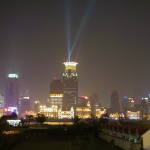
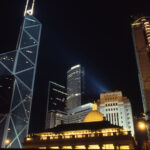
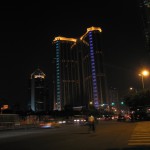
View of Shenzhen from Saige Paza
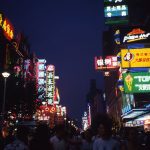
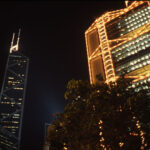
High-rise apartment buildings in Shenzhen
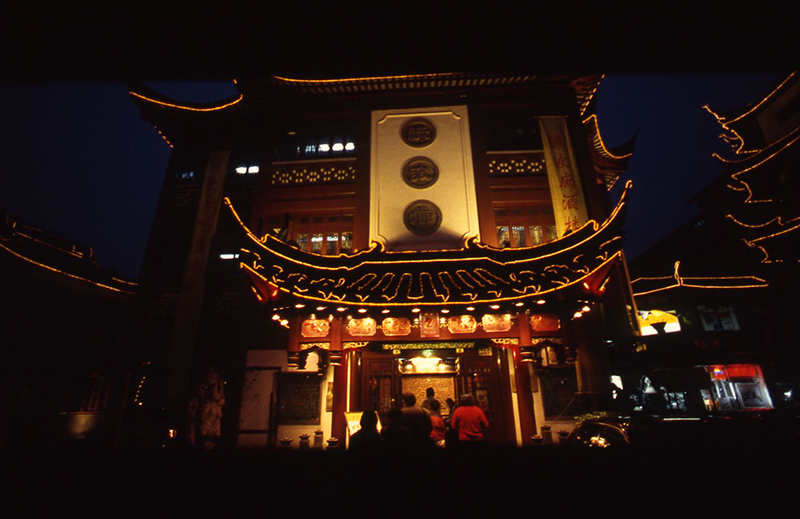
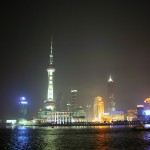
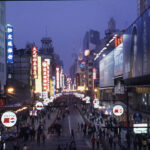
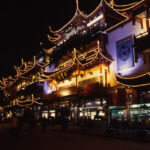
Architecture of Shanghai
YOU MIGHT ALSO LIKE
Vol.018 – Architects of Light
Theme: Architects of Light Interviewer: Mikine Yamamoto Yamamoto:Today is a nice day. Japan is lucky to have four seasons and to be able to experience the changes that natural sunlight displays. When I joined LPA 8 years ago I really wanted to design daylight in architecture. Architects like Eero Saarinen, Louis Kahn, and Tadao Ando really incorporate daylight into their buildings and I am inspired by how the architecture, itself, seems to function like a light fixture. When I was a student, I spent most of my free time visiting architecture, especially museums. The space in museums is so dramatic and compelling. I think it is really important to just experience architecture. Spend time enjoying the spaces and be moved by the various expressions brought on by changes throughout the day. That being said, the fundamental and emotional incorporation of light in Scandinavian architecture and Asian architecture is very different. Kimbell Art Museumby Louis Kahn Kresge Chapel : MIT Chapel by Eero Saarinen Mende:I can`t say which is superior, but I believe Scandinavian architects are intuitively keen to detail. The angle of the sun is very low in Northern Europe and Scandinavia and it penetrates to the interior of buildings. It feels like the towns of Northern Europe and Scandinavia seem to be designed with the rising and setting of the sun in mind. The long shadows leave a lasting impression and because there are shadows the light really stands out…
GRAZ, Austria
Graz is the second largest city in Austria. The Mor River runs through the center, with old cityscape and warm-colored street lighting giving the city a cozy feel. On the other hand, Kunst Haus and other newer architecture have added an element of the arts with a system of reflection streetlights also creating a new face for this city of culture. From the top of castle hill, with its large clock tower, Uhrturm, the City of Graz is in full view. Photo to the right, city hall offices in the city center. The building facades along Herrengasse Street are also up lit for a festive atmosphere as the sun goes down. The Kunst Haus, built along the Mor River and in the middle of the old cityscape, resembles a spaceship just blasting off. Fluorescent lights are mounted on the main facade and at night a program controls the fixtures, sometimes turning it blazing white. Reflection streetlights in the plaza before city hall. These streetlights are visible in many places throughout the city.
Vol.073 – The Shinsekai/Tsutenkaku Area: The Light of “No Double-Dipping”
Ever seen a sign that says “No Double-Dipping”? These days you don’t see them as much, but you used to find them in the立ち食い (tachigui – standing eat) kushiage (deep-fried skewer) shops in the old downtown areas of Osaka. You’d be chugging down cheap booze like “Poppy” or “Bakudan” while watching piping hot skewers get fried right in front of you. Then, you’d dunk the whole skewer into a shallow, enamel bowl of watery Worcestershire sauce and devour it in one go. I hear this is the original Osaka-style kushiage culture. The “no double-dipping” rule means you absolutely cannot dip a skewer back into the sauce once it’s touched your mouth. Of course, there’s a huge variety of kushiage ingredients. I’m a big fan of this kind of place, so whenever I went to Osaka on business in the old days, I’d often soak in this atmosphere by myself. These kushiage joints always have a pile of shredded cabbage for all you can eat, but it’s funny – there are hardly any soft leaves, mostly just the hard core and the bits around it. And it’s surprisingly good! You take a big bite of a sauce-covered skewer and immediately follow it with a crunchy mouthful of cabbage. That textural contrast is just so satisfying. But seriously, where do all the soft cabbage leaves disappear to? I’ve been going to Osaka quite a bit for the past five or six years….
VOl.080 -Cinema Lighting
Interviewer: Kunzhi Jiang Jiang: Today I’d like to talk about “Cinema Lighting.” I think cinema lighting is very important. For example, I recently watched “The Godfather,” and felt that light and shadow in cinema can really reveal various conditions of human psychology. Especially senses with intense contrast, light and shadow help create a very tense situation. Mende: Yes, there are many dark scenes in this film. It is an impressive example of using light to symbolize human emotion. Jiang: Yes. I was really impressed with how light is focused on the left side of the screen and the right side gradually becomes dark. I felt this represents the two-sided nature and internal turmoil of the characters. What kind of movies do you like? Mende: I like films of various genres, but I was really moved by the French movie “Diva.” The use of natural light is beautiful. The softness and warmth of natural light really dictates the atmosphere of this film. Jiang: This sounds like a film with many great scenes. I am curious about the balance of light and shadow. By the way, films by the Taiwanese director, Edward Yang, are also very impressive. Lighting melts into the quiet everyday scenes of his films in a way that is very easy. Mende: Taiwanese films certainly have a unique charm. Particularly, natural light is skillfully used to create detailed scenes and atmospheres, unable to be reproduced with artificial lighting. Jiang: “A Brighter Summer…
Vol.024-Coffee Break with Mr. Mende
Wearing many hats -writing, singing, tea ceremony, diving, skiing, golf etc all besides being a busy lighting designer Interviewer:Gaurav Jain Gaurav:How do you do it? Do you know of other designers who have similar diverse interests? What inspires you to keep yourself so engaged? Mende: I am a workaholic – I like to do so many activities or hobbies because I need to check myself. By that I mean, I am always keeping myself in check that is this the right way, or is there any other way? It is a kind of introspection…. When I sing traditional Japanese songs, it’s a completely different Mr. Mende. I see myself from a different perspective, I lose myself in what I do. Or when I ski, its very joyful for me. The 2-3 days of skiing are very immersive, I try to forget myself, my profession. But when I return from my ski trips, I return back to my world with more clarity – with different points of view. I suggest that a designer has to be interested in many different experiences. Gaurav: did these interests/hobbies develop early? Even before becoming a lighting designer? Mende: These interests did not start very young. Some of these I started after I became a lighting designer. I started skiing at the age of 50. I started diving at the age of 64. Gaurav: Do you give your 100% to these hobbies? Mende: Yes, very much…