RELATED POSTS
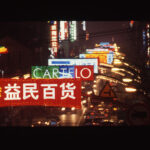
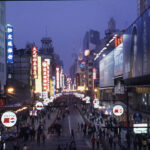
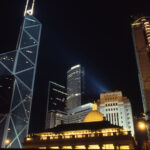
View of Shenzhen from Saige Paza
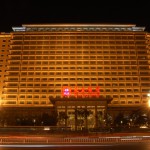
High-rise apartment buildings in Shenzhen
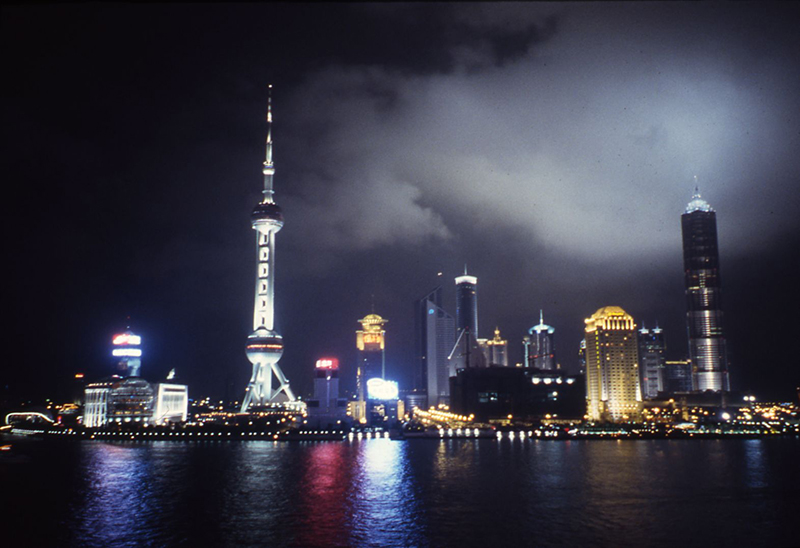
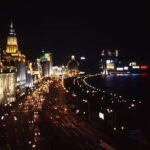
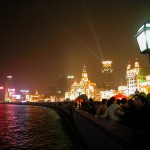
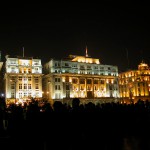
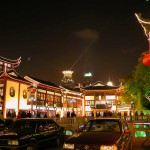
Architecture of Shanghai
YOU MIGHT ALSO LIKE
Vol.037 – The Fashion of a Lighting Designer
The Fashion of a Lighting Designer Interviewer: Koki Iwanaga Iwanaga:Mr. Mende do you have any preferences towards fashion. I really like the fitted jacket that I see you wear quite often. Mende:Yes, that jacket is so comfortable and easy to coordinate that I have several in the series. It’s an Issey Miyake design. It is compact and can be crumpled up so it is great for business trips. About twice a year I go shopping at Ginza Matsuya to treat myself. The printed shirt I am wearing now I fell I love with it while window shopping in Firenze. My heart has been stolen by other printed shirts a few times while window shopping!! How about you? Do you have any fashion preferences? Iwanaga: I don`t really have a brand that I totally love, but I do have a few simple rules. I usually choose my clothes based on the weather and what I`ll be doing for the day. For example, if I have a big presentation I`ll wear a dress shirt, jacket, and slacks. If I just have an internal meeting I`ll wear maybe a t-shirt and jacket or a collared shirt. If I have to go to the construction site for the day, I`ll wear a long sleeve shirt, even in the summer or dark color clothing for a lighting experiment. Mende:Yes, those for pretty obvious rules. Even I decided what color to wear based on my feeling for…
Vol.058-Finding the Ideal Street Lighting
Interviewer: Niken Wulandari Mende: Niken, do you like traveling? Niken: Yes, I do. I brought photos that I took from my trips, and we will talk about street lighting. I started to pay more attention to this since I did my thesis. During the time, I surveyed and compared the view during daytime and nighttime. That is when I noticed there are many designs of street elements that are visible during the daytime and not very noticeable during night-time. Mende: At the beginning, in Asia, everyone understood that lighting design is for the shape of the pole element. They care less about the lighting effect and the environment at nighttime, just focus on the beautiful shape of the street poles. Niken: I found that a lot of streets in European cities are using catenary lights, so they don’t have a lot of elements on the streets. When we walk, we don’t notice where the lights are coming from, we can enjoy the street view because it’s not obstructed by the poles. That’s why I like the concept of using catenary light. Mende: It is quite difficult for us in Japan or other Asian countries to implement this method to the buildings, it is not allowed in Japan. In Europe, they also mount wall-scones to the building. We have been suggesting so many times to use catenary light or wall-mounted street lighting in Tokyo and other cities in Japan, but it…
TOKYO : SHIBUYA
A city for the young and young at heart, Shibuya. The area is composed of a mess of streets all with a different atmosphere, including a few main streets connected by narrower alleyways. Each street has developed its own personality and role, including lighting conditions to create the Shibuya night. From the scramble intersection in front of Shibuya Station, 3 distinctive roads, Dogenzaka, Center Gai, and Koen Dori radiate. After dusk, the lights come on and the personality of each street is even more clearly defined. As the title implies, Center Gai is the center of Shibuya geographically and caters to the young as the center for shopping and entertainment. This street is full of light. Each shop seems to be competing for the brightest facade with infinite amounts of luminous signage and advertising, creating a 3-dimensional playground. Dogenzaka is a festive street with a steady flow of pedestrians, but turn down one of the narrow side streets and the atmosphere changes immensely. The facades of many love hotels packed into the area are saturated with color creating a seedy blend of light and young couples prowling the Maruyama-cho area.
Remote Salon Vol.02 English Ver.
English Remote Talk Event Lighting At Home / Neighbourhood 2020.07.19 Sherri Goh Connecting with members from all over the world without leaving our seats. We review daily lockdown scenes of our homes. Participants in the online event The first ever english virtual meeting for Lighting Detectives was held amidst the worldwide pandemic of the Coronavirus 19 that saw many countries in lockdown and members working from home. This was open to our current members only and we had an attendance of 21 people from China, Chile, Hong Kong, Japan, Netherlands, Singapore, Taiwan, Thailand and the USA. The time difference had people call in from work, bed, car, home and various social situations. As the theme was “Lighting at Home/Neighbourhood”, we called on our community to share pictures of their situations faced in quarantine or working from home. Submissions were received even from core members who were not able to attend the event itself. With minimal technical glitches at the beginning, we kickstarted the event with a welcome note from Kaoru Mende that contained more pictures of his daily commute in Tokyo followed by self-introductions from everyone. Fires in the Santa Catalina Mountains from Charles Stone The picture presentation began with a submission from Ignacio Valero of a pair of surgical masks, titled “Lockdown Kisses” captioned with “the idea that love will always find a way to express itself no matter what”. We had night views of Budapest, Hungary and Eskiltuna, Sweden at…
City Night Survey : Riyadh, Saudi Arabia
Diriyah, KAFD and Metro stations Riyadh2025.11.16 – 11.18 Gita Listia The purpose of this Riyadh lighting survey is to explore the characteristics of old urban areas and new developments in KAFD Riyadh, with a particular focus on their metro stations. The study aims to understand how each area expresses its identity through public space lighting and how lighting strategies are applied in major infrastructure such as metro station. ■Diriyah Diriyah is a historic area on the north-west side of Riyadh and one of Saudi Arabia’s most important cultural heritage sites. Located along Wadi Hanifah, about 15 km from central Riyadh, it reflects the early history of the city. Today, Diriyah is being developed into a vibrant heritage, cultural, and lifestyle destination, where historic preservation is carefully combined with modern urban design. The lighting in Diriyah is designed to be subtle and heritage-sensitive. Very warm white tones are used to complement the Najdi mud-brick architecture, creating a calm and welcoming night-time atmosphere. Pole lights and bollards in Diriyah feature distinctive shapes, patterns, and warmer colour temperatures compared to typical street lighting in other parts of Riyadh. This traditional lighting character clearly signals that visitors are entering a cultural and heritage area. ■At-Turaif At-Turaif is the birthplace of Saudi history and represents the cultural core of Diriyah. It is recognized as a UNESCO World Heritage Site. Lighting at At-Turaif is highly restrained and conservation-focused. Soft grazing and wall-washing techniques are used to gently…