Date of Issue: December 19, 2025
・Activity 1 / City Night Survey:Honolulu(2025.09.04-09.08)
・Activity 2 / city Night Walk Vol. 77: Gakugei-daigaku(2025.10.17)
・Activity 3 / Round Table Discussion Vol. 74: Review on Gakugei-daigaku(2025.11.10)
City Night Survey:Honolulu
2025.09.04-09.08 Yonglin Ke + Masashi Kurobe
The nights in Honolulu are a diverse blend of resort illumination, residential lights, torches, and night market glows. However, as the city develops, the starry sky is fading, raising concerns about the impact on the local ecosystem. Balancing urban growth with light pollution countermeasures remains a significant challenge. We conducted an on-site night walk survey to explore the balance between the city and nature and to evaluate the current lighting environment.
■Honolulu
Honolulu, the capital of the U.S. state of Hawaii, is a prominent tourist destination in the heart of the Pacific Ocean. Simultaneously, it serves as the political and economic hub of the state. In this land where the sea, mountains, and urban areas sit in close proximity, the nightscape reveals a variety of expressions depending on the time and location—blending the glow of resort hotels, the soft lights of residences, traditional fire torches, and the vibrant lights of night markets. Furthermore, the combination of intense sunlight and a tropical climate creates a unique character within the city’s lighting environment.
On the other hand, urban development and the growth of the tourism industry have negatively impacted the visibility of the starry sky and affected local ecosystems, such as migratory birds and sea turtles. While the state and city have begun implementing measures to reduce light pollution, finding a balance with the tourism industry remains a challenge. During this night walk survey, we investigated how the nighttime lighting of Honolulu shapes the environment between the urban landscape and nature.
■Resort & Beach Area
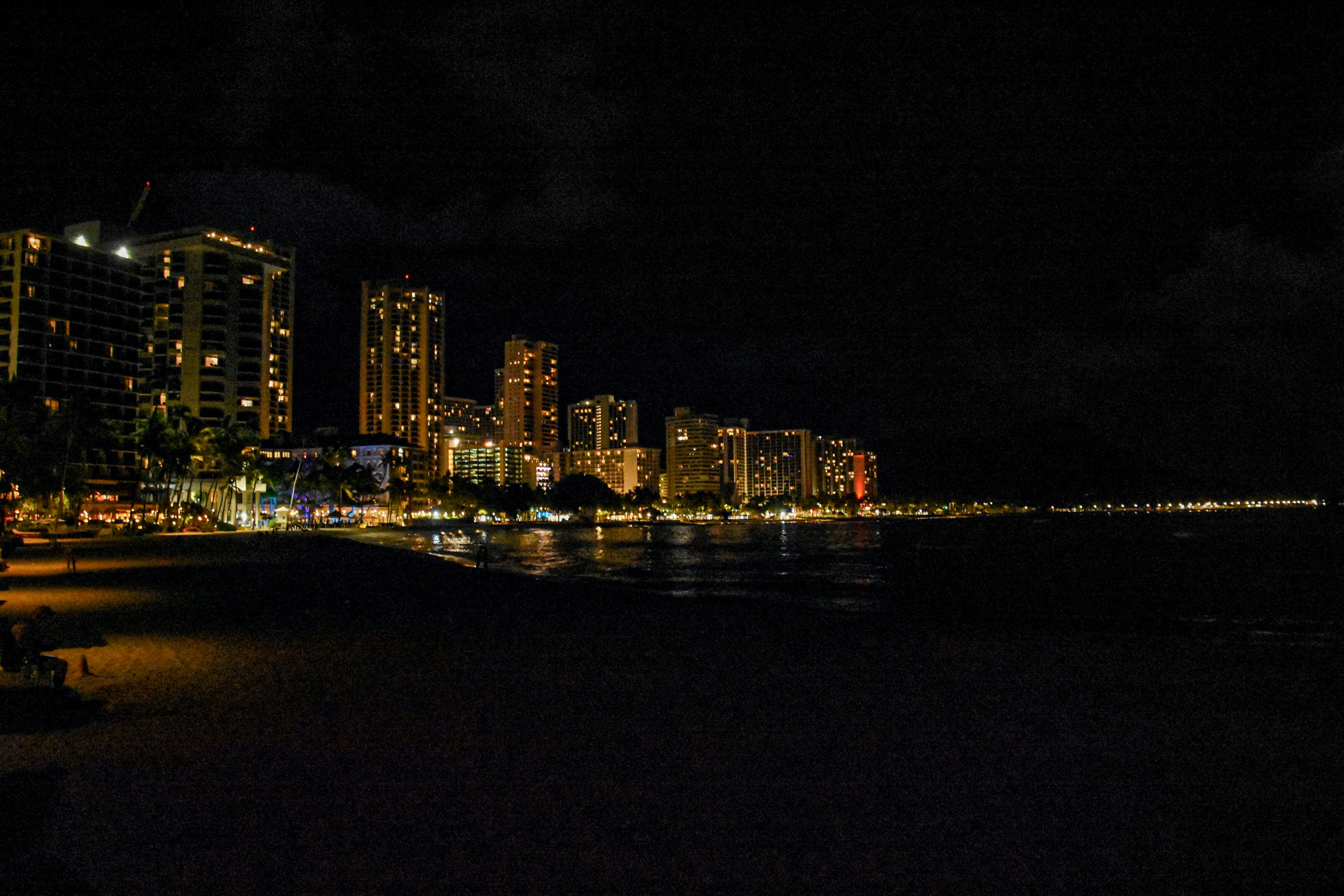
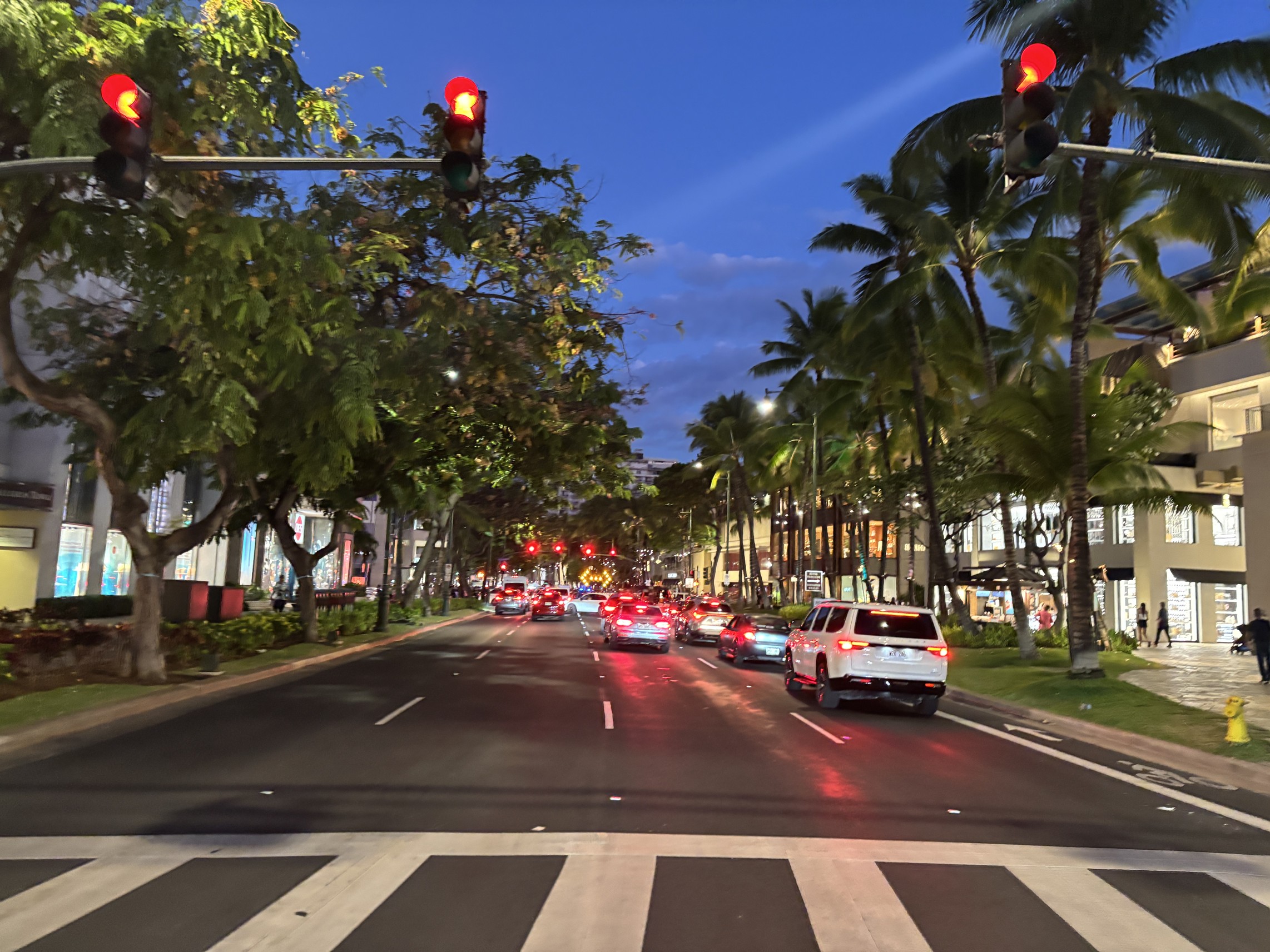
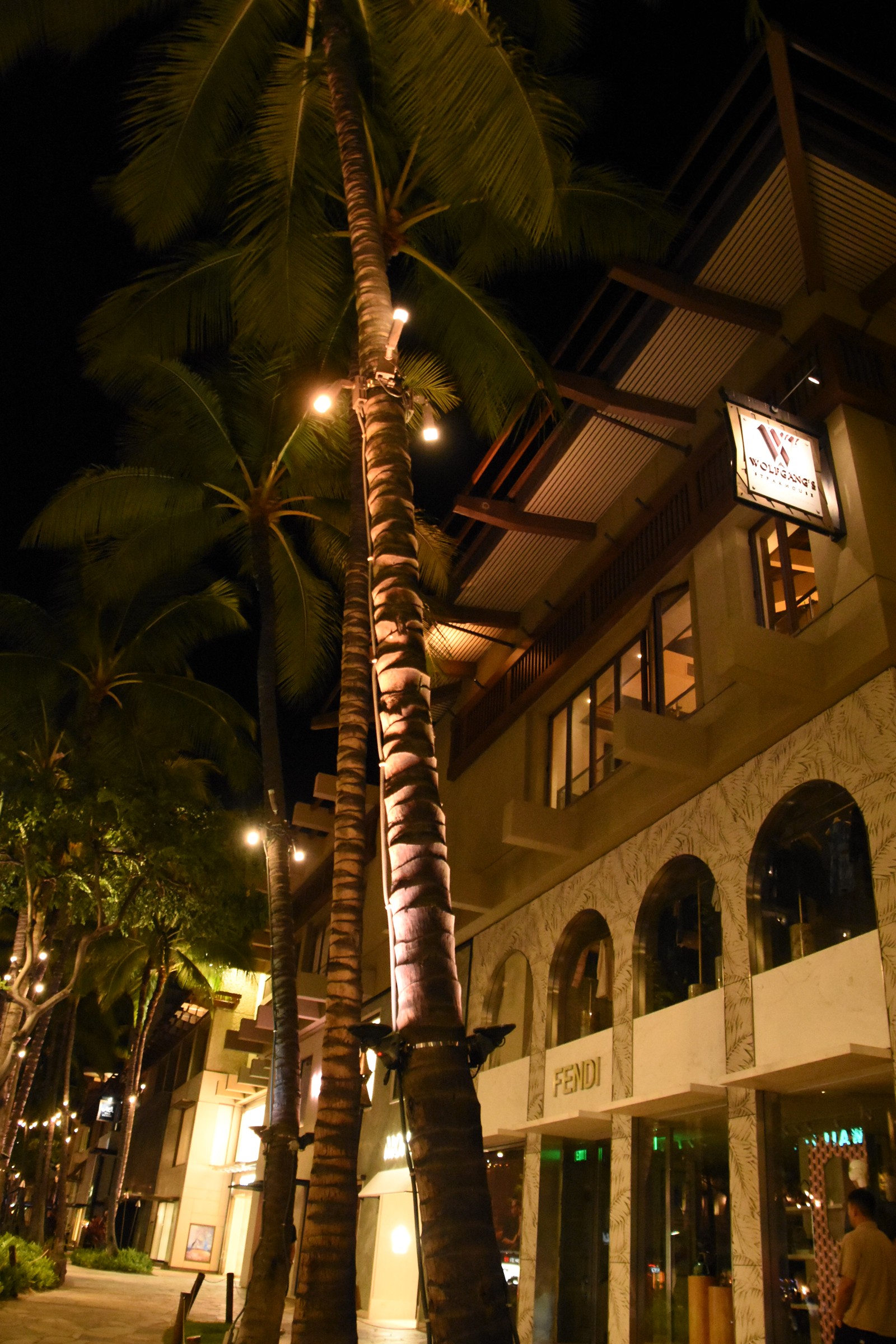
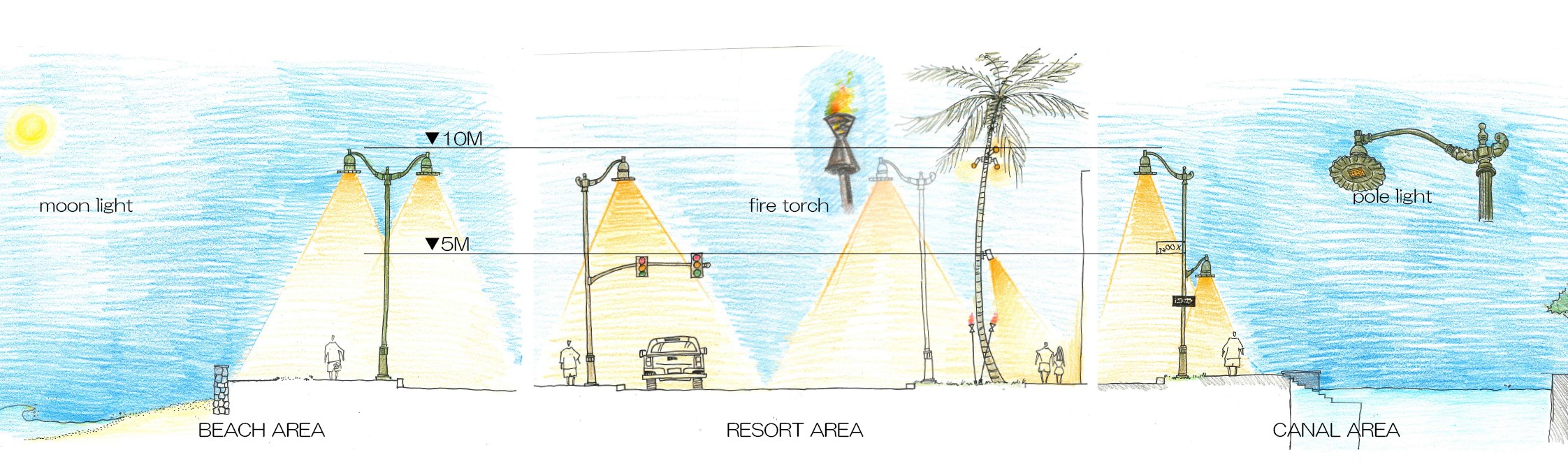
The resort area of Waikiki is a glamorous zone densely packed with hotels and retail spaces. Along the streets, pole lights approximately 10 meters high are lined up at regular intervals, serving as the primary illumination supporting the nighttime scenery. Around the retail shops, floodlights fixed to the trunks of palm trees illuminate the foliage and facades, while bulb-shaped spotlights are installed at varying heights as festive accents. Warm light is scattered throughout, creating a soft, bustling atmosphere that flows with the movement of people.
Particularly striking were the flickering torches found throughout the area. The movement of the flames shifted with the wind, emitting a sense of vitality distinct from artificial lighting. Furthermore, within the retail premises, string lights were wrapped around palm trunks, creating small, festive spaces under the night sky. The combination of natural materials and light produces an extraordinary, resort-like world.
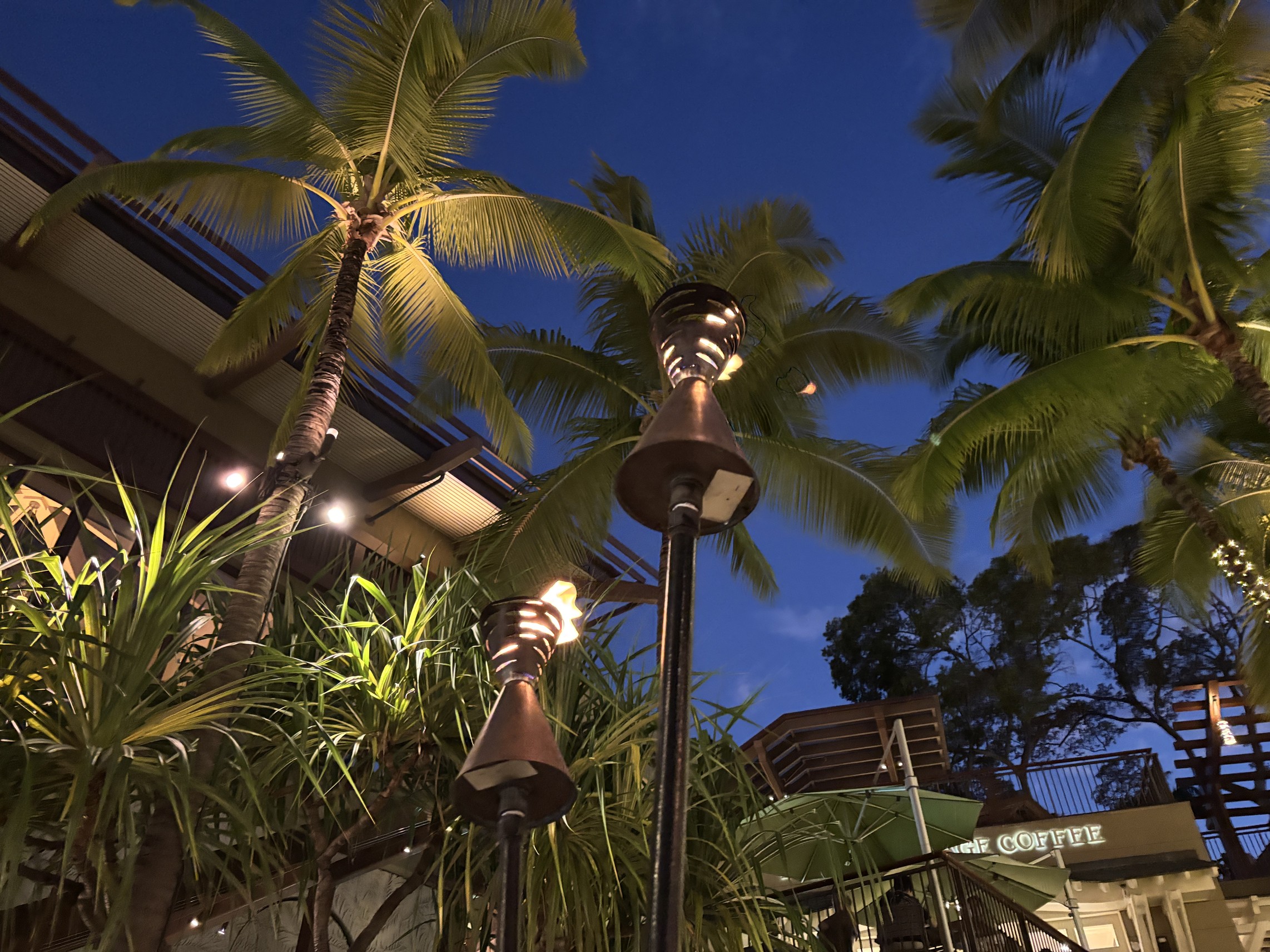
As the night deepens, a night market begins on Kalakaua Avenue. Stalls start lining up around 5:00 PM, with each vendor using various creative lighting techniques to make their booth stand out. On weekdays, after the retail stores close, small stalls offering nail art, portraits, and accessories begin to appear along the road. People gather at every stall, wrapping that corner of the street in a lively, night-market-like bustle.
In contrast, the atmosphere changes completely upon reaching the seaside. While pole lights line the city side of the stone walls bordering the beach, there is no lighting whatsoever on the sand. A large moon hung in the sky, and the water’s edge glowed faintly in the moonlight. The absence of artificial light accentuated the silence and depth of the nighttime ocean. The stray light from streetlamps on the hotel side slightly illuminated the back of the beach, which perversely emphasized the lack of light. This is also a result of ecological protection; light directed toward the sea is strictly restricted to prevent sea turtles from avoiding the shore for nesting and to ensure hatchlings do not head toward land-side lights instead of the ocean.
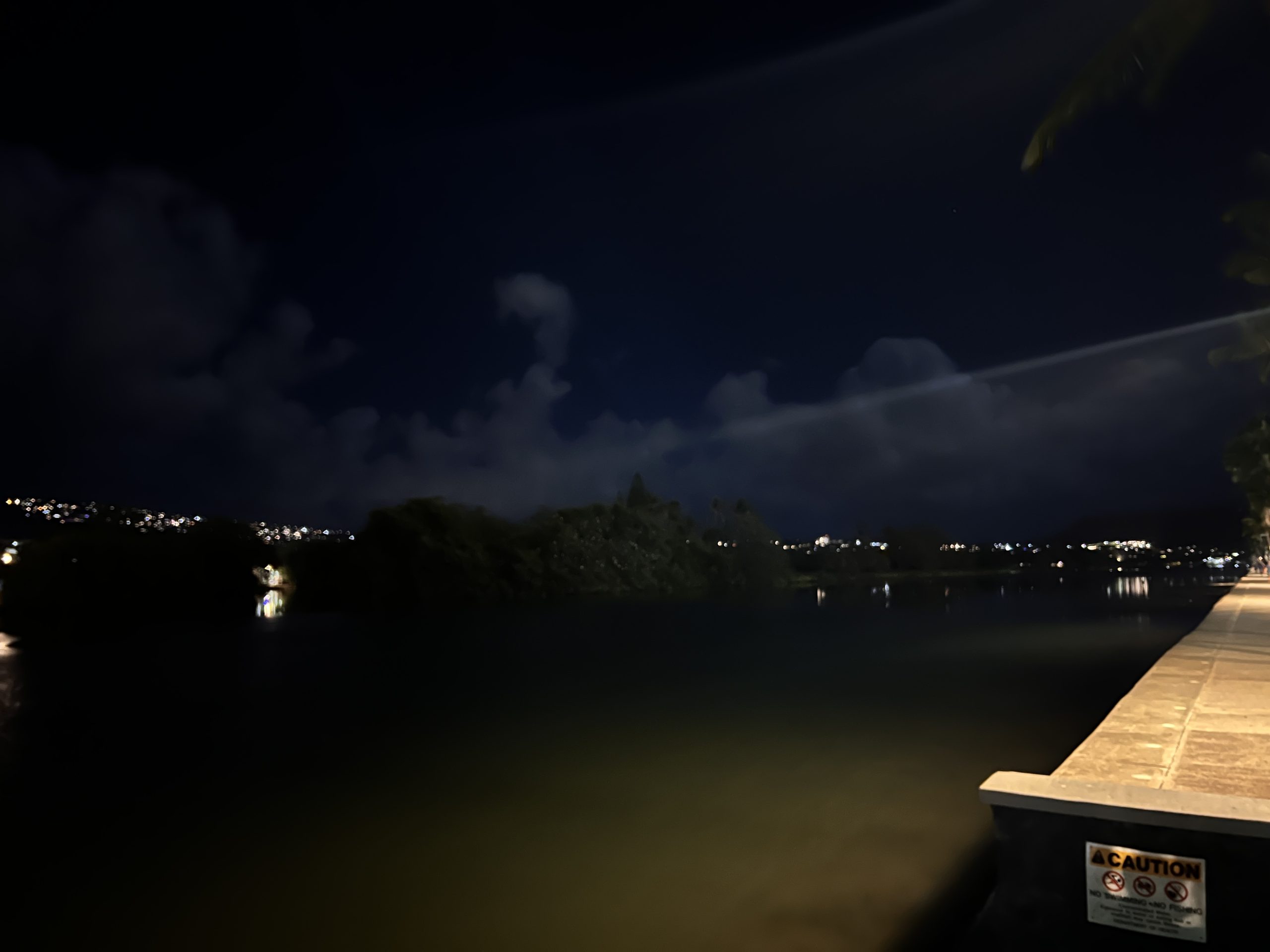
Turning toward the canal, a different kind of silence awaited. The streets are equipped with streetlights of the same design as those in the retail area, with unified variations for traffic signals, road lights, and pedestrian lights. Meanwhile, the golf course across the canal was pitch black, a sprawling darkness devoid of artificial light. At the very edge of the city’s reach, the boundary between light and dark was clearly visible. While much of the light in the resort area is designed to support commercial vibrancy, the natural darkness of the adjacent beaches and canals is respected. This coexistence of light and dark, shifting continuously, was one of the most memorable scenes in Honolulu’s nightscape. (Ke Yonglin)


■Residencial Area
Moving away from the tourist hub of Waikiki Beach and into the residential neighborhoods, I was struck by the sudden increase in stillness and the disappearance of vehicular and pedestrian traffic.
Residential areas in Hawaii consist largely of single-family homes, where flora such as palm and plumeria trees blend naturally into the properties, creating a lush, island-style landscape. Each area possesses a distinct character: grid-patterned coastal neighborhoods, hillside communities that branch out like trees across terraced slopes, and districts where historical wooden homes remain. Another characteristic feature is the formation of tight-knit communities, facilitated by parks, schools, and local shops clustered near the housing.
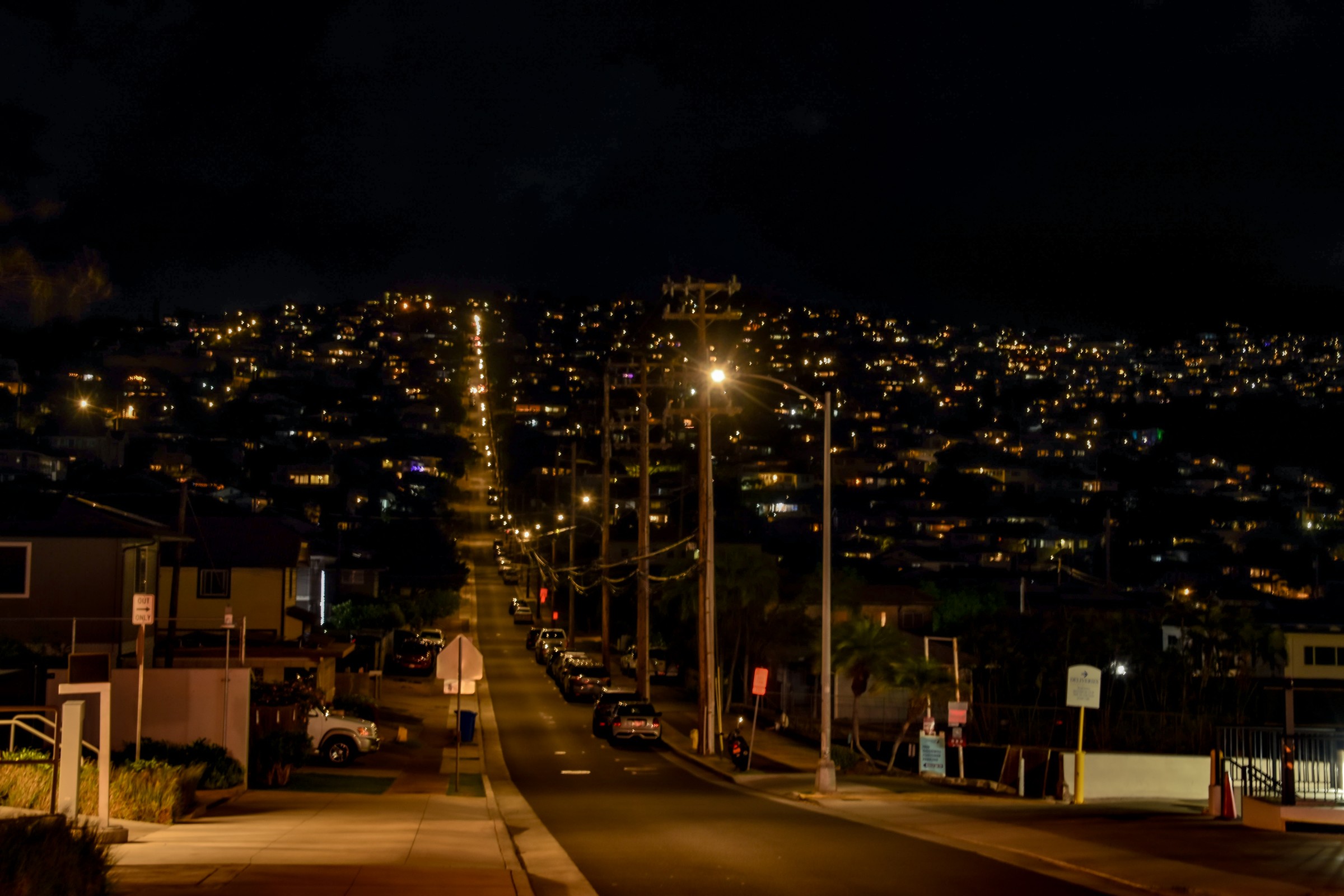
The lighting in these residential areas is sparse compared to Japan, with 9-meter-high streetlights positioned at intervals of approximately 20 meters. Broad-beam 3000K light spills onto the road surface, with illuminance levels kept quite modest at an average of around 10 lx. Outdoor architectural lighting within residential lots was similarly understated; most homes featured only under-eave or gate lights, with almost no instances of excessively bright decorative lighting. Observing the interiors through the windows, many homes utilized warm indirect lighting or pendants centered around the living and dining areas. The design philosophy seemed to prioritize coziness and relaxation rather than filling the entire space with brightness. The soft, gentle light filtering through lace curtains was also beautiful.
We held a photo shoot of the residential area on the hill from the valley side. The orange interior light leaking from the windows served as accents to the nightscape, characterized by scattered granular lights and the streaks of light from streetlamps reaching toward the sky. The entire slope looked as if the starry sky had been turned upside down, evoking a sense of profound tranquility.


■Aerial Nightscape of Honolulu
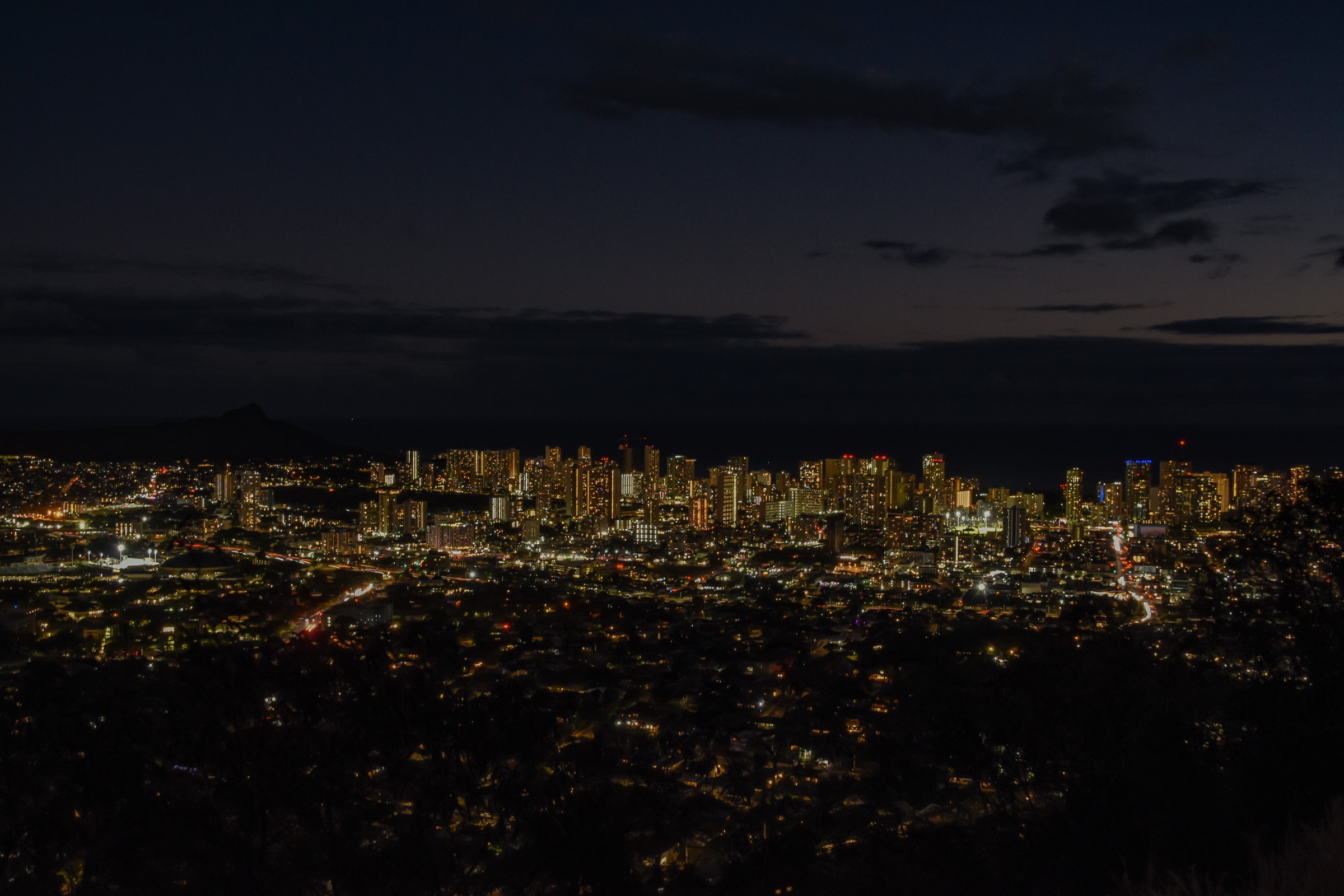
We photographed the nightscape from the side of a road near a hill, about a 20-minute drive from central Honolulu. We were able to observe the city’s distribution, where a gradient exists between the high-luminance band of the commercial and tourist districts on the ocean side and the low-luminance
band of the residential areas on the mountain side, with the light spreading toward the sea like a folding fan. Due to strict building height restrictions, high-rise buildings are concentrated in specific areas; as a result, hotel window lights, commercial facilities, and streetlights overlap to create a belt of high intensity. Despite being such a developed city on the ocean side, large-scale exterior facade lighting was absent; instead, the landscape was formed by interior lights and the illumination of balconies and corridors. While Honolulu does not have regulations as stringent as those on the Big Island of Hawaii, the design consistently avoids upward-shining light to protect the ecosystem and preserve the starry sky. Furthermore, given the density of hotels, it is likely that lighting is practically restricted to prevent glare for guests.
In terms of color temperature, warm bulb colors were more dominant than white, giving the impression that the color temperature of the entire city is unified. This seems to be the result of a combination of individual awareness—residents choosing calm, warm tones for interior lighting— and administrative policies promoting low color temperatures to minimize the impact on sea turtles and the broader ecosystem.


■Main Roads
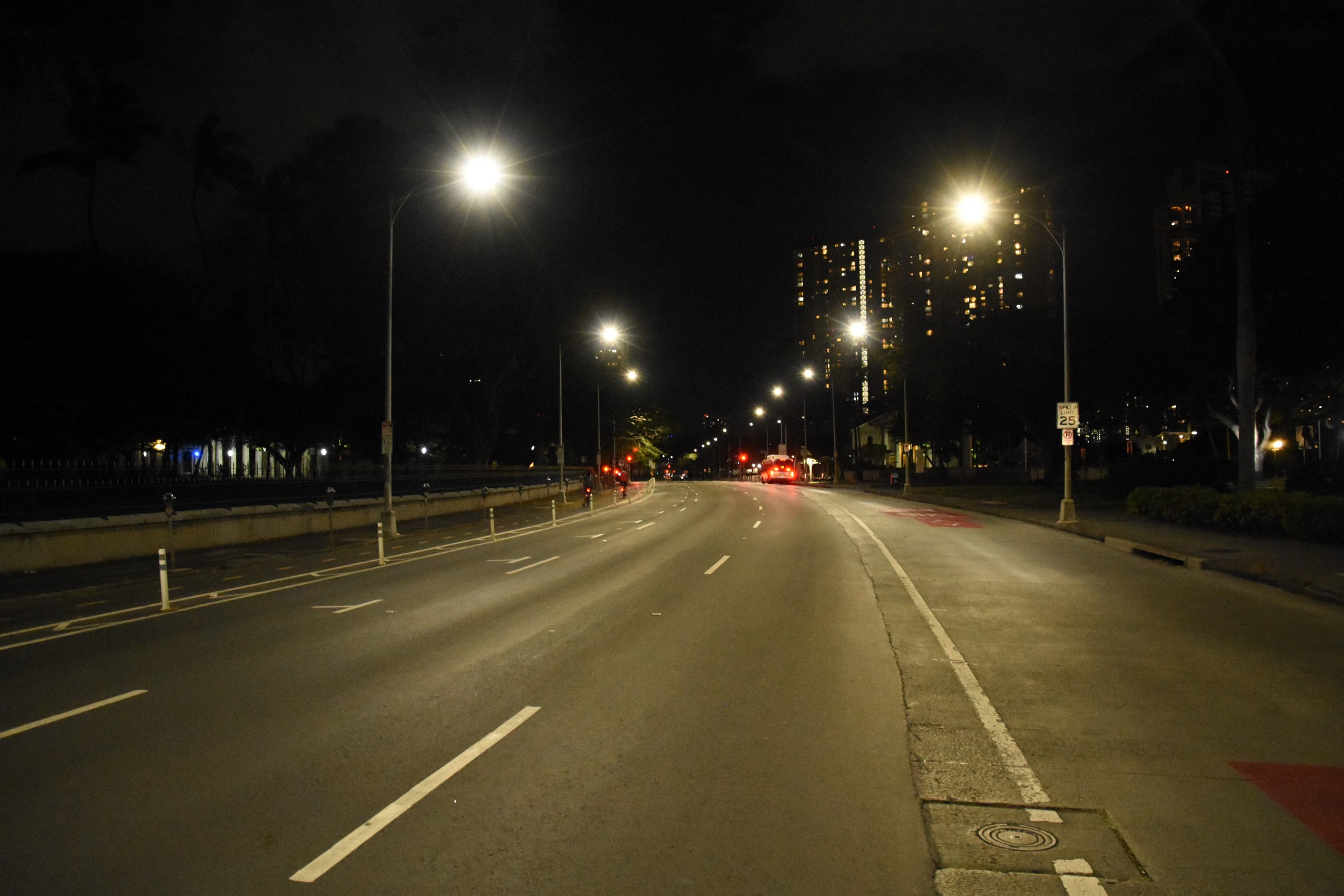
Between 2018 and 2019, Oahu underwent a large-scale project to convert approximately 53,000 municipal streetlights from sources like sodium lamps to LEDs. While this offered significant economic advantages through reduced energy consumption, it reportedly faced opposition from residents concerned about the natural environment. Ultimately, it appears that 4000K LEDs were adopted for main roads (whereas 3000K LEDs were selected for residential and tourist areas).
Streetlights 10 meters high are positioned at 30-meter intervals, illuminating the main roads with light distributions controlled to ensure uniform coverage. While the illuminance is a modest 20 lx directly beneath the lamps—relatively low for main road lighting—the potential impact on the ecosystem from the 4000K light reflecting off the ground is a point of concern. Furthermore, since the primary goal of the project was energy reduction, the use of bare LED fixtures may have been an unavoidable compromise.
■Daylight
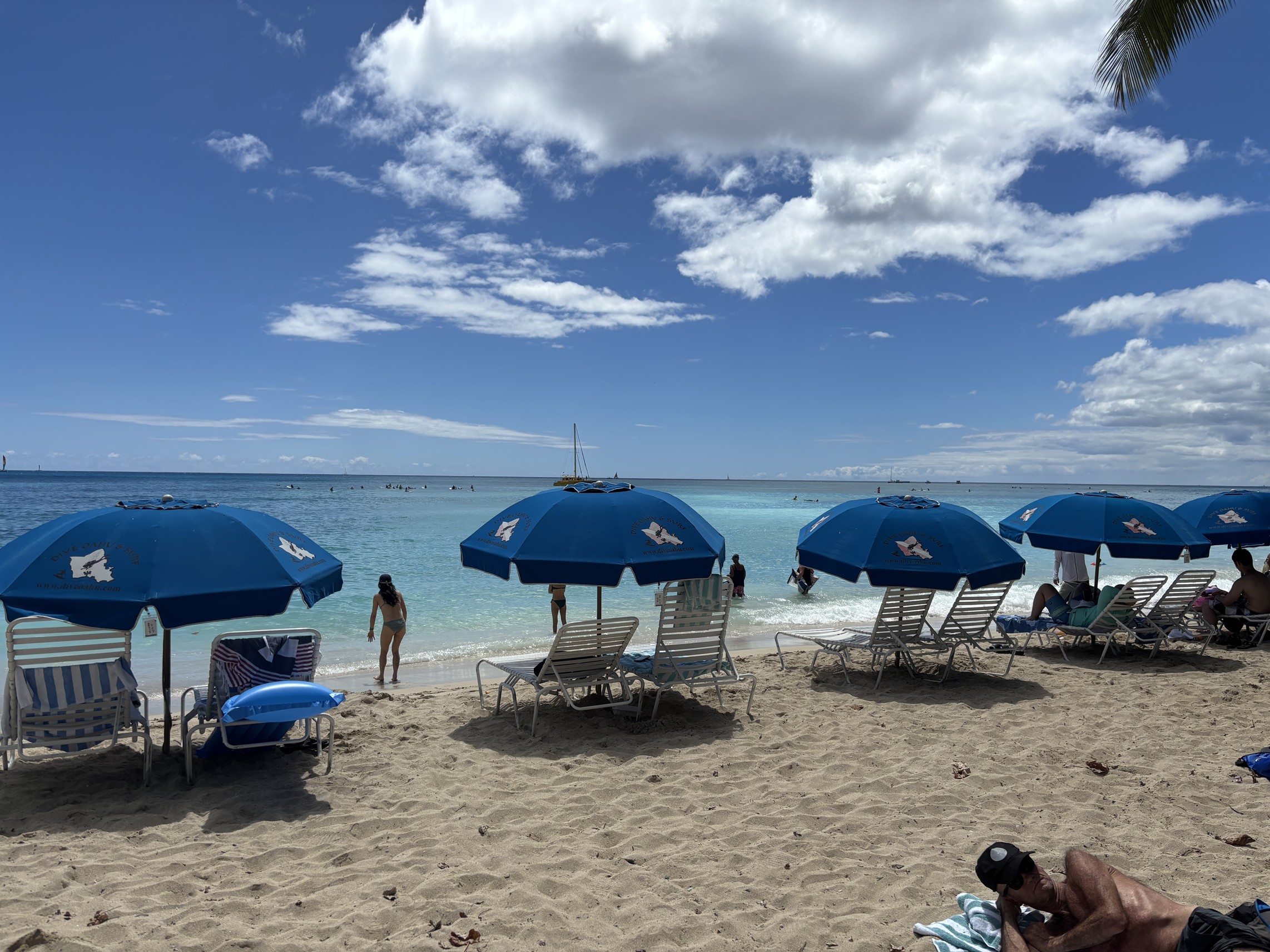
In Honolulu, the daylight conditions—characterized by intense sunlight and high solar radiation levels different from those in Tokyo—have significantly influenced architectural forms, which in turn directly impact nighttime lighting. Deep balconies designed to provide shade allow interior light and downlights to softly illuminate the ceiling surfaces. Furthermore, white exterior walls intended to reflect heat pick up even slight amounts of spill light, naturally creating a sense of vertical luminance even in areas without dedicated lighting fixtures. Additionally, since pedestrian spaces in the city are designed with shade as a prerequisite, large trees are planted everywhere; at night, these trees serve as the primary anchors for the lighting environment.
■Summary
Because residents accept darkness as a natural part of life, the lighting in Honolulu felt considerably dimmer compared to Tokyo. This is likely due to the strong will of the inhabitants to respect the natural environment and avoid unnecessary brightness.
Moving forward, Honolulu is expected to see continued LED conversion and an increase in
commercial lighting driven by urban redevelopment, such as railway extensions, and rising tourism demand. However, the importance of nature conservation, light pollution countermeasures, and landscape preservation will simultaneously become even more critical. It will be fascinating to see how Hawaii’s lighting culture, which cherishes natural darkness, continues to shape the future of its light environment. (Masashi Kurobe)
City Night Walk Vol.77 : Gakugei-daigaku
2025.10.17 Shino Yabuta + Yua Miyakoshi + Shiho Fujita
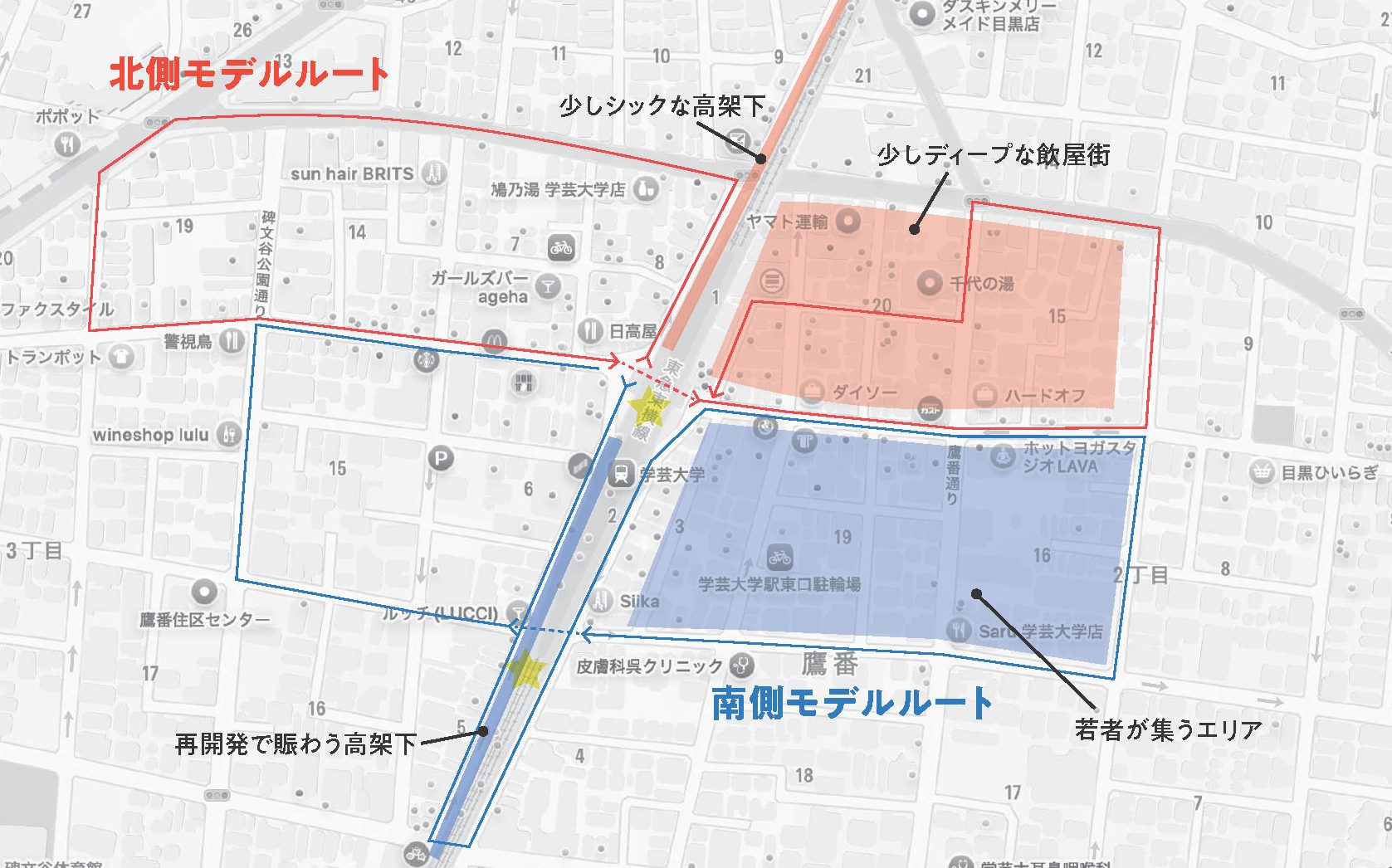
Gakugei-daigaku was the only district in Japan selected for the “Coolest Neighborhoods in the
World” rankings by the British media outlet Time Out. It is a town where “new” and “old” intersect, featuring lively shopping streets favored by the youth alongside quiet residential areas just a short walk from the station. We set out to uncover the secrets behind this neighborhood’s appeal, which has captured even international attention.
Gakugei-daigaku is a popular station on the Tokyu Toyoko Line, extending from Shibuya. Bustling shopping streets spread across both the east and west sides of the tracks. Here is our report on the nighttime charm of Gakugeidai, an area celebrated by overseas media.
■Team 1: North Area
Team 1 primarily explored the northern side of Gakugei-daigaku Station. We walked north along the elevated tracks, passing through dark alleys before emerging into the bustling commercial district. As bright streets and dim lanes appeared alternately, we searched for heroes and villains while experiencing the contrast between light and shadow. Stepping just one block away from the streetlamp-lit main thoroughfares plunges you into immediate silence. I felt that this contrast between light and dark is a defining characteristic of the Gakugei-daigaku neighborhood.
The lighting we selected as heroes highlights the unique personality of this town. Spotlights illuminating restaurant terrace seats appeared suddenly after a stretch of dark alleys, signaling the start of the entertainment district. The Art Nouveau-style streetlamps in the shopping district created a beautiful contrast with their classic design against modern shops, evoking an atmosphere unique to a town where the old and new intersect. Curiously, only the center streetlamp emitted a warm tone; while it felt slightly out of place at first, that idiosyncratic balance felt like part of the shopping street’s character.
Particularly impressive was the warm glow from a small deli located just past the main commercial area. While the surroundings were dark and foot traffic was sparse, the light spreading from inside, the vibrant glow of the sign, and the gentle light filtering through the awning brought a sense of security to the alley. As the town undergoes modernization, we felt the reassuring strength of a presence that remains unchanged and close to the local community.
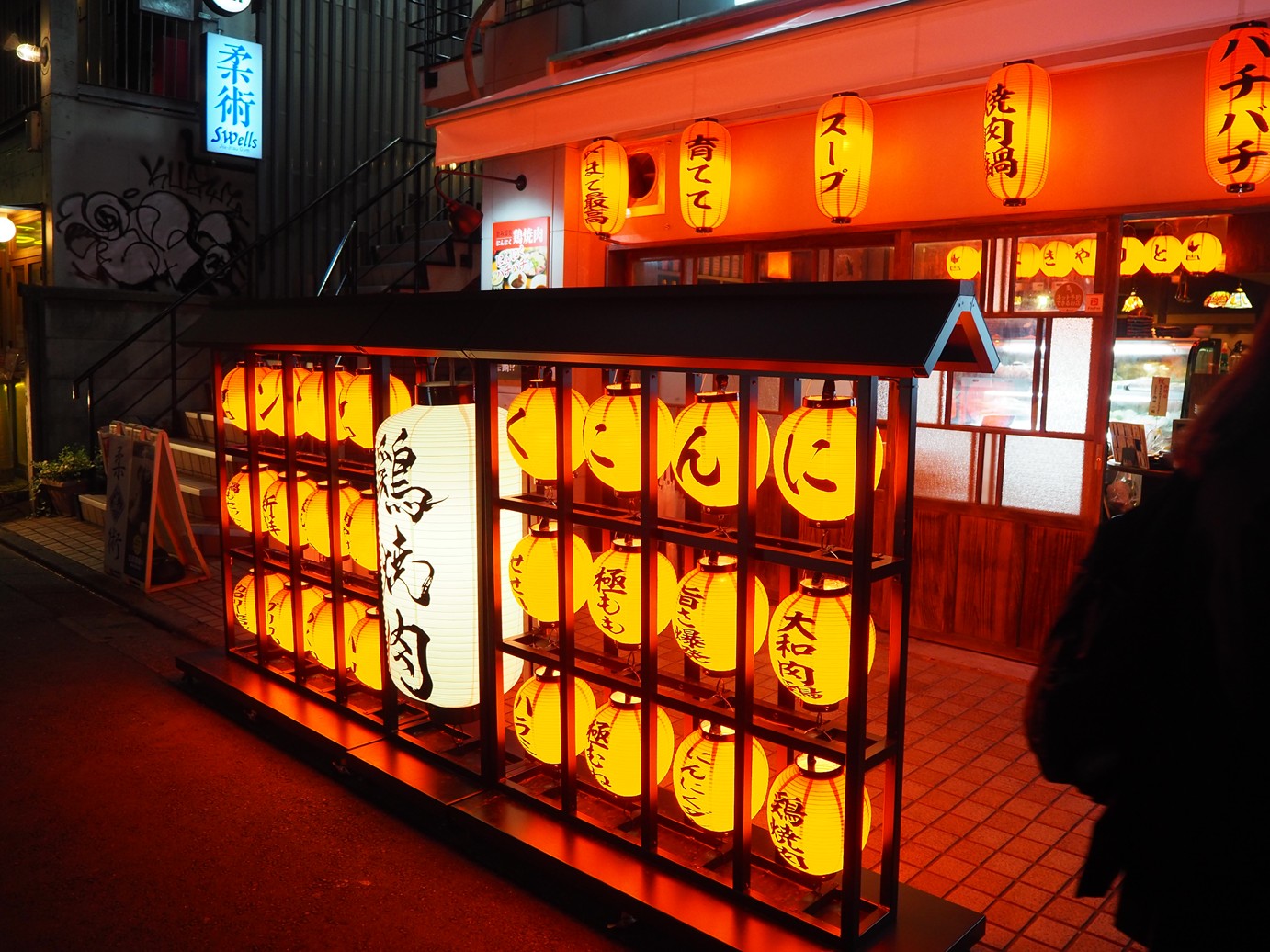
Conversely, the lighting we identified as “Villains” consisted entirely of lights failing to fulfill their intended roles due to excessive brightness, jarring colors, or poor maintenance. We noticed a pair of security lights that were piercingly bright compared to the surrounding dark alleys; the glare was so intense we worried about the impact on the residents of the apartment building directly behind them. In an alley lined with long-established izakayas(Japanese pubs), a single lantern emitting an incredibly garish, brilliant red light stained the entire vicinity red, creating an impression far removed from the neighborhood’s true identity. Additionally, a staircase where warm lighting beautifully complemented a Showa-era retro building was marred by several burnt-out bulbs; the lack of maintenance turned what could have been a lovely scene into one of loneliness and neglect.
Walking through Gakugei-daigaku at night made me realize how difficult it is to achieve “just the right light.” It is not simply a matter of “the brighter, the better.” I felt that a comfortable nighttime environment is only created through appropriate lighting design that considers the town’s personality, its specific use, and the surrounding environment. (Shino Yabuta)


■Team 2: North-South Crossing
Team 2 decided to explore the town freely, pausing at each alley to discuss which way looked more intriguing. This spontaneous approach allowed us to start from the northwest side of the station and circle the entire district clockwise. Even at a leisurely pace, we managed to cover the commercial areas in about an hour and a half, giving us the impression that the town is relatively compact.
We were surprised to find six different shopping districts spreading out in all directions from the station. However, stepping just one block off the main thoroughfare of any shopping street immediately reveals a quiet residential area, leaving us with the strong impression that the station, shops, and homes exist in very close proximity.
What frequently caught our eye were the streetlamps. Each shopping district featured a different design, and we enjoyed comparing them. Among them, a streetlamp with a charming decorative
design was chosen as a “Hero.” As mentioned by Team 1, among its three fixtures, one had a lower color temperature while the other two were higher; this balance of warmth and coolness functioned well and received high marks. Furthermore, since a new building designed by a famous architect is being constructed right behind it, concerns were raised that this old-fashioned decorative lamp might be removed. We designated it a Hero out of a sense of solidarity, hoping it can hold its ground despite its potentially limited lifespan.
A streetlamp featuring beautiful stained glass was also named a Hero. This one also showed a difference in illuminance between its two lights, and it was highly rated for its artistic design.


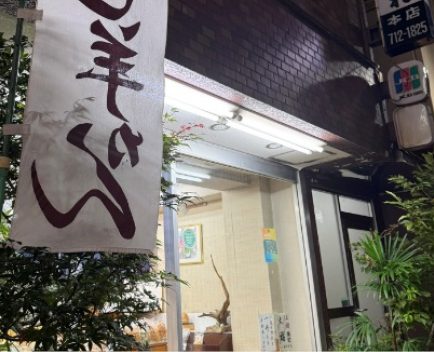
On the other hand, the lights most frequently cited as villains were those associated with commercial shops. Many members felt that the signage lighting for drugstores and clinics, as well as the storefront lighting of a traditional Japanese confectionery shop, was excessively bright. The confectionery shop’s lighting, in particular, utilized linear fixtures typically found in classrooms or offices; because these were installed low on the storefront ceiling, they caused significant glare. Another “Villain” was a decorative, glowing ball—resembling a traditional mari ball toy—hanging beneath a streetlight. Concerns were raised specifically because the electrical outlet on the utility pole was uncovered and exposed to the elements, posing a potential safety hazard. Since there are no large-scale commercial complexes around the station and most buildings are capped at about five stories, a charming landscape of crowded, traditional small buildings has been preserved. We also noted that many restaurants and shops have been renovated, suggesting a town that maintains its shitamachi (old downtown) emotional core while updating itself to suit the
modern era. (Yua Miyakoshi)

■Team 3: South Area
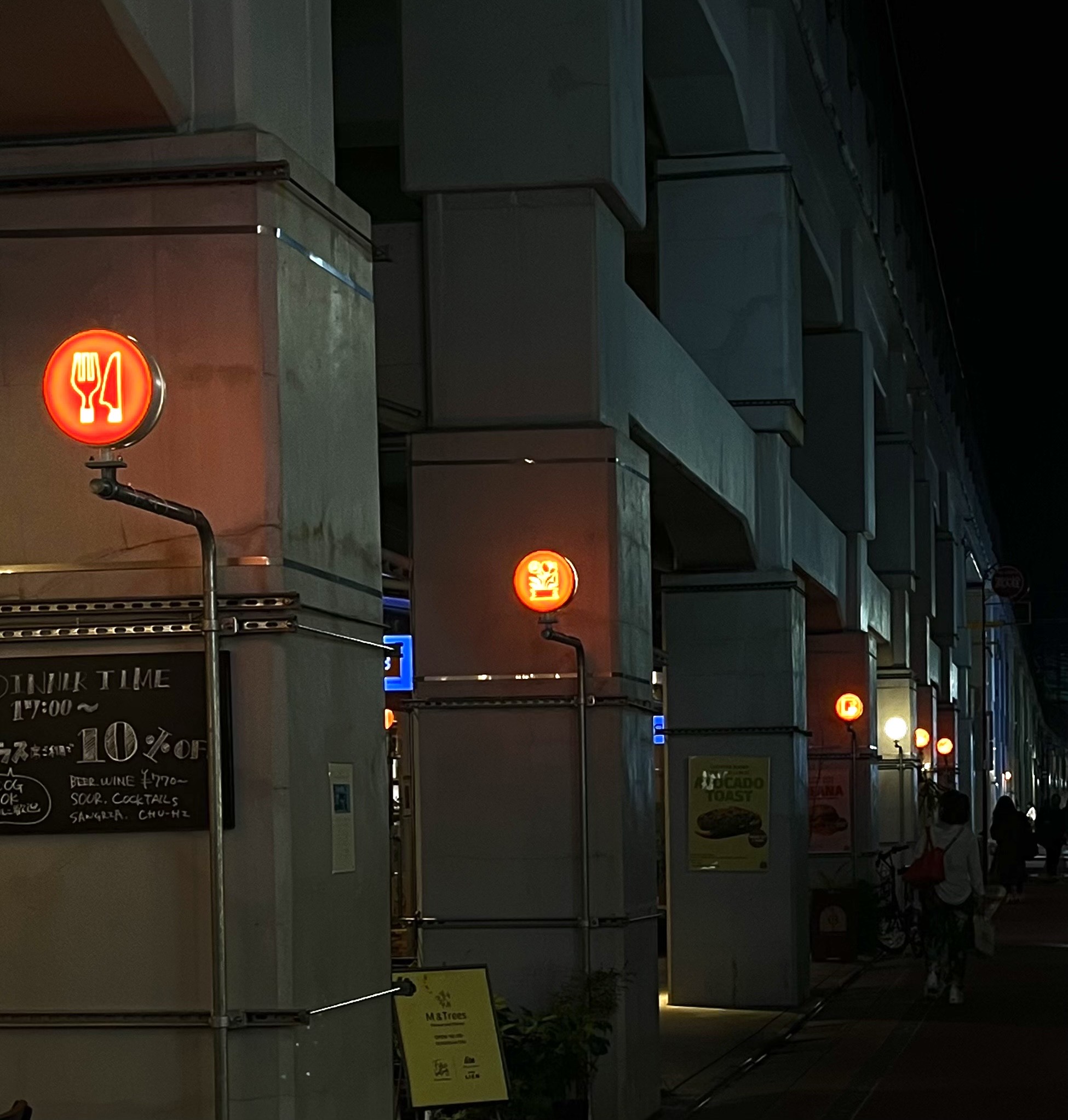
Team 3 explored the route heading south from Gakugei-daigaku Station, concluding by walking through the shopping districts from the east side to the west side. The area around the station is a blend of residential zones and shopping streets that have remained largely unchanged for years, alongside a gradual under-the-elevated-tracks renewal project that has been unfolding since 2021, fostering a fresh, modern atmosphere.
The lighting highly rated as heroes by our team was concentrated in this renewed area under the tracks, where we spent the most time observing. Many shops succeeded in creating a wonderful ambiance; the storefront facades—including the light reflecting off the underside of the tracks—were beautiful. Even the signage, which is often labeled a villain, showed an overall sense of unity in light quality, despite some minor maintenance issues. We were also impressed by a bicycle parking lot in the same row; it used warm, bulb-colored light to illuminate only key points, as if intentionally coordinating with the aesthetic of the neighboring restaurants.
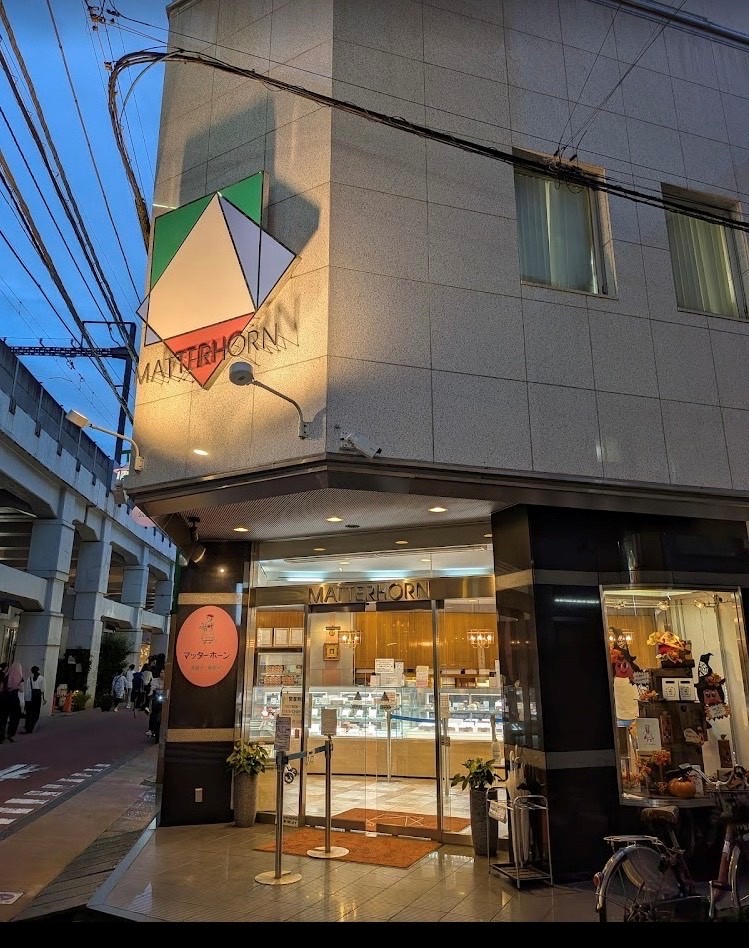
On the opposite side of the road from the elevated tracks, in an area that has remained largely unchanged for years, we found a long-established patisserie. Its exterior lighting, including the signage design, was understated and not overly assertive. Inside, classical chandeliers provided a glow that was elegant rather than glaring; we felt this harmonized beautifully with the modern lighting under the tracks, maintaining a perfect balance between the old and new sections of the neighborhood.
In contrast, the lighting at a multi-tenant building was labeled a villain. The white downlights in the ceiling were piercingly bright, while the spherical fixtures on the sides were a mismatched jumble of color temperatures and lamp types. Our team felt that a unified lighting plan could significantly improve the building’s atmosphere. Additionally, security lights along a straight path leading toward the shopping district were excessively bright over a wide area. while this may be the right choice from a security standpoint, they increased glare to the point that pedestrian comfort was
compromised.
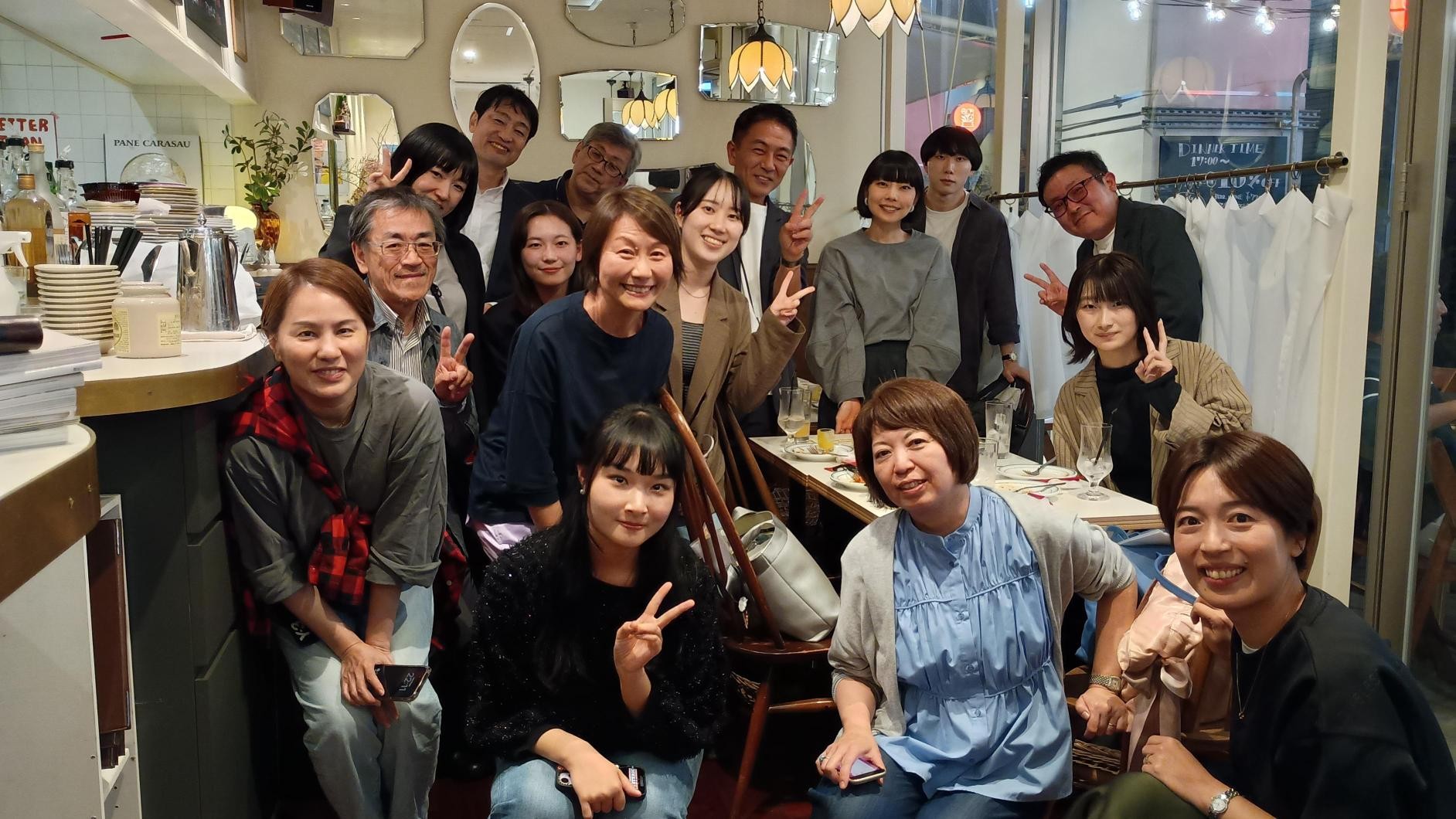
Through this night walk survey, I truly felt that Gakugei-daigaku is a town successfully updating itself while preserving its original soul. I believe the lighting accompanying the renewal under the tracks will lead the way for the town’s evolving identity. This was a wonderful opportunity to consider what “just the right light” looks like—one where the ongoing redevelopment and the nostalgic Showa-era areas enhance each other to increase the overall charm of the neighborhood. (Shiho Fujita)


Round Table Discussion Vol.74: Gakugei-daigaku Night Walk Review
2025.11.10 Noriko Higashi
We held a review session for the Gakugei-daigaku night walk survey conducted in October. A total of 14 participants joined the retrospective, with 10 attending at the secretariat and 4 participating online.
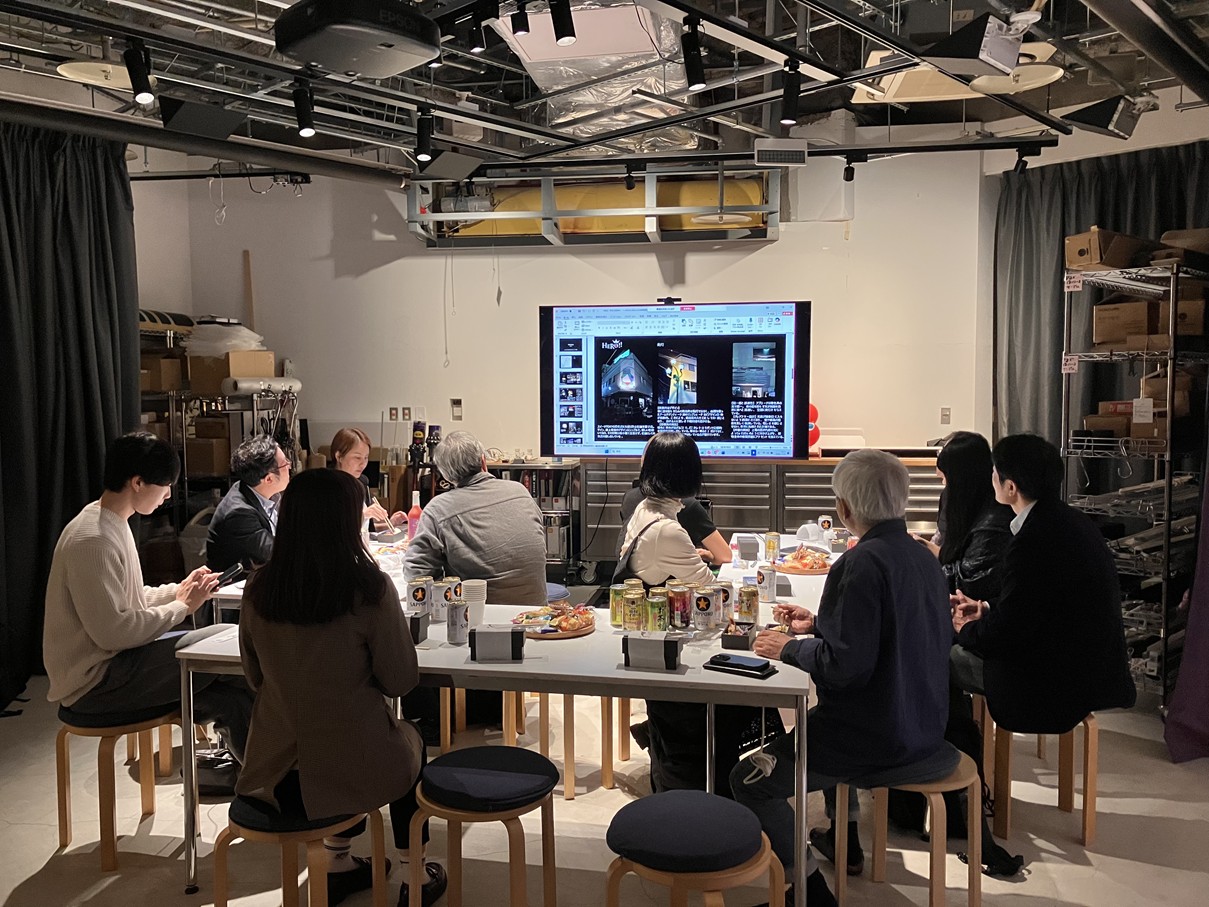
The second salon of the year at the Lighting Detectives’s office focused on the review of the Gakugei-daigaku night walk survey. Each leader from the three groups shared their findings.
Participants noted that Gakugei-daigaku was perhaps the most compact neighborhood we have surveyed to date. With the station, shopping districts, and residential areas so closely integrated, the night walk survey was relatively short at 90 minutes, yet it offered a wide variety of urban “expressions.” Similar sentiments were echoed throughout the salon.
One of the biggest surprises for many was the discovery that there is actually no “Gakugei University” in Gakugei-daigaku(university)! Research revealed that the university moved in 1964; it hasn’t been there for 60 years. While we began the walk expecting a student town atmosphere, we were struck by the relative lack of students and the strong presence of families and young professionals instead.
The most common impressions shared during the salon were that the town is a “mixture of the old and the new,” featuring “elaborate streetlamps” and “stylish redevelopment under the elevated tracks.”
The streetlamps, in particular, were a major topic of discussion. In any other neighborhood, their overly ornate designs and inconsistent color temperatures might have labeled them villains due to
the lack of cohesion. However, in this town, the overwhelming majority of opinions categorized them as heroes. There were many positive comments noting that the elaborate designs harmonize with the local atmosphere and preserve a nostalgic “Showa-era” charm. On the other hand, some of these same streetlamps were flagged as villains where maintenance was lacking—such as burnt-out bulbs or hazardous electrical setups.
With various shopping districts clustered in a compact area, traditional Japanese shops stand sideby-side with trendy new establishments. It truly felt like a neighborhood that deserves its recognition by Time Out, offering a condensed, enjoyable experience for international tourists in a short amount of time.
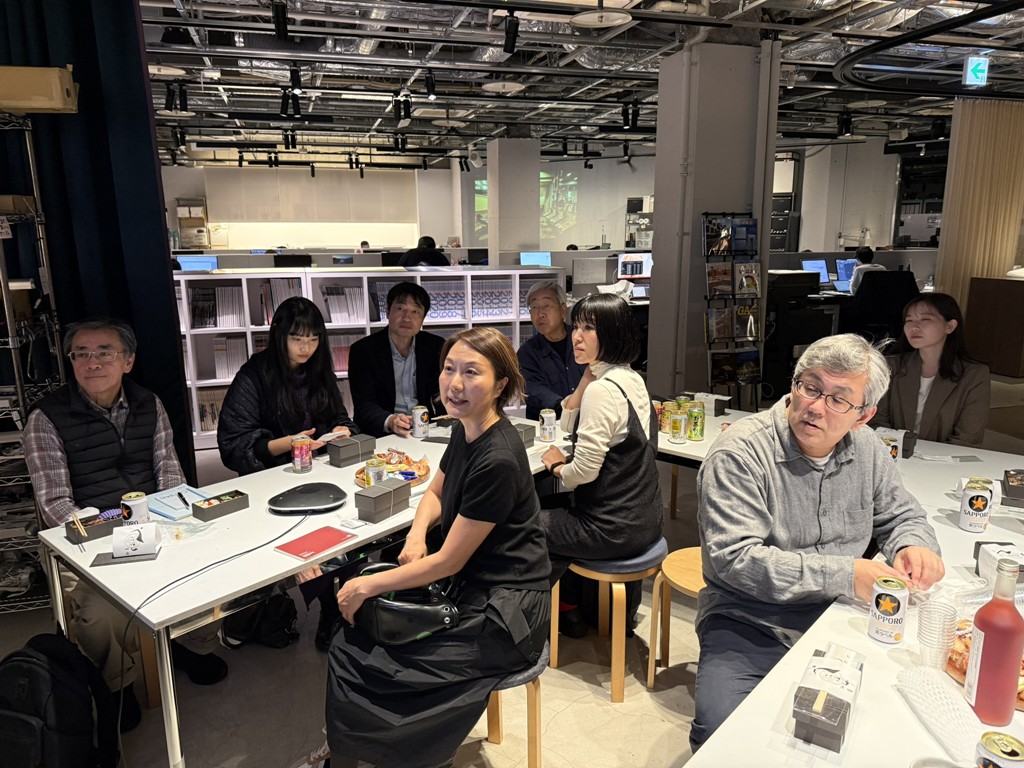

After a night walk survey, we gather again at the salon to review our findings. I truly believe there is significant value in taking the time to organize one’s thoughts after the event, rather than just on the day itself. One of our goals is to move away from the rowdy atmosphere of a typical izakaya and instead enjoy a relaxed “lighting discourse” at our secretariat office.
Even if you didn’t participate in the actual night walk survey, this is a space to share your recent thoughts on lighting or information about neighborhoods you’d like to visit. If you haven’t joined us yet, please come by and experience it for yourself.
We’ll have a delicious meal waiting for you!
Also, please mark your calendars for Friday, January 9th, when we plan to hold our 2025 Activity Report Meeting. We look forward to seeing you there! (Noriko Higashi)