Colombo ⇒ Kandy ⇒ Galle
2018/10/23-28 Momoko Muraoka + Yuri Araki
We surveyed the relationship between lighting and people’s lives in the Buddhist nation of Sri Lanka, traveling through three distinct cities: Colombo, which has seen remarkable development in recent years; and Kandy and Galle, both designated as World Heritage Sites.
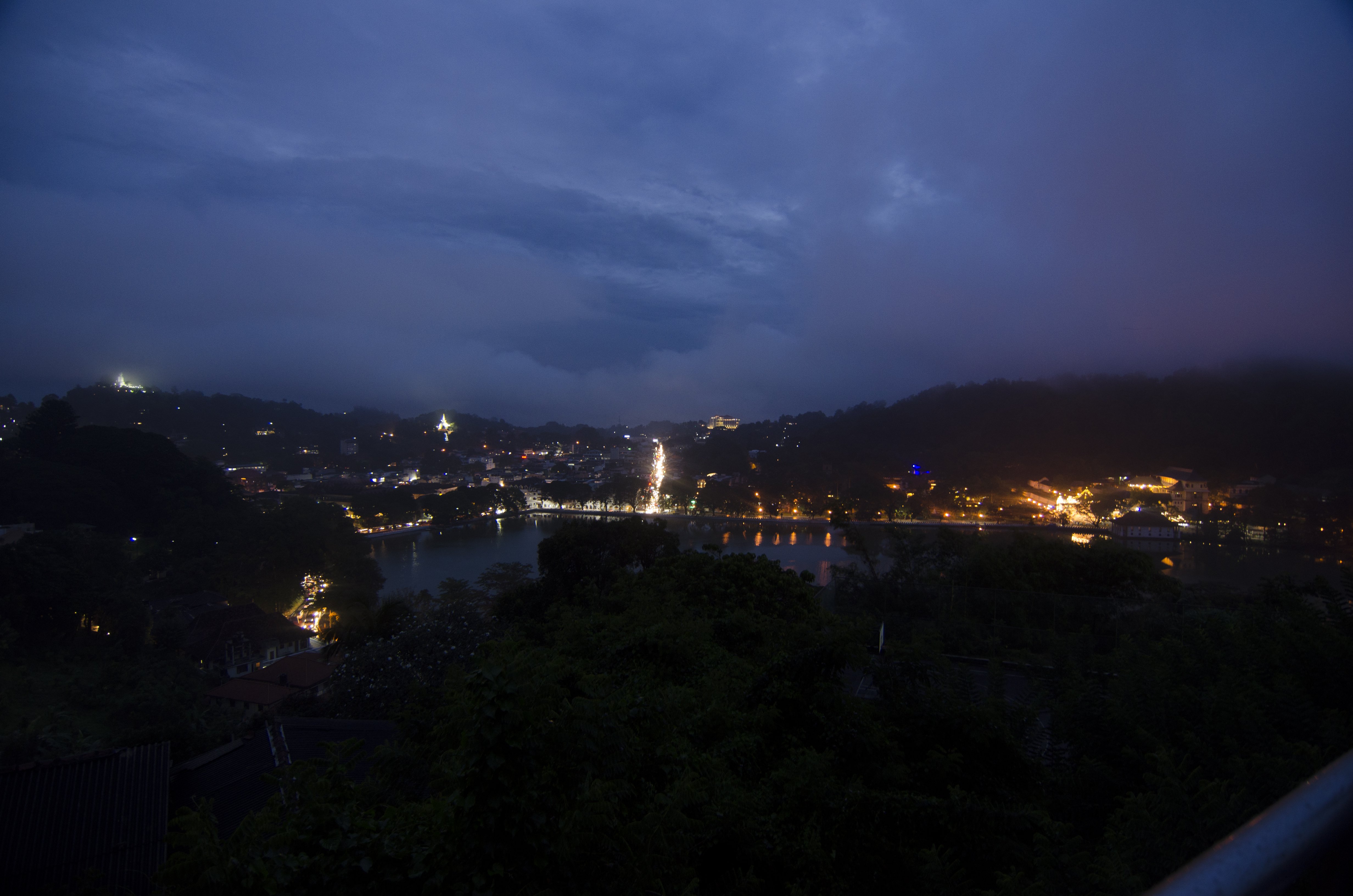
↑↑The nightscape of Kandy, a World Heritage Site. The illuminated Temple of the Sacred Tooth Relic can be seen on the right, across Kandy Lake
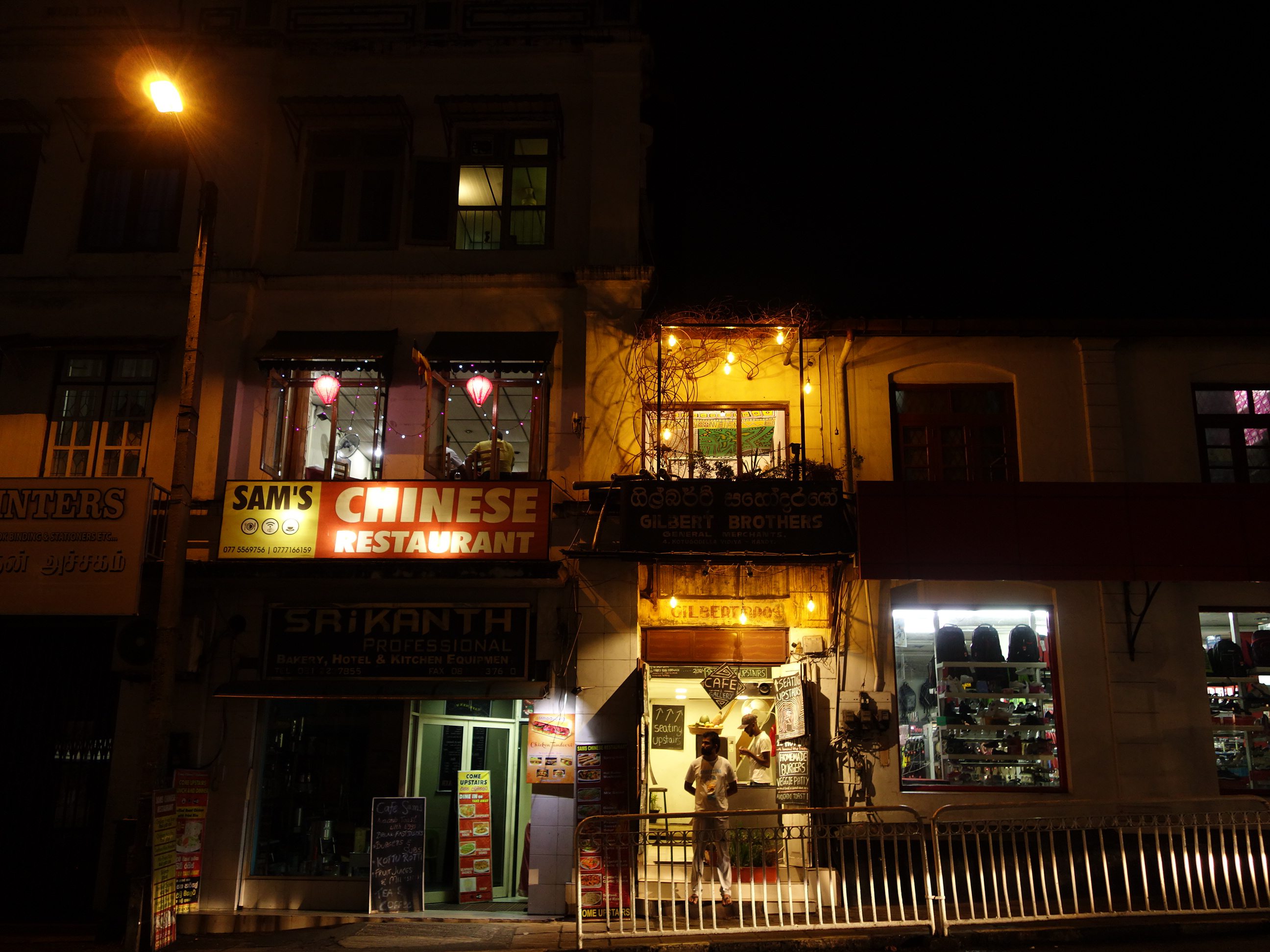
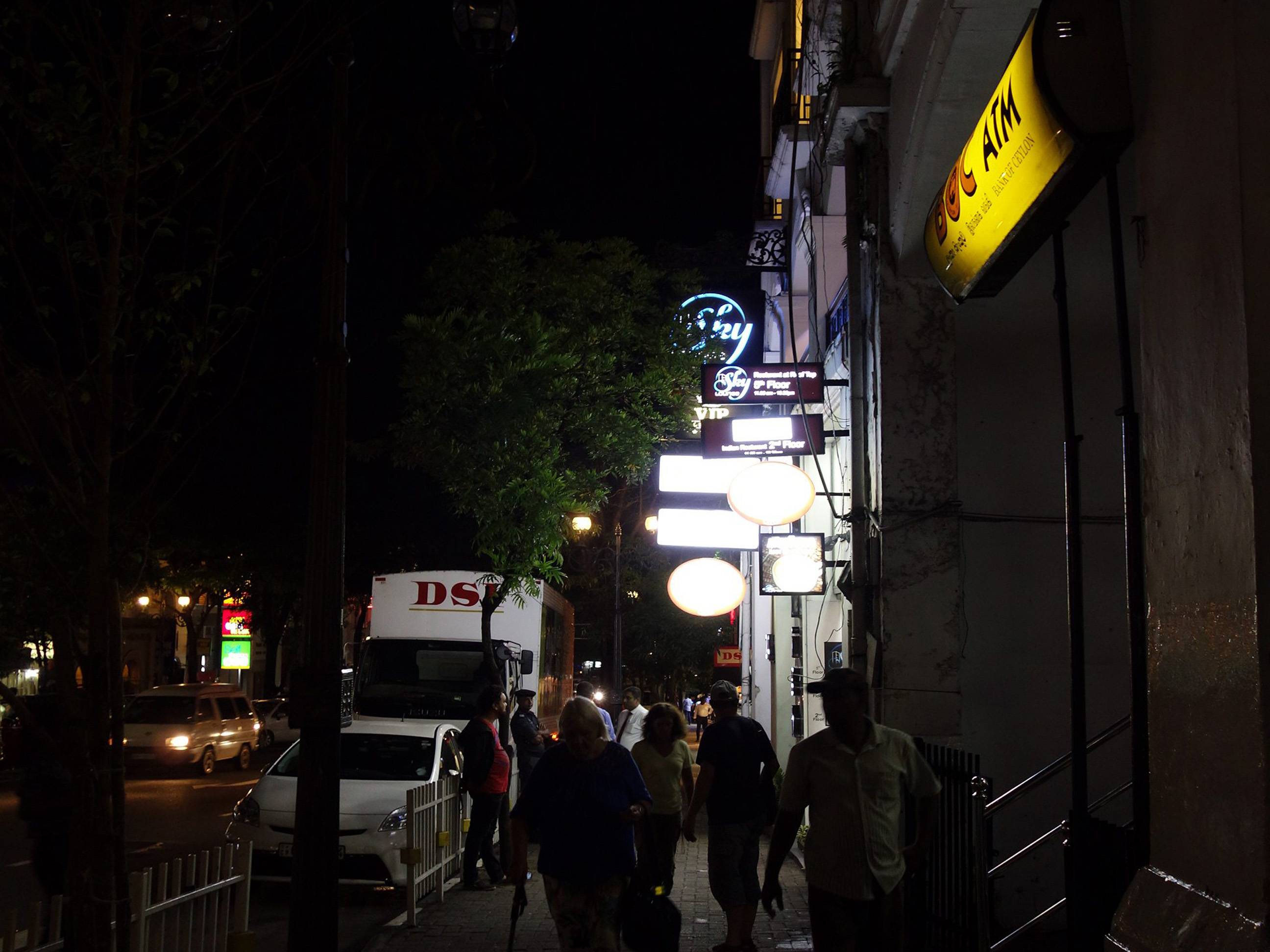
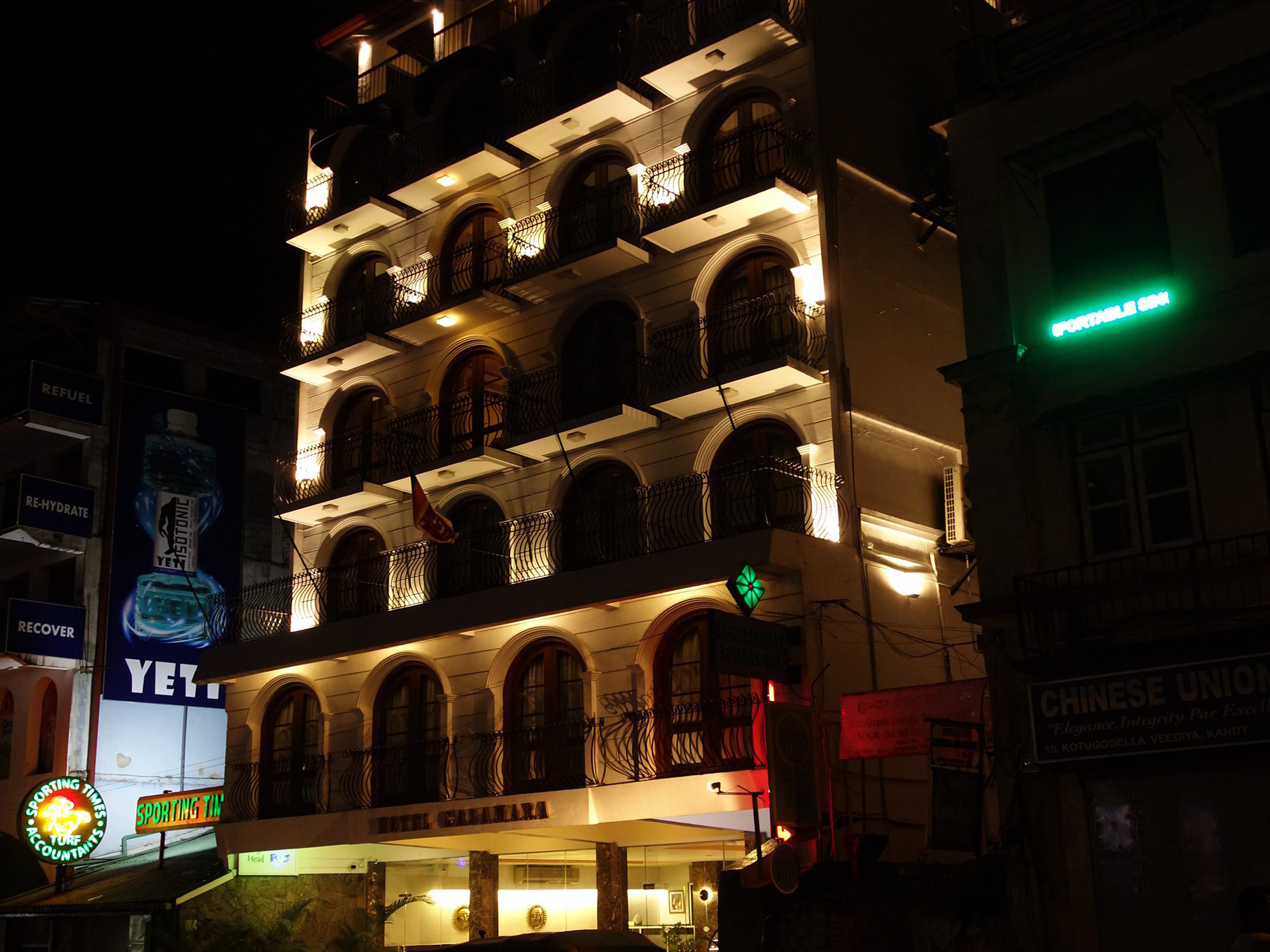
↓With few buildings featuring facade light-up or sign lighting, the nightscape is primarily formed by light spilling out from shop interiors
■What Creates the Night Streetscape of Sri Lanka
Kandy is an ancient capital and a World Heritage Site in central Sri Lanka. In the heart of the city, the Temple of the Sacred Tooth Relic—a sacred site for Buddhists—stands by the lake. Directly across from it is the colonial-style Queen’s Hotel, which evokes the British colonial era. During the day, this diverse streetscape allows you to feel the history of Sri Lanka.
However, the streetscape takes on a different appearance in the evening. Very few buildings have facade lighting, and even the Queen’s Hotel, a city symbol, is plunged into darkness. Since shop signs lack extravagant electrical decorations, the nightscape is primarily formed by light spilling out from the interiors. Compared to the streetscapes of modern cities, the scene is like a figure-ground reversal. Even the city’s largest road has no streetlights for the roadway, and the illuminance on the road surface is only about 1 lux.
In stark contrast, religious structures like the Temple of the Sacred Tooth Relic, mosques, and Buddha statues are brilliantly lit and stand out conspicuously, emanating an overwhelming presence. This suggests just how special the temples, where people offer their daily prayers, are to the people of Sri Lanka, a deeply Buddhist country.
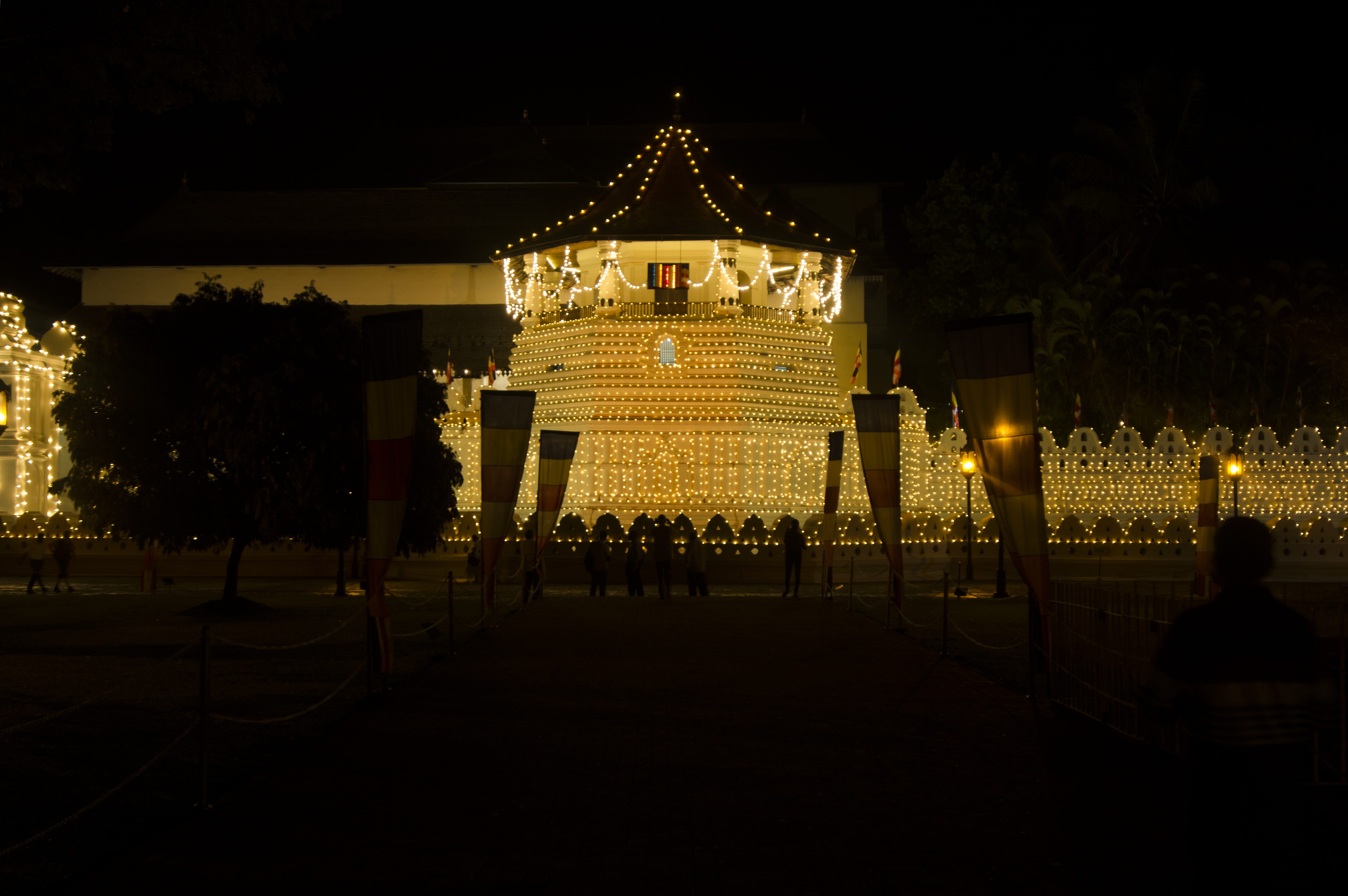
The illuminated Temple of the Sacred Tooth Relic. During the day, the brown roof stands out against the pure white exterior, but at night, the light-up gives it a completely different appearance
■Regarding Streetlights
Something that caught our attention during our evenings there was the timing of the streetlights. Sunset in late October is around 6:00 p.m., and the sky becomes dark around 6:30 p.m., but the streetlights remain off, leaving the entire city plunged into darkness. After the city’s light level completely drops for a while, the streetlights start to turn on one by one around 6:45 p.m., and the city’s brightness slowly returns. While few people go out at night in Sri Lanka currently and there are few evening activities, it seems like a missed opportunity for the entire city to be pitch-black during the time when many tourists are heading out for dinner. I believe that integrating technology like daylight sensors could bring about improvements and allow the city to become an even more vibrant tourist destination. (Yuri Araki)
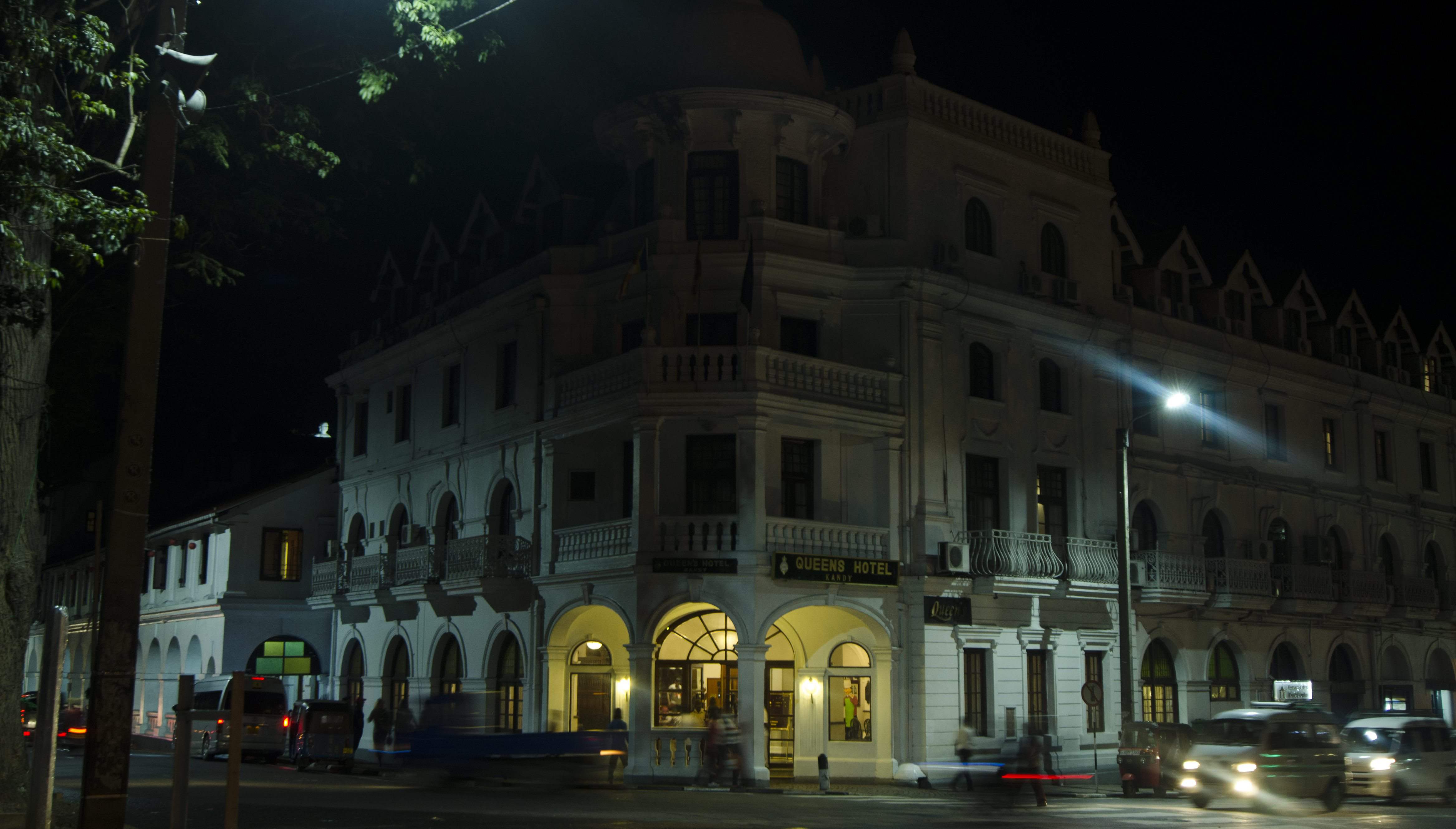 The Queen’s Hotel, a symbol of the city, is swallowed by the darkness at night
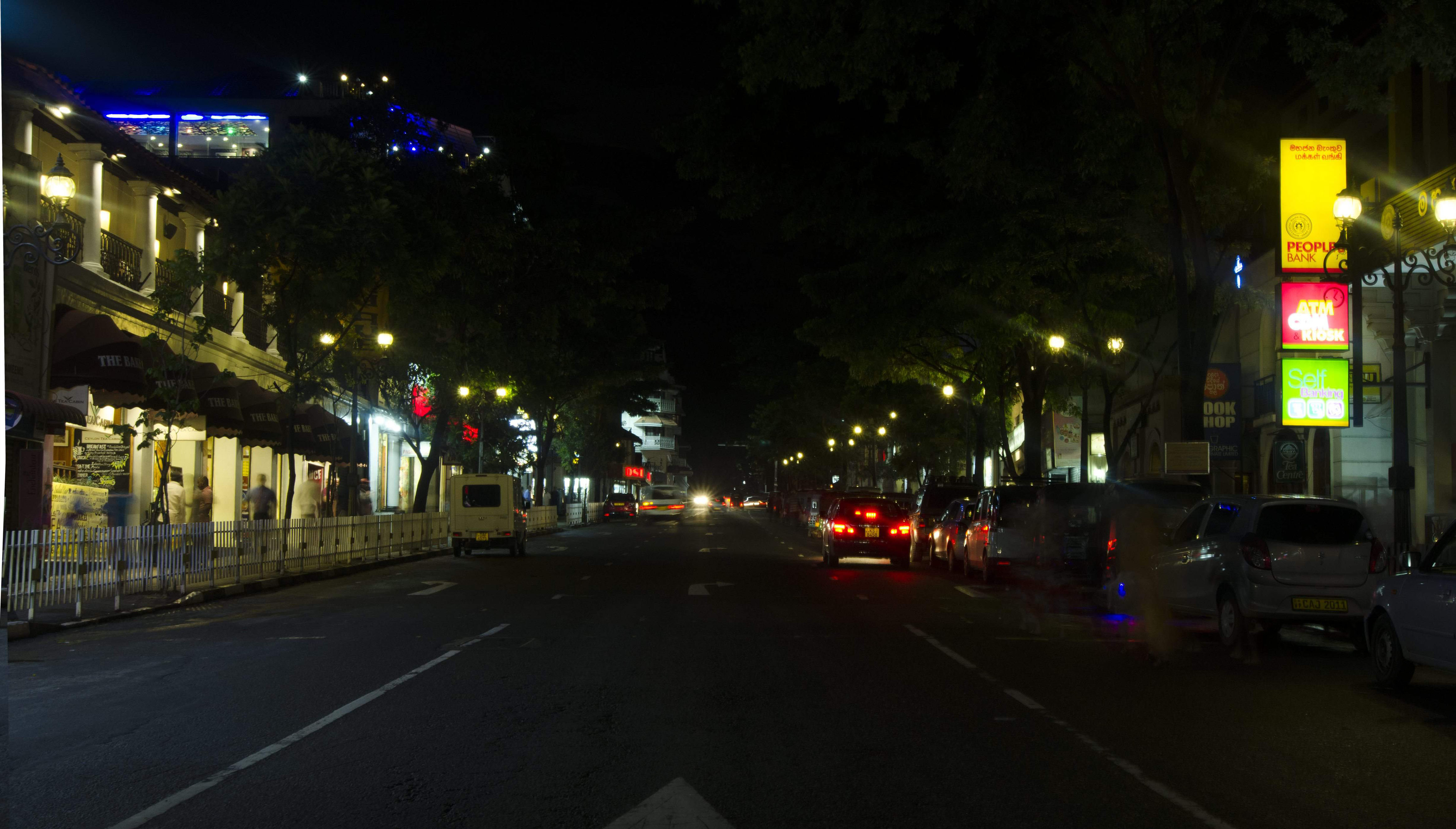 The main thoroughfare. There are no streetlights for cars, and the road surface brightness is around 1 Lux
■Galle, the Fortress City
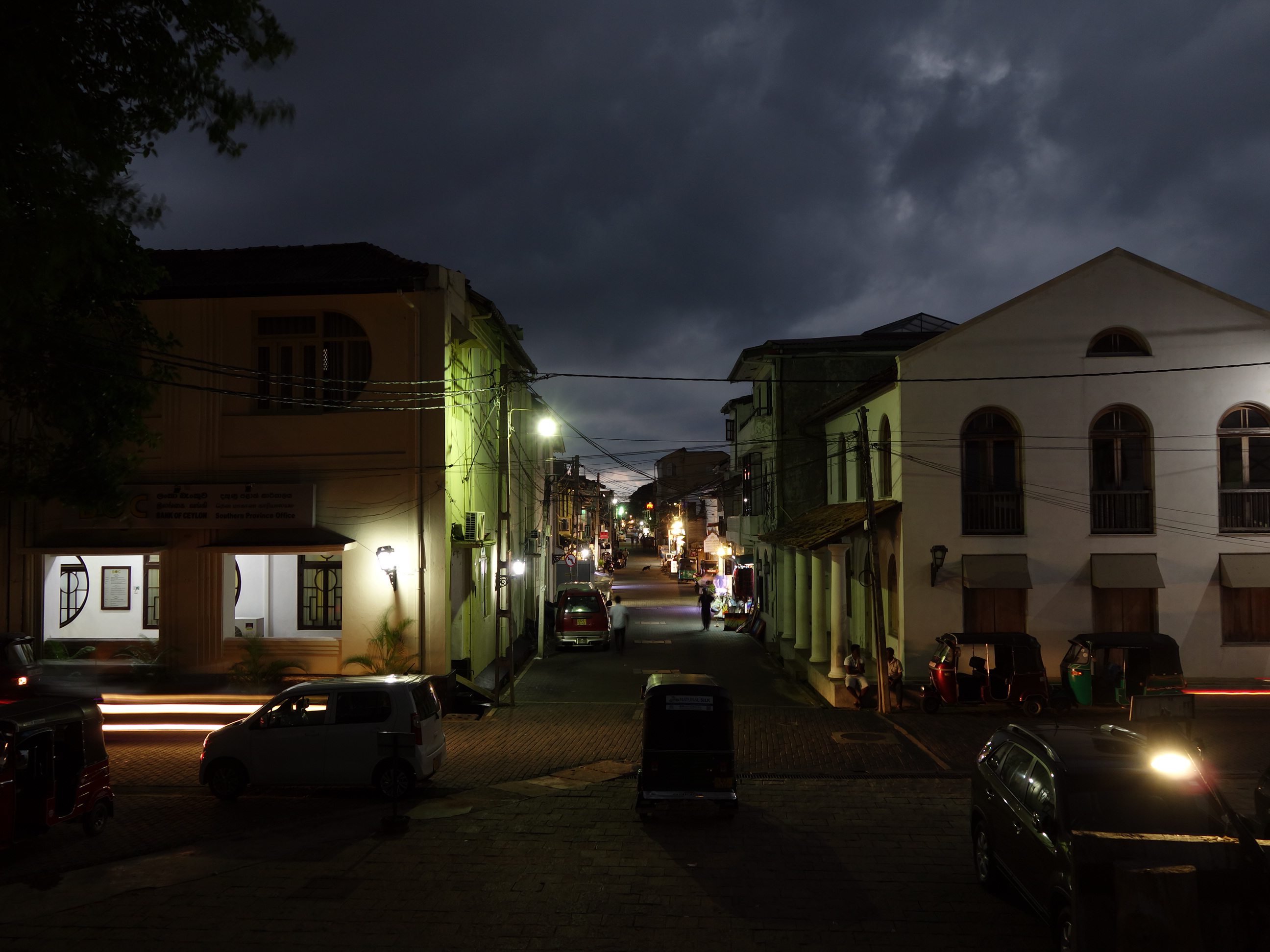 Church Street, the main thoroughfare of Galle
Galle, which has flourished as a trading hub since ancient times, is a city where the old town—a World Heritage site since 1988, enclosed by its walls and preserving its former charm—sits right next to a new city where very active economic life is visibly expressed in the streetscape. Moving between the two was an experience that felt like a strange time warp. While the old town is clearly focused on tourism, it feels freed from the pressure to overly curate its appearance, and its nightscape was completely devoid of artificial staging.
We waited for the night, anticipating that the uniform bracket lights fixed to the exterior walls would create a consistent nightscape. However, almost half of them did not turn on after sunset.
Landmarks like the churches, mosques, and the lighthouse were generally left unlit, standing quietly as if melting into the night sky. The only light that occasionally drew attention was the passing headlights of the tuktuks (a three-wheeled motorized vehicle). Although the shops displaying local jewelry were lit with high-intensity, bluish-white light, the city was otherwise a tourist destination filled with a simple, dark night—a kind of release from the self-consciousness of nightscape production, as the city seemed to go to sleep once the sun went down. When we stepped into a room facing the street, thinking it was quite bright, our measurement was only about 5 lux at low-table height. This was a city where we could truly experience a scale of brightness that was quite different from our daily lives.
Just as we began to think that this lack of focus on the nightscape in one of Sri Lanka’s leading attractions might stem from a solid philosophy on darkness, we were fortunately given the chance to hear the Mayor of Galle’s thoughts on the old town’s nightscape. The Mayor expressed a very strong interest in a nighttime illumination plan for the city. He suggested that revitalizing the lighting during the current “Low-Production Time” of 6:00 p.m. to 9:00 p.m. could lead to urban activation.
He added that they plan to gradually improve the lighting environment, starting with the street lighting along the new city’s coast, and looking into the potential use of solar power in the future.
We will watch with great interest to see how Galle’s nightscape transforms in the coming years.

A street view in Galle. Bracket lighting fixtures sharing the same design were used throughout, and the light bulbs in them were largely standardized
■Bentota and Colombo
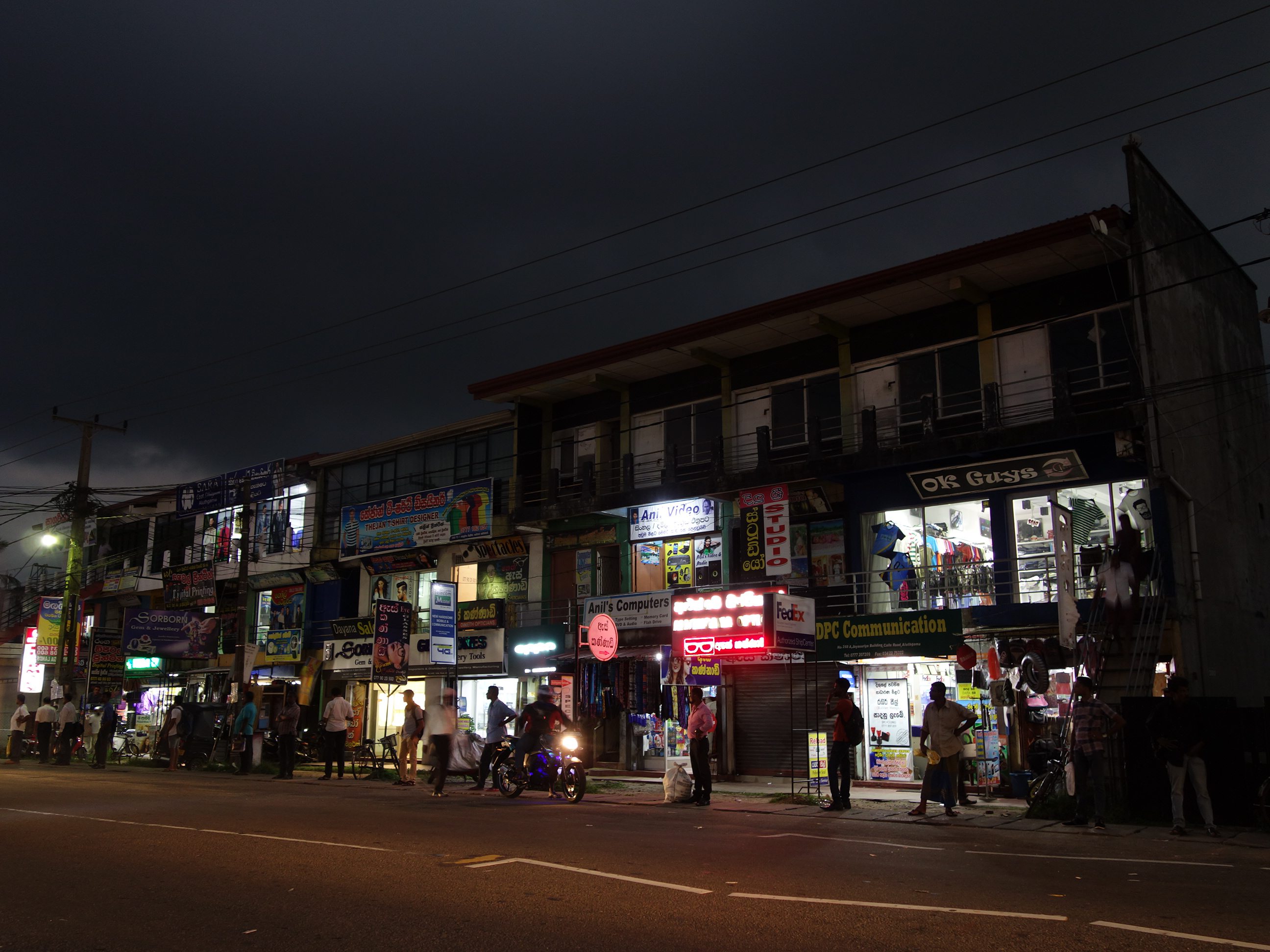 The street in front of Bentota Station
Actually, we set out on our trip even though chief Mende told us, “There is no urban nightscape in Sri Lanka.” Indeed, it was difficult to confirm any sense of a continuous night scene or light appearance across the streetscapes. Instead, what was lit up at night were the temples, or the shops asserting that they were open—it was an expression of the varying demands of the people. In the pitch-dark, high-traffic street, a continuous stream of people would gather, their silhouettes visible against the light of the shops behind them. Then, they would suddenly board a stopped bus, leaving the street illuminated only by the light spilling from the stores again. We repeatedly experienced moments where the drama of light and shadow felt like an intrinsic part of that location’s unique character.
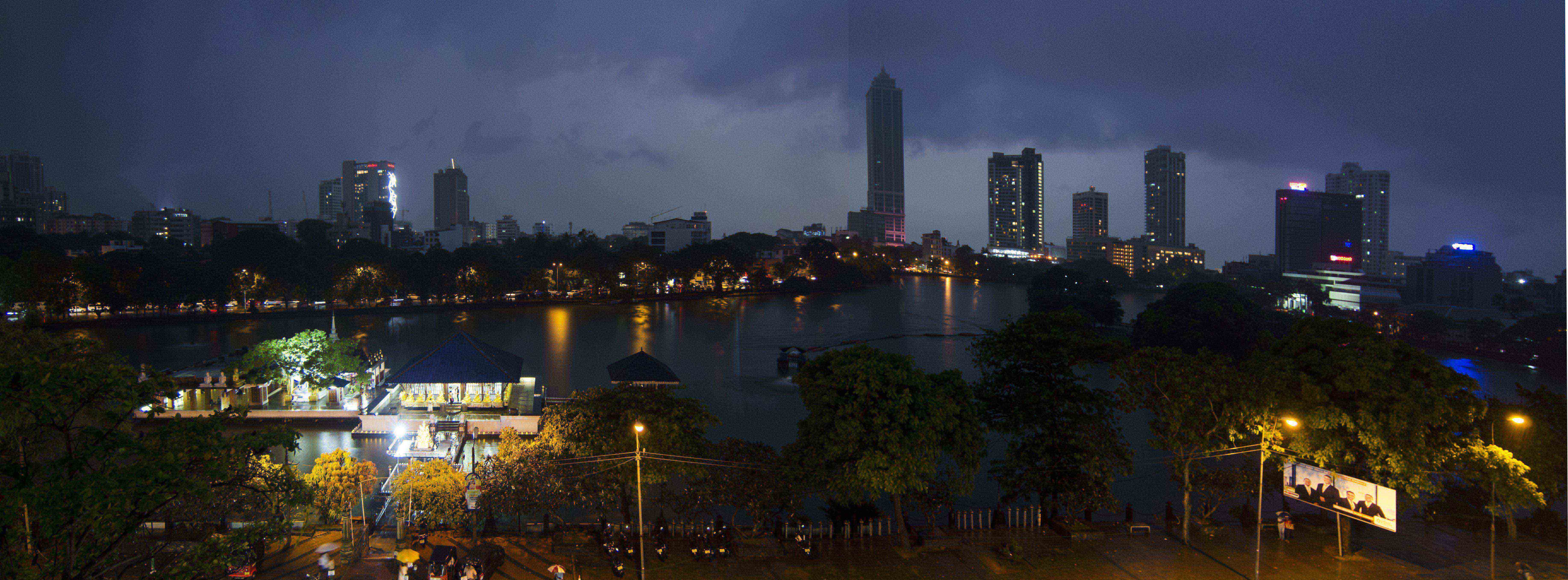
The nightscape of Colombo, Sri Lanka’s largest city. High-rise development is rapidly progressing around the temple floating on Beira Lake
■Light and Prayer
In Sri Lanka, a country where the majority of citizens are Buddhists, Buddhas are present along the city streets, often next to Bodhi trees (a sacred fig tree), and are illuminated at night like a showcase. At the Colombo International Airport, a Buddha backed by RGB color-changing lights welcomes arriving passengers along the path to immigration. Visiting a temple to pray is a daily routine for all generations, and the sight of people offering candles could be seen in many places.
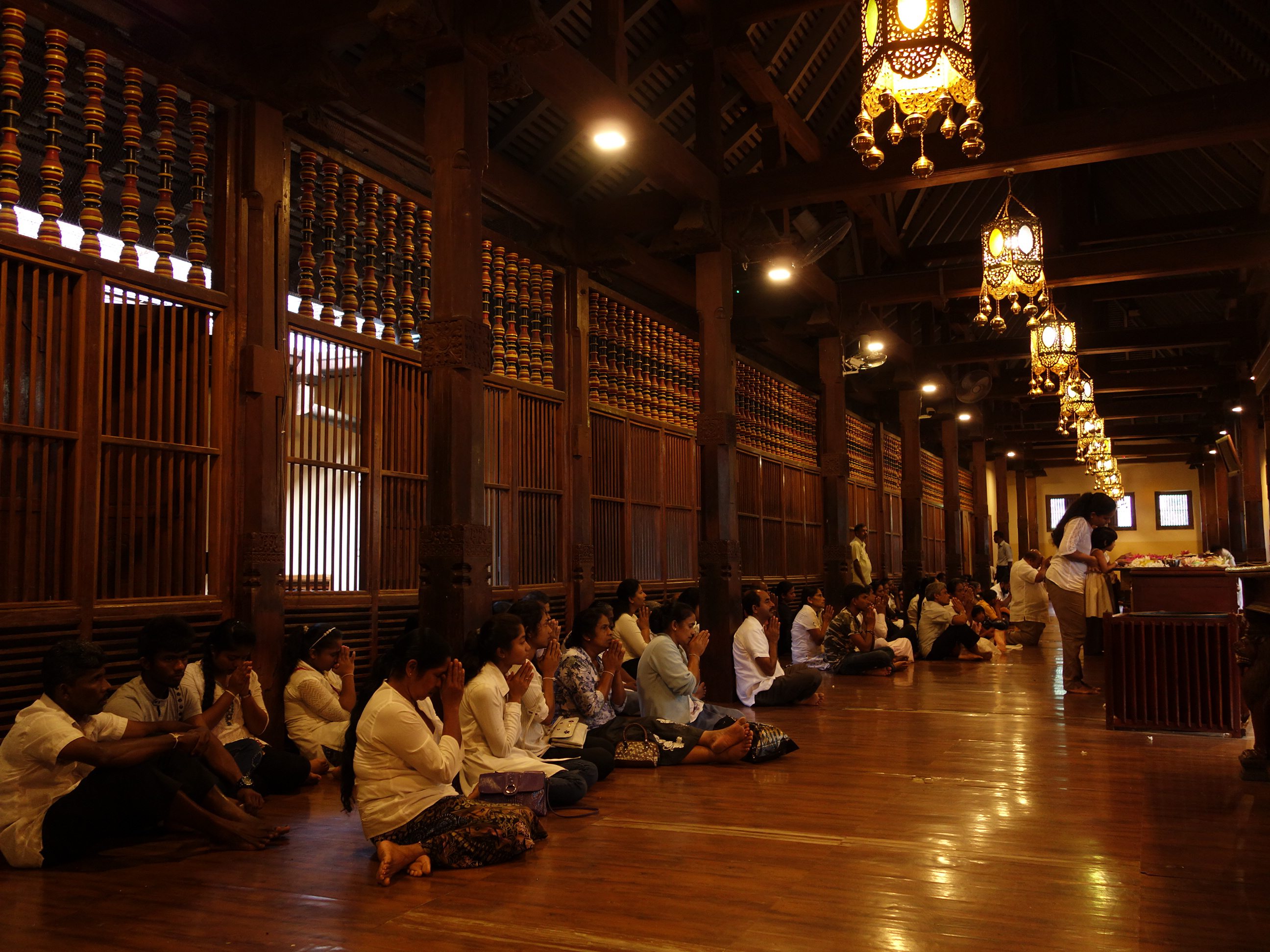 Inside the Temple of the Sacred Tooth Relic. Many people are visiting despite it being 7 a.m.
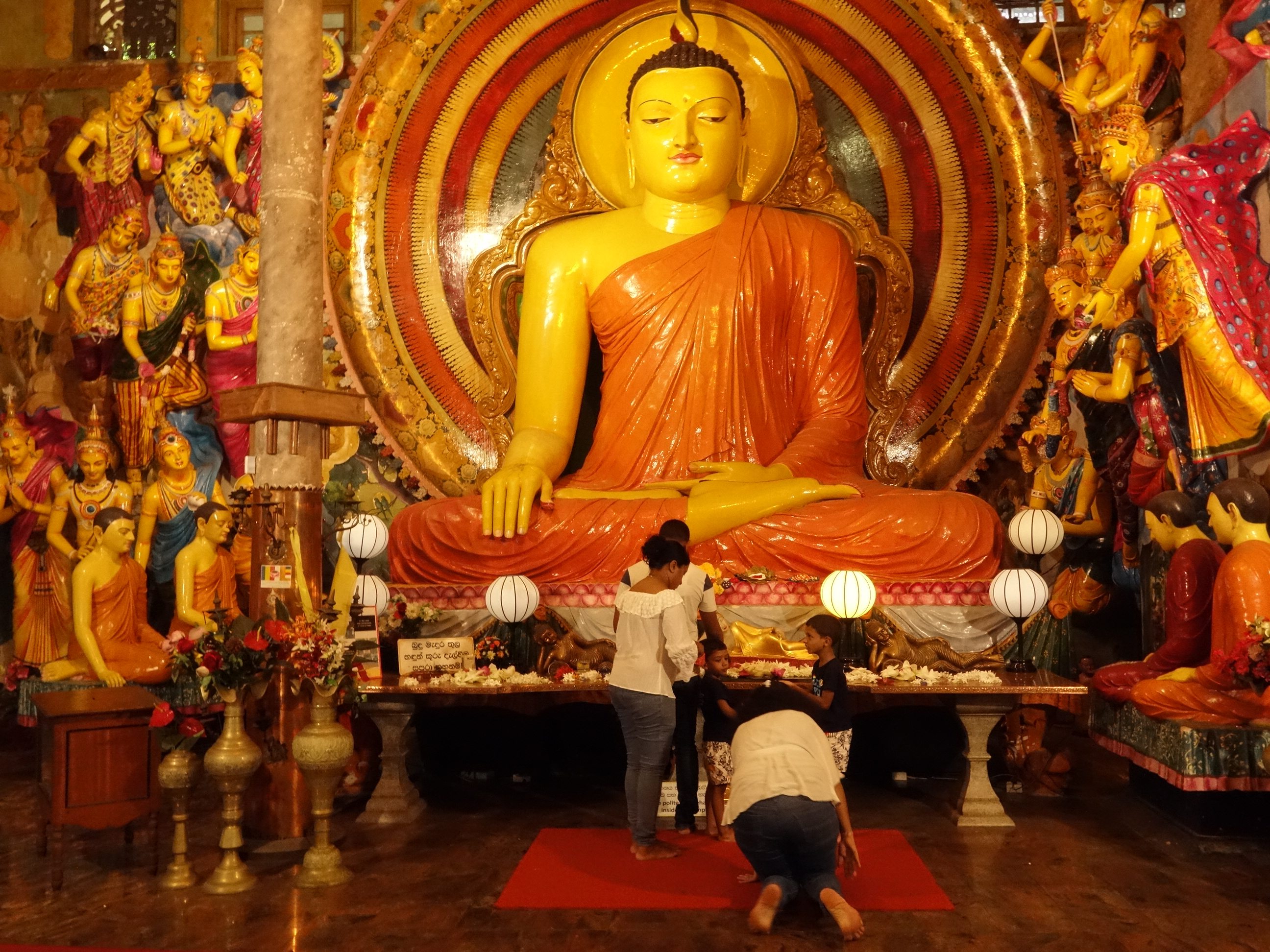 As it was a national holiday, many families in white attire visited the Gangaramaya Temple in Colombo
■Everyday Light and Illumination in Sri Lanka
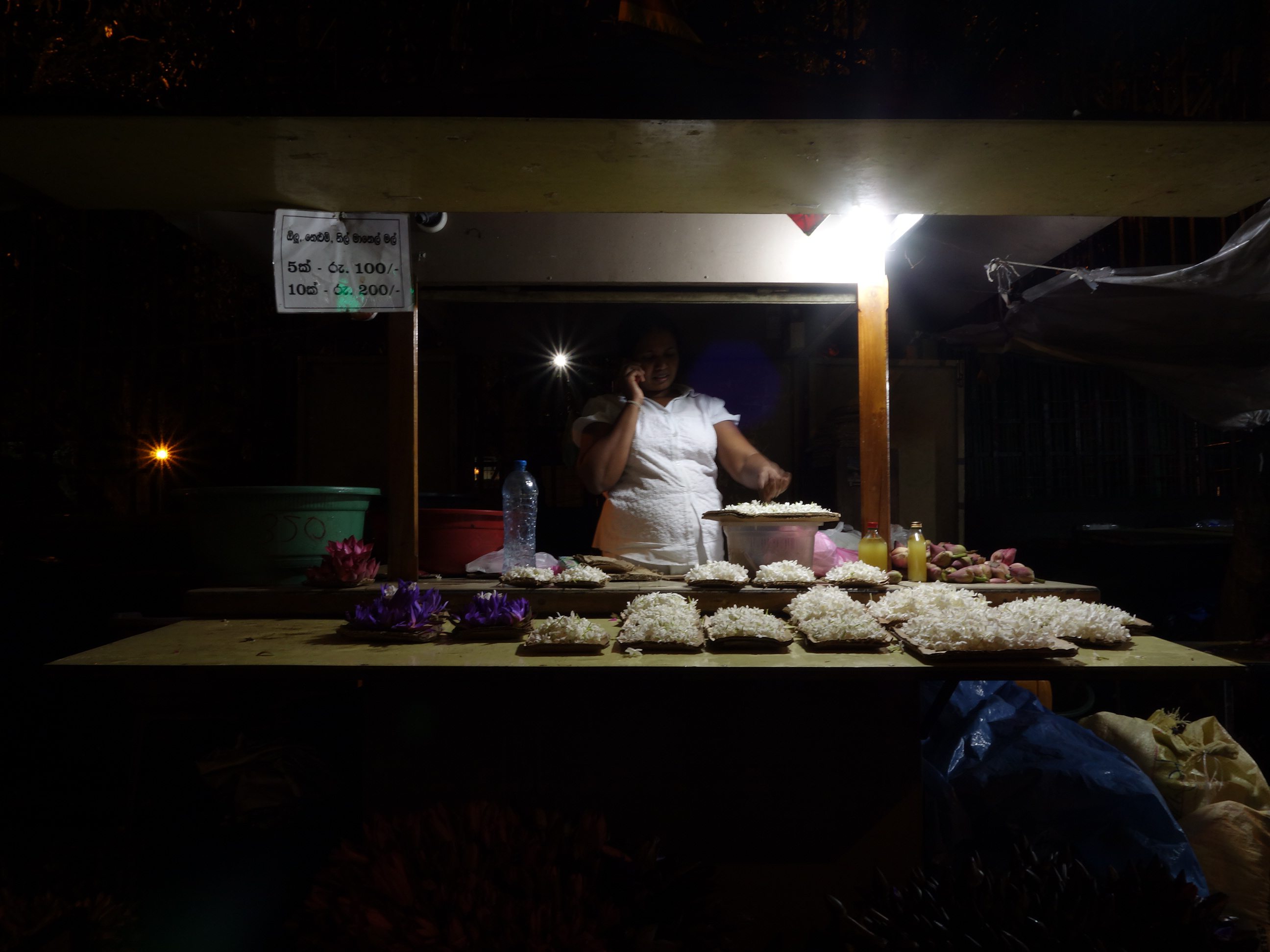 Around the temples, there is always a line of stalls selling offerings
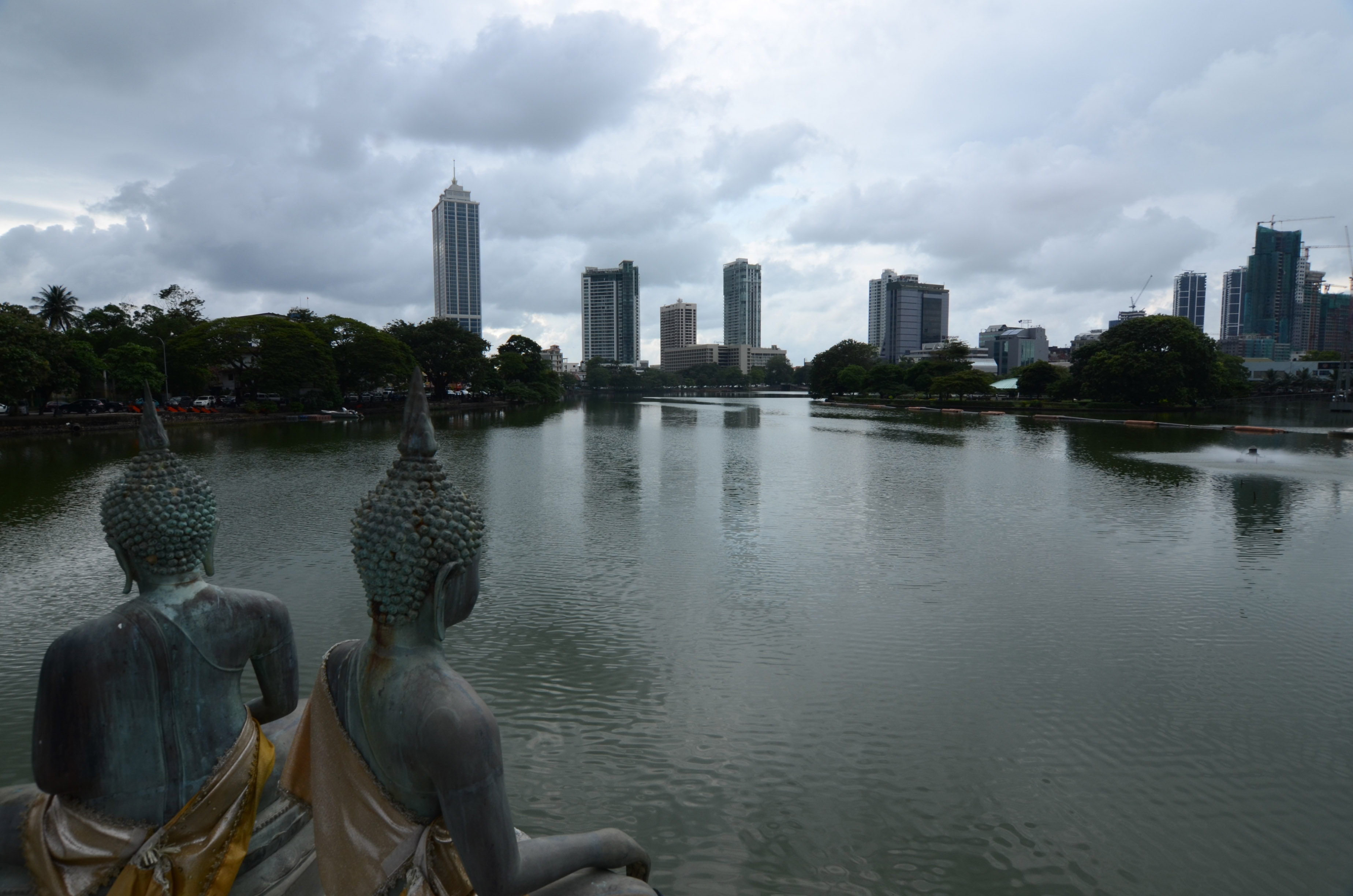 Beira Lake and high-rise buildings surrounding the Seema Malaka Temple
During this survey, we had several opportunities to experience the daylight environment that surrounds Sri Lankan people in their daily lives, such as being invited onto the rooftops of private homes to find high-angle photography spots, and visiting local offices through our contacts.
Basically, indoor lighting is not turned on during the day. People rely on the brightness provided by the reflection off walls and the road surface entering through openings, and they sometimes spend time in a completely dark interior. The contrast between light and dark that we experienced there was so dramatic that we initially thought it would be uncomfortable, but once inside, it felt very soothing and relaxed the body’s tension.
The intense sunlight created a dappled light (komorebi) that had a different impression from what is seen in Japan, with deep, captivating shadows everywhere. It was a fresh surprise to encounter such generosity towards darkness—the everyday life of a crowded market, for example, was carried out with just a small sliver of top light, suggesting that darkness is not necessarily seen as unpleasant or scary. This journey also led me to reflect on the diversity in the way daylight environments are accepted and how much variety is truly encompassed within our sensitivity and criteria for judging a nightscape.
Although we were not blessed with good weather during any of the four sunsets, meaning we couldn’t capture the stereotypical picturesque nightscape photos, I believe the evening scene, even if “less than a nightscape,” and the survey of a city with such a rich daylight character, will be a very interesting extreme point in the distribution of lighting culture diversity. (Momoko Muraoka)

The market in Kandy City. Many stalls were crowded together, with the only light coming from the slight amount of daylight filtering through the roof gaps
■Geoffrey Bawa’s Architecture
Many people associate Sri Lanka with Geoffrey Bawa, the master of tropical modernism and resort architecture. We were very fortunate to be able to stay at Number 11, Bawa’s own residence in Colombo, during this trip. Upon entering the building, the first thing that catches the eye are the pure white walls, floors, and ceilings. Although there are decorative lighting fixtures, none of them were switched on. Instead, natural light poured in from the top lights, reflecting off the white interiors and softly illuminating the entire space. The corridor connecting the entrance to the living room was breathtakingly beautiful, with art and plants exquisitely balanced in the light. We were able to experience a part of the design solution Bawa arrived at for dealing with the intense sunlight, a style he perfected while designing numerous tropical resorts. We also got a sense of how much Bawa’s architecture is loved by the people through the attitude of the staff managing Number 11.
They spoke about how difficult it is to constantly maintain the white interior but did so with clear affection and pride in preserving the building. (Yuri Araki)
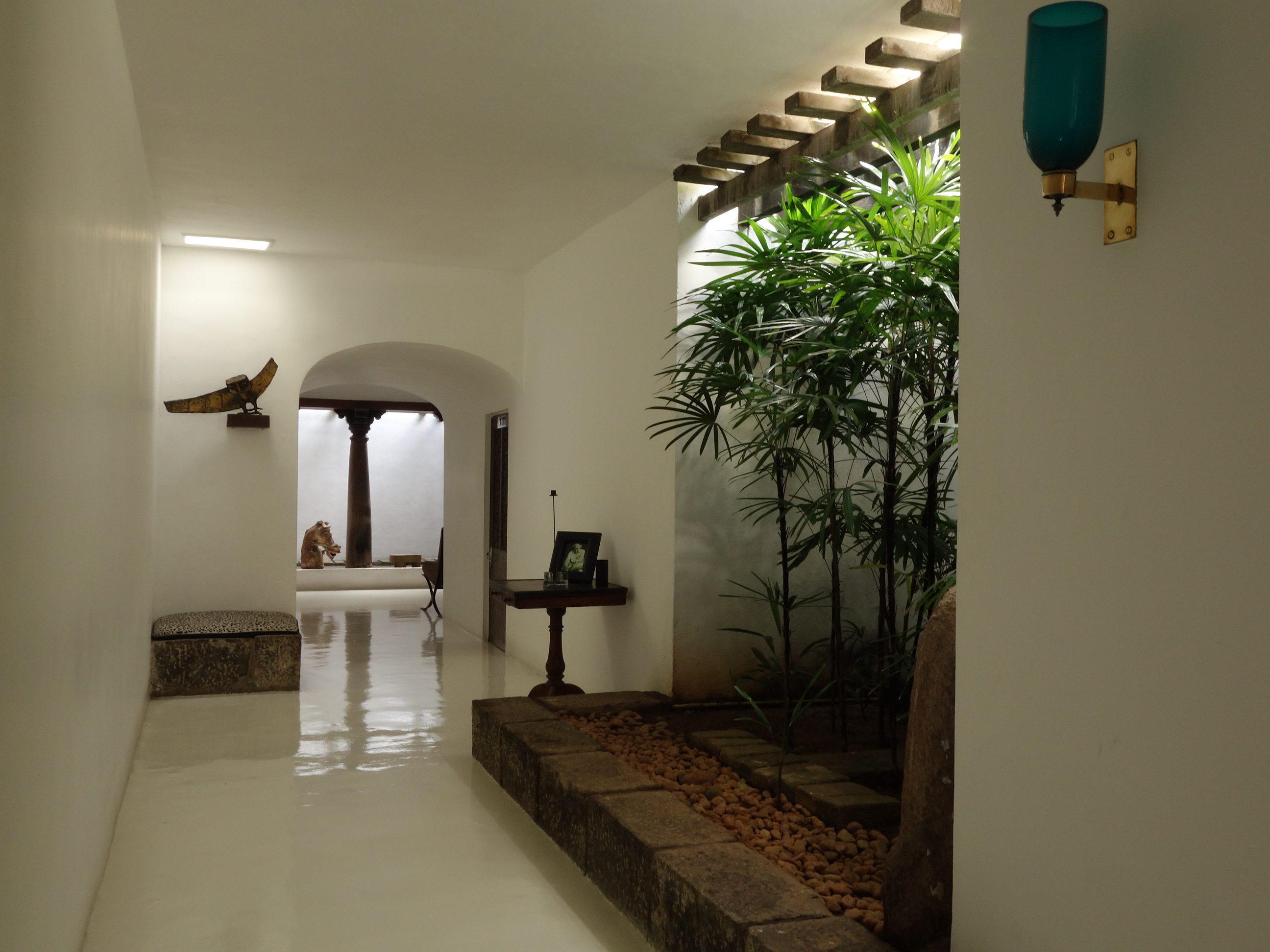 Number 11, the personal residence of Geoffrey Bawa
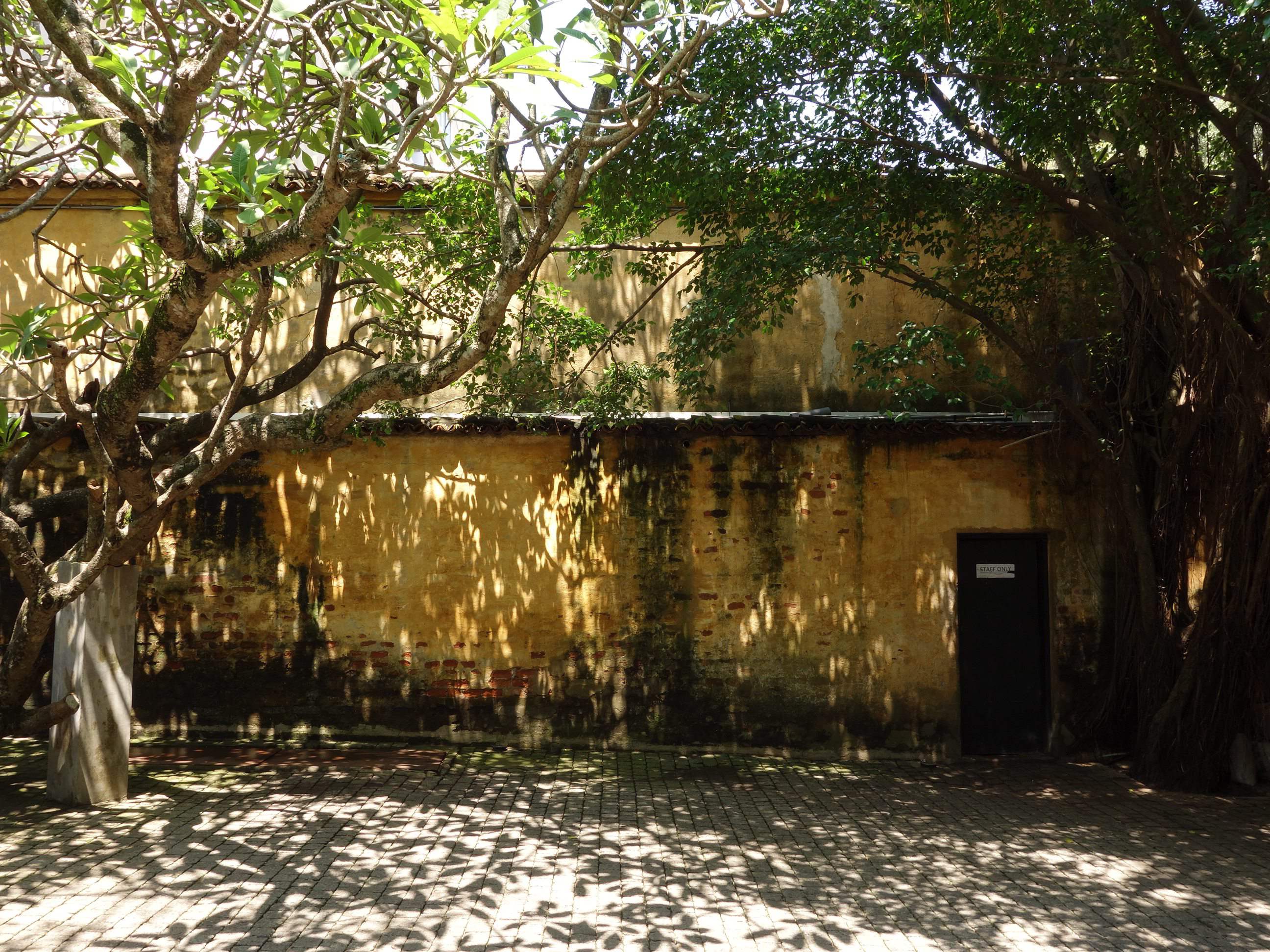 The dense greenery soaked up the strong sunlight, casting deep, rich shadows