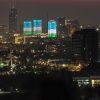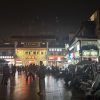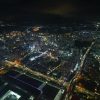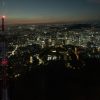
Diriyah, KAFD and Metro stations Riyadh2025.11.16 – 11.18 Gita Listia The purpose of this Riyadh lighting survey is to explore the characteristics of old urban areas and new developments in KAFD Riyadh, with a particular focus on their metro stations. The study aims to understand how each area expresses its identity through public space lighting and how lighting strategies are applied in major infrastructure such as metro station. ■Diriyah Diriyah is a historic area on the north-west side of Riyadh and one of Saudi Arabia’s most important cultural heritage sites. Located along Wadi Hanifah, about 15 km from central Riyadh, it reflects the early history of the city. Today, Diriyah is being developed into a vibrant heritage, cultural, and lifestyle destination, where historic preservation is carefully combined with modern urban design. The lighting in Diriyah is designed to be subtle and heritage-sensitive. Very warm white tones are used to complement the Najdi mud-brick architecture, creating a calm and welcoming night-time atmosphere. Pole lights and bollards in Diriyah feature distinctive shapes, patterns, and warmer colour temperatures compared to typical street lighting in other parts of Riyadh. This traditional lighting character clearly signals that visitors are entering a cultural and heritage area. ■At-Turaif At-Turaif is the birthplace of Saudi history and represents the cultural core of Diriyah. It is recognized as a UNESCO World Heritage Site. Lighting at At-Turaif is highly restrained and conservation-focused. Soft grazing and wall-washing techniques are used to gently…
2025.11.09-11.14 Jiang Kunzhi + Lin Huangyi This survey aims to explore the interaction between Soviet culture and Islamic culture within the urban space of western Tashkent, with a particular focus on whether this cultural layering has given rise to region-specific lighting approaches and expressions of the luminous environment. Therefore, a systematic field survey and documentation were carried out across the urban areas of Tashkent. As the capital of Uzbekistan, Tashkent reflects both Soviet modernism and Islamic architectural traditions. The city features large Soviet-era public buildings alongside religious architecture that blends tradition and modernity. In addition to above-ground buildings, this survey also examined the Tashkent Metro, Central Asia’s first metro system opened in 1977, where refined lighting and rich materials create museum-like underground spaces. (Jiang Kunzhi) ■Aerial night view of Tashkent Viewed from the TV Tower, Tashkent’s nightscape appears as a network of “lines” and “points” rather than a continuous illuminated façade. The road system forms the clearest visual structure: main roads and ring roads read as linear light bands, while bridges and major intersections appear as brighter nodes, creating a legible traffic framework over the city’s flat skyline. These linear elements strongly define the city’s sense of direction and scale. In contrast, most buildings remain dark at night, with their presence defined only by entrance lighting, limited window glow, and reflected ambient light. As a result, the overall background luminance stays low, allowing a few landmarks—such as tall structures or media…
Muslim District within New Development Context2025.11.06-11.09 Quratuaini Jamil + Xu Sunny The survey aims to examine the Muslim Quarter District with a focus on its religious, cultural, and urban context, while assessing how it integrates with the emerging modern development within Xi’an. ■ Brief Summary of Lighting SurveyWith a vast metropolitan population of 12.9 million—of which 4.45% reside in the urban center—Xi’an is a renowned historical and cultural hub in China that pursues an urban planning strategy blending tradition with modernity. The city integrates its rich heritage with the demands of contemporary development while carefully safeguarding key cultural areas. A prime example is the Muslim Quarter, which plays a crucial role in preserving living heritage, ethnic diversity, and the traditional urban fabric. Xi’an’s planning approach emphasizes “development within preservation and preservation within development,” reflected in the harmonious coexistence of new growth and historic architecture. Accordingly, this research focuses on how the old and new parts of the city—particularly distinct areas like the Muslim Quarter—are effectively integrated. ■Xi’An Muslim QuarterOn the first day, we observed the Friday congregational prayer at the Great Mosque of Xi’an. This visit provided a valuable opportunity to study the mosque’s internal spatial organization and architectural characteristics. The Great Mosque of Xi’an is distinctive for its unique synthesis of traditional Chinese architectural language and Islamic religious functions. It differs markedly from the Middle Eastern style—characterized by prominent domes and tall minarets—commonly seen in places like Singapore. Instead,…
2025.09.12 & 09.18 Lin Hu + Jiang Kunzhi + Lin Huangyi Shenzhen evolved from a fringe town into a high-tech metropolis in about 45 years, and its bold, sustainable urban lighting planning stands out nationally. A two-day field study examined nightscape patterns in its three CBDs, media façades in Futian, and the functional lighting design of the new Gangxia North Metro Station. Unlike older, historically rich Chinese cities, Shenzhen started as a peripheral town and in just about 45 years has become a high-tech modern metropolis. Thanks to its local legislative autonomy, Shenzhen’s urban planning is highly experimental and often serves as a model for other Chinese and even international cities. In urban lighting planning, Shenzhen is a national frontrunner: its nightscape design is bold and innovative, yet the city has also enacted special regulations for ecological protection and light pollution control, showing a clear commitment to sustainability. However, some lighting projects still spark social debate over energy consumption, light pollution, and the use of public resources. To understand more of Shenzhen’s current nightscape, the Shenzhen office team conducted a two-day field study with Mende-san and Kasai-san, focusing on three themes: 1. Nightscape of the three main CBDsWe visited the observation deck at 540 m on the Ping An Finance Center in Futian to take in the scale and layout of the city at night. Looking east toward Luohu, the skyline shows a mix of old and new high-rises, reflecting Shenzhen’s…
Songdo newcity, Inchon and Seoul city2025.10.22- 2025.10.25 Karen Huang + Xueying Piao + Xianyu Liu The purpose of this Seoul lighting survey is to explore how lighting shapes the city’s identity and cultural expression of the urban landscape in the multiple layers of Seoul.With this purpose in mind, we went to Songdo, Incheon and Seoul for the servey. ■ Songdo InchonOn the first day of our site survey, we visited Songdo International Business District in Incheon. As a flagship planned development in Yeonsu-gu, this new town represents a remarkable urban planning achievement, constructed entirely on reclaimed land – essentially a future-city built from the ground up. The district demonstrates excellent connectivity, with the core area accessible within approximately 90 minutes via bus from Incheon International Airport. By around 8:00 PM, few people are on the street. Our survey focused on the central park area of Songdo. At street level, building facades demonstrated minimal use of decorative flood lighting, relying primarily on internal illumination to create a subdued atmosphere, while the commercial districts utilized abundant illuminated signage to inject vibrancy into the urban landscape. The most critical insight emerged from the view at G Tower: the urban planning framework is distinctly articulated through strategic color temperature zoning, with residential areas at 2700K transitioning to over 5000K for landmark structures, constituting a macro-level “light planning” methodology. Simultaneously, the concentrated application of architectural lighting to tower crowns effectively reinforces skyline identity while minimizing…
2025.01.15-01.19 Masafumi Yamamoto + Yuichi Anzai About 65 years ago, a vast area at the foothills of the Himalayas was divided into districts for government functions, commerce, education, and residences, with separated roads, creating a landscape completely different from other Indian cities. This survey takes a multifaceted approach to examine Chandigarh’s urban lighting and nightscape, while observing the natural light expressions inspired by Le Corbusier’s architecture. ■Light RaysFirst, I quote the words of Le Corbusier:“Chandigarh is planned on a human scale. It connects to the infinite universe and nature. It is a place for all human activities where citizens can live a rich and harmonious life. Here, the radiance of nature and the heart is within our reach.”A vast paved ground is moistened by a dense white mist. About 180 meters ahead from where I stand, the High Court building faintly appears. Its enormous facade faces east and west. The sky behind peeks from beneath the portico, and the rays of light passing through it gently caress the huge concrete pillars painted red, yellow, and green, casting the morning sun on the ground. In this city, I encountered several lyrical daylight scenes. I believe this is because the philosophy of Atelier Le Corbusier in Paris, who designed this Capitol Complex, also extended to the urban layout. Until now, Chandigarh has been discussed mainly from an architectural viewpoint. However, I feel it has not been explored much from the perspective of…
2024.10.01-10.05 Atsushi Itakura & Genki Watanab When thinking of Mongolia, many people may imagine vast grasslands and nomadic gers, but therapidly developing capital city of Ulaanbaatar also deserves attention.Despite being only about five and a half hours from Japan, few people are familiar with its currentstate.This visit, conducted through an urban lighting survey of Ulaanbaatar, provided a valuableopportunity to discover an unexpected side of Mongolia. ■What Kind of Place Is Mongolia?When we think of Mongolia, the first image that often comes to mind is of vast grasslands stretching out endlessly, dotted with “gers”—the traditional dwellings of nomadic herders. For Japanese people, there’s also a sense of connection through cultural and historical ties, such as the shared heritage linked to the Mongolian spot (mongolian birthmark) and the many Mongolian sumo wrestlers who have found great success in Japan. Despite being only a five-and-a-half-hour flight away from Japan, Mongolia is a country that feels both near and distant—close in proximity, yet far in familiarity. Though we may feel an affinity toward Mongolia, the reality is that most people know very little about its present state. With this simple curiosity as our starting point, we embarked on a 5-day, 4-night survey of urban lighting in Ulaanbaatar, the capital of this rapidly developing nation. ■Topographical Characteristics of Ulaanbaatar Ulaanbaatar covers an area of approximately 4,700 square kilometers and is divided into nine districts. The city is flanked by hills to the north and south,…
2024.11.21-24 Chuanyi Liu + Jiang Kunzhi Hanoi, the capital of Vietnam where history and modernity blend seamlessly. Thanks to its rich cultural heritage, it has established itself as one of Southeast Asia’s premier tourist destinations. In this city where the Old Quarter, St. Joseph’s Cathedral, and Lotte Tower coexist, we explore Hanoi’s nightscape culture through the lens of light. Vietnam, a populous nation of 100 million people, has Hanoi as its capital serving as the political, cultural, and economic center as well as a key transportation hub. In July 2020, the Vietnamese government issued Decision No. 1129, promoting the development of the night economy and designating Hanoi as the pilot city for this initiative. The city’s rich heritage and unique cultural arts provide favorable conditions for the growth of Hanoi’s night tourism. Hanoi’s urban lighting exhibits distinct characteristics depending on the area and function. In the Old Quarter, narrow alleys and historic buildings create a lively atmosphere with bustling night markets. The nighttime lighting here mainly consists of creatively designed decorative lights at individual shops, which enhance the vibrant energy. Around Hoan Kiem Lake, soft lights reflected on the water’s surface and the illumination of the Turtle Tower standing in the lake harmonize to create a calm and serene nightscape. In the new urban area, modern building facades and bright LED lighting present a contemporary and sophisticated city image. Dynamic light displays further emphasize the lively spirit of the area….
2024.05.16 – 05.19 Mari Kubota+ Noriko Higashi Busan, South Korea’s second-largest city, is one of the world’s major port cities. In recent years, it has also gained fame as a hub for tourism and film. We surveyed the lighting in Busan, which is also a member of LUCI (Lighting Urban Community International). South Korea is a close neighbor, just 1.5 hours from Tokyo by plane, making it a popular destination for quick and affordable trips. Busan, the second-largest city in South Korea, is not only a tourist destination but also a major port and an entertainment center, hosting film festivals. As a member of LUCI, Busan has been focusing on urban lighting as part of its urban planning. In 2015, the city developed an extensive overview of its nightscapes, resulting in the Busan Urban Light Policy for 2030. This policy has been updated several times, reflecting the city’s ongoing efforts in implementation and improvement. The guidelines divide Busan into several zones, each with lighting tailored to its specific characteristics.We traveled to Busan to assess whether the city’s lighting contributes to safety, beauty, attractiveness, and the local economy at night. ■Jagalchi Market Jagalchi Market is South Korea’s largest seafood market, selling both fresh and dried fish. After purchasing seafood on the first floor, visitors can have it cooked and served on the second floor. The market attracts many tourists. White lights are used to illuminate the seafood, making it look as…
Nightscape in Jingmai Mountain2023.12.08 – 12.13 Kyoko Takubo + Hongna Chen Located on the southwest border of China, Jingmai Mountain is the birthplace of Pu’er tea, where the indigenous people have created an ancient tea forest cultural landscape, which was registered as a UNESCO World Heritage Site in September 2023.While working on the project, we became interested in the local culture. So we decided to survey the villages at night and to observe and report the impact of tourism development on the local nightscape. ■Introduction Visiting Jingmai Mountain isn’t easy. First, spend the night in Kunming, then leave early morning for the destination by plane or train.We had planned to fly from Langcang Jingmai airport, but our flight was suddenly cancelled. So we had to travel to Pu’er by train and grab a cab to Jingmai Mountain.During our stay, we were based in Huimin Town where our project TEA CELLAR is located. We visited Nuogang Village, Wengji Village, and Jingmai Village to observe the people’s daily life and the nightscape there. ■ Nuogang Village Nuogang Village is a historic village of the Dai tribe, where the villagers have maintained their traditional lifestyle. The first floor of the house, with its distinctive gabled roof, is used for tea production and for the teahouse. The second floor with a tiled roof is a living space.The owner of the teahouse told us that the first floor is open to guests and the family…
City Night Survey- Chiang Mai Lantern Festival 2023.11.25 – 11.29 Angkana Kongchatri (Tan)+Momoko Muraoka Chiang Mai is the second largest city in Thailand which has special atmosphere tracing from Lannar kingdom period. Tan from Bangkok and Momoko from Tokyo traveled to the city for a survey. ■Back ground of the survey The lantern festival in Chiang Mai has been getting very high attention from international tourists since a couple of decades ago. Due to its visual appeal, the festival has become an explosively hot tourist spot and activity. As number of tourists raise up, the negative side of the festival also becoming a serious issue, such as the risks of fire and abandoned trashes which cause suffering to local people. In this SNS era, the speed and frequency of exchanging information has become extremely heavy than ever. When very local culture gets intensive attention from unidentified crowds, then the one to retain the culture need to face and respond the troubles to come with the anonymous attention which is also happening on the lantern festival in Chiang Mai. Festivals with lights are attractive. However, overlooking the wastes happening materially and culturally cannot be accepted anymore. Through this survey, we aim to observe not only the bright side but also the problems and struggles behind which could relate with many other traditional lighting festivals. We believe that the approach could bring another layer of depth for the lighting detective activity with…
Lighting Survey: Nepal 2023.11.12 – 2023.11.14Mayumi Banno Xianyu Liu (Flower) Kathmandu Valley, a World Heritage Site encompassing Kathmandu, Patan, and Bhaktapur; how is the city faring now after the devastating earthquake of 2015? During Tihar, Nepal’s festival of lights, we visited the capital city of Kathmandu and the adjacent ancient city of Bhaktapur. ■IntroductionHow are Nepal’s cities faring after the 2015 earthquake? During Tihar, Nepal’s festival of lights, we visited the capital city of Kathmandu and the adjacent ancient city of Bhaktapur to explore the reconstruction and the lighting environment during the festival. From the plane overlooking the whole of Nepal, shocked by the twinkling lights of the stars. Nepal is a country with a high national happiness index, but it is also very poor. But when I saw this from the plane, I was surprised, I thought Nepal would have no lights, or very little lights. Later, I heard local people say that because it is the New Year, every family will prepare the colored lights, decoration, and create a lively atmosphere. (Flower) ■KathmanduKathmandu is located at an altitude of about 1,400 meters. In mid-November, when we visited, the days were hot and sunny, but the nights were cooler than 10 degrees Celsius. The city was filled with the hustle and bustle of the Hindu festival of Lakshmi, the goddess of wealth and happiness, to pray for wealth and health, and the New Year who live in this region….
City Night Survey – Taipei & Taichung, Taiwan 2023.10.30 – 11.04 Genki Watanabe+Hikaru Kimura Office of the Governor-General Taiwan is geographically close to Japan and has deep historical ties. It is famous for its skyscrapers such as Taipei 101 and, more recently, for buildings designed by Japanese architects. Renovations of old buildings are also being actively undertaken. We investigated how the mixture of old and new influences the light and human activity in the cities of Taipei and Taichung. Taipei and Taichung The capital of Taiwan, “Taipei” is characterized by world-class skyscrapers such as Taipei 101 and streetscapes that retain historical architecture. In addition to new buildings, there are also many renovations of existing buildings, creating a city with a mixture of old and new architecture. Taichung has become the second largest city in Taiwan in terms of population in 2017 as a result of government-led urban development efforts in recent years to disperse the over concentration of the metropolis in Taipei.We investigated how Taichung, planned as a compact city, affects the city’s light and human activity, and how it differs from Taipei’s light. The nightscape of Old City (west side) from Taipei 101 Taipei’s Urban Area Taipei’s urban area can be roughly divided into two areas. The west side of the city is the Old City, where historical buildings still remain. Many important political centers are still located on the west side, and historical buildings are still used as administrative…
2023.09.22 – 2023.09.26 Ke Yonglin + Chuanyi Liu
Chong Qing Lighting Survey 重庆史光: Re-Celebrating History of Light 2019.07.04 – 2019.07.05 Clement Lee + Iwata Masahiro Located in the upstream of Yang Tze Basin, Chong Qing serves as one of the manufacturing, transportation and commercial hub of China. Caught within rapid infrastructure changes, this survey seeks to uncover the methods for Architectural and Lighting preservation efforts to reflect the ancient Clement Lee + Iwata Masahiro traditions from the dynasties. Ci Qi Kou Old Town highlighted with linear architecture facade lighting contrasting the light blue canvas sky of the evening Old town of Ci Qi Kou (磁器口): Cultural Hub of Chong Qing Chongqing is a technologically advanced city situated in the mountains of southwest China. With a rich history of being a major economic hub, Chong Qing was propelled to earn a place in the top 13 megalopolises of China. With the theme of understanding and exploring the cultural traditions of Chong Qing, we set out to discover its customs and efforts to preserve the rich traditions which create the unique character that separates this Sze Chuan-influenced province from the other major cities of China. We began at the heart of the city: the old district of Ci Qi Kou. This old town is currently filled with shops sells goods and traditional food of the old Chongqing. A modernized trading hub that reflects the bustling old port to trade porcelain along the Yangtze River. It was a commercial hub for pioneers back in the…
Colombo ⇒ Kandy ⇒ Galle 2018/10/23-28 Momoko Muraoka + Yuri Araki We surveyed the relationship between lighting and people’s lives in the Buddhist nation of Sri Lanka, traveling through three distinct cities: Colombo, which has seen remarkable development in recent years; and Kandy and Galle, both designated as World Heritage Sites. ↑↑The nightscape of Kandy, a World Heritage Site. The illuminated Temple of the Sacred Tooth Relic can be seen on the right, across Kandy Lake ↓With few buildings featuring facade light-up or sign lighting, the nightscape is primarily formed by light spilling out from shop interiors ■What Creates the Night Streetscape of Sri Lanka Kandy is an ancient capital and a World Heritage Site in central Sri Lanka. In the heart of the city, the Temple of the Sacred Tooth Relic—a sacred site for Buddhists—stands by the lake. Directly across from it is the colonial-style Queen’s Hotel, which evokes the British colonial era. During the day, this diverse streetscape allows you to feel the history of Sri Lanka. However, the streetscape takes on a different appearance in the evening. Very few buildings have facade lighting, and even the Queen’s Hotel, a city symbol, is plunged into darkness. Since shop signs lack extravagant electrical decorations, the nightscape is primarily formed by light spilling out from the interiors. Compared to the streetscapes of modern cities, the scene is like a figure-ground reversal. Even the city’s largest road has no streetlights for…
City Survey in Qatar/Azerbaijan 2018/02/12-02/17 Masahiro Iwata + Hikaru Kimura We went to Qatar and Azerbaijan from 12th to 17th February for 6 days for lighting survey. Both of countries are oil producers, and have been developed with oil money. Qatar and Azerbaijan are located on similar longitude, however each urban landscape has been developed in different ways according to their history. Qatar is an emergent country, which benefits from oil money. High-rise buildings has been built on vacant huge desert, and the gulf coast has been developed for attracting wealthy class in around the world. On the other hand, Azerbaijan still faces a problem which a lots of refugees by the past war have hard lives, even it is in bubble boom and it benefits from oil money as much as Qatar. They have redeveloped the old town, which is world heritage. We surveyed lighting in these two countries, where electricity expenses are free by benefit of oil money. Sketch of the road lighting ■Qatar, Capital city Doha Doha used to be described as “the most boring city in the world”, where there were no accommodation and entertainment facilities according to its closed policy. Today luxury hotels and huge shopping malls has been built, and it has become a bustling city. There are lots of buildings painted the current president’s face on the façade. These buildings are by pocket money of president or owned by the government. The buildings along…
Lighting Survey in Mumbai 2017/10/02-10/07 Mikine Yamamoto + Leon Hitsu We researched the biggest economic city of India, Mumbai. It is located west coast of India, which was used to call Bombay. This is the second time we researched this city since we last did in 2004. The goal of this research is to compare how its architecture and lighting have developed, and to compare with Navi Mumbai (New Bombay) developed as a new city of Mumbai. Dhobi Ghat is an outdoor laundry with more than 100 years of history. It is used as a laundry in the daytime, though people lived there and felt a sense of life in the nighttime. The contrast with the skyscraper in the background is very Indian. The building in front of the station. Building was carefully lit up with orange color. Mounting details. The hood was installed in the fixture in order to avoid glare when seen from the front Arriving at Mumbai hotel after the sunset, from the taxi on the way to the hotel, I only saw street lights that lit the street, and the city that was on the background looked dark and sunken. We expected that it was developed like China where a number of buildings lit up, but there was no building that was illuminated. The situation didn’t change even in the city, with only seeing street light illuminating the building a little. Entering the central part of the…
2014.06.24-06.29 Ai Sohara+ Mami Ichida With the population of 60 million and the 2nd largest country in South East Asia, Myanmar has not yet been well-known to the world because of its isolated policy for over a half century. Reforming as a democratic nation in recent years, Myanmar is now developing very rapidly and its cities are witnessing fast urban growth. The survey was made to “unveil” the role of light in three different cities. Sulepaya, View from the Surepaya As darkness falls over Yangon, the former capital of Myanmar, golden pagodas enhance its majestic presence in contrast to the modest living environment. These brilliant pagodas symbolize the faith of the local people. Street light at Naypyidaw Nay Phi Taw, the vast but empty new capital, seems the only city without electrical problems. Unlike other cities, road and public facilities are built with lighting technology and are well maintained. View from the Shwesandaw Pagoda The winning light in Old Bagan, where almost no artificial light can be seen, is absolutely during dusk. Watching thousands of pagodas turning into silhouettes and eventually merging into darkness creates the impression as if you are traveling back to ancient times.
2014.03.31-04.06 Genki Watanabe + Hu Lin Dubai which becomes a hub in the Middle East. Since 2003 decade, sustained economic development of urban construction at the same time, decoration, lighting, etc also has a very significant change. This time, we investigated the city lights and light of life. View from the Burj Khalifa Dubai is separated by an old town from new town. From the birth of the new urban area in the desert, about the lights of the messy no uniformity, glare is very much also. Is old town which is driven by the local way of life, have a certain order of light in the evolution of the light environment. Too light or too dark in the space is more, the overall light environment in a state of disharmony. In a city there are two completely different forms of development order, and are looking forward to Dubai in future how to plan more mature light environment. The Dubai Mall Dubai’s sunshine time is long, many architectural practice break hot also consider natural lighting. In the Dubai mall every space has a unique Islamic architecture design, Ceiling. Interior lighting and day lighting harmonious blend in together. Day lighting is a good example. Deira Gold Souq Deira Old Souq (Spice Souq) Signboard light in old town