RELATED POSTS
View of Shenzhen from Saige Paza
High-rise apartment buildings in Shenzhen
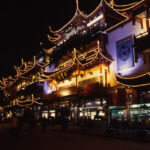
Architecture of Shanghai
YOU MIGHT ALSO LIKE
12th Annual TNT Forum:2015 / Mexico City
12th Annual TNT Forum:2015 / Mexico City 2015.11.19-21 The world`s most populous city, Mexico City. A city with a long history and lots of charm, this was the venue for the 12th annual Transnational Lighting Detectives Forum, the largest forum in the books yet. Architecture students from the Universidad Nacional Autonoma de Mexico (UNAM) were the center of the 3-day forum focusing on SENSING LIGHT – FEELING LIGHT. The Mexico City nightscape comes with many problems and we worked with local students to examine how local residents asses the nightscape and addressed ideas for improvements or upgrades. Presentation on Last day of the forum ■Day 1: Orientation The orientation was held at the Museo de Luce, a building over 400 years old. The workshop started by dividing into 6 teams of 10 participants and 2 TNT members. Museo Medicine Museo de Luz ■City Night Walk Asking question during Night walk The night walk focused on six distinct areas in Mexico City. 1. Plaza Santo Domingo, an area bustling with people during the day. 2. Temple Mayor Area, an area of Aztec ruins. 3. Madero Zocalo, a historical area popular with tourists. 4. Alameda Park, the oldest park in Mexico City is also a local oasis and place of relaxation. 5. Revolution, the area near the Monument to the Revolution. 6. Reforma, the central business district. These are places people seem to gather also at night, but also have visible problems…
City Night Survey:Honolulu
2025.09.04-09.08 Yonglin Ke + Masashi Kurobe The nights in Honolulu are a diverse blend of resort illumination, residential lights, torches, and night market glows. However, as the city develops, the starry sky is fading, raising concerns about the impact on the local ecosystem. Balancing urban growth with light pollution countermeasures remains a significant challenge. We conducted an on-site night walk survey to explore the balance between the city and nature and to evaluate the current lighting environment. ■Honolulu Honolulu, the capital of the U.S. state of Hawaii, is a prominent tourist destination in the heart of the Pacific Ocean. Simultaneously, it serves as the political and economic hub of the state. In this land where the sea, mountains, and urban areas sit in close proximity, the nightscape reveals a variety of expressions depending on the time and location—blending the glow of resort hotels, the soft lights of residences, traditional fire torches, and the vibrant lights of night markets. Furthermore, the combination of intense sunlight and a tropical climate creates a unique character within the city’s lighting environment. On the other hand, urban development and the growth of the tourism industry have negatively impacted the visibility of the starry sky and affected local ecosystems, such as migratory birds and sea turtles. While the state and city have begun implementing measures to reduce light pollution, finding a balance with the tourism industry remains a challenge. During this night walk survey, we investigated…
Candle Night Winter Solstice 2005: Lantern Light @ Omotesando
22 December 2005 It was a chilly winter night for the December 22, 2005 Candle Night event. Across the street from the new Otomesando Hills construction site in the final months of opening-day preparations, soft, warm light danced along the street at this festive, bi-annual event. Lantern Light This winter was the fifth time for the Lighting Detectives to be involved with Candle Night, a countrywide event. Since last summer, the local event has moved from Cat Street, a small side street connecting Harajuku and Shibuya, to the more visible stage of Omotesando. The catch-slogan for this event, “Turn off the lights and take it slow.” is a reflection of a movement to rethink our positions on the environment, energy conservation, and the modern lifestyle. The local Omotesando venue is a festive stage with individually designed lanterns taking center stage, as they are displayed and carried by volunteers up and down the street. Shopping-bag lanterns, zelkova tree motif lanterns, umbrella-shaped lanterns with reflecting light, and even necklace-inspired lanterns…all the hard work of local university students. At 8pm a special promotion video on the huge, Jingumae Intersection digital display board kicked off the evening and grabbed the attention of those unfamiliar with the event. Zelkova Tree Light In front of the Oriental Bazaar, glowing, zelkova tree motif lanterns were lined up at the entrance to represent the rows of flourishing trees along Omotesando. Votive candles were placed on the bars of…
Global Lighting Survey: Chong Qing
Chong Qing Lighting Survey 重庆史光: Re-Celebrating History of Light 2019.07.04 – 2019.07.05 Clement Lee + Iwata Masahiro Located in the upstream of Yang Tze Basin, Chong Qing serves as one of the manufacturing, transportation and commercial hub of China. Caught within rapid infrastructure changes, this survey seeks to uncover the methods for Architectural and Lighting preservation efforts to reflect the ancient Clement Lee + Iwata Masahiro traditions from the dynasties. Ci Qi Kou Old Town highlighted with linear architecture facade lighting contrasting the light blue canvas sky of the evening Old town of Ci Qi Kou (磁器口): Cultural Hub of Chong Qing Chongqing is a technologically advanced city situated in the mountains of southwest China. With a rich history of being a major economic hub, Chong Qing was propelled to earn a place in the top 13 megalopolises of China. With the theme of understanding and exploring the cultural traditions of Chong Qing, we set out to discover its customs and efforts to preserve the rich traditions which create the unique character that separates this Sze Chuan-influenced province from the other major cities of China. We began at the heart of the city: the old district of Ci Qi Kou. This old town is currently filled with shops sells goods and traditional food of the old Chongqing. A modernized trading hub that reflects the bustling old port to trade porcelain along the Yangtze River. It was a commercial hub for pioneers back in the…
Newsletter Vol.102
Date of Issue:31 January, 2020 ・Activity 1/ The 65 Night walk: Ikebukuro (2019.11.15) ・Activity 2 / The 62 Round table discussion (2019.11.29) ・Activity 3 / RE-IMAGINING GOLDEN MILE(2019.11.01) Newsletter Vol.102 Download PDF Investigating the nightscape of Ikebukuro–a city that escaped the clutches of disappearance 2019.11.15 Tomoya Furukawa+Shinichi Sakaguchi+Wen Yan Zhang+Noriko Higashi Toshima-ku is aiming to be a city known worldwide as a center for art and culture. At their plan’s center lies within the redevelopment of Ikebukuro. We focused our investigation on the light of the parks within their redevelopment and compared it with Shibuya and Shinjuku. A 360 degree photo of Sunshine Street bursting with white light Group 1: JR Ikebukuro→Nakaikebukuro Park→Sunshine60→West Ikebukuro Central Park Nakaikebukuro Park and HAREZA creating a good mood. The red staircase stands out The white façade on PARCO leaves a good impression Group 1’s main objectives for their investigation was the newly opened HAREZA and the renewed Nakaikebukuro Park. We started out nicely with the well-coordinated white façade of the PARCO and Maker’s logo, and the well-rounded Bic Camera’s façade, but soon we were disappointed by the excessive amounts of light that spilled from the stores. The pink Christmas decorations on the streetlights on Sunshine Street also got bad reviews from us. Some places showed an intention to create an exquisite or posh mood but it’s a mixed batch. Our main objective this time: Nakaikebukuro Park was lit very evenly at a perfect brightness, allowing it…