Mutsuo Honma
Lighting Environmental Researcher
Kyoto
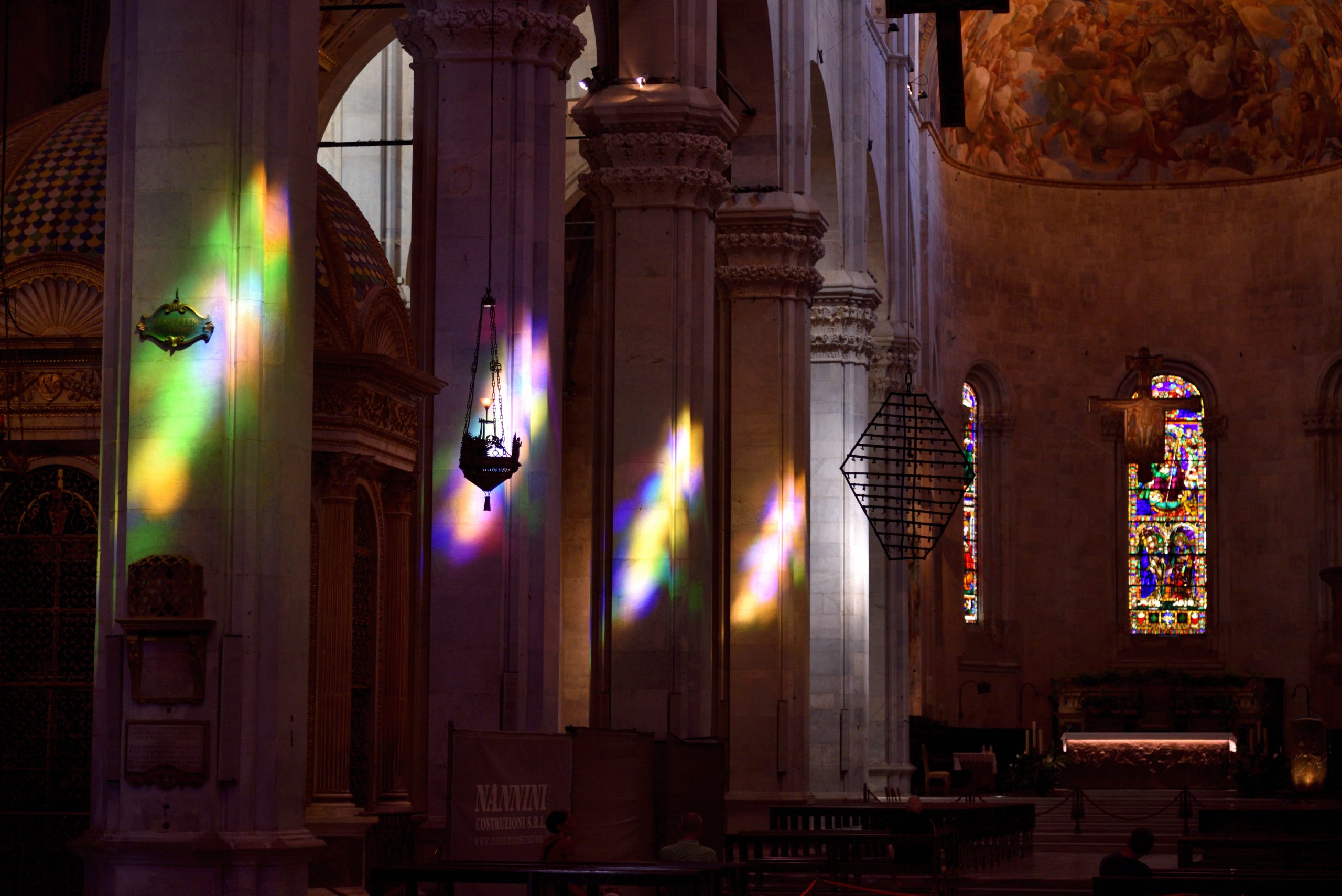
How has the design of light in architecture evolved throughout human history? This is the research theme I am currently pursuing, with a particular focus on religious architecture. Today, I would like to share an overview of this work with you. I very much look forward to your enthusiastic responses.
Today, light is valued for concepts such as ‘coloring space’ and ‘creating atmosphere.’ In the past, however, I think the role of light was much simpler.
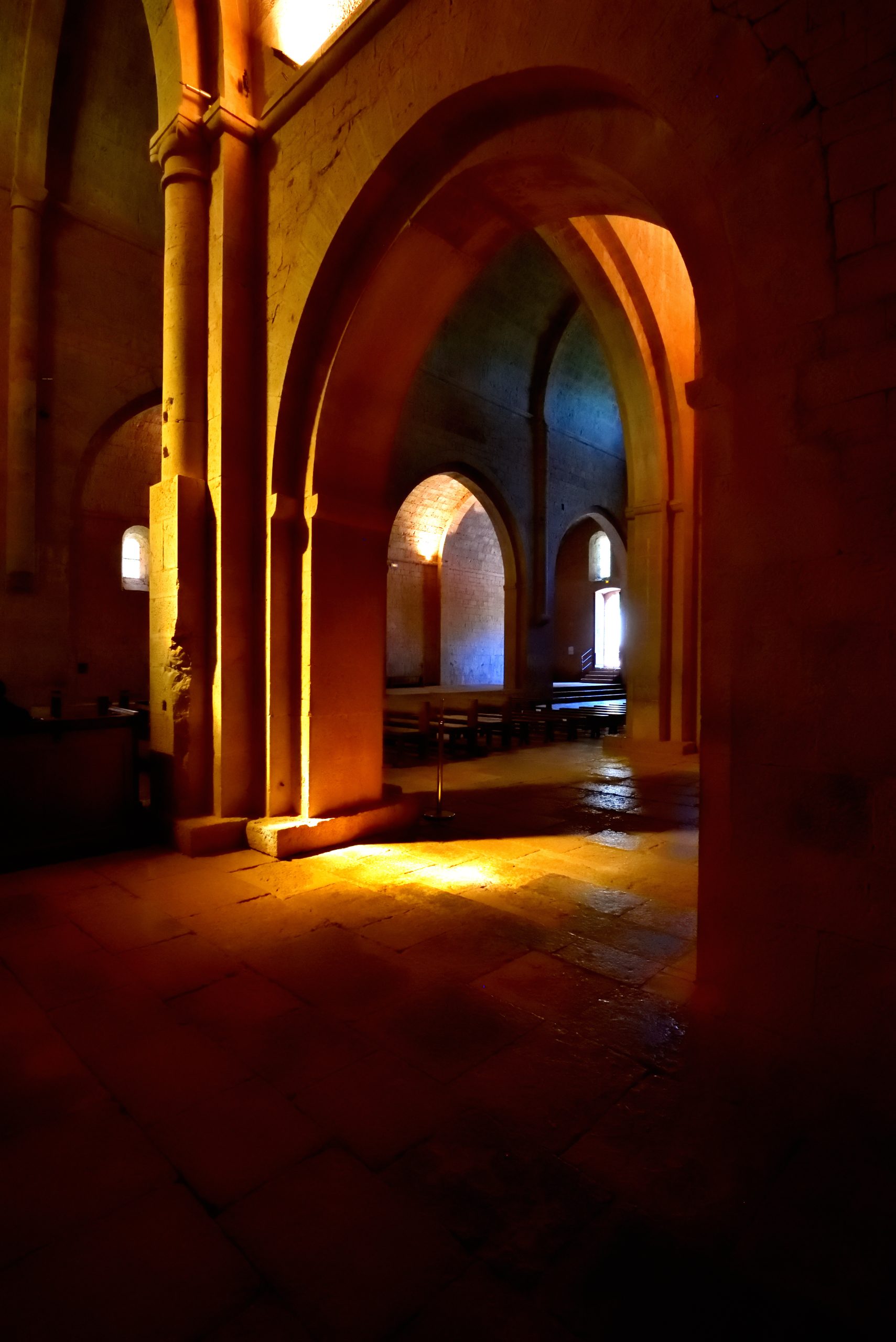
In the Romanesque period, the use of stone masonry arches imposed clear limitations on the size of window openings. Reliance on daylight was unavoidable, therefore, windows known as embrasures, with splayed edges, were widely used. Maximizing daylight was regarded as an absolute priority. Because embrasures also increased penetration of direct sunlight, linear shafts of sunlight entering through windows into otherwise dim interiors may have been perceived as gifts from God. Presumably, this visual experience was cherished and valued.
Fast forward to the Gothic period, structural innovations dramatically relaxed constraints on window openings. Although these developments might naturally lead to brighter interiors, in reality large windows were filled with low-transmittance, richly colored stained glass. Instead, deliberately preserving a dim atmosphere and bathing interior spaces with shafts of direct sunlight filtered through stained glass. Introducing the injection of colored light. While one theory holds that stained glass served as a visual display of biblical stories for followers, regardless of interpretation, this period marks the moment when the concept of ‘coloring’ a dim space with multi-colored light was added to the role of light itself.”
During the reign of King Louis, the imbalance of wealth widened, and the royal family began to lavishly hang chandeliers filled with expensive candles. Also, enjoying balls in dazzlingly illuminated spaces. All opinions aside, this can be interpreted as the moment when the concept of splendor or pomp was added to the meaning of light.
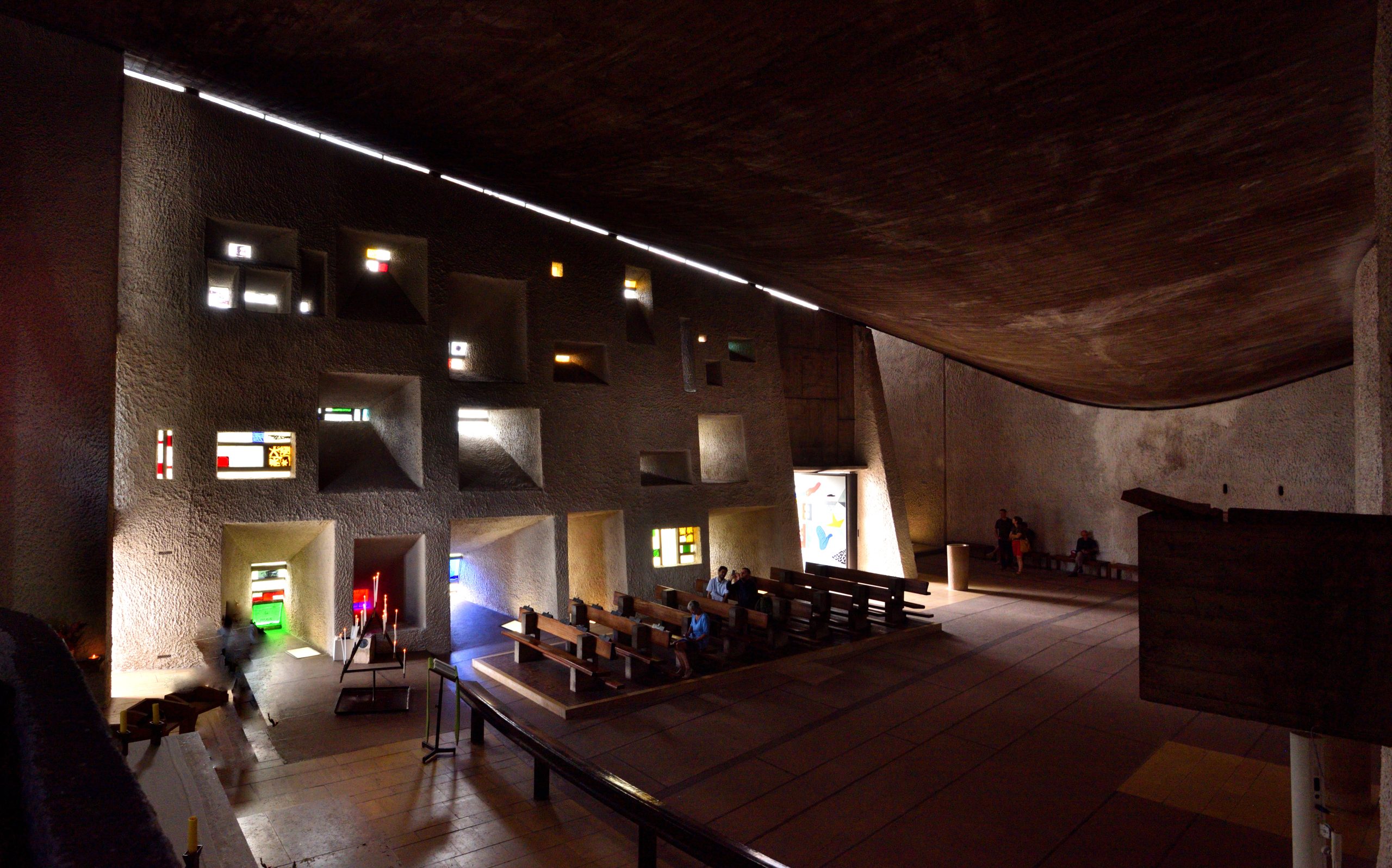
As time passed, designers in the Modernist period seem to have sought out spaces even darker and more solemn. The lighting environment of the Chapel of Notre Dame du Haut at Ronchamp and St. Mary’s Cathedral in Tokyo are strikingly different when viewed against history. Yet, standing inside these spaces, the feeling is not oppressively dark or dispiriting. On the contrary, there is a sense of freshness, something that holds its own even against brightly lit interiors.
This sudden mutation in the lighting environment during the Modernist period is related to the advent of electric lighting. No longer completely dependent on daylight, architects were free to supplement with artificial light, without concern for overcast skies. They could express ‘brightness’ with far greater freedom. Rather than representing brightness in a literal, quantitative way, it was now possible to express a sense of brightness or ambiance.
It is safe to say that the very emergence of such concepts was made possible through the years of history that preceded it.
There is a saying in Japanese, “Black ink encompasses all colors.” Ink paintings are known as an art form evoking ‘color’ solely through gradations of black ink. Similarly, masters of the Modernist period may have sought to reveal a sense of brightness within dimly lit spaces. In this sense, a new concept of abstraction emerged in the realm of light.

Mutsuo Honma
Lighting Environmental Researcher
Kyoto
A faculty member at Ritsumeikan University (Department of Architecture and Urban Design). His research focuses on uncovering the secrets of lighting environment design.