Date of Issue: 3 December, 2025
・Activity 1 / City Night Survey : Seoul, Korea(2025.10.22-10.25)
・Activity 2 / City Night Survey : Shenzhen. China(2025.9.12&9.18)
City Night Survey : Seoul, Korea
Songdo newcity, Inchon and Seoul city
2025.10.22- 2025.10.25 Karen Huang + Xueying Piao + Xianyu Liu
The purpose of this Seoul lighting survey is to explore how lighting shapes the city’s identity and cultural expression of the urban landscape in the multiple layers of Seoul.With this purpose in mind, we went to Songdo, Incheon and Seoul for the servey.

■ Songdo Inchon
On the first day of our site survey, we visited Songdo International Business District in Incheon. As a flagship planned development in Yeonsu-gu, this new town represents a remarkable urban planning achievement, constructed entirely on reclaimed land – essentially a future-city built from the ground up.

The district demonstrates excellent connectivity, with the core area accessible within approximately 90 minutes via bus from Incheon International Airport.
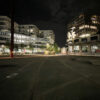
By around 8:00 PM, few people are on the street. Our survey focused on the central park area of Songdo. At street level, building facades demonstrated minimal use of decorative flood lighting, relying primarily on internal illumination to create a subdued atmosphere, while the commercial districts utilized abundant illuminated signage to inject vibrancy into the urban landscape.
The most critical insight emerged from the view at G Tower: the urban planning framework is distinctly articulated through strategic color temperature zoning, with residential areas at 2700K transitioning to over 5000K for landmark structures, constituting a macro-level “light planning” methodology. Simultaneously, the concentrated application of architectural lighting to tower crowns effectively reinforces skyline identity while minimizing light trespass, demonstrating sophisticated sustainable design principles.
In overall assessment, Songdo International Business District’s urban planning has demonstrated remarkable achievements in systematic organization, environmental sustainability, and macro-scale spatial coherence, while revealing opportunities for enhancement in micro-scale richness and detailed execution. (Xianyu Liu)


■ Bukchon Hanok Village Seoul
Bukchon is set within a dense fabric of traditional Korean houses, with narrow lanes and shifting slopes. The surrounding environment is quiet, so the overall lighting level is intentionally kept very low. The area relies mainly on small LED streetlights and lantern-like fixtures at house entrances to provide minimal illumination. Their low mounting height and soft distribution help retain the deep shadows on eaves and tiled roofs that define the hanok streetscape.
There is no façade floodlighting; instead, warm interior light filters through paper windows, gently outlining building forms and creating a characteristic low-brightness night scene. Walking through the alleys, the light is just enough to guide movement while allowing generous darkness to remain. This restraint brings a sense of calm and preserves the authentic texture of daily life in the historic neighborhood. (Xueying Piao)

■ Haebangchon @Yongsan district

Haebangchon sits on a steep hillside with narrow streets and tightly packed residential buildings. Its nightscape once depended on the scattered small bulbs and old-fashioned street lamps, resulting in many dark corners and unclear spatial definition. After improvements, the main street now uses low-glare, more uniformly distributed lighting, enhancing visibility without overpowering the environment. Additional low-mounted lighting at slopes and corners addresses previously unsafe dark spots.
Façades are lit only lightly with small linear fixtures to highlight entrances and textures, avoiding excessive brightness. Warm interior light spilling from shops adds gentle points of illumination across the street. The alleys remain dark but safer, creating a clear spatial rhythm.
Walking through the renewed Haebangchon, the lighting feels orderly and warm, retaining the lively community while making the neighborhood more comfortable and inviting at night. (Xueying Piao)
■ Sengsu-dong
Seoul Seongsu-dong was once a district of factories and warehouses, where night-time lighting served only basic functional needs. As creative industries moved in, night activities increased and the lighting strategy shifted toward a more contemporary urban character. The main streets now use LED lighting with more even distribution and better color rendering, giving the area a clean, modern appearance at night.
Low-brightness linear lighting subtly traces the rough surfaces of old warehouse façades, turning their industrial materiality into a visual feature rather than leaving them hidden in darkness. Warm spill light from cafés, studios, and shops scatters across the streets, creating multiple points of brightness and transforming the once-dim industrial grid into a layered, lived-in nighttime environment. Walking through Seongsu-dong now reveals a clear atmosphere but also harmony between its industrial past and new cultural vitality—expressed through the way light shapes both. (Xueying Piao)


■ Namsan Seoul Tower
Namsan Seoul Tower stands on a mountain in the center of the city, visible from many directions. The surrounding forest and mountain roads remain dim, while the distant glow from commercial districts forms a soft backdrop, making the tower appear even clearer in the night sky. Its façade is lit with an even LED wash that creates a stable vertical outline, and the RGB lighting at the top shifts among blue, green, yellow, and red based on real-time air-quality conditions, turning the tower into a subtle public signal.
The path leading up the mountain keeps its natural darkness, guided only by low projection lights that offer gentle direction and build a clear “path-to-target” relationship with the tower above. Plaza lighting is restrained so the tower remains the visual focus. Walking upward through the dim trees, the tower slowly appears between shadows like a calm beacon.
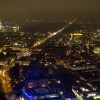
From the top, the city spreads out as a patterned field of lights—roads forming bright ribbons, commercial areas glowing densely, and quieter residential zones softening the view—revealing Seoul’s nightscape in a clear, ordered rhythm. (Xueying Piao)


■ Audeum Museum
eoul’s vibrant art scene is a part of this research trip. We choose the Audeum Audio Museum, because it’s not only a recently established architectural landmark but also a project by LPA. The professional guided tour inside the museum lends a distinctive sense of ceremony to the visit. The diverse designs of the vintage audio equipment are particularly memorable, while listening to music through the exhibition devices offers an unparalleled auditory delight. The lighting harmonizes perfectly with the exhibition atmosphere, with wall-washing techniques that elegantly highlight the contours of the audio equipment. It was truly an exceptional museum experience. (Xianyu Liu)
■ Banpo Hangang Park @Songpa district
At Banpo Hangang Park, large crowds gather beneath the bridge to watch the Rainbow Fountain show—a synchronized performance of light and music that has established the site as a popular nighttime destination. However, the main plaza area suffers from noticeably inadequate illumination. Beyond the fountain performance hours, activity in other zones remains sparse, a situation closely linked to the lack of a sense of safety resulting from insufficient lighting.
In the nearby Sebitseom area, the aging floodlights have fallen into disrepair due to the district’s earlier development period. Moreover, the bridge lighting exhibits severe glare issues, which not only impair visual comfort but also highlight concerns regarding deteriorating infrastructure. (Xianyu Liu)


■ Interview
During the survey along the Hangang Park, we interviewed a couple from Australia. They mentioned that although the lighting along the handrail area is somewhat too bright, it remains within acceptable levels.
However, they pointed out that in Australian waterfront lighting design, greater emphasis is placed on targeted illumination of waterside facades. This approach enhances the reflection of light on the water surface, allowing viewers on the opposite shore to enjoy a clearer and more captivating ripple effect.
A Japanese observer commented on the nighttime lighting along the Han River in Korea. Compared with Japan, landscape lighting in Korea primarily emphasizes illumination of the ground, whereas in Japan, it tends to highlight the surrounding environment, such as using uplighting on trees. In addition, Korea makes greater use of RGB lighting. Some lighting installations are very bright and even glaring; however, they can be advantageous for photography, as they illuminate faces and function like a reflector. The observer noted that this aspect did not pose a concern. (Xueying Piao, Xianyu Liu)

■ Conclusion
During our survey to Incheon and Seoul, we observed distinct differences in the overall urban layout and planning between Seoul’s old and new city areas. The new city districts demonstrate a strong emphasis on smart development, while the old town areas remain vibrant and rich in local atmosphere, with each possessing its own unique lighting character.
Although this survey could not cover all urban lighting scenarios. We look forward to future opportunities to revisit Seoul and further explore the dynamic relationships between light, urban spaces, and cultural elements. ( Xianyu Liu)

City Night Survey : Shenzhen, China
2025.09.12 & 09.18 Lin Hu + Jiang Kunzhi + Lin Huangyi
Shenzhen evolved from a fringe town into a high-tech metropolis in about 45 years, and its bold, sustainable urban lighting planning stands out nationally. A two-day field study examined nightscape patterns in its three CBDs, media façades in Futian, and the functional lighting design of the new Gangxia North Metro Station.

Unlike older, historically rich Chinese cities, Shenzhen started as a peripheral town and in just about 45 years has become a high-tech modern metropolis. Thanks to its local legislative autonomy, Shenzhen’s urban planning is highly experimental and often serves as a model for other Chinese and even international cities.
In urban lighting planning, Shenzhen is a national frontrunner: its nightscape design is bold and innovative, yet the city has also enacted special regulations for ecological protection and light pollution control, showing a clear commitment to sustainability. However, some lighting projects still spark social debate over energy consumption, light pollution, and the use of public resources.
To understand more of Shenzhen’s current nightscape, the Shenzhen office team conducted a two-day field study with Mende-san and Kasai-san, focusing on three themes:

- The overall nightscape patterns of the three major CBDs (Luohu, Futian, Nanshan)
- The role of media façades in Futian in shaping the city’s nightscape and public space
- The nighttime lighting performance and impact of newly built public buildings
1. Nightscape of the three main CBDs
We visited the observation deck at 540 m on the Ping An Finance Center in Futian to take in the scale and layout of the city at night. Looking east toward Luohu, the skyline shows a mix of old and new high-rises, reflecting Shenzhen’s commercial history—rather than flashy upgrades, the strategy here focuses on using and enhancing existing lighting.
The city’s planning axis runs north–south past the Civic Center, and Futian, as the administrative core, features broad plazas, parks, and high-rise clusters. These towers create an intentional media façade zone. At the same time, we can also see major public buildings lining both sides of the central axis, such as the Shenzhen Library & Concert Hall designed by Arata Isozaki, and the Shenzhen Museum of Contemporary Art and Urban Planning designed by Coop Himmelb(l)au.
To the west is Nanshan, the tech and high-industry district, where many tall buildings with internal lighting. Shenzhen Bay Park also contributes to Nanshan’s nightscape in a landscaped form. Importantly, in Shenzhen’s lighting master plan there are strict restrictions on lighting near ecological areas (like bird migration corridors or wetlands). Some uplights, fixtures without spill-light control , lasers, and media façades are under control, and during migration season, dynamic lighting may be limited or switched off.


2. Media façades in Futian
The Futian District’s media façades are centrally planned and managed by the Urban Management Bureau. Coordinated with major buildings, they form a unified, rhythmic night visual system. Outside of holidays, these façades often display gentle animations like “meteor showers,” which are subtle and elegant. During festivals, they show special content to create city-scale dynamic visuals. In recent years, drone light shows have also become part of the nightscape, drawing many locals.
On social media, people often call Futian’s nightscape “cyberpunk” — the futuristic lighting adds technological allure, but some residents criticize the aggressive, dynamic lighting for increasing light pollution and energy use, questioning whether it really benefits everyday public life.
3. Lighting of new public architecture – Gangxia North Metro Station
We also studied Gangxia North Metro Station, a major interchange hub in Shenzhen’s subway system. Its station hall features an atrium called the “Shenzhen Eye” that brings in daylight. At night, the same space is lit to extend that feeling of light flowing from above into the station. We measured lighting levels in key areas and concluded that, while the design feels modern and functional, it doesn’t rely on spectacle—it’s more of a work-oriented nightscape, focused on serving transit and daily use.


■ Conclusion
In this survey, we focused on Shenzhen’s central areas, where public events are most concentrated and media façades are densest, to experience the real light environment behind social-media “filters.” From the street level, large-scale media content often does not form a readable visual image, yet being immersed in such a dynamic lighting setting is undeniably striking. At the same time, despite its brilliance, we observed that colored light reflected off glass façades spills into many corners of the streets and even into residential areas. Converting entire high-rises into media surfaces can also diminish the architectural form and its inherent aesthetic value.
As social media becomes increasingly influential, more Shenzhen residents are no longer passive recipients of top-down nighttime scenery. Instead, they are actively reflecting on the light environment around them and voicing concerns about poor lighting conditions. We hope that, as the most direct users of the city, citizens’ opinions can gradually influence Shenzhen’s lighting environment from the bottom up, allowing it to become genuinely more comfortable and humane through thoughtful planning and design—rather than relying solely on lighting wonders or oversized advertising. (Lin Huangyi)