RELATED POSTS
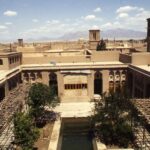
Pillar palace
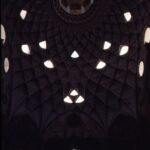
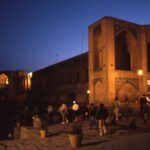
Khaju Bridge
Khaju Bridge
YOU MIGHT ALSO LIKE
Vol.005 – Disaster Area Lighting
Theme: Disaster Area Lighting Interviewer: Yukiko Saito Saito I was born in Rikuzentakada City, Iwate Prefecture, an area devastated by the 2011 earthquake and tsunami. I would like to talk today about “Disaster Area Lighting.” Mende Have you visited the area after the earthquake? Saito Yes, three times. Mende It is just one year ago this month. They are starting to slow clear away the debris and reclaim the area. Saito Yes. In December most of the debris was hauled away and two stop lights in the downtown area were erected. Seven months after the disaster in November there were still no street lights of any kind. This story made the new since it was so dark and a little scary at night. Is there anything we can do as lighting professionals? Mende The city was devastated by a natural disaster that wiped out all power poles and even underground electrical wiring and ducts. It’s a tough situation to even get electricity to the area. However, solar panel mounted street lights don`t need any electrical wiring. It might be wise for the government to buy and issue solar power lighting to these areas. Even in times of a power outage, lighting with capacity to generated electricity from a natural source is a good backup plan. Saito When we drove through the debris cover area, we only had the car headlights for navigation with a few house lights in the distance. I`m just an amateur, but I can`t help but…
Vol.051 – Into the Water
Theme: Into the Water Interviewer:Yusuke Hattori Hattori:Your first diving experience was five years ago near Malaysia`s Tioman Island, is that right. Was it really your first time? Mende:Yes really. I wanted to go diving and so I went. I got my diving licence with a really strict Japanese instructor. I was 64 years old at the time and now I go diving every year. I am still a beginner, but I have done about 30 dives. How many dives have you done? Hattori: I have about 100 dives and an advanced diving license. The first time I went diving, I was so moved by the lighting experience underwater, I wanted to capture it in photographs. So I just went out and bought an underwater camera. Underwater photography is so interesting. Mende:Are there any differences between photographing underwater or on land? Hattori:Underwater you are floating, so shooting the camera is very difficult. Also you can`t use a tripod so it is hard to use auto focus when your body is floating and moving. I can really understand the distinction between a regular photographer and underwater photographer. Their diving skills need to be very advanced. Mende:Divers are all interested in different targets underwater. Some divers are interested in only sea slugs or really big fish or such. Hattori: I like underwater terrain. The dynamic landforms get me really excited! The fish are pretty, some look good to eat, but that is the…

Newsletter vol.94
Date of Issue:February 7, 2019 ・Activity 1/City Night Survey:Rio de Janeiro/ (2018/10/13-10/23) ・Activity 2/TNT Forum 2018 in Santiago(2018/10/17-10/18) City Night Survey:Rio de Janeiro/ Santiago 2018/10/13-23 Mikine Yamamoto + Kouki Iwanaga This was our first South American survey in about 15 years. We tracked the light expression of Rio de Janeiro, a port city marked by both entertainment and poverty, which hosted the FIFA World Cup in 2014 and the Olympics in 2016 and has become increasingly international. While possessing famous coasts like Copacabana and Ipanema and being counted as one of the world’s three most beautiful harbors, it also has the “favela” slums covering its hillsides. Surrounded by magnificent nature, Santiago, Chile’s largest city, has annual rainfall of only about 360mm, meaning it is sunny for most of the year. We investigated the lighting situation of this city blessed with natural light. The nightscape from Pão de Açúcar: A beautiful contrast created by the rich topography Viewing Copacabana Beach from Pão de Açúcar Favelas built on the mountain slopes ■Rio de Janeiro / Brazil Rio de Janeiro is an international tourist city that hosted the Carnival and the Olympics in 2016. It is said to be a microcosm of the country, where light and darkness coexist: scenic areas with beautiful topography blending nature and culture are situated next to slums. We surveyed the light expressions of this city, which has various faces, including the glamorous light of tourist and resort…
Night Watching Tour in Oouchijuku
Night Watching Tour:Oouchijuku Let’s go look at lights on the snow-scape! 2020.02.08- 2020.02.09 Namiko Watanabe + Noriko Higashi In search for a festival of lights in Japan, we headed to the Winter festival at Oouchijuku. Our 19 members headed north from Tokyo towards a fantastical view of snow and the lights of the old villages houses. Looking down on Oouchijuku, we were lucky it started snowing the day before, barely creating a beautiful snowscape Oouchijuku cuisine – Green Onion buckwheat noodles- where we use green onions as our chopsticks Located in South Aizu in Fukushima Prefecture, Oouchijuku prospered as a passing town on route from Nikkou to Wakamatsu in Aizu. It is a beautiful town, designated as an architectural cultural heritage, where cottages with thatched rooves still stand. Our Night-watching tour planning committee, after lots of investigation decided upon this Winter Festival in Oouchijuku. Let us find out if we were able to glimpse the view we were promised! ■Tour Cancelled⁉ The theme of this tour is “Let’s go look at lights on the snow-scape!”. Our goal for this tour was to go see the glimpse of warm light spilling out from cottages buried in the snow or as we like to think “THE Japanese Snow-scape and Cottage lighting”, but sadly this winter was an abnormally warm winter. It had not snowed even a week before the planned date for the tour. A lot of the festivals were cancelled or shrunk…
No.63 – Thought I Might Design a Chandelier
As an architectural lighting designer, I have always thought this profession was not about the form or shape of lighting fixtures, but have argued that lighting design is about the relationship between lighting and people. Japanese lighting design is still relatively new and I am torn between hope and despair for the profession as most conversations revolve around whether a fixture looks cool or not. I always thought there are more important aspects to discuss. But as of late, I`ve come to realize and maybe most people would tend to agree with me, that lighting design isn’t just about the amount of light or shape of a fixture. But at the same time, we, as lighting designers, have to realize that we are not in the business of distributing downlights and spotlights everywhere. And so a few years back, I thought I might design a Mende-style chandelier. Of course I did not want to just reproduce a copy of a glittery European chandelier or redesign a florescent light pendant for Japanese residential use, but through the dynamic use of material, produce a delicate, but one-of-a-kind architectural chandelier, or so I thought. Unfortunately, in this world things don’t always go as you would have planned and Swarowsky, a well-established crystal chandelier manufacture, unveiled a new chandelier, very close to the design I had envisioned. It happened at the Euroluce in Milan this last spring. Have a look at the top-secret photos…