RELATED POSTS
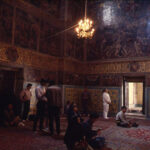
Pillar palace
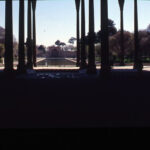
Khaju Bridge
Khaju Bridge
YOU MIGHT ALSO LIKE
Global Lighting Survey: Tsukiji, Tokyo
City Survey: Tsukiji, Tokyo 2017/12/14,2018/01/12 Nemoto Isao + Masafumi Yamamoto Night view from the opposite shore of Tsukiji, across the Sumida River. Tsukiji Market on the middle, Tokyo Tower and Tsukiji Bridge on the left, and Kachidoki Bridge on the right. In this Tsukiji survey, we visited the inner market, where mainly wholesale is taking place, the outer market, where visitors can shop and eat, and also the Tsukiji Honganji temple and the Kachidoki Bridge which are popular spots for tourists. ■Luminous Environment around Tukiji Fish Market From the Kachidoki area on the opposite side of the Tsukiji fish market, you can overlook the entire view of the market, buildings such as Kachidoki Bridge and Tokyo Tower across the Sumida River. While we notice white light that comes from the market and surrounded buildings, the warm-colored light of incandescent lamps emitted from the fish handling facility facing the Sumida River on the opposite shore. This view is quite impressive, and creates an emotional and beautiful view during the night.This warm light from the market brings the sense of the history of Tsukiji rooted in this area for a long time. In contrast, the white light emitted from the group of high-rise buildings in the background seems to symbolize the momentum of the rapidly evolving city. Outside the market, there are more than 400 shops, and many shops still remain open after evening.Various light sources and lighting fixtures are used in each…
Vol.085 – Buddies with Vending Machines…
This excerpt is from an essay Mende contributed in December 2001. During a period of time, I often felt that my thoughts were rather unstable. I had a habit of continuing conversations without coming to clear conclusions about whether something was good or bad, whether I liked it or disliked it. In essence, I had an indecisive personality that gauged the other person’s reactions while engaged in conversation. One could say this is typical of Japanese people, but I believe my profession as a designer contributed significantly to this tendency. We lighting designers have a job that involves listening to many people’s demands while skillfully handling contradictory conditions to solve a puzzle. It was after meeting Koharu Kisaragi that I was strongly compelled to reflect on this weakness of mine. Koharu Kisaragi, in complete contrast to me at that time, spoke about the light of the modern city with a strikingly fresh perspective.“I love glowing vending machines.” That was her first statement when we invited her to appear at the Lighting Detectives Practical Workshop Series that we organized in the fall of 1996. “Vending machines may seem to be everywhere in the city, but they’re actually passive. They can’t do anything on their own unless we humans approach them and access them. They don’t know what to do with themselves, and that blankness reminds me of urban Japanese people. Everyone is in a crowd, yet they’re alone…” she continued. At…
Vol.045 – Work Style Revolution
Work Style Revolution Interviewer: Tomohiro Mukaihira Mukaihira:Today I`d like to talk with you about design and work balance, not as a lighting designer, but as Mr. Mende, the entrepreneur. Recently, the workforce is decreasing with several social issues such as, childcare, nursing care, and overworking to resolve amid calls for work style reform in Japan. Mende:Do you think you and others your age are being overworked? How many work hours is ideal? Mukaihira:It seems that many Japanese are being overworked to the point of exhaustion. I think the ideal is 9 to 6 and being able to punch out on time. Mende: I see. As expected, an 8-hour day. However, what is “punching out on time”? A farmer will get up early in the morning to tend his fields and work into the night fixing and managing tools and equipment. I don`t think they have a punch out time. Mukaihira: I think there are two types of working style; one is just working for money and two working for self-fulfillment. The former, probably wants a shorter schedule and the later might be willing to work longer hours. What kind of working style did you have in your 20`s and 30`s? Mende:I`m pretty much a nerd and love working! So I don`t think my style is a good reference. I really love my work!! Before I became a designer I had several jobs, like delivery. At home I wash dishes, vacuum, and…
Newsletter vol.135
Date of Issue: 16 December, 2024・-Activity 1/ City Night Survey –Cairo&Giza, Ezypt(2024.10.31-11.3)・-Activity 2/ Visiting Tanteidan in Hida Kamiokamachi (2024.11.15)・-Activity 3/ Nightwalk : Kagurazaka, Tokyo (2024.11.18) City Night Survey: Cairo&Giza, Egypt2024.10.31-11.3 Makalin Wongchinchai + Stell Li Egypt, land of secrets, a place full of history, mystery and amazing stories. We wanted to see not only thefamous pyramids, but also a lot of interesting cities and lightings in the night. To explore the lighting in Egyptian daily life, we chose to visit two main cities in Greater Cairo Area for four days. ■Introduction Egypt, one of the world’s oldest civilizations, is home to the pyramids, deserts, the Nile, and its vibrant capital, Cairo, where ancient and modern worlds meet.To explore this one of the most historical countries in the world, we chose to visit two main cities in Greater Cairo Area —Cairo (the captial city of Egypt) and Giza (with Memphis and its Necropolis – the Pyramid Fields from Giza to Dahshur ).As the sun sets over the city, Cairo & Giza transforms into a dazzling display of lights and enchantment. The bustling streets come alive with vibrant energy. As locals and visitors alike gather in cafes, shisha lounges, and bazaars, embracing the rich Egyptian culture that thrives well into the night, we surveyed lightings on Cairo & Giza’s daily life. ■Cairo The Khan el-Khalili market has always been a hub of trade and commerce since it was established in 14th century. Walking in this…

Newsletter vol.132
Date of Issue: 23 August, 2024 ・-Activity 1 / City Night Survey – Busan, South Korea(2024.05.16 – 05.19)・-Activity 2 / Children Workshop in Omishima Island(2024.07.13) City Night Survey: Busan, South Korea2024.05.16 – 05.19 Mari Kubota+ Noriko Higashi Busan, South Korea’s second-largest city, is one of the world’s major port cities. In recent years, it has also gained fame as a hub for tourism and film. We surveyed the lighting in Busan, which is also a member of LUCI (Lighting Urban Community International). South Korea is a close neighbor, just 1.5 hours from Tokyo by plane, making it a popular destination for quick and affordable trips. Busan, the second-largest city in South Korea, is not only a tourist destination but also a major port and an entertainment center, hosting film festivals. As a member of LUCI, Busan has been focusing on urban lighting as part of its urban planning. In 2015, the city developed an extensive overview of its nightscapes, resulting in the Busan Urban Light Policy for 2030. This policy has been updated several times, reflecting the city’s ongoing efforts in implementation and improvement. The guidelines divide Busan into several zones, each with lighting tailored to its specific characteristics.We traveled to Busan to assess whether the city’s lighting contributes to safety, beauty, attractiveness, and the local economy at night. ■Jagalchi Market Jagalchi Market is South Korea’s largest seafood market, selling both fresh and dried fish. After purchasing seafood on the first floor, visitors…