
Fieldwork

Global Research

City Night Survey : Riyadh, Saudi Arabia

more

Diriyah, KAFD and Metro stations Riyadh2025.11.16 – 11.18 Gita Listia The purpose of this Riyadh lighting survey is to explore the characteristics of old urban areas and new developments in KAFD Riyadh, with a particular focus on their metro stations. The study aims to understand how each area expresses its identity through public space lighting and how lighting strategies are applied in major infrastructure such as metro station. ■Diriyah Diriyah is a historic area on the north-west side of Riyadh and one of Saudi Arabia’s most important cultural heritage sites. Located along Wadi Hanifah, about 15 km from central Riyadh, it reflects the early history of the city. Today, Diriyah is being developed into a vibrant heritage, cultural, and lifestyle destination, where historic preservation is carefully combined with modern urban design. The lighting in Diriyah is designed to be subtle and heritage-sensitive. Very warm white tones are used to complement the Najdi mud-brick architecture, creating a calm and welcoming night-time atmosphere. Pole lights and bollards in Diriyah feature distinctive shapes, patterns, and warmer colour temperatures compared to typical street lighting in other parts of Riyadh. This traditional lighting character clearly signals that visitors are entering a cultural and heritage area. ■At-Turaif At-Turaif is the birthplace of Saudi history and represents the cultural core of Diriyah. It is recognized as a UNESCO World Heritage Site. Lighting at At-Turaif is highly restrained and conservation-focused. Soft grazing and wall-washing techniques are used to gently…

Global Research

City Night Survey : Tashkent, Uzbekistan

more

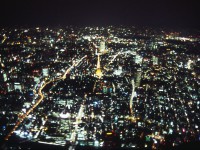
2025.11.09-11.14 Jiang Kunzhi + Lin Huangyi This survey aims to explore the interaction between Soviet culture and Islamic culture within the urban space of western Tashkent, with a particular focus on whether this cultural layering has given rise to region-specific lighting approaches and expressions of the luminous environment. Therefore, a systematic field survey and documentation were carried out across the urban areas of Tashkent. As the capital of Uzbekistan, Tashkent reflects both Soviet modernism and Islamic architectural traditions. The city features large Soviet-era public buildings alongside religious architecture that blends tradition and modernity. In addition to above-ground buildings, this survey also examined the Tashkent Metro, Central Asia’s first metro system opened in 1977, where refined lighting and rich materials create museum-like underground spaces. (Jiang Kunzhi) ■Aerial night view of Tashkent Viewed from the TV Tower, Tashkent’s nightscape appears as a network of “lines” and “points” rather than a continuous illuminated façade. The road system forms the clearest visual structure: main roads and ring roads read as linear light bands, while bridges and major intersections appear as brighter nodes, creating a legible traffic framework over the city’s flat skyline. These linear elements strongly define the city’s sense of direction and scale. In contrast, most buildings remain dark at night, with their presence defined only by entrance lighting, limited window glow, and reflected ambient light. As a result, the overall background luminance stays low, allowing a few landmarks—such as tall structures or media…

Global Research

City Night Survey:Xi’An China

more

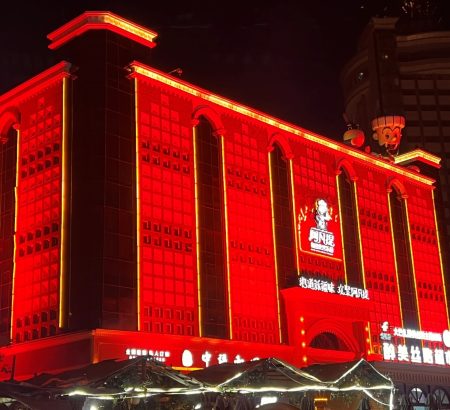
Muslim District within New Development Context2025.11.06-11.09 Quratuaini Jamil + Xu Sunny The survey aims to examine the Muslim Quarter District with a focus on its religious, cultural, and urban context, while assessing how it integrates with the emerging modern development within Xi’an. ■ Brief Summary of Lighting SurveyWith a vast metropolitan population of 12.9 million—of which 4.45% reside in the urban center—Xi’an is a renowned historical and cultural hub in China that pursues an urban planning strategy blending tradition with modernity. The city integrates its rich heritage with the demands of contemporary development while carefully safeguarding key cultural areas. A prime example is the Muslim Quarter, which plays a crucial role in preserving living heritage, ethnic diversity, and the traditional urban fabric. Xi’an’s planning approach emphasizes “development within preservation and preservation within development,” reflected in the harmonious coexistence of new growth and historic architecture. Accordingly, this research focuses on how the old and new parts of the city—particularly distinct areas like the Muslim Quarter—are effectively integrated. ■Xi’An Muslim QuarterOn the first day, we observed the Friday congregational prayer at the Great Mosque of Xi’an. This visit provided a valuable opportunity to study the mosque’s internal spatial organization and architectural characteristics. The Great Mosque of Xi’an is distinctive for its unique synthesis of traditional Chinese architectural language and Islamic religious functions. It differs markedly from the Middle Eastern style—characterized by prominent domes and tall minarets—commonly seen in places like Singapore. Instead,…

探偵ノート Detective note

Monologue of a Lighting Detective

Vol.013 – Natural Light that Both Stirs the Heart and Brings Beace, and the Ideal Artificial Light of TIF and MIHO Museum

more

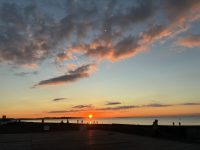
Tomoya FurukawaKanagawa Still basking in the joy of how bright, unusually large, and beautiful last night’s full moon was, I headed out early in the morning to the wood deck along the beach. I went to take part in a radio calisthenics session together with elderly ladies, married couples, local runners, etc.  The morning after the Cold Moon, sunrise in the Shonan area on December 6 was at 6:33 a.m., and as we exercised, we ended up watching the sun rise.  I restarted radio calisthenics to add some rhythm and structure to my long days. I thought I would probably give up after about three days or so, but I have stuck with it for a month. I wonder why I have stuck with it this time?  What is my motivation?  The early bird catches the worm?  A growing sense of urgency to maintain physical health? Because I like the post-workout chat? “Mt. Fuji is very beautiful today.  So clear.  You can see Ohshima Island!” “Glad to see the sun rise, again today.  So peaceful.” At this time of year just before the winter solstice, the sun in the Shonan area gradually shifts to the right of Enoshima in the eastern sky and rises from behind the Miura Peninsula. As the sky turns pale and bright, about five minutes before sunrise the eastern horizon slowly deepens into shades of red. Then, for a few minutes until the very top of…

Monologue of a Lighting Detective

Vol.012 – Perspectives on the Evolution of Lighting Environment Design

more

Mutsuo HonmaLighting Environmental ResearcherKyoto How has the design of light in architecture evolved throughout human history?  This is the research theme I am currently pursuing, with a particular focus on religious architecture. Today, I would like to share an overview of this work with you. I very much look forward to your enthusiastic responses. Today, light is valued for concepts such as ‘coloring space’ and ‘creating atmosphere.’ In the past, however, I think the role of light was much simpler. In the Romanesque period, the use of stone masonry arches imposed clear limitations on the size of window openings. Reliance on daylight was unavoidable, therefore, windows known as embrasures, with splayed edges, were widely used. Maximizing daylight was regarded as an absolute priority.  Because embrasures also increased penetration of direct sunlight, linear shafts of sunlight entering through windows into otherwise dim interiors may have been perceived as gifts from God. Presumably, this visual experience was cherished and valued. Fast forward to the Gothic period, structural innovations dramatically relaxed constraints on window openings.  Although these developments might naturally lead to brighter interiors, in reality large windows were filled with low-transmittance, richly colored stained glass.   Instead, deliberately preserving a dim atmosphere and bathing interior spaces with shafts of direct sunlight filtered through stained glass.  Introducing the injection of colored light. While one theory holds that stained glass served as a visual display of biblical stories for followers, regardless of interpretation, this period…

Coffee Break

Vol.084 – Dreams & Dreaming

more

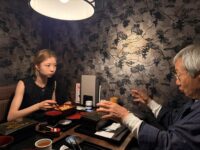
Interviewer: Jack Lim Jack: Good morning Mr. Mende. Today’s theme is “Dreams”. We will keep it open for discussion, whether it refers to the dreams when we sleep, or ambitions and wishes.  I will start with the question: When you sleep, do you have recurring dreams? Mende: I have many times dreamt of the same scenery and the same landscape, which gave a feeling of déjà vu. In this dream, I am usually flying. I see the ocean, the sun all over town, with beautiful nature and landscape. And I am usually just stand on a higher place. Do you know the ‘Tetsuwan Atomu’ (Astro Boy) ? I am just flying like Atomu. This is my favourite dream. I very much enjoy dreaming. Jack: Do you also dream a lot? Mende: Yes, I always have very good and optimistic dreams. I don’t have any fearful and bad dreams. Even when I have to fight somebody, I can always win. How about you? Jack: I dream a lot. I can dream even during a quick 10-minute nap, or when I fall asleep on a bus ride. My dreams come in all forms, good and bad. A recurring dream that I have usually happens when I’m almost falling asleep: I step on something slippery, like a banana peel, and fall backward, hitting the back of my head. Then I wake up with a sudden jolt, lying in bed, shocked. Sometimes, though, I…

popular posts

Newsletter

Newsletter vol.074

World Lighting Journey

Chongqing

World Lighting Journey

Forth Worth Stock Yard

World Lighting Journey

Streets of Barcelona

World Lighting Journey

Hitoyoshi City, Kumamoto

World Lighting Journey

Hanoi

World Lighting Journey

Night View of Sapporo from the T38

World Lighting Journey

Streets of Berlin

World Lighting Journey

Palm Springs

Who are the Lighting Detectives?
A research group established in 1990 by Lighting designer, Kaoru Mende and 5 other designers, and dedicated to the study of lighting culture through the observation and surveying of urban light environments in Japan and throughout the world.