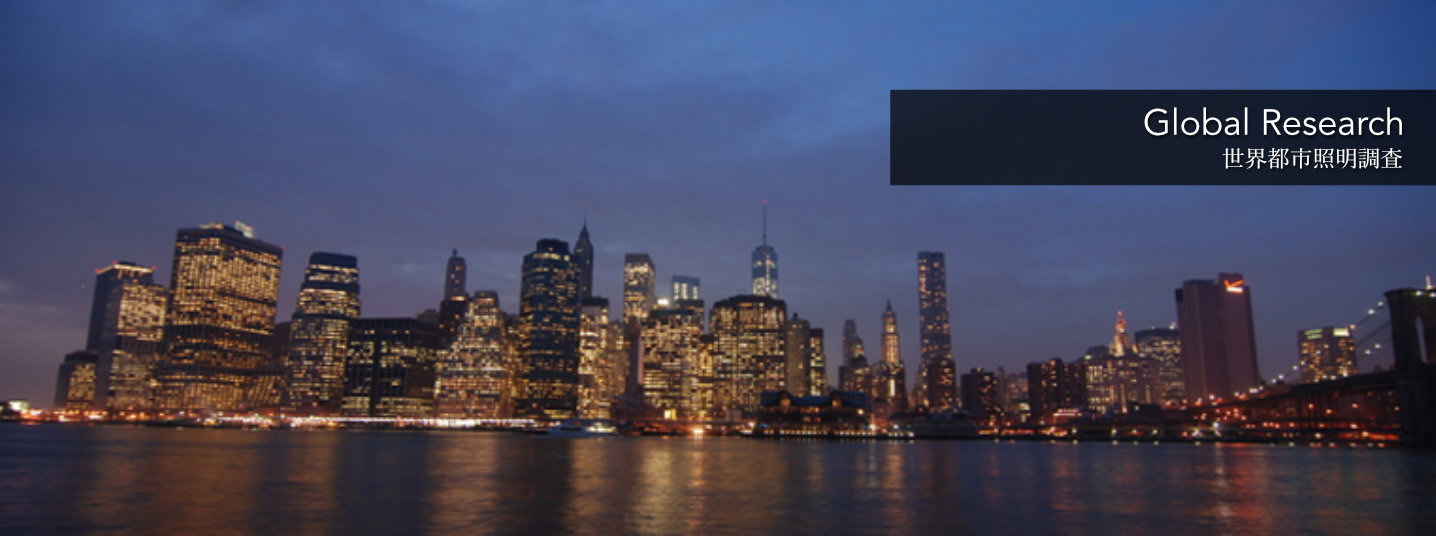
To grasp lighting environments around the world, the Lighting Detectives have continued to survey local and global cities. Over 70 cities have been surveyed and record in “The World Lighting Journey,” which has become an important database for comparing the many lighting environments around the world.

ASIA

City Night Survey : Riyadh, Saudi Arabia

More

Diriyah, KAFD and Metro stations Riyadh2025.11.16 – 11.18 Gita Listia The purpose of this Riyadh lighting survey is to explore the characteristics of old urban areas and new developments in KAFD Riyadh, with a particular focus on their metro stations. The study aims to understand how each area expresses its identity through public space lighting and how lighting strategies are applied in major infrastructure such as metro station. ■Diriyah Diriyah is a historic area on the north-west side of Riyadh and one of Saudi Arabia’s most important cultural heritage sites. Located along Wadi Hanifah, about 15 km from central Riyadh, it reflects the early history of the city. Today, Diriyah is being developed into a vibrant heritage, cultural, and lifestyle destination, where historic preservation is carefully combined with modern urban design. The lighting in Diriyah is designed to be subtle and heritage-sensitive. Very warm white tones are used to complement the Najdi mud-brick architecture, creating a calm and welcoming night-time atmosphere. Pole lights and bollards in Diriyah feature distinctive shapes, patterns, and warmer colour temperatures compared to typical street lighting in other parts of Riyadh. This traditional lighting character clearly signals that visitors are entering a cultural and heritage area. ■At-Turaif At-Turaif is the birthplace of Saudi history and represents the cultural core of Diriyah. It is recognized as a UNESCO World Heritage Site. Lighting at At-Turaif is highly restrained and conservation-focused. Soft grazing and wall-washing techniques are used to gently…

ASIA

City Night Survey : Tashkent, Uzbekistan

More

2025.11.09-11.14 Jiang Kunzhi + Lin Huangyi This survey aims to explore the interaction between Soviet culture and Islamic culture within the urban space of western Tashkent, with a particular focus on whether this cultural layering has given rise to region-specific lighting approaches and expressions of the luminous environment. Therefore, a systematic field survey and documentation were carried out across the urban areas of Tashkent. As the capital of Uzbekistan, Tashkent reflects both Soviet modernism and Islamic architectural traditions. The city features large Soviet-era public buildings alongside religious architecture that blends tradition and modernity. In addition to above-ground buildings, this survey also examined the Tashkent Metro, Central Asia’s first metro system opened in 1977, where refined lighting and rich materials create museum-like underground spaces. (Jiang Kunzhi) ■Aerial night view of Tashkent Viewed from the TV Tower, Tashkent’s nightscape appears as a network of “lines” and “points” rather than a continuous illuminated façade. The road system forms the clearest visual structure: main roads and ring roads read as linear light bands, while bridges and major intersections appear as brighter nodes, creating a legible traffic framework over the city’s flat skyline. These linear elements strongly define the city’s sense of direction and scale. In contrast, most buildings remain dark at night, with their presence defined only by entrance lighting, limited window glow, and reflected ambient light. As a result, the overall background luminance stays low, allowing a few landmarks—such as tall structures or media…

ASIA

City Night Survey:Xi’An China

More

Muslim District within New Development Context2025.11.06-11.09 Quratuaini Jamil + Xu Sunny The survey aims to examine the Muslim Quarter District with a focus on its religious, cultural, and urban context, while assessing how it integrates with the emerging modern development within Xi’an. ■ Brief Summary of Lighting SurveyWith a vast metropolitan population of 12.9 million—of which 4.45% reside in the urban center—Xi’an is a renowned historical and cultural hub in China that pursues an urban planning strategy blending tradition with modernity. The city integrates its rich heritage with the demands of contemporary development while carefully safeguarding key cultural areas. A prime example is the Muslim Quarter, which plays a crucial role in preserving living heritage, ethnic diversity, and the traditional urban fabric. Xi’an’s planning approach emphasizes “development within preservation and preservation within development,” reflected in the harmonious coexistence of new growth and historic architecture. Accordingly, this research focuses on how the old and new parts of the city—particularly distinct areas like the Muslim Quarter—are effectively integrated. ■Xi’An Muslim QuarterOn the first day, we observed the Friday congregational prayer at the Great Mosque of Xi’an. This visit provided a valuable opportunity to study the mosque’s internal spatial organization and architectural characteristics. The Great Mosque of Xi’an is distinctive for its unique synthesis of traditional Chinese architectural language and Islamic religious functions. It differs markedly from the Middle Eastern style—characterized by prominent domes and tall minarets—commonly seen in places like Singapore. Instead,…

OCEANIA

City Night Survey:Perth, Australia

More

Urban Light and Natural light in Western Australia2025.10.28 – 11.01 Hongna Chen + Puyu Wu This lighting survey investigates the influence of Western Australia’s local culture and natural landscape on its lighting environment, exploring whether its relative remoteness has led to distinctive approaches in lighting design. For this purpose, field investigations were conducted in Perth and its surrounding natural areas. ■ Perth’s Geographic LocationPerth is a city in Western Australia and is often described as the world’s most isolated major city. This characterization stems from its extreme remoteness with the Indian Ocean to the west, vast outback deserts to the east, and long distances from other major cities—about 4,000 km from Darwin, 2,700 km from Adelaide, and over 3,000 km from eastern cities such as Sydney and Melbourne. The unique nightscape of such a “remote” city is the central focus of this survey. ■ Panoramic Night ViewTo take in the city’s nightscape from above, we chose King’s Park, the largest park in Perth. The park is a popular recreational spot for locals. On our way up, we saw many people hiking, picnicking, and sunbathing. We joined them at the hilltop to await nightfall. From Kings Park, Perth’s nighttime view clearly reveals the structure of the city’s lighting. The CBD skyline is defined by clusters of bright, cool-white light from office towers, while the streets below form a grid of warmer, yellow streetlights. The Swan River is faintly outlined by ambient…

ASIA

City Night Survey : Shenzhen, China

More

2025.09.12 & 09.18 Lin Hu + Jiang Kunzhi + Lin Huangyi Shenzhen evolved from a fringe town into a high-tech metropolis in about 45 years, and its bold, sustainable urban lighting planning stands out nationally. A two-day field study examined nightscape patterns in its three CBDs, media façades in Futian, and the functional lighting design of the new Gangxia North Metro Station. Unlike older, historically rich Chinese cities, Shenzhen started as a peripheral town and in just about 45 years has become a high-tech modern metropolis. Thanks to its local legislative autonomy, Shenzhen’s urban planning is highly experimental and often serves as a model for other Chinese and even international cities. In urban lighting planning, Shenzhen is a national frontrunner: its nightscape design is bold and innovative, yet the city has also enacted special regulations for ecological protection and light pollution control, showing a clear commitment to sustainability. However, some lighting projects still spark social debate over energy consumption, light pollution, and the use of public resources. To understand more of Shenzhen’s current nightscape, the Shenzhen office team conducted a two-day field study with Mende-san and Kasai-san, focusing on three themes: 1. Nightscape of the three main CBDsWe visited the observation deck at 540 m on the Ping An Finance Center in Futian to take in the scale and layout of the city at night. Looking east toward Luohu, the skyline shows a mix of old and new high-rises, reflecting Shenzhen’s…

ASIA

City Night Survey : Seoul, Korea

More

Songdo newcity, Inchon and Seoul city2025.10.22- 2025.10.25 Karen Huang + Xueying Piao + Xianyu Liu The purpose of this Seoul lighting survey is to explore how lighting shapes the city’s identity and cultural expression of the urban landscape in the multiple layers of Seoul.With this purpose in mind, we went to Songdo, Incheon and Seoul for the servey. ■ Songdo InchonOn the first day of our site survey, we visited Songdo International Business District in Incheon. As a flagship planned development in Yeonsu-gu, this new town represents a remarkable urban planning achievement, constructed entirely on reclaimed land – essentially a future-city built from the ground up. The district demonstrates excellent connectivity, with the core area accessible within approximately 90 minutes via bus from Incheon International Airport. By around 8:00 PM, few people are on the street. Our survey focused on the central park area of Songdo. At street level, building facades demonstrated minimal use of decorative flood lighting, relying primarily on internal illumination to create a subdued atmosphere, while the commercial districts utilized abundant illuminated signage to inject vibrancy into the urban landscape. The most critical insight emerged from the view at G Tower: the urban planning framework is distinctly articulated through strategic color temperature zoning, with residential areas at 2700K transitioning to over 5000K for landmark structures, constituting a macro-level “light planning” methodology. Simultaneously, the concentrated application of architectural lighting to tower crowns effectively reinforces skyline identity while minimizing…

AMERICAS

City Night Survey:Honolulu

More

2025.09.04-09.08 Yonglin Ke + Masashi Kurobe The nights in Honolulu are a diverse blend of resort illumination, residential lights, torches, and night market glows. However, as the city develops, the starry sky is fading, raising concerns about the impact on the local ecosystem. Balancing urban growth with light pollution countermeasures remains a significant challenge. We conducted an on-site night walk survey to explore the balance between the city and nature and to evaluate the current lighting environment. ■Honolulu Honolulu, the capital of the U.S. state of Hawaii, is a prominent tourist destination in the heart of the Pacific Ocean. Simultaneously, it serves as the political and economic hub of the state. In this land where the sea, mountains, and urban areas sit in close proximity, the nightscape reveals a variety of expressions depending on the time and location—blending the glow of resort hotels, the soft lights of residences, traditional fire torches, and the vibrant lights of night markets. Furthermore, the combination of intense sunlight and a tropical climate creates a unique character within the city’s lighting environment. On the other hand, urban development and the growth of the tourism industry have negatively impacted the visibility of the starry sky and affected local ecosystems, such as migratory birds and sea turtles. While the state and city have begun implementing measures to reduce light pollution, finding a balance with the tourism industry remains a challenge. During this night walk survey, we investigated…

JAPAN

City Night Survey : Toyosu, Tokyo

More

2025.06.26 Yumi Honda +Qiaoxi Wang+ Momoe Nomura We observed and recorded the nighttime light environment of the newly developed commercial complex Senkyaku Banrai in the Tokyo Bay Area and its surrounding public spaces (green plaza, station area, and Gururi Park). We conducted a multifaceted analysis, including the placement of lighting fixtures, illuminance, and the impression of the space, to determine how light affects the atmosphere of the facility and the city in the Toyosu area, which is being developed as a tourist hub. The Toyosu area is a point of interest where the latest urban spaces and the lively atmosphere of shitamachi (old downtown) coexist due to redevelopment. We walked through the area around Toyosu Market Station, the green plaza, and Gururi Park, observing how light design impacts the impression, comfort, and safety of the town. ■Senkyaku Banrai Senkyaku Banrai is a commercial facility that opened in 2024 next to the Toyosu Market. It’s a spot where both tourists and local residents can enjoy the array of restaurants and souvenir shops. Through architecture and lighting design incorporating traditional Japanese motifs, it exudes a uniquely Japanese warmth and vitality, even within the contemporary urban nightscape. The lighting plan inside the facility is unified, as befitting a new commercial complex, and was designed with both aesthetic appeal and functionality in mind. The main path lighting uses warm, incandescent colors, creating a nostalgic atmosphere reminiscent of a Showa-era shopping street. This fosters a…

ASIA

City Night Survey: Chandigarh, India

More

2025.01.15-01.19 Masafumi Yamamoto + Yuichi Anzai About 65 years ago, a vast area at the foothills of the Himalayas was divided into districts for government functions, commerce, education, and residences, with separated roads, creating a landscape completely different from other Indian cities. This survey takes a multifaceted approach to examine Chandigarh’s urban lighting and nightscape, while observing the natural light expressions inspired by Le Corbusier’s architecture. ■Light RaysFirst, I quote the words of Le Corbusier:“Chandigarh is planned on a human scale. It connects to the infinite universe and nature. It is a place for all human activities where citizens can live a rich and harmonious life. Here, the radiance of nature and the heart is within our reach.”A vast paved ground is moistened by a dense white mist. About 180 meters ahead from where I stand, the High Court building faintly appears. Its enormous facade faces east and west. The sky behind peeks from beneath the portico, and the rays of light passing through it gently caress the huge concrete pillars painted red, yellow, and green, casting the morning sun on the ground. In this city, I encountered several lyrical daylight scenes. I believe this is because the philosophy of Atelier Le Corbusier in Paris, who designed this Capitol Complex, also extended to the urban layout. Until now, Chandigarh has been discussed mainly from an architectural viewpoint. However, I feel it has not been explored much from the perspective of…

JAPAN

City Lighting Survey: Hida Furukawa, Furukawa Festival

More

2025.04.19 Hikaru Kimura + Noriko Higashi When we first held a workshop in Hida Furukawa in 2023, city hall staff told us just how deeply the people of Furukawa cherish their festival. At the Hida Furukawa Festival Exhibition Hall, we were given explanations about the history of the festival and the stalls. We also had the opportunity to see the storehouses where each neighborhood keeps its stall, as well as the lantern stands placed in front of individual houses. This inspired us to head to Furukawa with the intent of exploring and documenting the festival scenes that are so important to the local people. The Furukawa Festival, held annually on April 19th and 20th, is designated as a UNESCO Intangible Cultural Heritage and a National Important Intangible Folk Cultural Asset of Japan. It’s a community-wide celebration so deeply rooted in the town’s identity that even former residents living outside the area for school or work return home specifically for the festival. The event centers around two main elements: the “Okoshi Daiko,” a ritual where a giant drum is paraded through the town and beaten throughout the night, and the “Yatai Procession,” where each neighborhood pulls its own stall through the streets. When we first visited Furukawa in April 2022 for a workshop, it happened to be just after the festival had ended. The excitement had slightly faded, and the town was in the midst of cleanup. During that time, we…

JAPAN

City Night Survey: Kitakyushu

More

2025.01.08-01.11 Misuzu Nakamura + Sachiko Segawa Kitakyushu City was finally ranked No.1 in the latest “New Three Great Nightscapes of Japan” by the Night View Tourism Convention Bureau. The city has actively utilized its local assets—such as the industrial landscapes developed from the Yahata Steel Works, historic streetscapes, and a terrain of hills and bays—to enhance its nightscape. Surprisingly, this city had not yet been surveyed by the Lighting Detectives, so we set out to rediscover its unique allure. ■Learning What Makes a Compelling Nightscape Before beginning our survey, we visited Ms. Miki Matsushita, a lighting designer who has long been involved in Kitakyushu city’s nightscape—from formulating the nightscape guidelines for the Kokura city center to planning lighting for various facilities both in and outside the city. We visited her lighting design office in Fukuoka City, which felt as comfortable and refined as an art museum. There, we had the opportunity to hear a wide range of storie—from the time she spent developing the guidelines to her mindset as a lighting designer. One thing that left a lasting impression was her comment that guidelines shouldn’t become manuals, but rather serve as guidebooks. It became clear that her approach, rooted in deep empathy for the local community, allowed her to foster unique charm through the application of the guidelines in ways that reflect the distinct character of each area. (Misuzu Nakamura) ■Kokura Station Area: The Gateway to Kitakyushu and a Hub…

JAPAN

City Night Survey: Yokkaichi, Mie

More

2024.11.21-11.22 Shunichi Ikeda + Yuta Shibata Yokkaichi has developed as an industrial city. The striking contrast between its dazzling factory nightscape and the increasingly organized city center stands out. We conducted a survey of the urban lighting where industry and daily life coexist. ■About Yokkaichi Yokkaichi has a long history, having developed as a port town facing Ise Bay. During the Edo period, it prospered as a post station along the Tokaido route. The city’s name originates from the markets that were held on days ending in “4.”After World War II, Yokkaichi grew as an industrial city with the construction of a petrochemical complex during Japan’s period of rapid economic growth. However, air pollutants emitted from the complex caused a serious pollution-related illness known as Yokkaichi asthma.Today, the city has regained a comfortable living environment. Residential areas, shopping streets, and everyday life now extend right alongside the industrial zones. ■3D Factory Nightscape Yokkaichi, with its history of industrial development, began drawing attention during the early 2000s factory nightscape boom. The expansive factory nightscape of the Yokkaichi petrochemical complex, which stretches about 10 kilometers north to south, is counted among Japan’s five greatest factory nightscapes. What makes it especially unique is that the nightscape can be viewed from the sky, land, and sea—earning it the nickname “3D Nightscape.” Particularly photogenic views of the factory nightscape have gained significant popularity. From the perspective of the Lighting Detectives, we conducted a survey of…

ASIA

City Night Survey: Ulaanbaatar, Mongolia

More

2024.10.01-10.05 Atsushi Itakura & Genki Watanab When thinking of Mongolia, many people may imagine vast grasslands and nomadic gers, but therapidly developing capital city of Ulaanbaatar also deserves attention.Despite being only about five and a half hours from Japan, few people are familiar with its currentstate.This visit, conducted through an urban lighting survey of Ulaanbaatar, provided a valuableopportunity to discover an unexpected side of Mongolia. ■What Kind of Place Is Mongolia?When we think of Mongolia, the first image that often comes to mind is of vast grasslands stretching out endlessly, dotted with “gers”—the traditional dwellings of nomadic herders. For Japanese people, there’s also a sense of connection through cultural and historical ties, such as the shared heritage linked to the Mongolian spot (mongolian birthmark) and the many Mongolian sumo wrestlers who have found great success in Japan. Despite being only a five-and-a-half-hour flight away from Japan, Mongolia is a country that feels both near and distant—close in proximity, yet far in familiarity. Though we may feel an affinity toward Mongolia, the reality is that most people know very little about its present state. With this simple curiosity as our starting point, we embarked on a 5-day, 4-night survey of urban lighting in Ulaanbaatar, the capital of this rapidly developing nation. ■Topographical Characteristics of Ulaanbaatar Ulaanbaatar covers an area of approximately 4,700 square kilometers and is divided into nine districts. The city is flanked by hills to the north and south,…

ASIA

City Night Survey: Hanoi, Vietnam

More

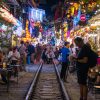
2024.11.21-24 Chuanyi Liu + Jiang Kunzhi Hanoi, the capital of Vietnam where history and modernity blend seamlessly. Thanks to its rich cultural heritage, it has established itself as one of Southeast Asia’s premier tourist destinations. In this city where the Old Quarter, St. Joseph’s Cathedral, and Lotte Tower coexist, we explore Hanoi’s nightscape culture through the lens of light. Vietnam, a populous nation of 100 million people, has Hanoi as its capital serving as the political, cultural, and economic center as well as a key transportation hub. In July 2020, the Vietnamese government issued Decision No. 1129, promoting the development of the night economy and designating Hanoi as the pilot city for this initiative. The city’s rich heritage and unique cultural arts provide favorable conditions for the growth of Hanoi’s night tourism. Hanoi’s urban lighting exhibits distinct characteristics depending on the area and function. In the Old Quarter, narrow alleys and historic buildings create a lively atmosphere with bustling night markets. The nighttime lighting here mainly consists of creatively designed decorative lights at individual shops, which enhance the vibrant energy. Around Hoan Kiem Lake, soft lights reflected on the water’s surface and the illumination of the Turtle Tower standing in the lake harmonize to create a calm and serene nightscape. In the new urban area, modern building facades and bright LED lighting present a contemporary and sophisticated city image. Dynamic light displays further emphasize the lively spirit of the area….

AFRICA

City Night Survey: Cairo&Giza, Egypt

More

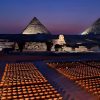
2024.10.31-11.3 Makalin Wongchinchai + Stell Li Egypt, land of secrets, a place full of history, mystery and amazing stories. We wanted to see not only thefamous pyramids, but also a lot of interesting cities and lightings in the night. To explore the lighting in Egyptian daily life, we chose to visit two main cities in Greater Cairo Area for four days. ■Introduction Egypt, one of the world’s oldest civilizations, is home to the pyramids, deserts, the Nile, and its vibrant capital, Cairo, where ancient and modern worlds meet.To explore this one of the most historical countries in the world, we chose to visit two main cities in Greater Cairo Area —Cairo (the captial city of Egypt) and Giza (with Memphis and its Necropolis – the Pyramid Fields from Giza to Dahshur ).As the sun sets over the city, Cairo & Giza transforms into a dazzling display of lights and enchantment. The bustling streets come alive with vibrant energy. As locals and visitors alike gather in cafes, shisha lounges, and bazaars, embracing the rich Egyptian culture that thrives well into the night, we surveyed lightings on Cairo & Giza’s daily life. ■Cairo The Khan el-Khalili market has always been a hub of trade and commerce since it was established in 14th century. Walking in this maze-like narrow streets was like taking a journey back in time.During the day, the sunlight was intense. When the sun shines through all kinds of awnings,…

JAPAN

City Night Survey: Akihabara, Tokyo

More

2024.9.9 Yonglin Ke + Kunzhi Jinag + Linxi Chen The brightness (luminance) of signage lighting is key to shape the overall lighting of a city. This survey conducted in Akihabara, a globally famous district, focused on the renowned Akihabara Electric Town (Chuo-dori), analyzing the evolution of the city’s lighting composition by comparing it to the survey from 19 years ago. ■Akihabara Electric TownAkihabara is the heart of electronics in Tokyo and a globally famous hub for otaku culture. While it is bustling with tourists daily, the colors of the signs, filled with anime and game culture, are much more diverse compared to upscale commercial areas like Ginza or other shopping districts. In 2020, Chiyoda Ward released guidelines for outdoor advertising and urban development, leading to changes in Akihabara’s streetscape. This survey investigates the current night view of Akihabara Electric Town, comparing it to a survey conducted 19 years ago. (Kunzhi Jiang) ■What kind of lights shape Akihabara?The main lighting elements in Akihabara’s key districts include streetlights, signage lighting, building façade lighting, and lighting from store entrances and spillover light.Compared to the picture from 19 years ago, the most noticeable green and red lights from EDION were not illuminated due to the store’s closure. The ONODEN sign is now an LED screen, and the surrounding lighting has a more subdued feel. Previously, the area behind the bridge was completely dark, but now, with the bright lighting from a drugstore’s interior and…

ASIA

City Night Survey – Busan, South Korea

More

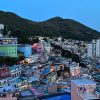
2024.05.16 – 05.19 Mari Kubota+ Noriko Higashi Busan, South Korea’s second-largest city, is one of the world’s major port cities. In recent years, it has also gained fame as a hub for tourism and film. We surveyed the lighting in Busan, which is also a member of LUCI (Lighting Urban Community International). South Korea is a close neighbor, just 1.5 hours from Tokyo by plane, making it a popular destination for quick and affordable trips. Busan, the second-largest city in South Korea, is not only a tourist destination but also a major port and an entertainment center, hosting film festivals. As a member of LUCI, Busan has been focusing on urban lighting as part of its urban planning. In 2015, the city developed an extensive overview of its nightscapes, resulting in the Busan Urban Light Policy for 2030. This policy has been updated several times, reflecting the city’s ongoing efforts in implementation and improvement. The guidelines divide Busan into several zones, each with lighting tailored to its specific characteristics.We traveled to Busan to assess whether the city’s lighting contributes to safety, beauty, attractiveness, and the local economy at night. ■Jagalchi Market Jagalchi Market is South Korea’s largest seafood market, selling both fresh and dried fish. After purchasing seafood on the first floor, visitors can have it cooked and served on the second floor. The market attracts many tourists. White lights are used to illuminate the seafood, making it look as…

ASIA

City Night Survey – Pu’er City Yunnan, China

More

Nightscape in Jingmai Mountain2023.12.08 – 12.13 Kyoko Takubo + Hongna Chen Located on the southwest border of China, Jingmai Mountain is the birthplace of Pu’er tea, where the indigenous people have created an ancient tea forest cultural landscape, which was registered as a UNESCO World Heritage Site in September 2023.While working on the project, we became interested in the local culture. So we decided to survey the villages at night and to observe and report the impact of tourism development on the local nightscape. ■Introduction Visiting Jingmai Mountain isn’t easy. First, spend the night in Kunming, then leave early morning for the destination by plane or train.We had planned to fly from Langcang Jingmai airport, but our flight was suddenly cancelled. So we had to travel to Pu’er by train and grab a cab to Jingmai Mountain.During our stay, we were based in Huimin Town where our project TEA CELLAR is located. We visited Nuogang Village, Wengji Village, and Jingmai Village to observe the people’s daily life and the nightscape there. ■ Nuogang Village Nuogang Village is a historic village of the Dai tribe, where the villagers have maintained their traditional lifestyle. The first floor of the house, with its distinctive gabled roof, is used for tea production and for the teahouse. The second floor with a tiled roof is a living space.The owner of the teahouse told us that the first floor is open to guests and the family…

AMERICAS

City Night Survey – Alaska

More

2024.02.06-02.12 Masafumi Yamamoto + Yuki Ito We visited Alaska at the beginning of February. The purpose was to investigate the light environment in the Arctic under the theme of ‘Mother Nature’, focusing on urban areas, living environments, Eskimo life, and the wilderness. In this study, we stayed in Anchorage, the largest city in Alaska, and Fairbanks, a citysurrounded by nature. In Fairbanks, we stayed at a lodge in the mountains and observed the northern lights. ■Arctic City After noon in Fairbanks, a city as close to the Arctic Circle as you can reach. The weather is clear. The sun has risen close to the horizon and is about to set. Houses and trees cast long shadows on the ground. It is a beautiful scene, as if I had dipped the tip of my paintbrush in dark blue watercolor paint and carefully traced a stroke on a white canvas covered with snow. The temperature here is minus 20°C (68°F). Still, I can feel the warmth of the sun on my skin. The temperature can reach minus 40°C (-40°F) during the harshest season, while the four seasons are rich in variety. The temperature drops even further when the wind blows. This is the kind of Alaska I wanted to visit. The flora and fauna live in such a harsh natural environment. Human life right next to them. We would like to investigate the lighting culture while unraveling the reasons for this. ■Closing…

ASIA

Lighting Survey: Chiang Mai Lantern Festival

More

City Night Survey- Chiang Mai Lantern Festival 2023.11.25 – 11.29 Angkana Kongchatri (Tan)+Momoko Muraoka Chiang Mai is the second largest city in Thailand which has special atmosphere tracing from Lannar kingdom period. Tan from Bangkok and Momoko from Tokyo traveled to the city for a survey. ■Back ground of the survey The lantern festival in Chiang Mai has been getting very high attention from international tourists since a couple of decades ago. Due to its visual appeal, the festival has become an explosively hot tourist spot and activity. As number of tourists raise up, the negative side of the festival also becoming a serious issue, such as the risks of fire and abandoned trashes which cause suffering to local people. In this SNS era, the speed and frequency of exchanging information has become extremely heavy than ever. When very local culture gets intensive attention from unidentified crowds, then the one to retain the culture need to face and respond the troubles to come with the anonymous attention which is also happening on the lantern festival in Chiang Mai. Festivals with lights are attractive. However, overlooking the wastes happening materially and culturally cannot be accepted anymore. Through this survey, we aim to observe not only the bright side but also the problems and struggles behind which could relate with many other traditional lighting festivals. We believe that the approach could bring another layer of depth for the lighting detective activity with…