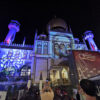
Muslim District within New Development Context
2025.11.06-11.09 Quratuaini Jamil + Xu Sunny
The survey aims to examine the Muslim Quarter District with a focus on its religious, cultural, and urban context, while assessing how it integrates with the emerging modern development within Xi’an.

■ Brief Summary of Lighting Survey
With a vast metropolitan population of 12.9 million—of which 4.45% reside in the urban center—Xi’an is a renowned historical and cultural hub in China that pursues an urban planning strategy blending tradition with modernity. The city integrates its rich heritage with the demands of contemporary development while carefully safeguarding key cultural areas. A prime example is the Muslim Quarter, which plays a crucial role in preserving living heritage, ethnic diversity, and the traditional urban fabric. Xi’an’s planning approach emphasizes “development within preservation and preservation within development,” reflected in the harmonious coexistence of new growth and historic architecture. Accordingly, this research focuses on how the old and new parts of the city—particularly distinct areas like the Muslim Quarter—are effectively integrated.

■Xi’An Muslim Quarter
On the first day, we observed the Friday congregational prayer at the Great Mosque of Xi’an. This visit provided a valuable opportunity to study the mosque’s internal spatial organization and architectural characteristics. The Great Mosque of Xi’an is distinctive for its unique synthesis of traditional Chinese architectural language and Islamic religious functions. It differs markedly from the Middle Eastern style—characterized by prominent domes and tall minarets—commonly seen in places like Singapore. Instead, the mosque features a pagoda-like minaret positioned centrally within a courtyard. Its landscape layout is rooted in Chinese courtyard planning, culminating in a main prayer hall framed by a monumental stone gate adorned with Arabic calligraphy and dragon mandala motifs.

Inside, the timber-constructed prayer hall creates a dim atmosphere, where carved Qur’anic verses line the walls, and lighting—primarily a 5000K conventional lamp—effectively compensates for the dark interior materials. The rest of the space was also only lit up with the bare conventional lamp within its compound. Unfortunately due to the timing that we went is close to winter. Therefore, we were not able to view the internal space a night as it closes at 5.30pm during winter. We instead explore the outskirts of the mosque streets which filled with food, commercial stores and spots of entertainment attraction which is known to them as Muslim district bazaar.

■ Muslim Bazaar
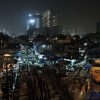
At night, the bazaar in Xi’an’s Muslim Quarter transforms into a vibrant and visually dynamic space, reflecting both commercial activity and cultural heritage. The streets are illuminated with bright, warm-toned lights from food stalls, shops, and entertainment spots, creating a lively atmosphere. Neon signs, LED strips, and hanging lanterns add color and energy, drawing the eye to merchandise and culinary displays.

Street lighting is kept moderate, providing safety for pedestrians while allowing the individual shop lighting to take precedence. Traditional lanterns are incorporated along some streets and entrances, subtly reinforcing Chinese cultural aesthetics. The layered lighting effect—bright stalls set against softer ambient light—enhances depth and highlights the movement within the bazaar. Overall, the lighting strategy balances functional illumination for commerce with cultural expression, producing a nighttime environment that is both energetic and intimate. The interplay between bright commercial zones and the softer atmospheric landscape creates a unique and memorable urban experience.


■ Xi’An Museum
The Xi’an Museum presents the city’s rich historical legacy through extensive collections from the Zhou, Qin, Han, and Tang dynasties, housed within architecture that blends modern design with traditional Tang influences. Located alongside the Small Wild Goose Pagoda and landscaped gardens, the museum offers both cultural depth and a serene spatial experience. Particularly notable were exhibitions showcasing historical transformations through everyday materials such as ancient plumbing components, floor tiles, and roof eaves, as well as the use of AI technology to enhance historical interpretation. A key highlight was the exhibition on the evolution of urban planning from the Sui and Tang to the Song dynasty, illustrating changes in city scale and spatial organization. Overall, the museum provides valuable insight into Xi’an’s development as both an imperial capital and a dynamic urban environment.

■ Tang Dynasty ‘Ever Bright City’
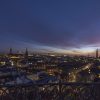
The “Ever Bright” area showcases exceptionally bright and vividly colored façade and outdoor lighting, emphasizing the intensity of commercial zones. In contrast, sections of the city wall are dimmer, which local photographers creatively use for shadow puppet-style effects. The Big Wild Goose Pagoda features subdued lighting in both brightness and color temperature, creating a striking contrast with the surrounding illuminated areas. Many photographers were seen using the pagoda as a backdrop for commercial tourist photoshoot.
Trees are decorated with lines of lights, apple-shaped lanterns, and 5000K outline strip lights, with canopies highlighted by yellow RGB calligraphy. The commercial buildings, inspired by ancient Chinese architecture, use spotlights to illuminate niche details and accentuate the structure. Although there is a strong contrast between the bright commercial lighting and the dimly lit landscape, the overall effect feels surprisingly balanced. This interplay creates a layered, immersive nightscape that showcases both modern spectacle and historical heritage. It appears that while Xi’an holds a minority Muslim culture, the people take great pride in their Chinese ancestry, which is clearly visible in the unique context of the city.


■ Conclusion
Xi’an’s Muslim District and city lighting remain strongly influenced by Chinese cultural traditions. This reflects the city’s large population and its preference for a festive, celebration-oriented lifestyle. Spaces are brightly lit to create a lively atmosphere and enhance safety. Emphasized vertical surfaces make buildings glow like lanterns. Multiple lighting colors—drawn from street signage and traditional accents—may seem inconsistent but are generally well received and enjoyed by the public.(Quratuaini Jamil、Xu Sunny)