Small-group Night Walk Live Review
2021.Nov. Naoko Oguchi + Narumi Mizuno + Shiho Ishizaki + Shinichi Sakaguchi + Sachiko Tsuji + Yuka Suzuki + Mutsuro Honma + Qin Tianyi
Waiting for the state of emergency to lift, we carried out the night walk surveys. Although in small groups, we were able to conduct them across many areas. We paid careful attention to COVID-19 infection control measures and held review sessions. Each team’s review was deep and thorough, reflecting the advantages of having a small number of participants.

■Shibuya
The Shibuya team investigated the third phase of the Shibuya Ward’s “THE TOKYO TOILET” project and Shibuya SKY. The public restroom at Yoyogi Hachiman, designed by Toyo Ito, uses indirect lighting that bounces softly off the ceiling, creating a gentle, warm light environment both inside and outside. Combined with its form, it created a cozy atmosphere and was thus considered a hero. Each restroom in the project has its own unique character, but considering ease of use for people, soft lighting seemed important.
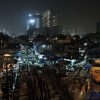
Shibuya SKY is a facility 229 meters above Shibuya, offering a 360-degree panoramic view of Tokyo’s nightscape. It eliminates glass barriers and minimizes unnecessary light from the facility itself, allowing visitors to enjoy the view without stress. The hammock area, where lighting is minimized to fully reveal the sky, was also praised as a hero. While carefully placed accent lights maintain brightness and create cool gradations of illumination, some areas like staircases felt a bit unsafe from a security perspective. As a side note, the Tokyo Skytree, in contrast to Tokyo Tower, felt glaring due to its strong lighting. Shibuya SKY offers a unique vantage point to observe Tokyo’s nightscape, so anyone who hasn’t been is highly encouraged to visit. (Naoko Oguchi)


■Kita-Aoyama
The Aoyama team explored “Nono Aoyama,” a newly completed area within the Kita-Aoyama redevelopment zone, and experienced the stark contrast it presents with the adjacent 59-year-old buildings awaiting future redevelopment.
They identified several “villains,” such as a newly constructed building with a color-controlled lighting system that clashes with the surrounding environment; an office building with glass facades that exposes cluttered interiors under harsh white lighting at night; and streetlights installed by the local merchants’ association that disrupt the atmosphere created by the individually lit storefronts.
On the other hand, heroes included the softly lit landscaping around Nono Aoyama. The gentle lighting wasn’t overly bright, yet still ensured safety while beautifully illuminating the surrounding wooded areas. Another hero was the nightscape of Shinjuku seen from the rooftop of the 59-yearold building—the contrast with the abandoned former Tokyo Metropolitan Housing complex below was particularly striking.
The dilapidated complex, now surrounded by temporary fencing, had the mood of a back alley that made some wonder, “Is this really Aoyama?” While some saw it as a villain, others commented, “I actually kind of like this atmosphere…” Comments like these came not just from Japanese participants, but also from those joining the salon from China. It was a reminder that lighting, as something etched into the five senses, resonates differently for everyone—shaped by individual memories and associations. (Narumi Mizuno)

■Asakusa
The team surveyed the Tori-no-Ichi festival held at Asakusa’s Ohtori Shrine. This event is beloved as a celebration for good fortune and business prosperity in the coming year, with the festive kumade (decorative rakes adorned with lucky charms) as its signature item. Despite the light rain on the day of the survey, the venue was bustling with crowds and a long queue formed just to get in. Passing through the shrine gate, visitors entered a path lined with kumade vendors. The lighting used by these stalls varied greatly—exposed LED bulbs, high color temperature lamps, and floodlights were commonly used, causing glare in many areas.
On the other hand, there were also thoughtful touches, such as paper umbrellas covering lamps to shield pedestrians from glare, and some stalls that used a few low color temperature bulbs in a tasteful way, creating a gentle and pleasant brightness.
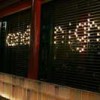
At the end of the path stood the main shrine building, where walls of lanterns formed an impressive photo spot. This received high praise from the team. However, the floodlights nearby were aimed at the lanterns from the outside, which diminished the soft glow that would have come from within. It seemed that the space could have been even more enchanting had the lanterns been lit from the inside, allowing their original beauty to shine.
While the overall feedback was that the lighting felt “too bright and lacking cohesion,” many also said it was “a cheerful and lively festival atmosphere.” This highlighted the idea that for limitedtime festivals, creating a fun and vibrant mood may matter more than visual comfort. (Shiho Ishizaki)


■Takeshiba Area
We had visited Takeshiba during the night walk in July, but due to rain we weren’t able to conduct a thorough survey—so this was a return visit to properly explore the area. The area features many new developments, and overall the lighting gave off a pleasant atmosphere. At WATERS Takeshiba, color lighting was used in the landscape and canopy illumination, creating a playful and whimsical ambiance.
At Port City Takeshiba, deck-level footlights helped foster a calm and relaxed environment. The restaurant area was bustling with energy, evoking a sense of nostalgia—somehow reminiscent of the pre-pandemic days. As for villains, one standout was the backlit signage at Port City Takeshiba. The luminance was too high, making it uncomfortably bright. Additionally, the Lawson convenience store on the first floor was strikingly bright and had a high color temperature, making it feel out of place within the overall space.
With so many new and open facilities now available, we hope to see more people returning and bringing renewed energy to the area. (Shinichi Sakaguchi)


■Tokyo Station Area
With Christmas illuminations underway, the Tokyo Station and Marunouchi area lived up to its image as a refined, mature cityscape—leaving a strong positive impression when it came to lighting.
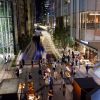
The streets, draped in elegant champagne gold LEDs, naturally lifted our spirits just by walking through them. The illuminations along Marunouchi Nakadori have become a winter tradition, drawing in large crowds. Despite the cold, visitors were clearly enjoying the dazzling atmosphere, and the area now stands out as one of Tokyo’s top winter illumination spots.
While Tokyo Station is home to many lighting “heroes,” there were still a few areas that could be improved. Some tree uplights were uncomfortably bright, and the north exit of Tokyo Station had permanent floodlights that were glaringly intense. Still, the Tokyo Station–Marunouchi district blends old and new, creating a nightscape full of visual highlights. Especially in Marunouchi, nighttime aesthetics are considered an integral part of urban design. With its stunning seasonal lighting, it’s an area where people can truly enjoy the night—one that you’ll want to visit again and again. (Sachiko Tsuji)
■Hisaya-odori Street, Nagoya
The Nagoya team conducted a night walk survey in Hisaya-odori Park, which opened about a year ago. The park integrates public green space with commercial facilities, stretching across the TV Tower area and the northern zone. Within the park, there are four main zones:
(1) the “Learning Forest Zone” adjacent to a large lawn,
(2) the “Urban Resort Zone” ideal for leisurely strolls along winding paths,
(3) the “Communication Zone” that enriches everyday life, and
(4) a new “Symbol Zone” showcasing the charm of Nagoya.
Each area offered distinct spatial and lighting characteristics, making for an exciting and varied walking experience.
A favorite spot among the team was the view of the TV Tower from the Forest Zone. The lighting and sense of spaciousness were well balanced, and the ambient light level was low enough that even bright stars could be seen overhead.
Another favorite was the view of the tower from between restaurants in the Urban Resort Zone. The area had a gentle slope, and the warm light spilling from the restaurants created a pleasant atmosphere. However, some lighting “villains” were spotted within the park. Trees lit with red LEDs gave off an eerie, ghost-like impression. From the central Sakae district, the view of the TV Tower was disrupted by three large monitors in the line of sight, which was disappointing.
Like Nagoya Station, Sakae is an area we’ll need to keep an eye on. We’re already looking forward to the next night walk survey. (Yuka Suzuki)


■Kyoto Station
This time, the Kyoto team conducted a night walk survey of Kyoto Station and its surrounding streets.
Kyoto Station, the gateway to a city rich in traditional culture, features a refined and understated design based on the concept of In-ei Raisan (In Praise of Shadows). It’s beloved by both tourists and locals, and the station itself could be considered a kind of lighting “hero.” However, our exploration of the surrounding area revealed some “villains” as well. Although the station was completed in 1997—an era when LED lighting was still more science fiction than reality—our current survey found that nearly all the lighting has been replaced with LEDs. While this transition to LEDs brings many advantages, particularly in terms of energy efficiency, it appears to have also fostered a few lighting villains. The most noticeable issue was deliberate dimming. In many places, lights had been selectively turned off. This was particularly problematic with the lighting that illuminates architectural structures from below—when these lights are dimmed or removed, the entire expression of the space changes dramatically.
The grand staircase featured a whimsical digital display. Some couples may enjoy the seasonal content, such as animations of Santa Claus, but when the space is constantly decorated with content that departs from the “praise of shadows” aesthetic, the station’s identity as Kyoto’s dignified entrance begins to fade.
Another lighting villain was the underground shopping arcade—unnaturally bright and lacking any Kyoto character. One team member noted that the stark contrast in brightness between the underground area and the station concourse might be why some people perceive Kyoto Station as “dark.” Given the walking time from the subway through the underground arcade to the station, the human eye simply can’t adjust quickly enough. (Mutsuo Honma)
■Suzhou, China
Suzhou Nocturne
“In the spring, petals fall upon the water in Suzhou,
Do the willows weep, mourning their fleeting beauty?
The blossoms drift away on flowing streams—
Though we do not know where the waters lead tomorrow…”
— Excerpt from “Suzhou Nocturne”


According to historical records, Suzhou’s history stretches back over 4,000 years. Among the many notable chapters in that long history, one of the most significant is the construction of Suzhou City during the Spring and Autumn period about 2,500 years ago, when it served as the capital of the ancient Wu Kingdom. For this night walk survey, we explored the area of Pingjiang Road—a district that perfectly represents one of Suzhou’s defining characteristics: the way its streets run parallel to canals, with the cityscape and waterways existing side by side. The most prominent “villain” we encountered during our walk was the over-the-top signage. In China, signage seems to prioritize visibility above all else. For instance, brightly colored and oddly shaped signs are boldly affixed even to historic buildings. While they may appear striking at first glance, mounting these signs on old brick walls results in irreversible damage. It’s especially disheartening to see such signs installed on structures with historical value.
Another visual offender was the use of color lighting on trees. In China, it’s quite common to see greenery lit up in green at night—so much so that it has become almost unremarkable. However, when red and green are used together, even in the name of Christmas, it becomes difficult to excuse the visual clash.

On the other hand, the “hero” of the nightscape was the line lighting installed along the riverbanks, shimmering as it reflected off the water’s surface. What made it special was that the fixtures weren’t directly illuminating the river—instead, the lights were aimed upward, with the glow rebounding gently to illuminate the water below. This indirect lighting created a soft, serene atmosphere. The sparkling surface of the river and the swaying boats together formed a quintessential Suzhou scene. Surely, it’s the power of lighting that brings such a view to life.

I also felt that the streetlights deserved to be called heroes. Their light sources were enclosed in plastic covers, which diffused the light gently and created a calming effect. They paired beautifully with the high-reflectance stone pavement, and when it rained, the combination created an especially atmospheric and charming setting. Past and future alike, Suzhou has always been deeply connected to water. I truly hope that its nights continue to become more enchanting through lighting design. And once the COVID era is behind us, wouldn’t it be wonderful to go on a night walk survey in Suzhou with all the Lighting Detectives? (Qin Tianyi)
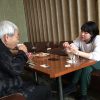
Because the groups were small, everyone had a chance to share their thoughts as we walked, making each team’s night walk survey deeply engaging and meaningful. We were also able to hold reflection sessions afterward, which allowed us to immediately review what we had observed. It felt like the joy of discussing lighting had bloomed again after a long while.
In China, one of our members even did the night walk survey solo, showing how the format has evolved under the pandemic. While this style of survey will likely continue for a while, it’s becoming more feasible to hold walks not only in Tokyo but also in various other regions.
The Nagoya team was actually formed after someone reached out saying, “I’d love to do a night walk survey in Nagoya.” We contacted Lighting Detectives members living in Aichi Prefecture, and five people gathered, making the survey possible. A night walk can be held as long as a few people come together, so even if you’ve never participated in a Tokyo walk before, please feel free to join in. Let’s carry out night walk surveys all over Japan and grow the Lighting Detectives community! (Noriko Higashi)