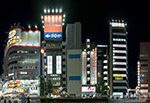
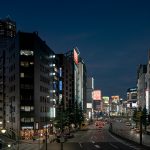
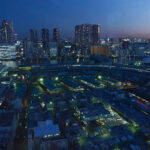
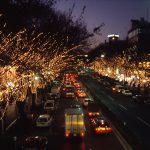
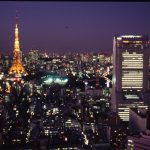
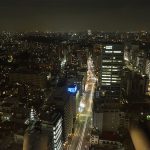
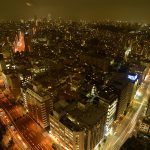
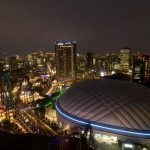
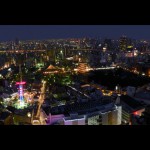
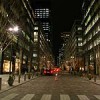
A city for the young and young at heart, Shibuya. The area is composed of a mess of streets all with a different atmosphere, including a few main streets connected by narrower alleyways. Each street has developed its own personality and role, including lighting conditions to create the Shibuya night. From the scramble intersection in front of Shibuya Station, 3 distinctive roads, Dogenzaka, Center Gai, and Koen Dori radiate. After dusk, the lights come on and the personality of each street is even more clearly defined. As the title implies, Center Gai is the center of Shibuya geographically and caters to the young as the center for shopping and entertainment. This street is full of light. Each shop seems to be competing for the brightest facade with infinite amounts of luminous signage and advertising, creating a 3-dimensional playground. Dogenzaka is a festive street with a steady flow of pedestrians, but turn down one of the narrow side streets and the atmosphere changes immensely. The facades of many love hotels packed into the area are saturated with color creating a seedy blend of light and young couples prowling the Maruyama-cho area.
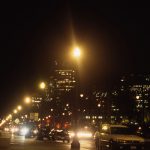
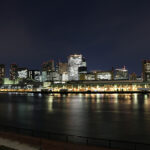
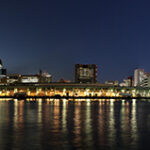
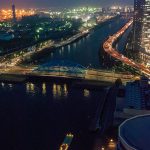
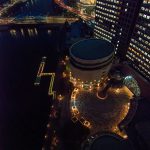
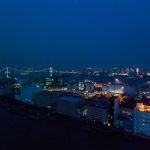
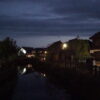
In the heart of Tokyo, Nihonbashi River lies hidden under a system of highway overpasses and the Sumida River is wide and commanding and it cuts through the city. With a variety of bridges, both rivers assert their own unique presence in the Tokyo cityscape. On our own river tour, we encountered the particular water and lightscapes surrounding the bridges and shores of each river. The newly built Nihonbashi Mitsui Tower next to the famous Nihonbashi Bridge. This is the first skyscraper in the Nihonbashi area and as the sun sets, the facade detail is elegantly illuminated. At the historical Nihonbashi District, a variety of lighting methods are on parade, but the highway overpasses keep most of the river hidden from view. Rumors of reconstructing the highway system underground would help revive the scenery along the Nihonbashi River. The main structure of the Chuo-Ohbashi Bridge is beautifully illuminated. The many bridges along the Sumida River compete with each other for top beauty marks, as each is illuminated in a multitude of colors.
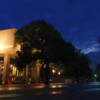
Rich in local history and cultural facilities, Ueno Park covers a large area in the middle of Tokyo. Even though located in an urban setting, we anticipated a lighting environment completely different than the lights of downtown. Between the trees and darkness of the park there are patches of Tokyo`s bright night sky, but the hushed silence is isolated from the city`s hustle and bustle. Ueno Park`s quiet presence gently sleeps next to Tokyo`s vibrant downtown. Approaching Ueno Park from the JR train station. The large overhang of the Tokyo Bunka Kaikan is brightly illuminated in contrast to the surrounding darkness of the park. A view o f northern Tokyo over the Shinobazu Pond from an elevated Ueno terrace. The bright lights of a vibrant downtown are seen in the distance beyond the dark trees of the park. However, through the darkness a bright, orange, sodium lamp illuminates the Benten Shrine near the pond. Looking towards the water fountain plaza from the Tokyo National Museum. A slightly bright night sky, characteristic of most metropolitan areas, opens over head with a dark belt of trees and tiny dots of light below. Young couples seeking a quiet spot away from the lights, snuggle up together on near benches.
2025.09.04-09.08 Yonglin Ke + Masashi Kurobe The nights in Honolulu are a diverse blend of resort illumination, residential lights, torches, and night market glows. However, as the city develops, the starry sky is fading, raising concerns about the impact on the local ecosystem. Balancing urban growth with light pollution countermeasures remains a significant challenge. We conducted an on-site night walk survey to explore the balance between the city and nature and to evaluate the current lighting environment. ■Honolulu Honolulu, the capital of the U.S. state of Hawaii, is a prominent tourist destination in the heart of the Pacific Ocean. Simultaneously, it serves as the political and economic hub of the state. In this land where the sea, mountains, and urban areas sit in close proximity, the nightscape reveals a variety of expressions depending on the time and location—blending the glow of resort hotels, the soft lights of residences, traditional fire torches, and the vibrant lights of night markets. Furthermore, the combination of intense sunlight and a tropical climate creates a unique character within the city’s lighting environment. On the other hand, urban development and the growth of the tourism industry have negatively impacted the visibility of the starry sky and affected local ecosystems, such as migratory birds and sea turtles. While the state and city have begun implementing measures to reduce light pollution, finding a balance with the tourism industry remains a challenge. During this night walk survey, we investigated…
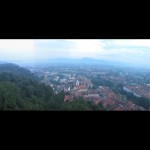
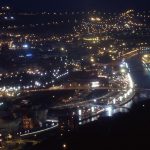
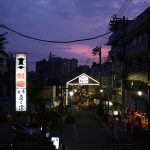
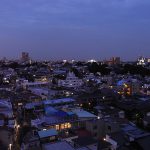
Kichijoji is an area of Tokyo where a variety of elements are compressed together to create this unique neighborhood. However, even though it seems to be a mixture of “stuff” the area is well planned and organized. Public and private organizations have aggressively worked together in city planning and we surveyed the area to discover what kind of lighting environment or rules they have advised. Starting on the north side of the station, a commercial area, we then moved to the south side of the station and Inogashira Park and the alleyways that connect the park and station. North Side of the Station The lighting along the covered arcade shopping streets, Sun Road and Diamond Street, are LEDs, creating a modern atmosphere, but down some of the narrower alleyways, like Harmonic Alley, the lighting is retro for an exciting nightly stroll. Park Street The main street from the station to Inogashira Park is a narrow 3-meter wide street lined with small cafes, bars, and recycled clothing and nick-nack shops. Restaurant and shop lighting is a warm 3000k for a comfortable atmosphere, but most street lighting spills out from the entrance to these restaurants and shops. Once they are closed for the night the street is very dark. Inogashira Park Equip with solor panels, tall metal halide streetlights record 331lx inside the park. However, the average lux level inside the park is about 30lx. The streetlights are too bright, and ruin…