Date of Issue: April 24, 2026
・Activity 1 / Lighting Detectives Jr. : Children’s Workshop(2026.03.20)
・Activity 2 / City Night Walk Vol.78:Shinjuku(2026.03.05)
・Activity 3 / The Round Table Discussion Vol.75: Shinjuku Night Walk Review(2026.03.19)
Lighting Detectives Jr. : Children’s Workshop
Awaken the “Treasures” Sleeping in Nighttime Tsukudajima with Light!
2026.03.20 Sachiko Segawa + Simeng Huang + Momoe Nomura + Noriko Higashi
On the first day of the three-day weekend before spring break in March, we held our children’s workshop. This time, right in Tsukudajima where the LPA office is located, we took the kids on a night walk survey to search for “Lighting Heroes and Villains” and discover “treasures” hidden in the darkness. We also conducted lighting experiments on the spot.
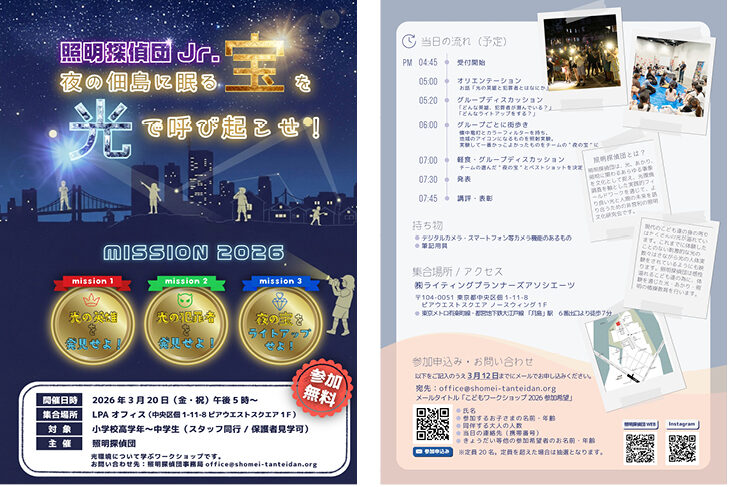
On March 20th—just a bit too early for the cherry blossoms—we hosted the 2025 Children’s Workshop. This annual hands-on program encourages children to explore and create under the theme of “light,” helping them learn about its power and influence. Since children rarely have the chance to walk outside after dark, the goal is to provide a spark for them to think about the relationship of light within the city. They experience how a familiar landscape transforms at night and how a single beam of light can drastically change an impression.
For this session in Tsukudajima, we tasked the children with identifying “Heroes and Villains” and locating “Night Treasures”—landmarks swallowed by the dark that could reveal new charms when illuminated. As they walked, the kids observed the town, experimented with lights to see what looked interesting, and recorded their findings through photography.
Tsukudajima is a historic island built by fishermen summoned from Osaka by Tokugawa Ieyasu. Today, it is an area where the remnants of the Edo period coexist with high-rise apartments. The neighborhood condenses the best of old-fashioned “shitamachi” (downtown) charm and modern scenery: cherry blossom trees along the Sumida River, the atmospheric Tsukuda-kobashi Bridge and Tsukuda-bori Moat, Sumiyoshi Shrine (dedicated to Ieyasu), and the contrasting cluster of skyscrapers. We were eager to see what kind of Heroes, Villains, and nighttime landmarks the children would discover in this fascinating area. (Sachiko Segawa)
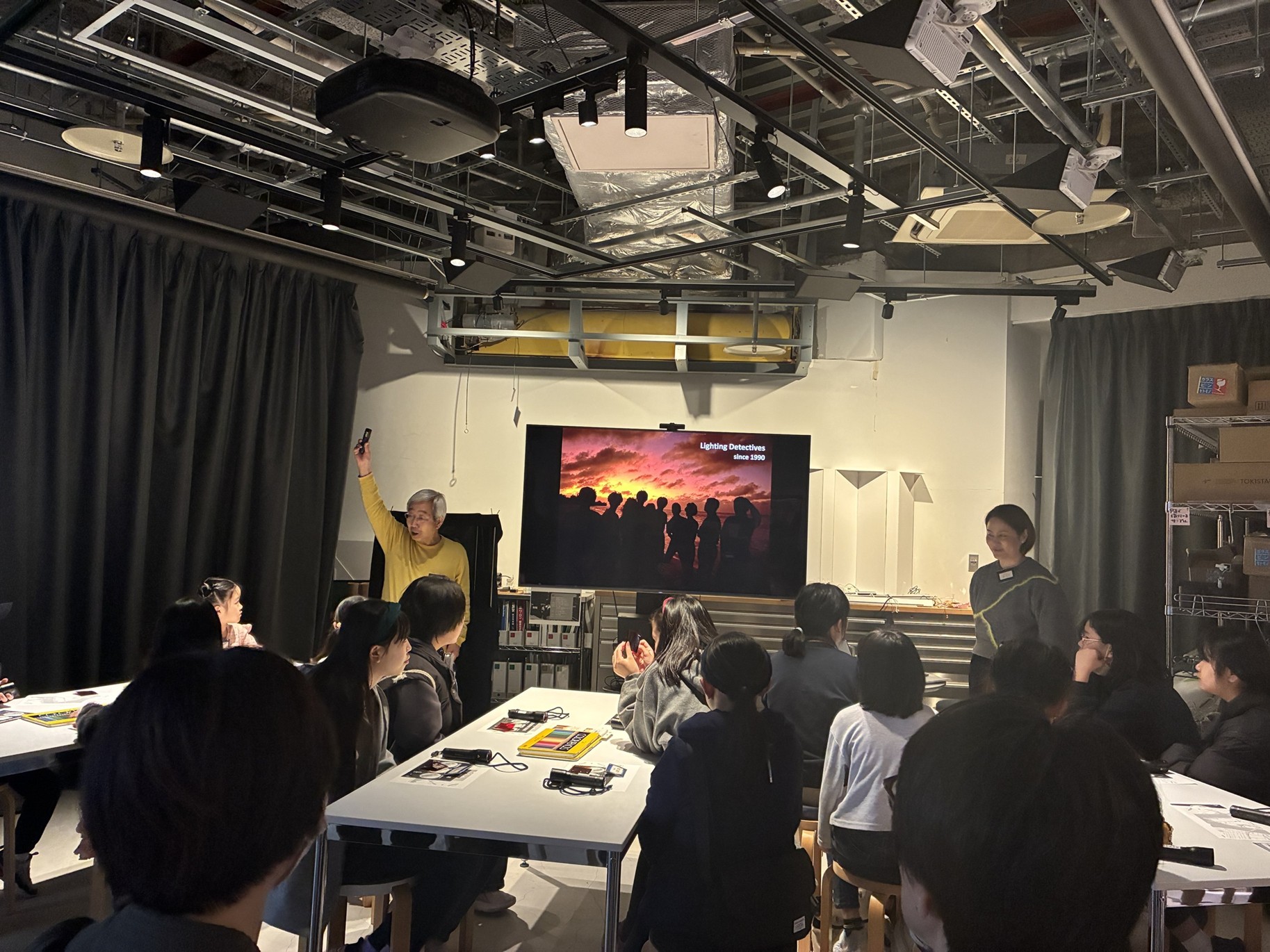
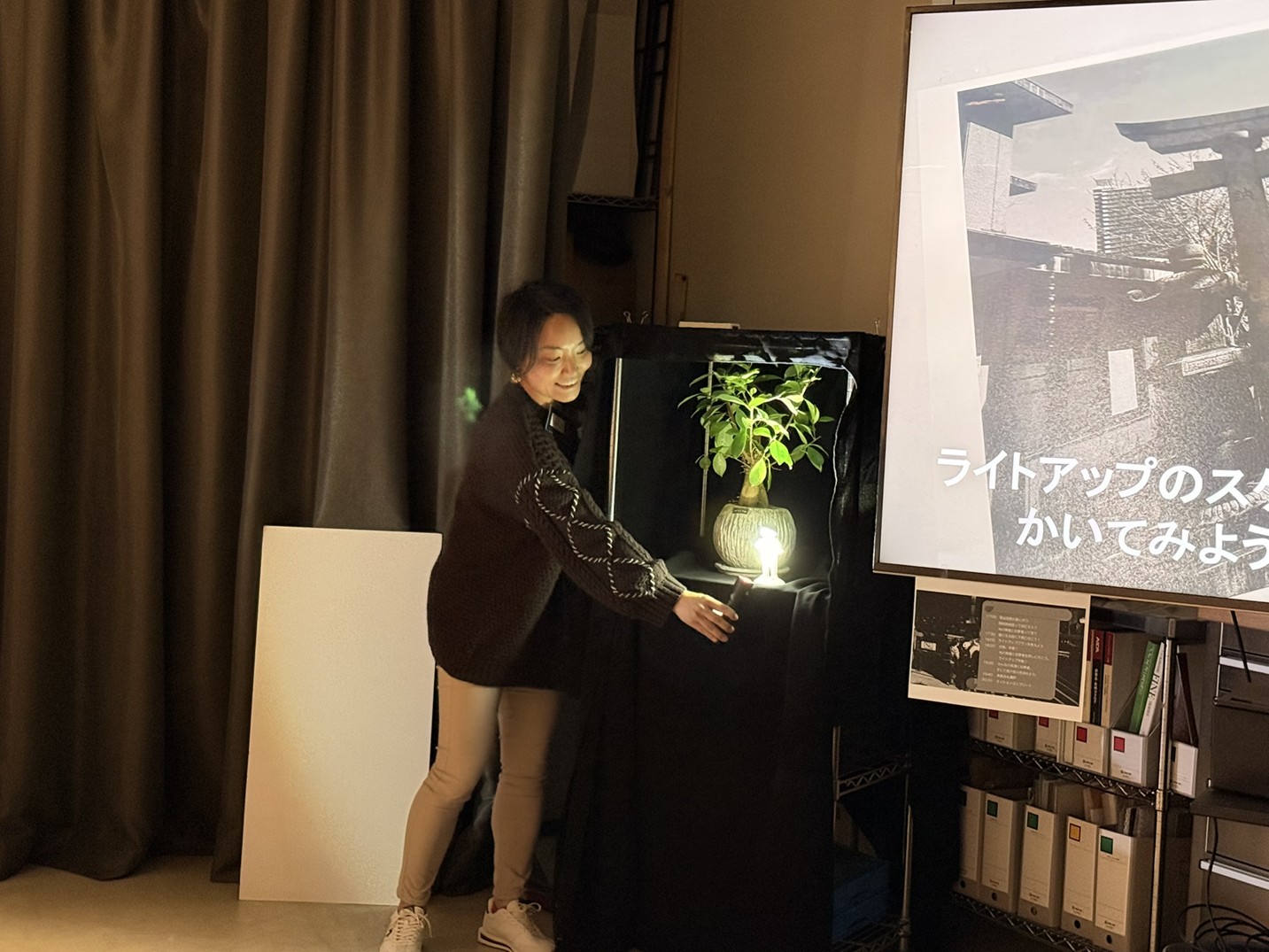
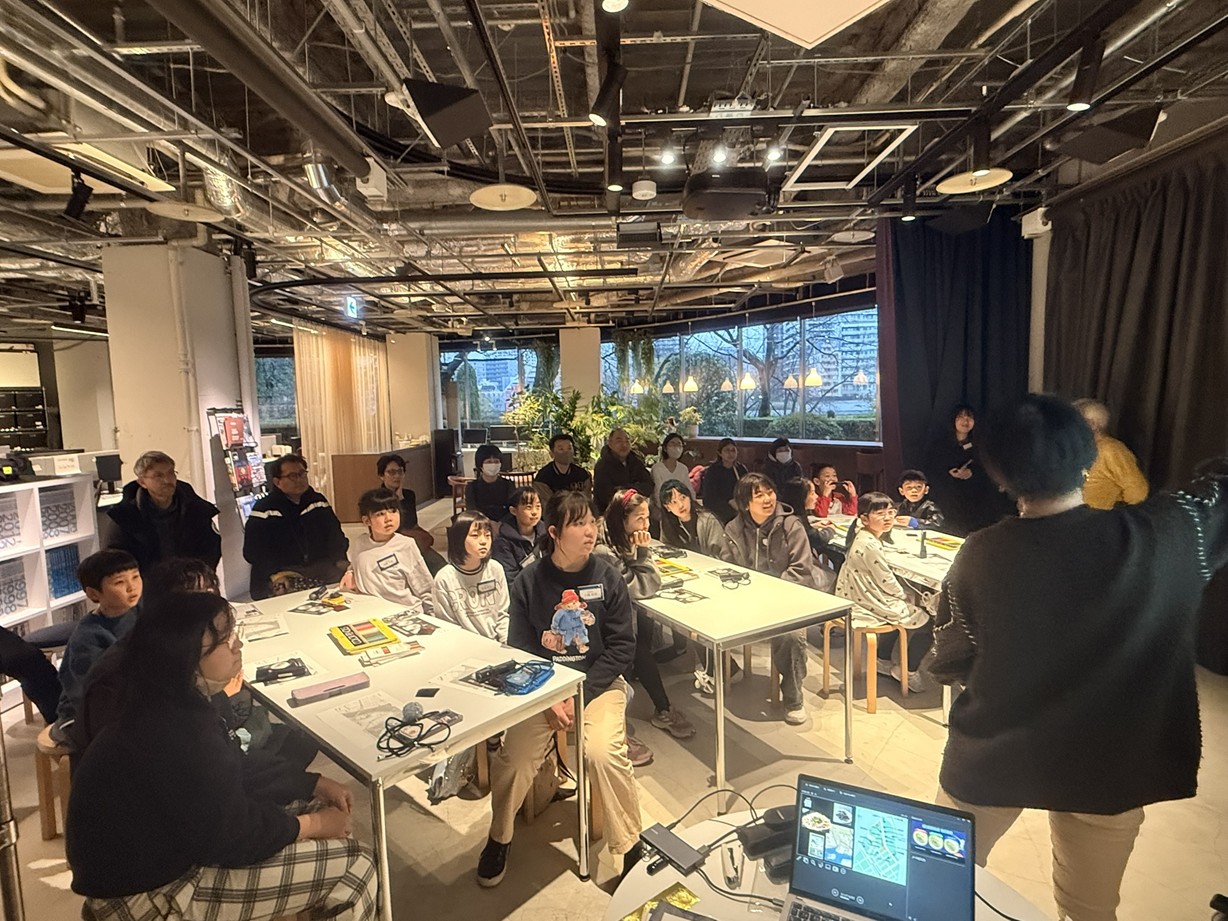
On the day of the event, 16 children ranging from 5 to 12 years old participated. We began with an orientation, explaining what lighting designers do, who the Lighting Detectives are, and the nature of our activities. After outlining the workshop flow, we started with a hands-on demonstration of how appearances change depending on how light is applied, allowing the children to experience the fascination of light firsthand.
Next, while it was still light outside, we conducted a preliminary scouting of the sites to be illuminated. By walking through the area and considering which spots would look most attractive and how they should be lit, each child began to develop their own creative vision.
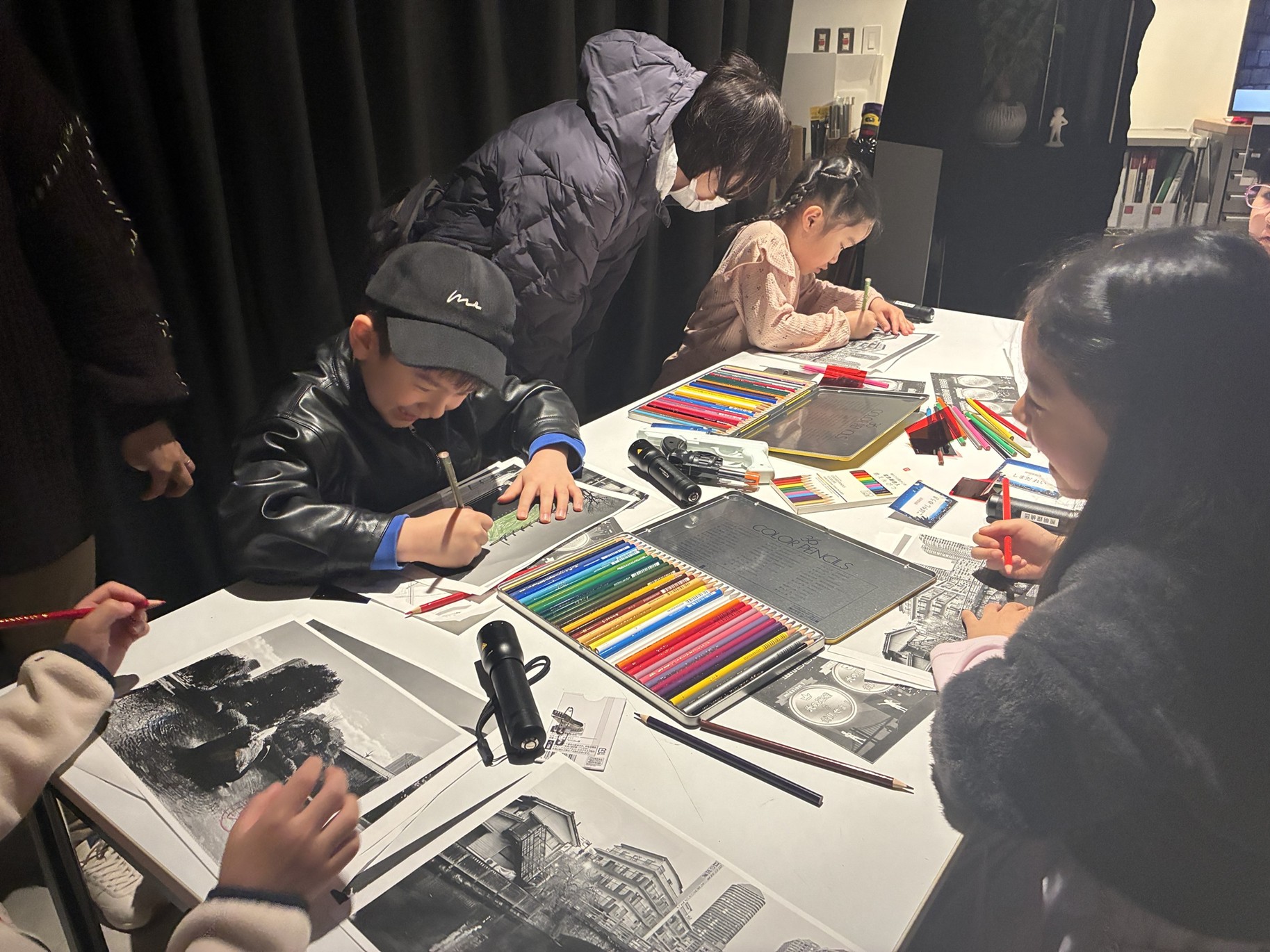
Upon returning to the studio, they immediately set to work on their design sketches. Using colored pencils, they filled in their lighting plans on black-and-white prints of the target locations. Referencing actual hand-drawn sketches by professional lighting designers, they seriously considered “where,” “what color of light,” and “how to apply it,” drawing their plans as if they were pros. While keeping an eye on the ideas of the children around them, each participant completed a plan full of unique personality.
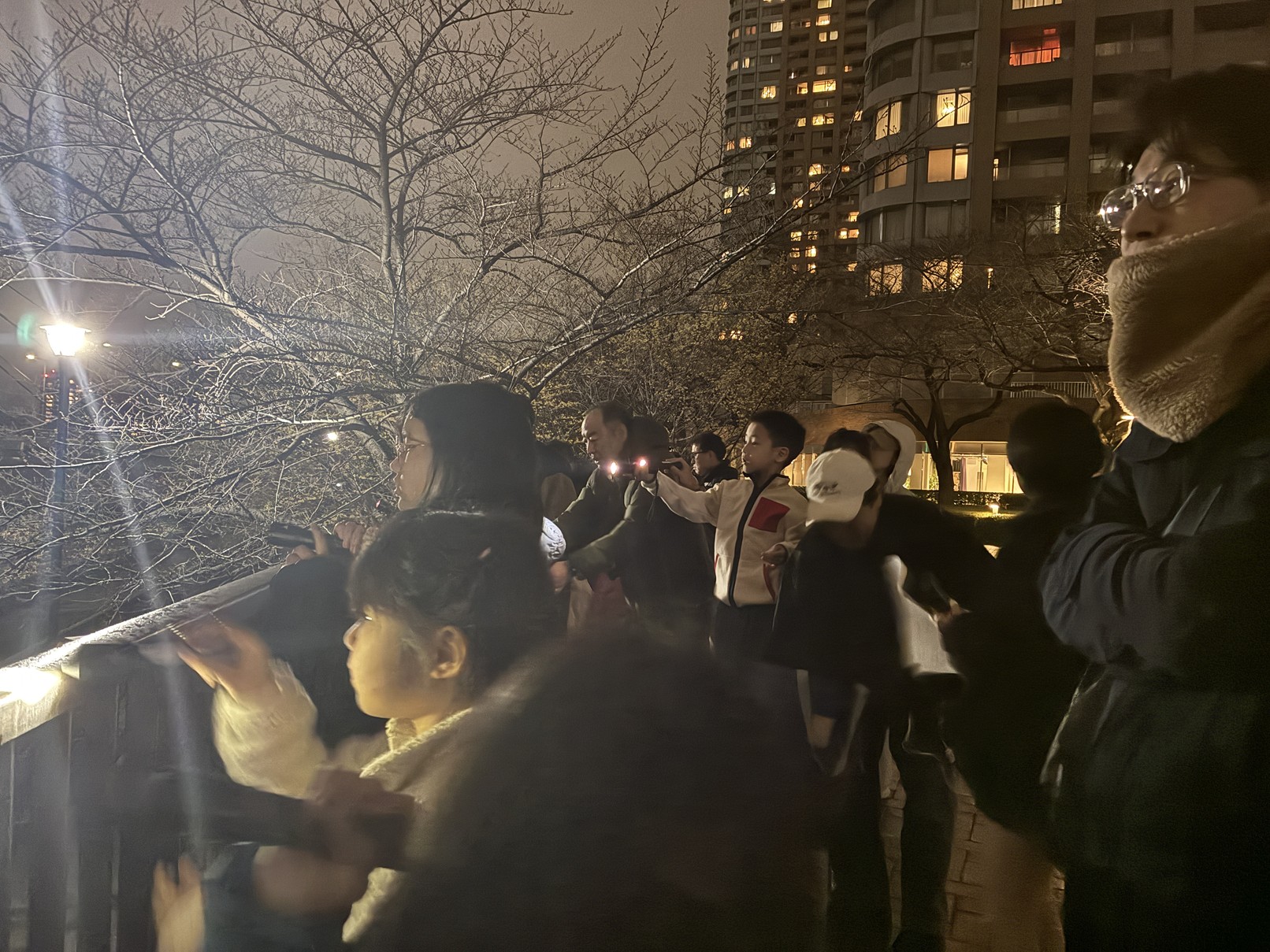
Searching for “treasures” hidden deep within the darkness
While they were sketching, it became completely dark outside, and the time finally came to experiment their ideas. Among the target sites for illumination, Sumiyoshi Shrine was particularly popular. With its rows of lanterns, komainu (guardian dog statues), the main hall, and the adjacent brick warehouse, the shrine offered many attractive elements for the children to experiment with.
The kids used various techniques, such as changing the color of the light with color filters and adjusting the zoom functions on their flashlights. At times, several children worked together to create a single collaborative piece of light art.
They also showed a deep understanding of the “Lighting Heroes” and “Lighting Villains” concepts learned during orientation. Natural discussions emerged among them, with comments like, “This is beautiful, so it’s a Hero,” or “I see that, but I might not personally like this style.”
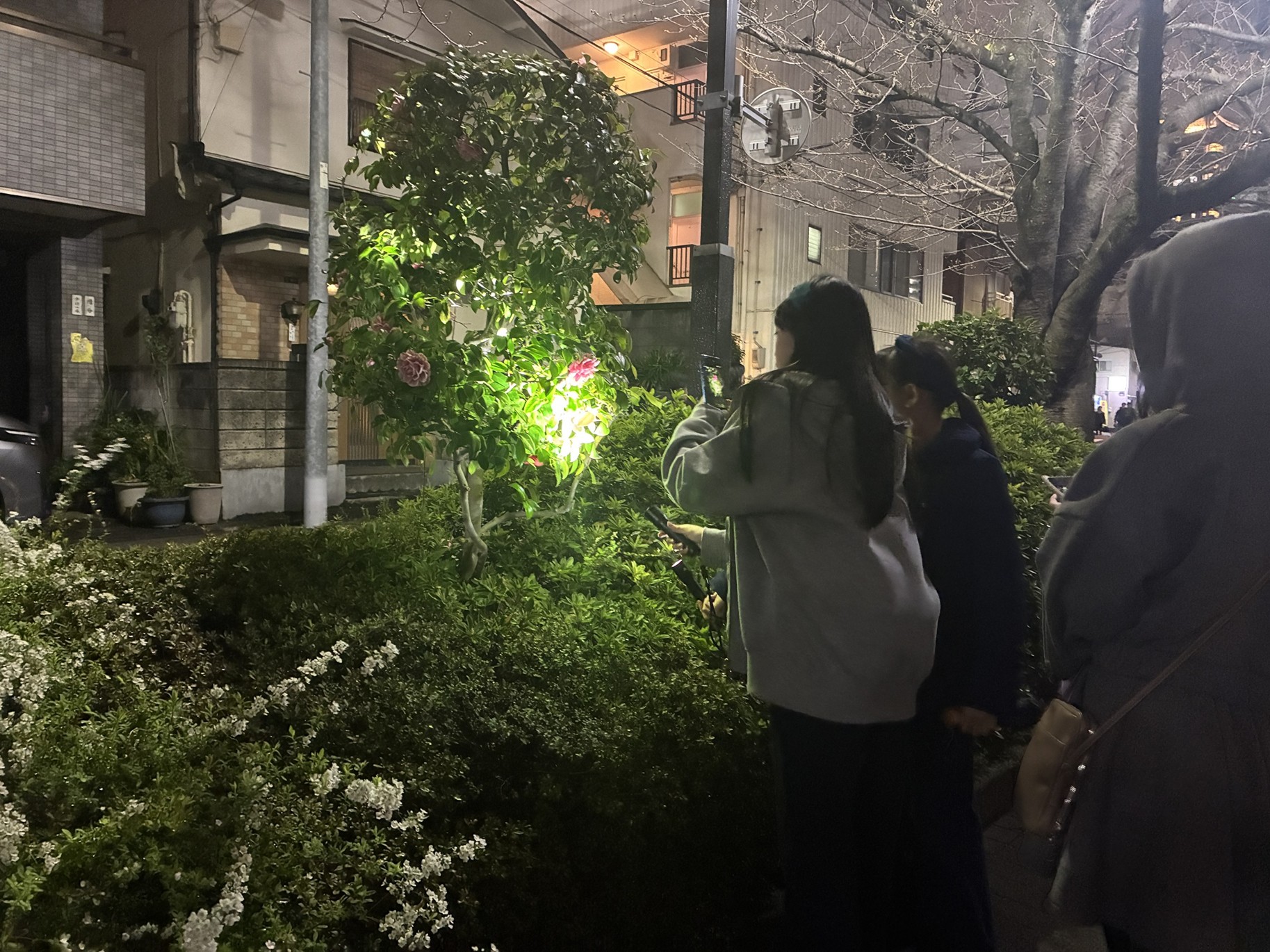
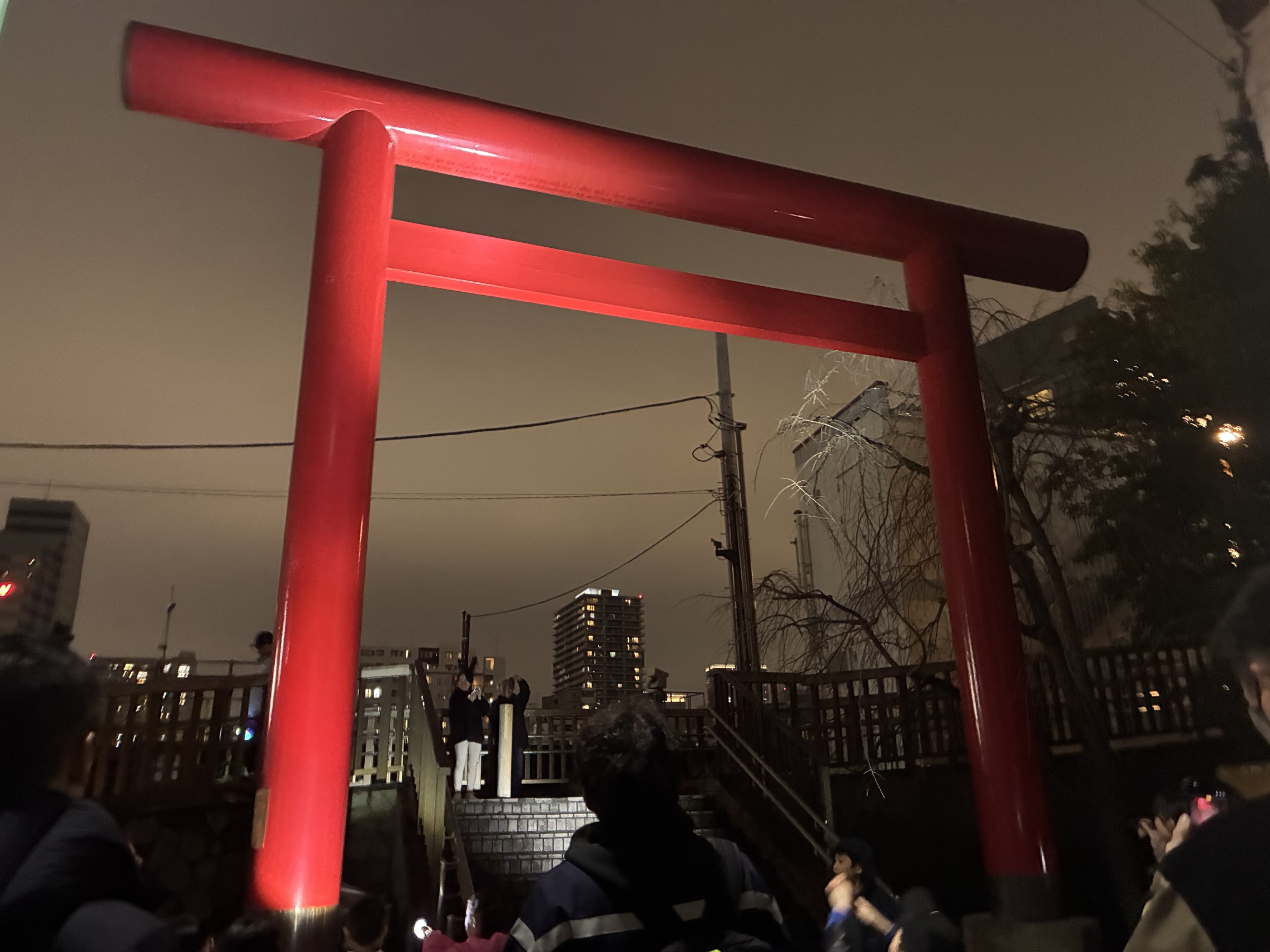
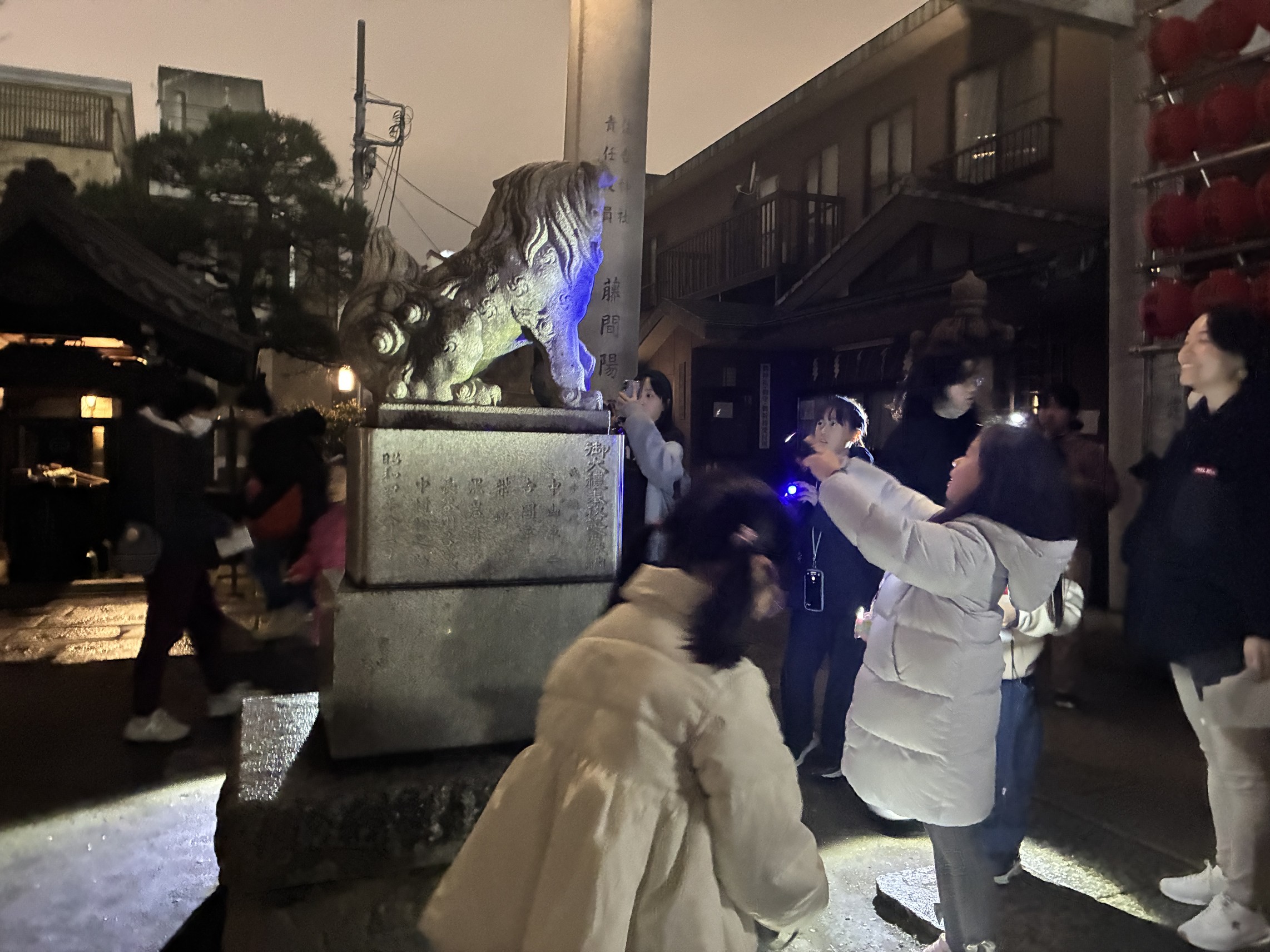
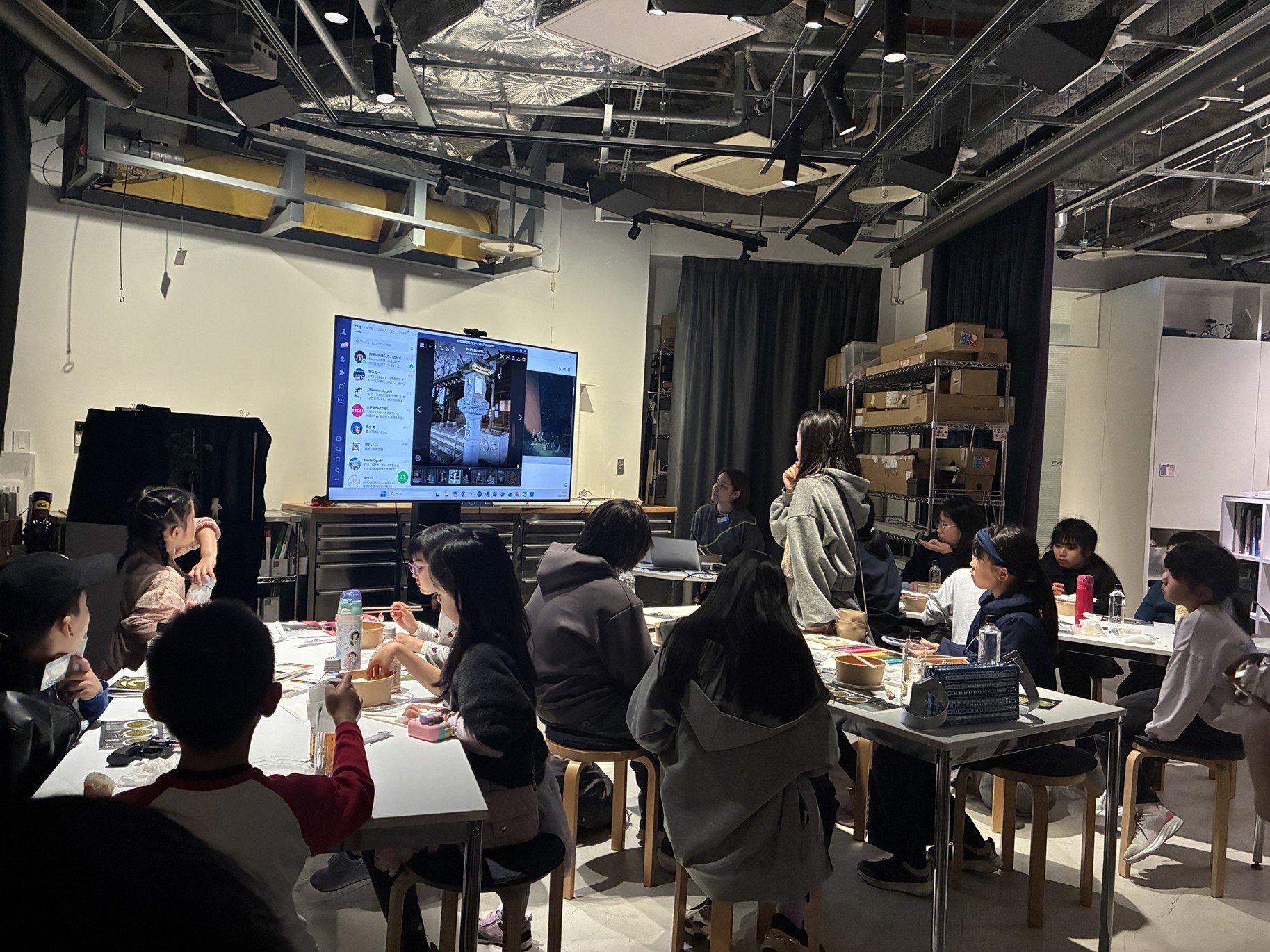
After finishing the 30-minute illumination session, we returned to the studio to enjoy bento boxes and present the “Heroes” and “Villains” each participant had discovered. Despite the wide age range —from preschoolers to upper elementary students—there were no significant differences in how they perceived light. It was particularly striking that many children identified the glaring streetlight at the entrance of the shrine as a “Villain.”
For both the first-time participants and the recurring members of the Lighting Detectives Jr., it was a day to deepen their understanding of light. By moving beyond just “seeing” light to “thinking” about it, we hope to see their perspectives expand in the future. (Simeng Huang)
Our children’s workshops, held at least once a year, are approaching their 20th milestone. We have conducted various programs—darkness experiences, nightscape sketching competitions, lantern making, and night walk surveys—not only in Japan but also with children in Taiwan, Hong Kong, Singapore, and Germany.
We intend to continue these workshops to keep fostering a high sensitivity toward lighting, brightness, and even the quality of darkness in the next generation. (Noriko Higashi)
City Night Walk Vol.78:Shinjuku
Unraveling Shinjuku’s Past, Present, and Future Through Layers of Light
2026.03.05 Shinichi Sakaguchi + Ryuji Hotta + Akira Tawarada
We observed and compared the diverse faces of Shinjuku—the futuristic feel of skyscrapers, the silence of historic shrines, and the back alleys retaining the atmosphere of the Showa era—from the perspective of the lighting environment. We experienced firsthand how the differing “light density” and “color” of each area shape the city’s identity, all within the same “Shinjuku at night.”
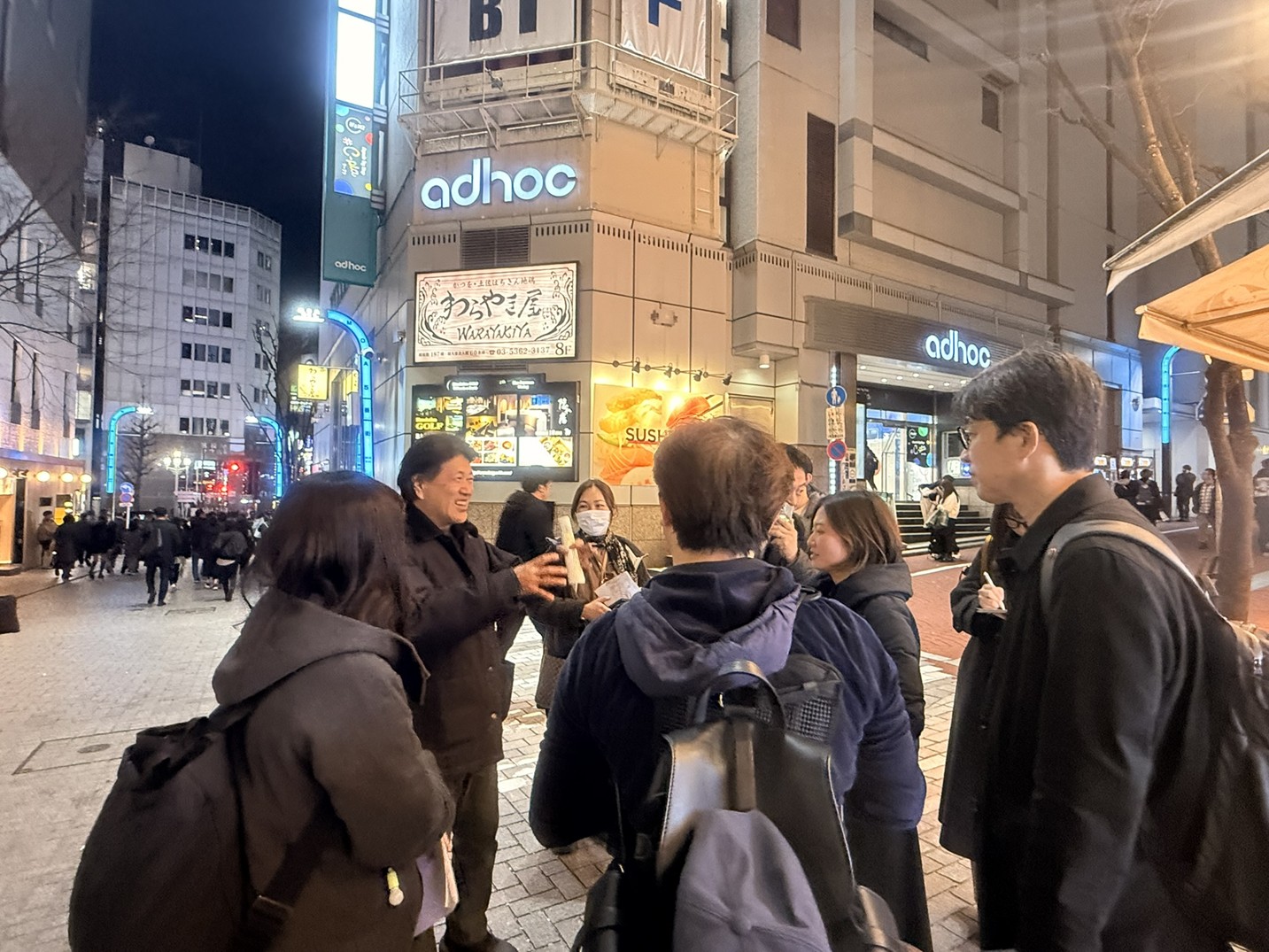
The final night walk survey of the 2025 fiscal year took place at Shinjuku, Japan’s largest terminal station. It was held on a Friday night, bustling with crowds. We divided the vast Shinjuku area into three sections for our night walk survey: the vicinity of the West Exit and Kabukicho, the Metropolitan Government Building area, and the route from the South Exit to the West Exit. It was a session where we discovered an abundance of light designed to draw people in.
■Group 1: Shinjuku Station West Exit Area
Group 1 observed the nature of “light” that shapes the city, primarily around the Kabukicho district of the massive Shinjuku terminal, guided by lighting designer Masahide Kakudate, who knows the area intimately.
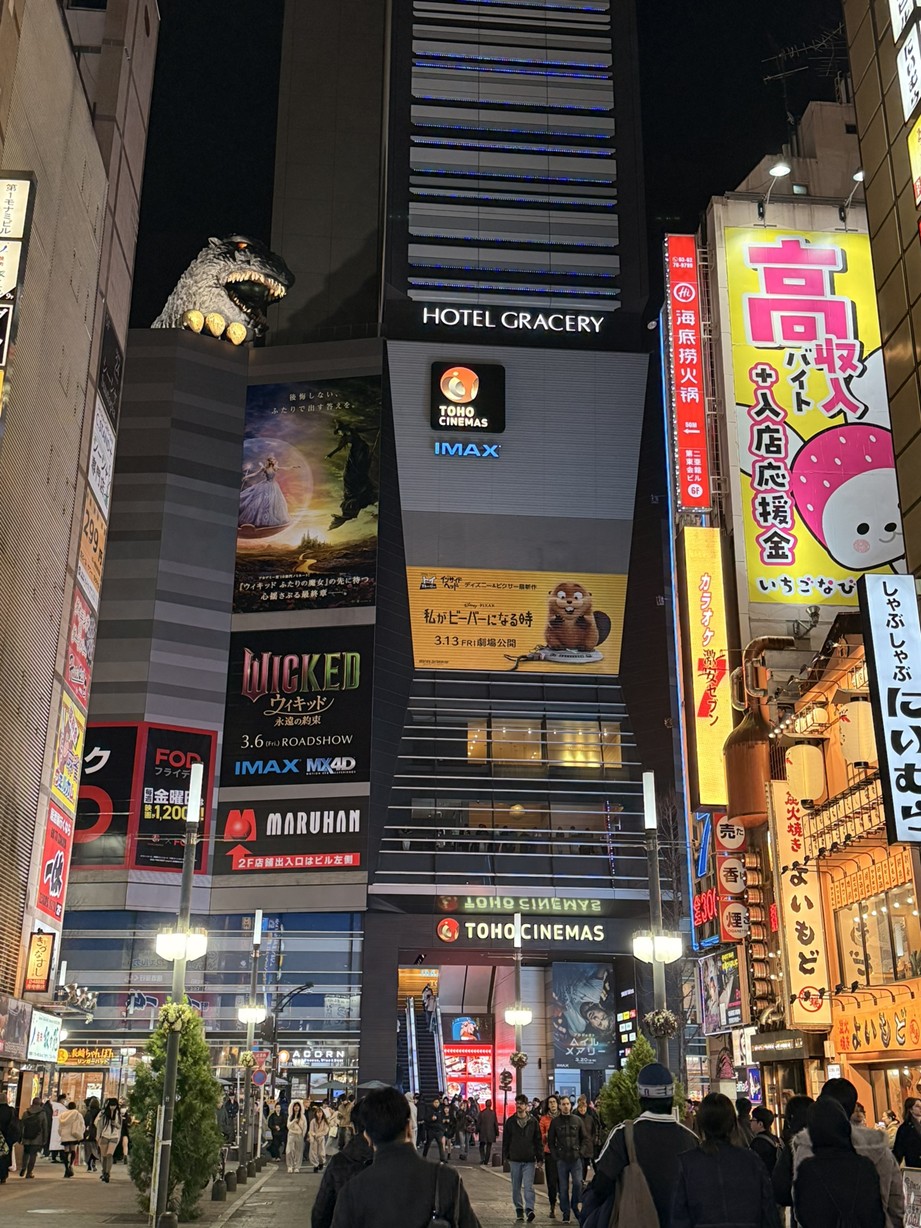
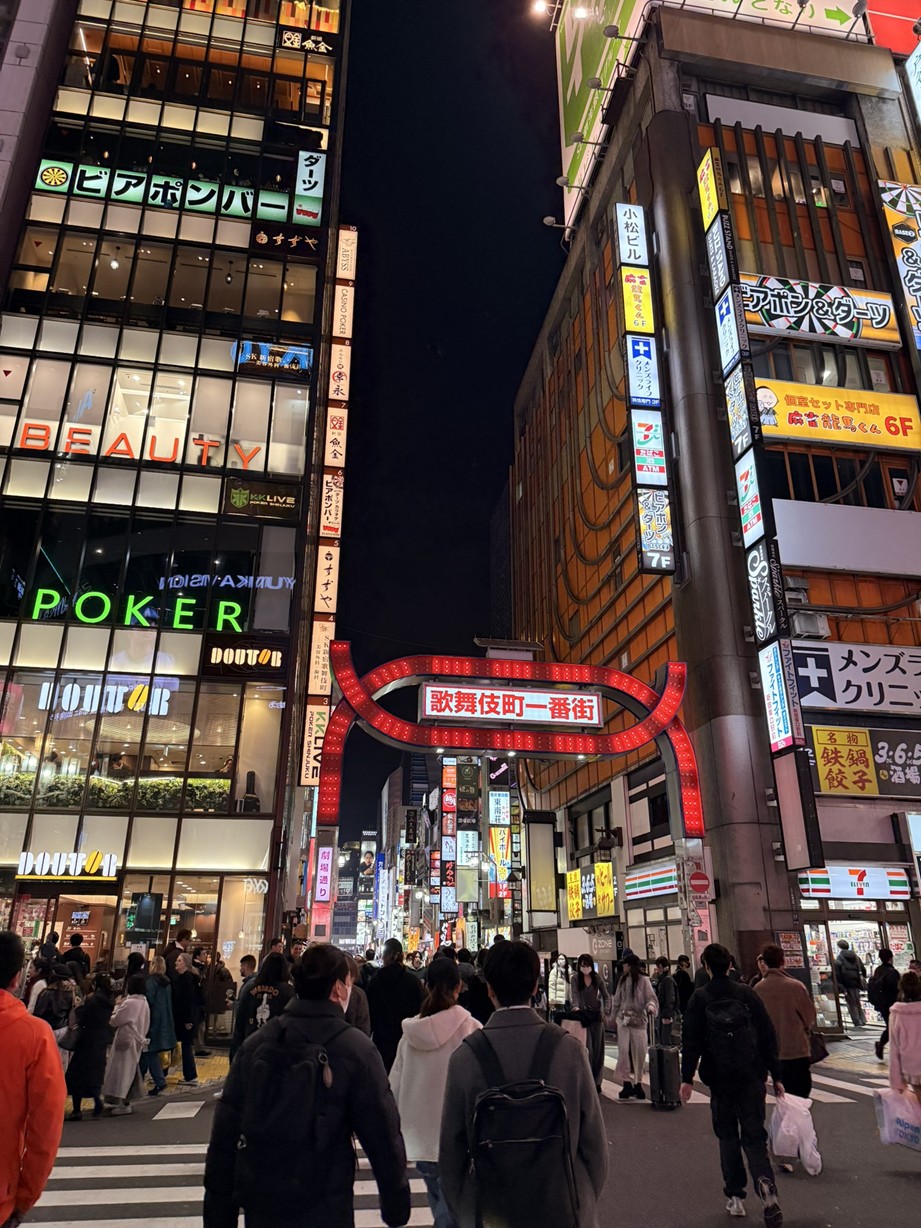
The “Villains” were, as expected, streetlights that emit glare directly into pedestrians’ eyes. We also saw unnecessarily bright signage and cold, industrial floodlights with exposed light sources. Regarding the excessively bright signs, in a district like Kabukicho, this brightness acts as a status symbol—without it, the area might not feel like Kabukicho at all. In fact, if the signs were turned off, it might feel strangely desolate.
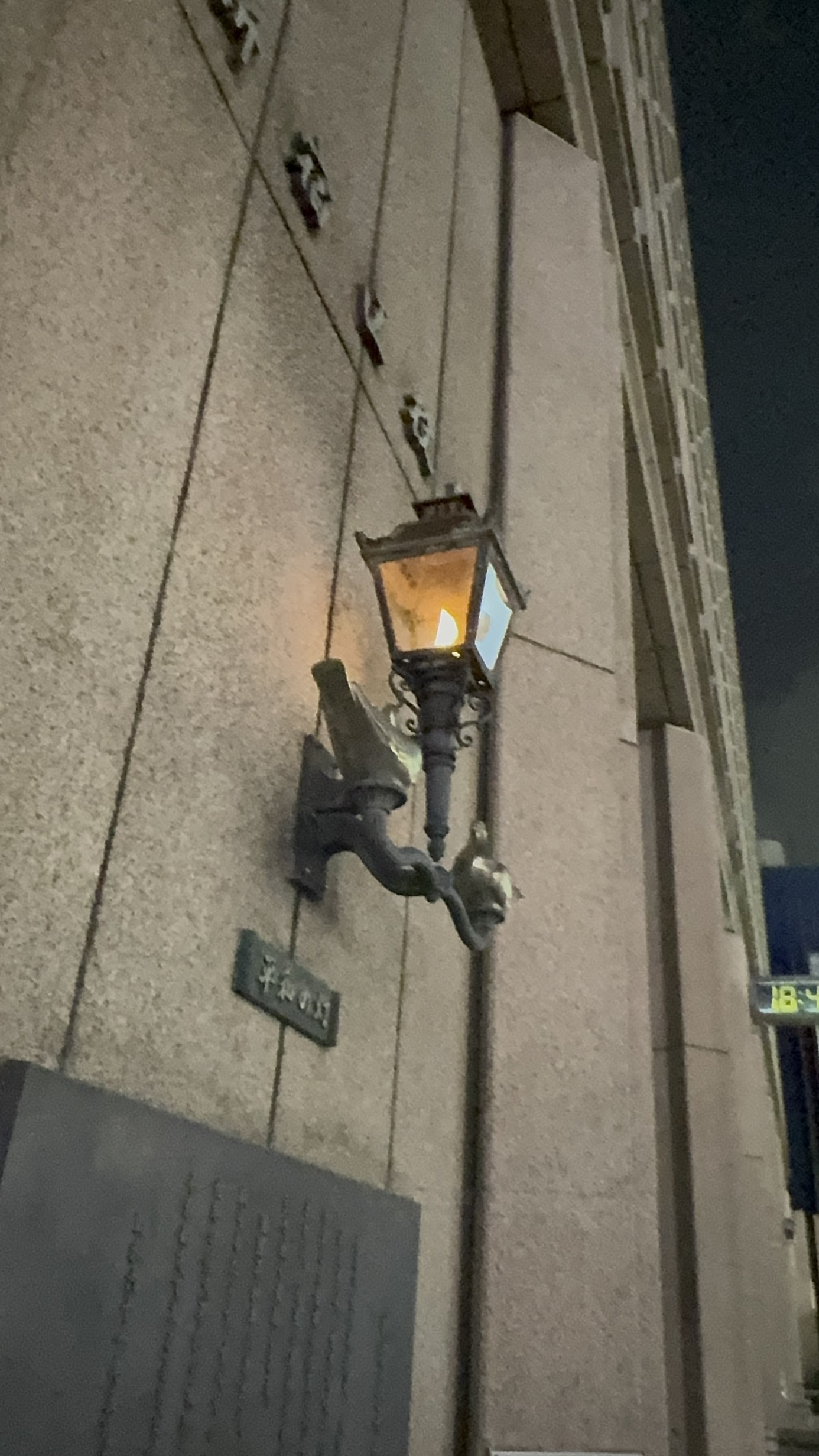
Yet, even in such a glaring town, “Heroes” were to be found! These included what seemed to be gas lamps that serve as the original source of light at the Shinjuku Ward Office, and the subdued, Showa-era atmosphere of Golden Gai. I even felt that the slightly illuminated Godzilla claws were a Hero… Godzilla’s claws are lighting up the city!
Shinjuku is a place where commercial bustle and sophisticated urban planning coexist, revealing many different “expressions” of light. I felt once again that good lighting is not about “making everything look bright,” but about placing the right quality and quantity of light in the necessary locations.
From the glitzy “classic Kabukicho” streets to the shrines and Golden Gai, each area has its own light with a distinct personality. With the redevelopment around the station expected to accelerate, I believe a night walk survey in a few years will reveal yet another completely different face of the city. (Shinichi Sakaguchi)
■Group 2: Tokyo Metropolitan Government Building Area
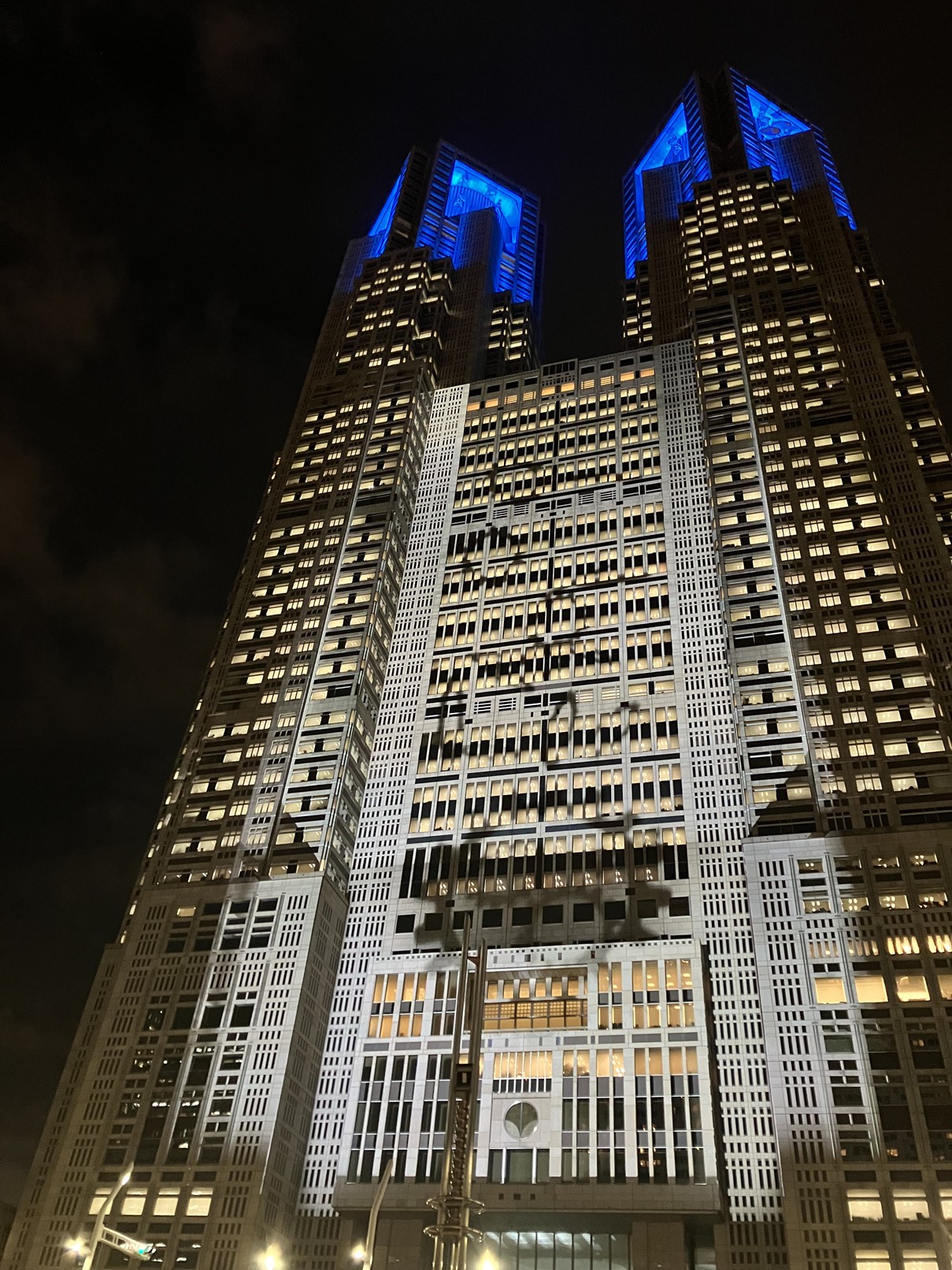
Group 2 began the survey at the Tokyo Metropolitan Government Building (TMG), where we viewed the projection mapping at the TMG Plaza. Many participants noted that viewing from directly below caused the projection to overlap with the building’s interior lighting, reducing visibility; thus, watching from a slight distance was considered more effective.
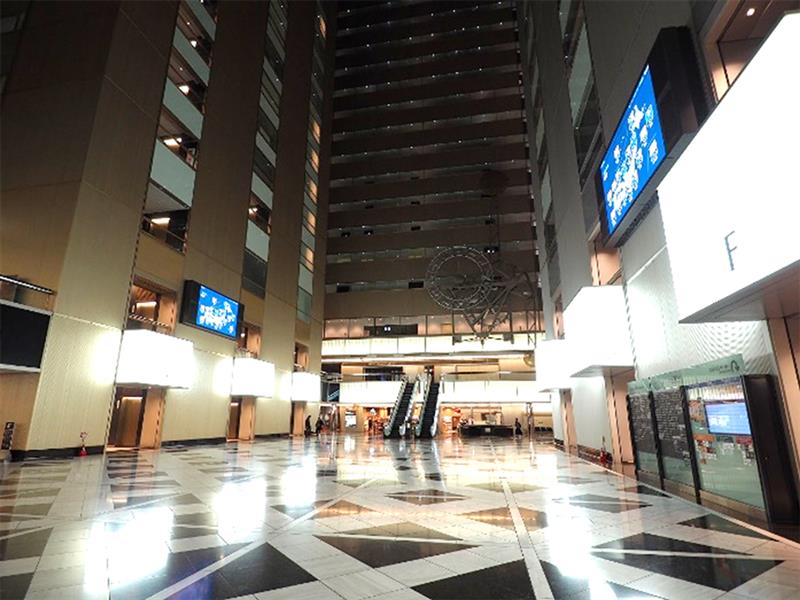
We then moved to the atrium of the Shinjuku NS Building. Completed in 1982 and renovated with new lighting in 2011, it was disappointing that we could no longer see the original lighting scheme, which had much to teach us about architectural lighting. The current internal illumination of the elevator hall was flagged as an issue due to its high luminance and intense glare.
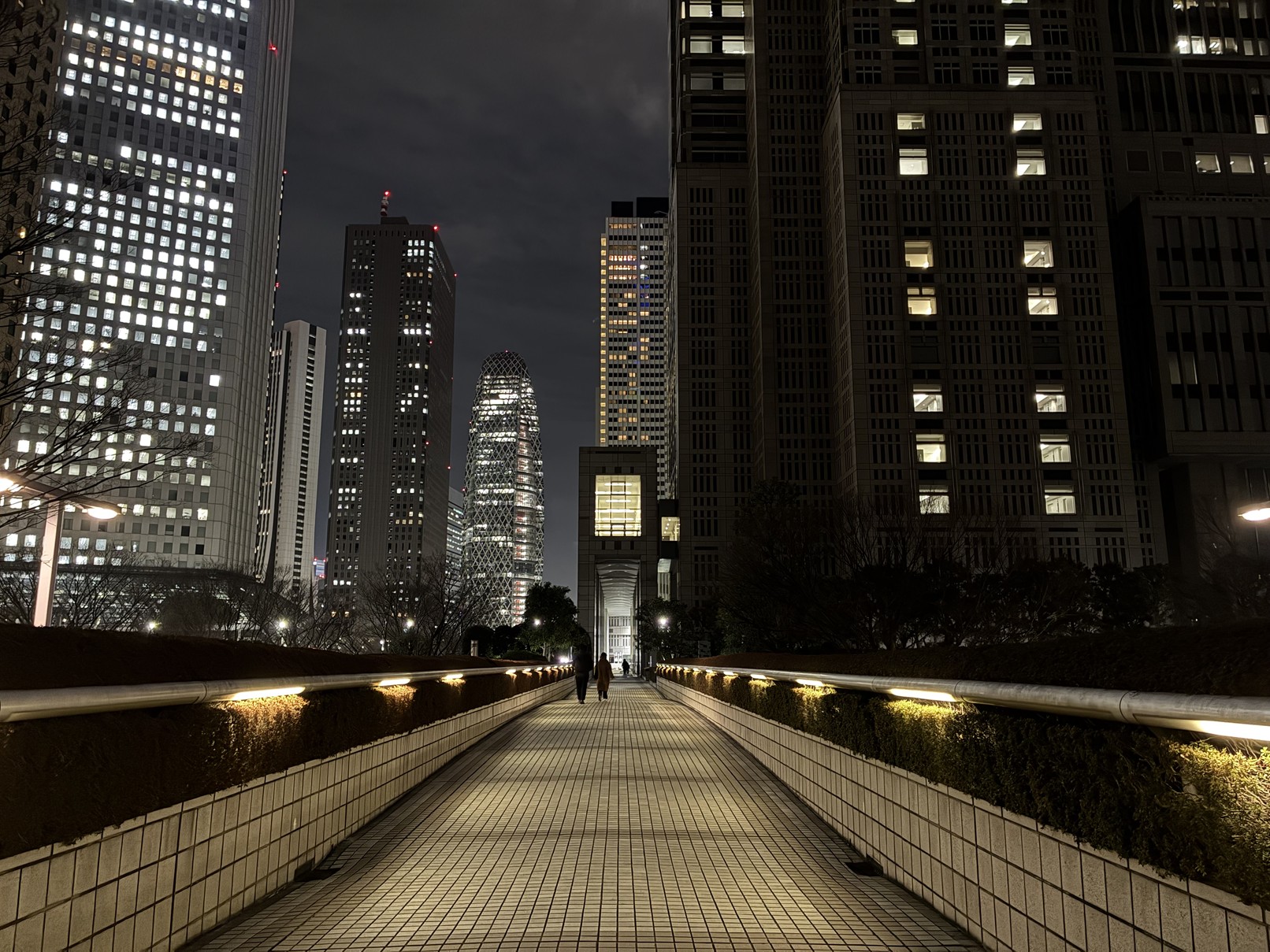
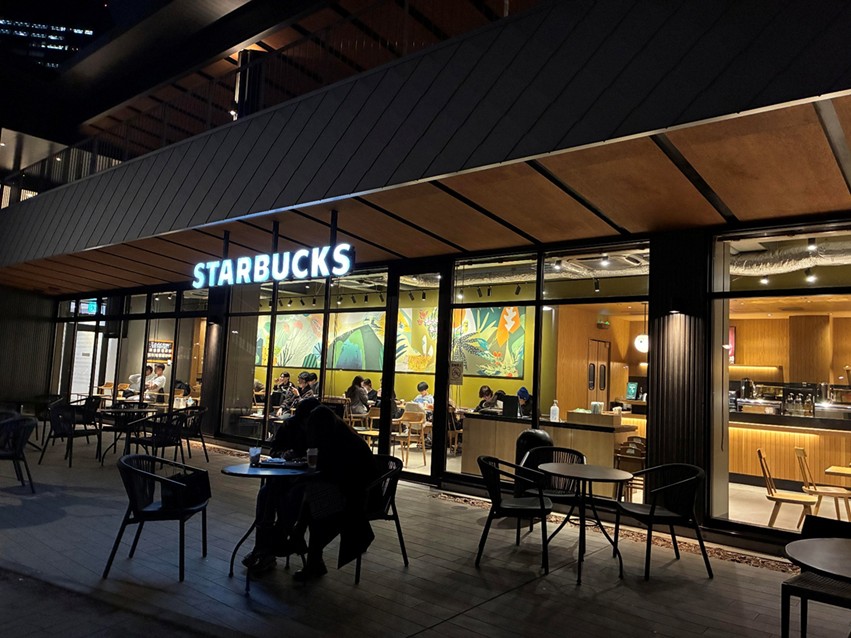
Along the pedestrian walkway from the TMG to Shinjuku Central Park, the upper parts of the gate structures were illuminated, creating a calm lighting environment that harmonized with the surrounding skyscrapers. At SHUKNOVA within the park, the lighting was well-controlled, creating a sense of unity that effectively drew in visitors. The Starbucks inside the facility achieved a perfect balance of brightness and comfort through the use of lighting tracks and spotlights.
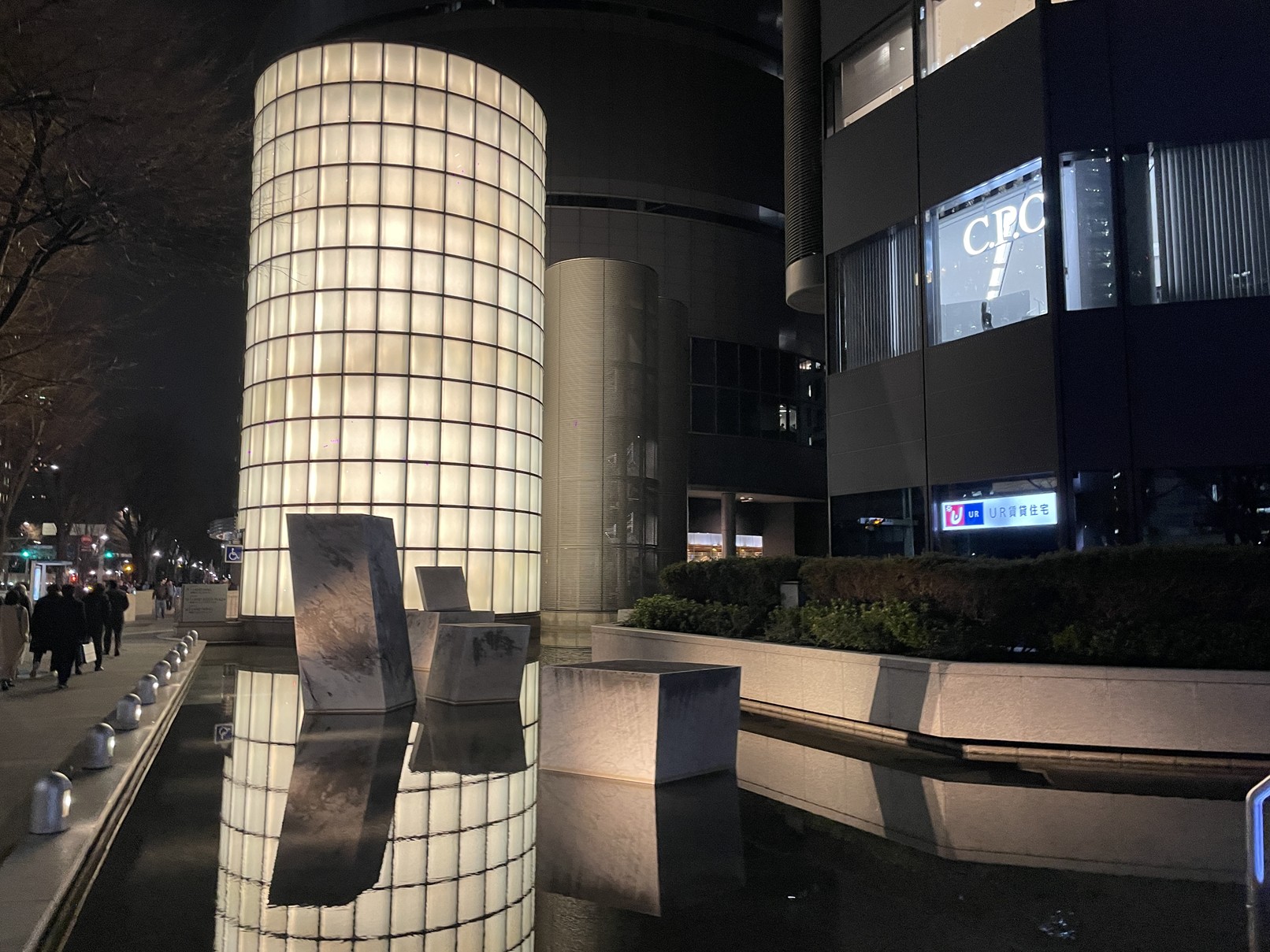
At Shinjuku I-Land, the soft, gentle light of the “Tower of Light” and its reflection on the water’s surface were particularly impressive. On the other hand, the patio’s atmosphere had changed following its transition to LED; the light, which previously gathered impressively in the center, now felt different. This night walk survey served as a meaningful opportunity to reflect on the succession and preservation of architectural lighting. (Ryuji Hotta)
■Group 3: Shinjuku South Exit to West Exit
As a record of our Shinjuku night walk survey, I’ll simply write down what I saw. Group 3 started from Southern Terrace at the New South Exit, passed through the Southeast Exit and the area in front of the former ALTA building, then ducked under the tracks to reach Omoide Yokocho Alley and the West Exit side. The lighting at the New South Exit welcomes people while maintaining shadows; a soft darkness of about 3–4 lx pools around the benches and decks, providing a simultaneous sense of security and tranquility.
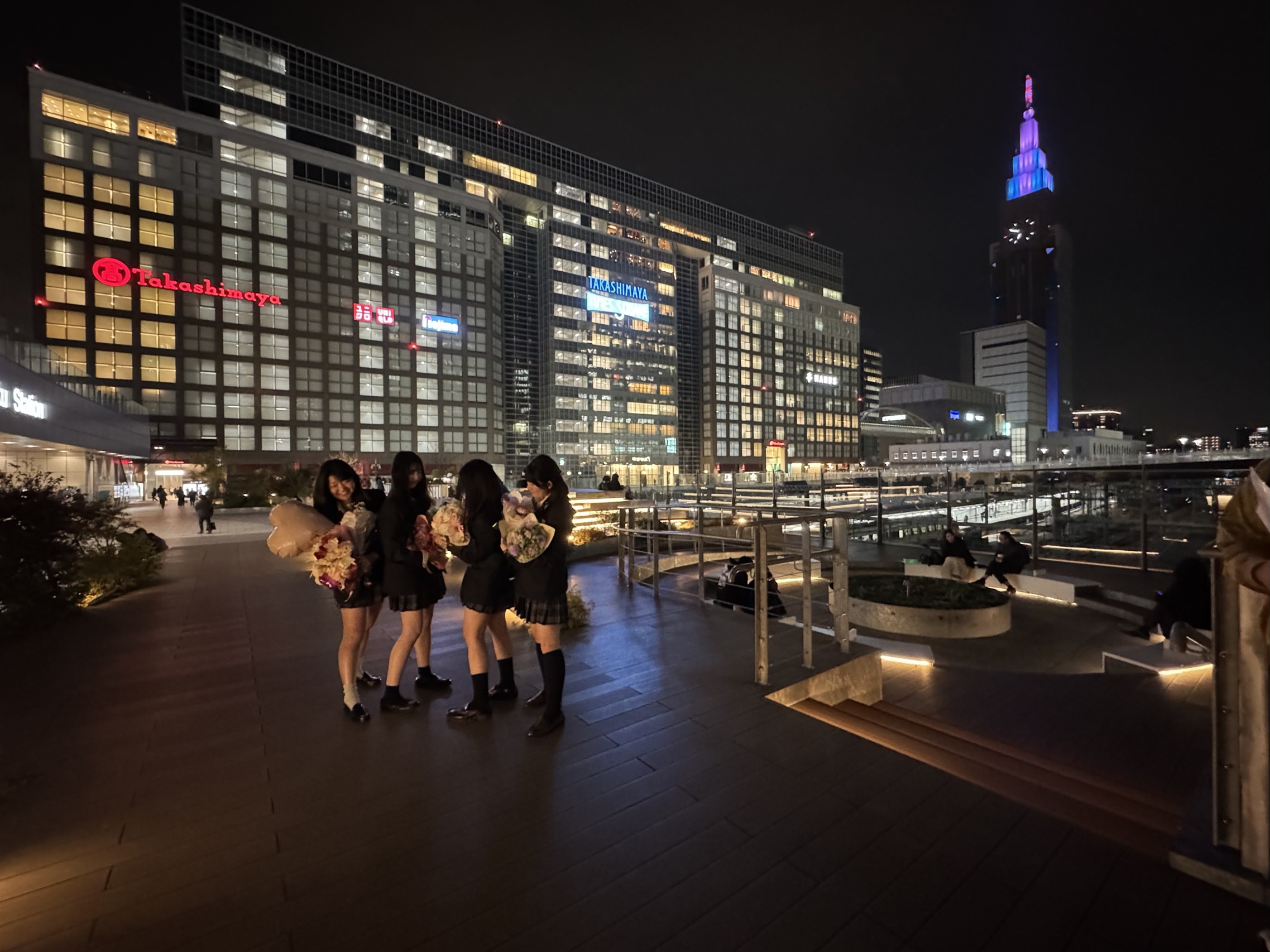
The passage under the eaves on the east side of Takashimaya maintained a unified color temperature of 4000K, where 300–500 lx clearly illuminated the storefronts and the expressions of shoppers.
The underpass at the Southeast Exit has been transformed from the damp dimness of the past into a sophisticated space; there is a sense of safety there—a “good deed” performed by light. In contrast, the area in front of Don Quijote was hit by the influence of LED displays at 810 lx / 7111K. The sharp, pale blue glare pierced the eyes and seemed to strip the surrounding area of its color. Along Musashino-dori, a calm, warm tone of 270 lx / 3096K softly illuminated the textures of the building walls and cast long shadows from pedestrians. The eaves of Yodobashi Camera reached 1011 lx, with the interior at a staggering 2355 lx, creating a harsh contrast with the 30 lx shadows near the former ALTA area.
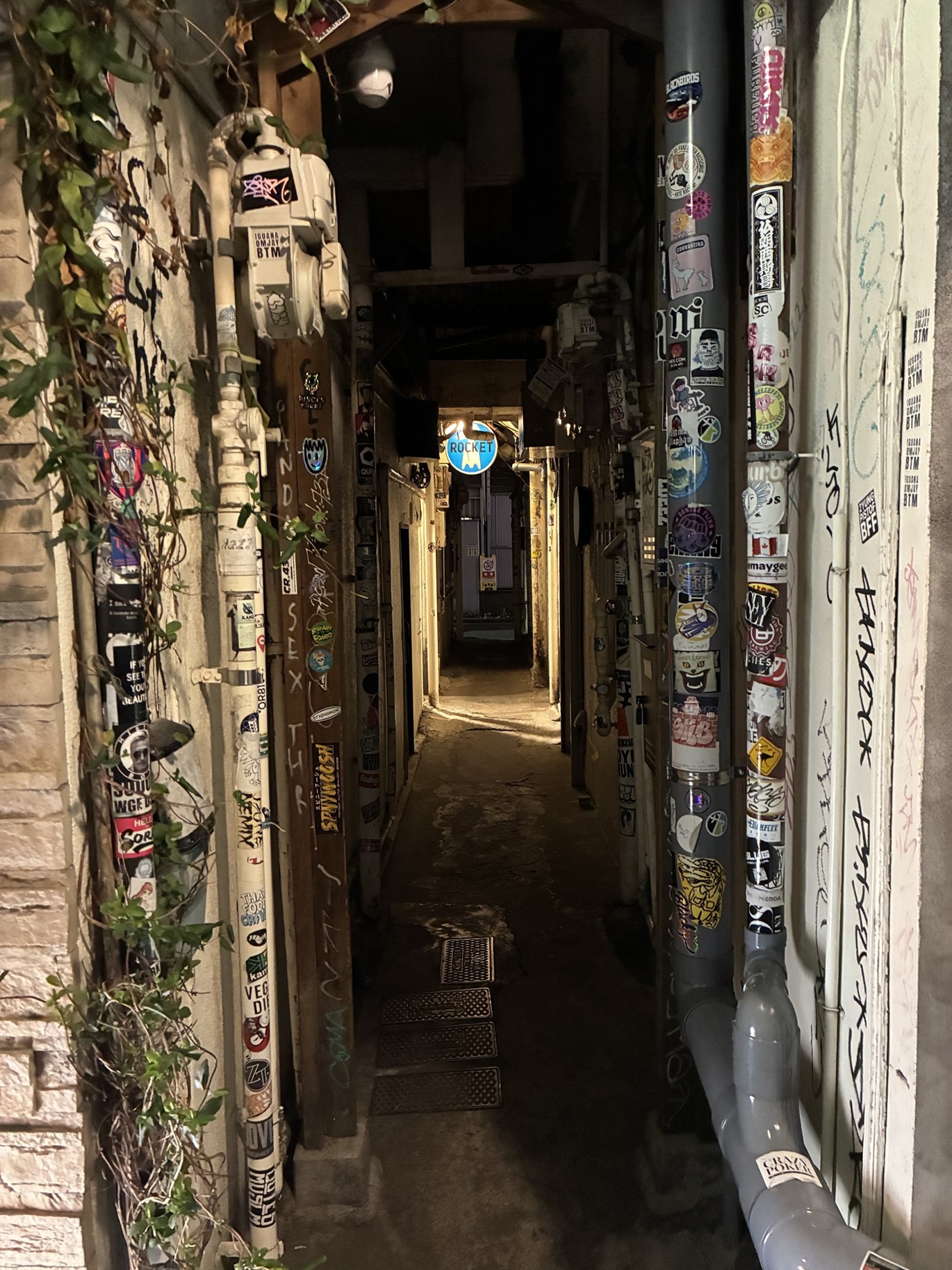
Omoide Yokocho Alley sat at 991 lx / 3072K, where Showa-retro warm tones enveloped the wooden walls and noren(shop curtains), creating a peaceful atmosphere. However, the moment we stepped out of the alley, the intense light in front of Matsuya instantly pulled us back to reality.
Ascending the West Exit pedestrian bridge, the uplights hitting the walls of Odakyu HALC felt “quintessentially Shinjuku,” creating a lively, boisterous atmosphere while serving as a landmark for the West Exit. Furthermore, the high-saturation red of Bic Camera and the blue of Odakyu added a certain depth to the space.
The moderate mix of color temperatures, localized glare, and the coexistence of warm lanterns and mismatched lightbulbs—this is the raw, living lighting environment of Shinjuku today. The good elements and the areas with room for improvement all exist together as the current expression of Shinjuku at night. (Akira Tawarada)
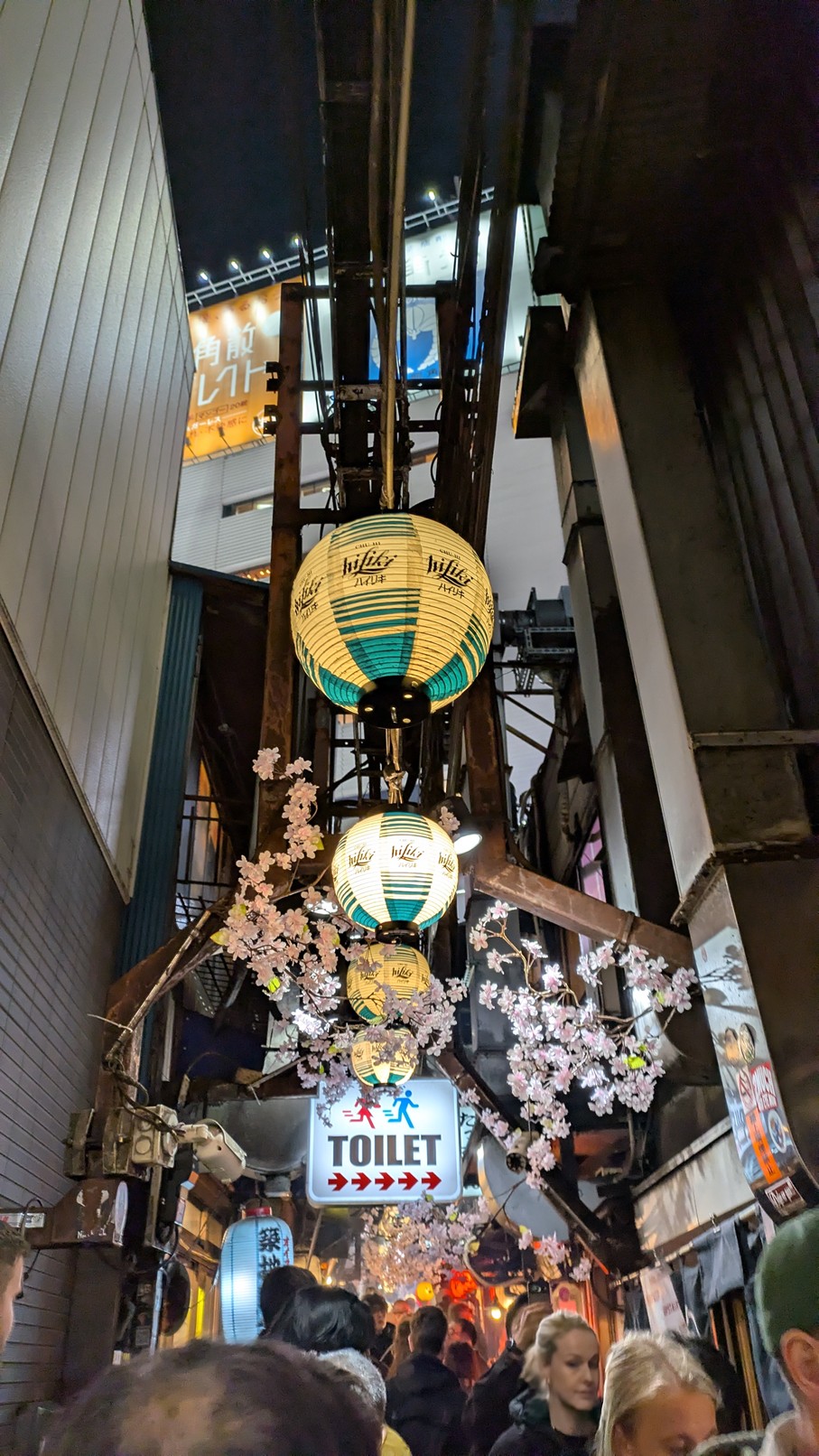
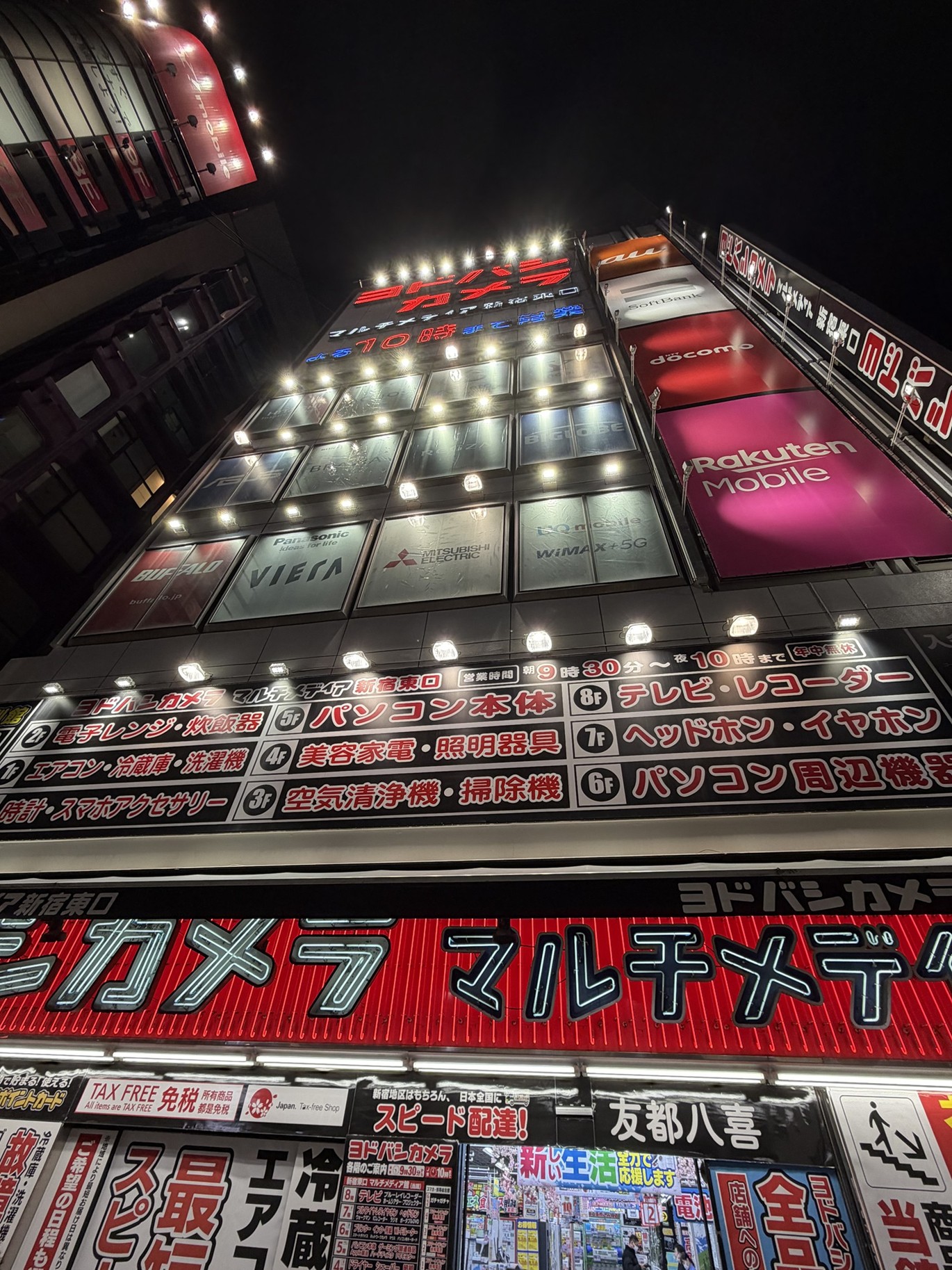
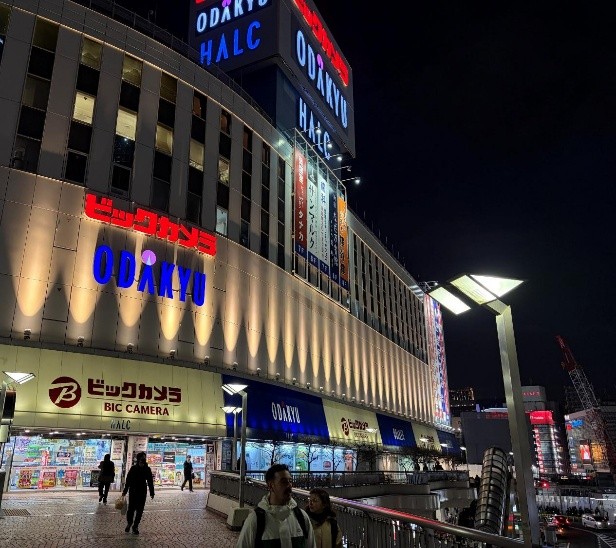
From the exciting, high-energy glow to the glaring layers of light where each sign seems to compete for dominance; from the nostalgic, warm light that lingers with a Showa-era charm to the gentle illumination of parks and cafes designed for relaxation—in Shinjuku, we were able to observe every imaginable phenomenon of light. These diverse nocturnal expressions are likely one of the key charms of Shinjuku that continues to draw in tourists.
As development around the station progresses, I suspect the city will show a completely different face in five or ten years. The Lighting Detectives will continue to be watchers of Shinjuku’s nights, documenting its evolution through our ongoing surveys. (Noriko Higashi)
The Round Table Discussion Vol.75: Shinjuku Night Walk Review
2026.03.19 Noriko Higashi
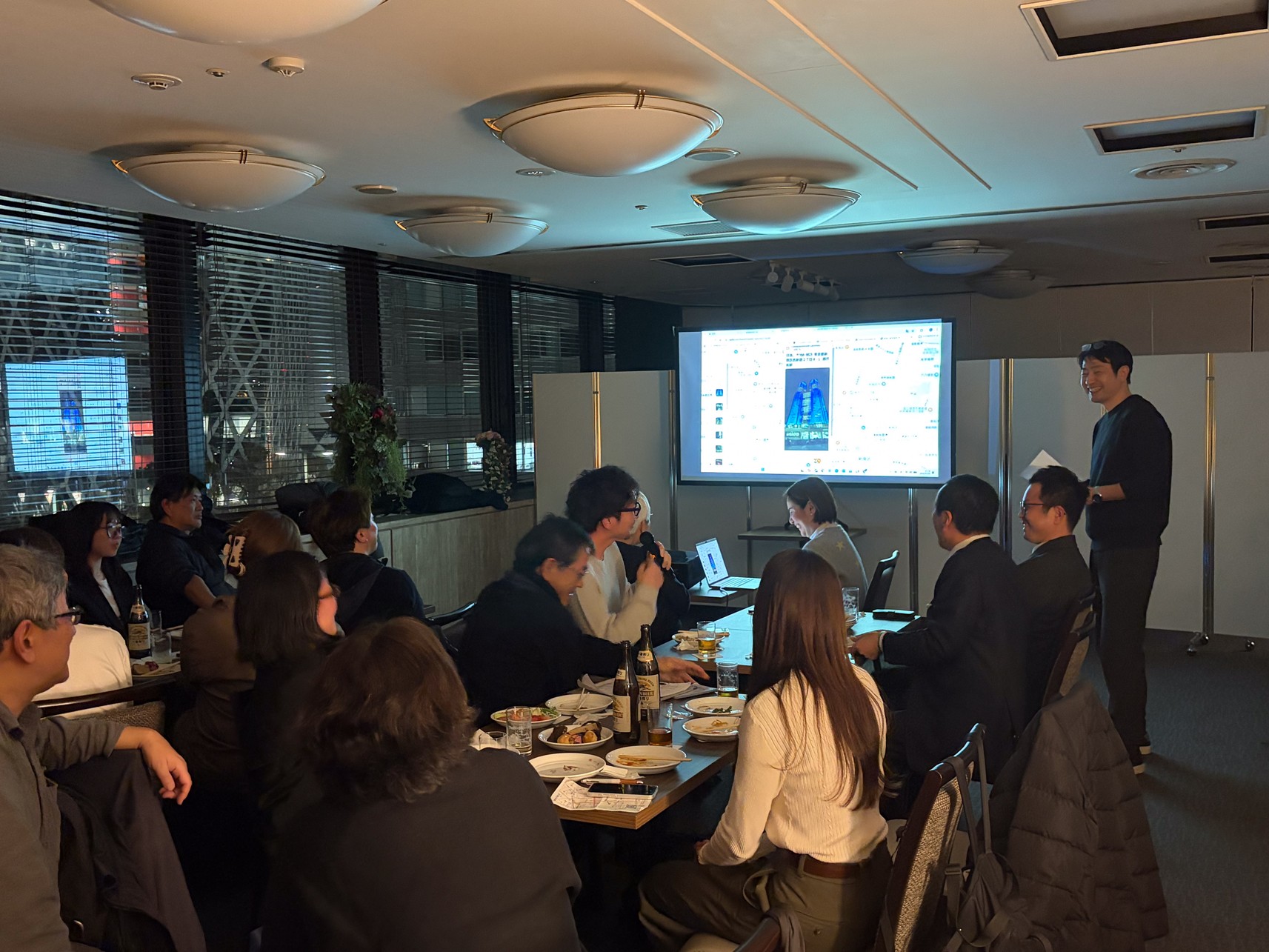
Following the “Shinjuku Night Walk” held on March 6, 2026, a salon was convened where participants from Groups 1 through 3 presented their findings on Shinjuku’s lighting environment, identifying “Lighting Heroes and Villains.” The theme, “Unraveling Shinjuku’s Past, Present, and Future Through Layers of Light,” explored how varying light densities and colors shape the city’s unique identity.
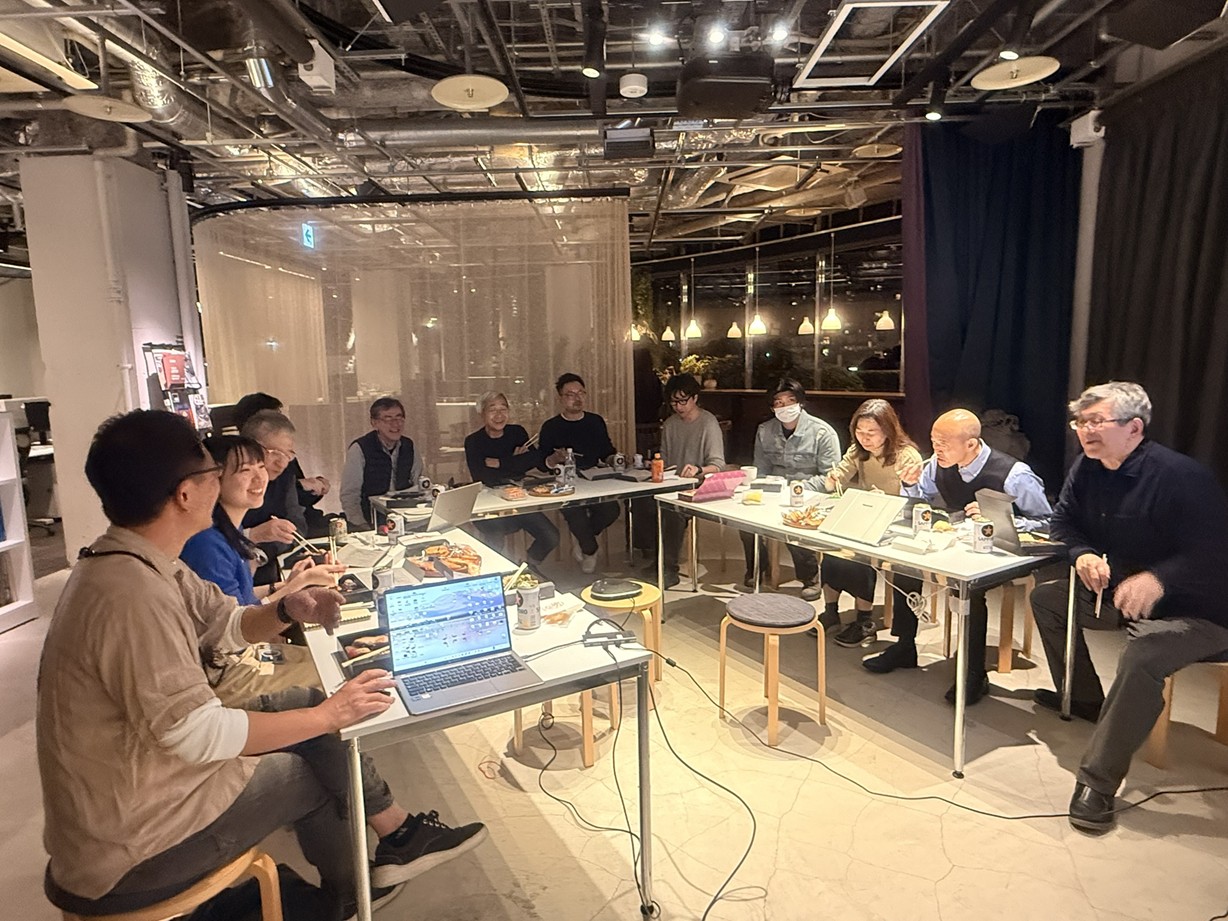
The reporting session took place at the LPA office. Group 1 focused on the East Exit and Kabukicho, Group 2 surveyed the area around the Tokyo Metropolitan Government Building, and Group 3 covered a broad expanse from the South Exit through the East Exit to Omoide Yokocho Alley near the West Exit. During the review, the specific lighting characteristics of each area were reported.
Group 1, which toured the Kabukicho and Shinjuku 3-chome areas, observed neon signs and displays at Shinjuku Ichibangai and the Tokyu Kabukicho Tower that overflowed with a “desire to stand out.” While the signage alone provided ample brightness, participants pointed out “Villains” in the form of streetlights and LED fixtures that emitted an excessively harsh, glaring light. Interestingly, it was noted that Kabukicho Park felt significantly dark due to the overwhelming brightness of its surroundings, effectively providing a sense of “tempo and contrast” to the district.
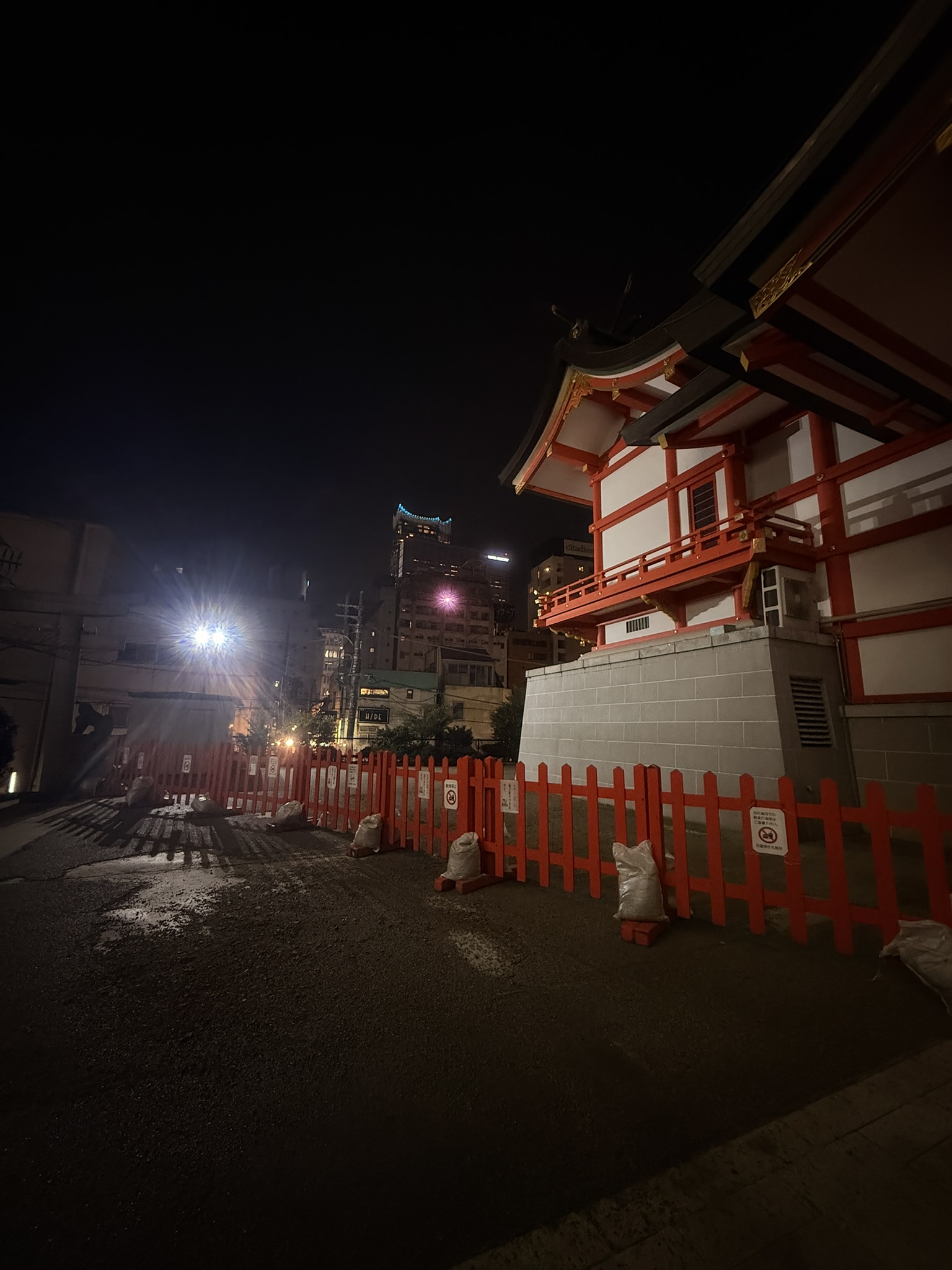
On the other hand, Hanazono Shrine was perceived as a sanctuary from the urban clamor, with its restrained brightness creating a static, peaceful layer alongside the classic lighting of the Isetan department store. The mysterious, atmospheric glow of Golden Gai and the lanterns of Omoide Yokocho Alley were highly praised as “Heroes” that instinctively made people want to reach for their cameras.
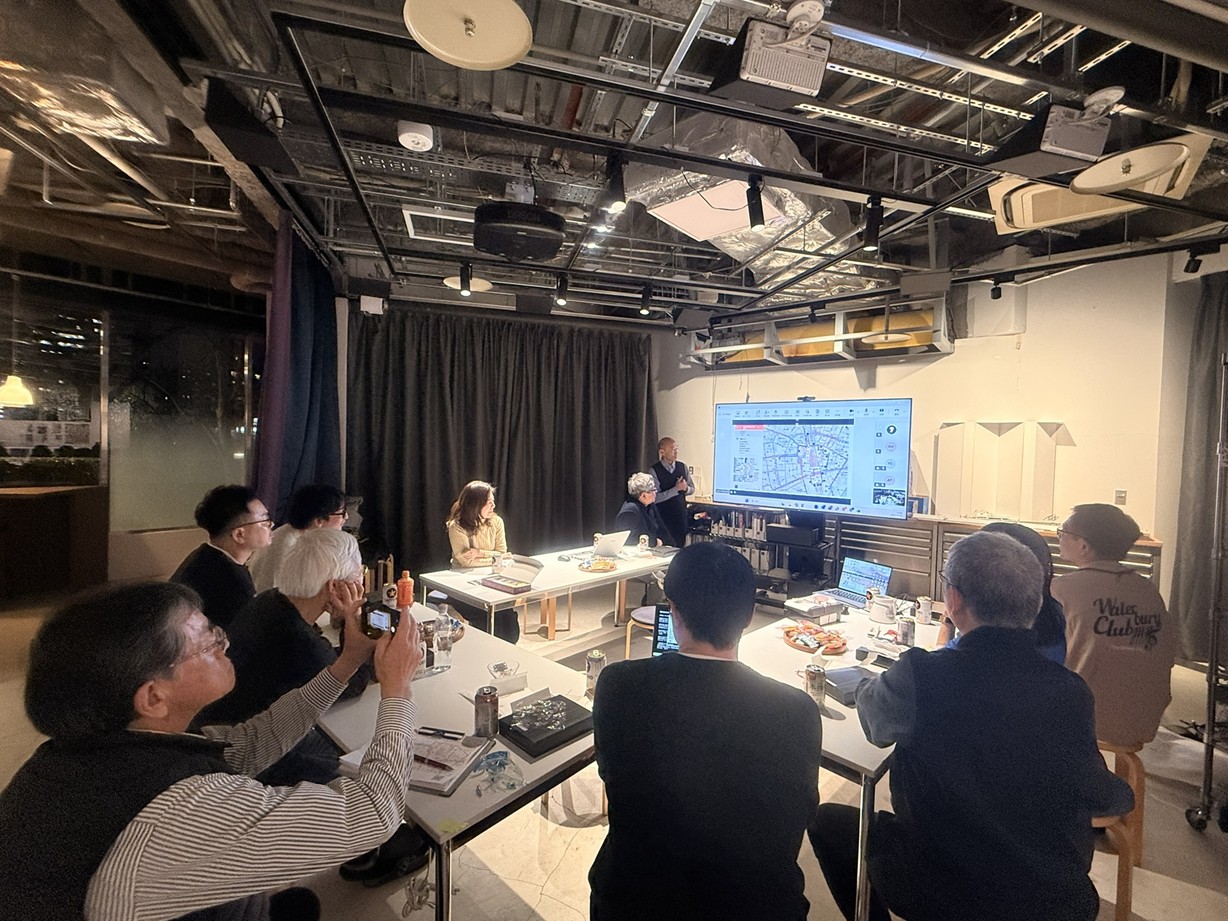
A brilliant tool that allows us to seamlessly use the photos uploaded by participants during the night walk survey for the presentation
Group 2 reported on the lighting environment spanning from the TMG Plaza to the NS Building and the area around Shinjuku Central Park. While the projection mapping on the TMG building was hailed as a “Hero”—providing a bold accent to the kyscraper district—it also sparked complex debate. Some suggested that the light from the windows of office workers staying late would actually add a more authentic urban pulse to the scene. Conversely, others expressed concern that those interior lights interfered with the projection, or that the show itself might be a “Villain” by disrupting the work being done inside.
At the NS Building, the high-luminance white LEDs in the elevator halls and under the bridges were criticized as “painfully bright” and labeled “Villains,” along with the inconsistent color temperatures found throughout. Furthermore, many participants lamented the recent renovation that replaced the atmospheric wall-washers with purely functional downlights, feeling a loss of architectural character.
In contrast, the calm, warm bulb-color tones of the pedestrian walkway leading to Shinjuku Central
Park and the cozy lighting of the park’s cafe (SHUKNOVA) were celebrated as “Heroes” that
soothe the fatigue of city life and work. At Shinjuku I-Land, while the gentle light of the patio was
appreciated, there was a sense of regret that the original lighting design had been lost, with current
spotlights creating unwanted glare.
Group 3 covered the vast area around Shinjuku Station. Near the South Exit, the timeless beauty of the lighting’s natural gradation was rediscovered and praised as a hero. On the other hand, the massive LED displays of big-box electronics retailers and Don Quijote were harshly critiqued as “violently bright” and “painful” villains. In particular, the experience of stepping out from the gentle, enchanting glow of the traditional Omoide Yokocho alley only to be blasted by the dominant, modern light of these giant displays was described as “utterly aggressive.”
The group also captured a scene unique to Shinjuku: the colorful illumination of the NTT Docomo Yoyogi Building standing out against the night sky and reflecting off the glass of surrounding skyscrapers.
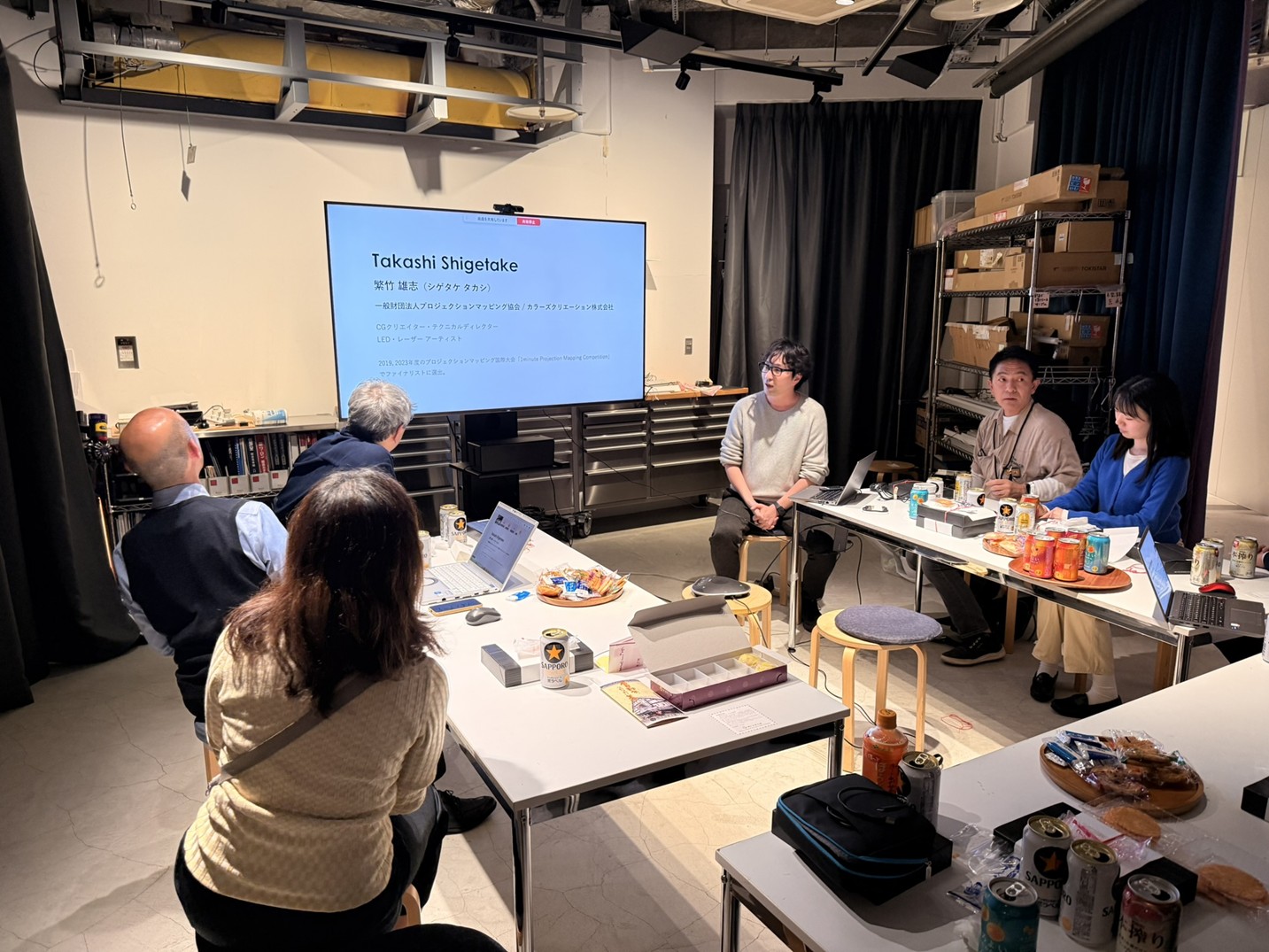
This session also featured guest speaker Takashi Shigetake, a projection mapping producer, who provided expert commentary on the history and evolution of the medium.
Through the presentations of each group, the multifaceted nature of Shinjuku was clearly brought to light—a place where the excessive light of commercialism (villains) coexists with the silence of back alleys, shrines, and the tranquil, restorative light of parks (heroes). From the soaring skyscraper clusters to the narrow alleys retaining the charm of the Showa era, this salon proved to be a highly enriching report that forced us to reconsider what a truly comfortable urban lighting environment should be. (Noriko Higashi)