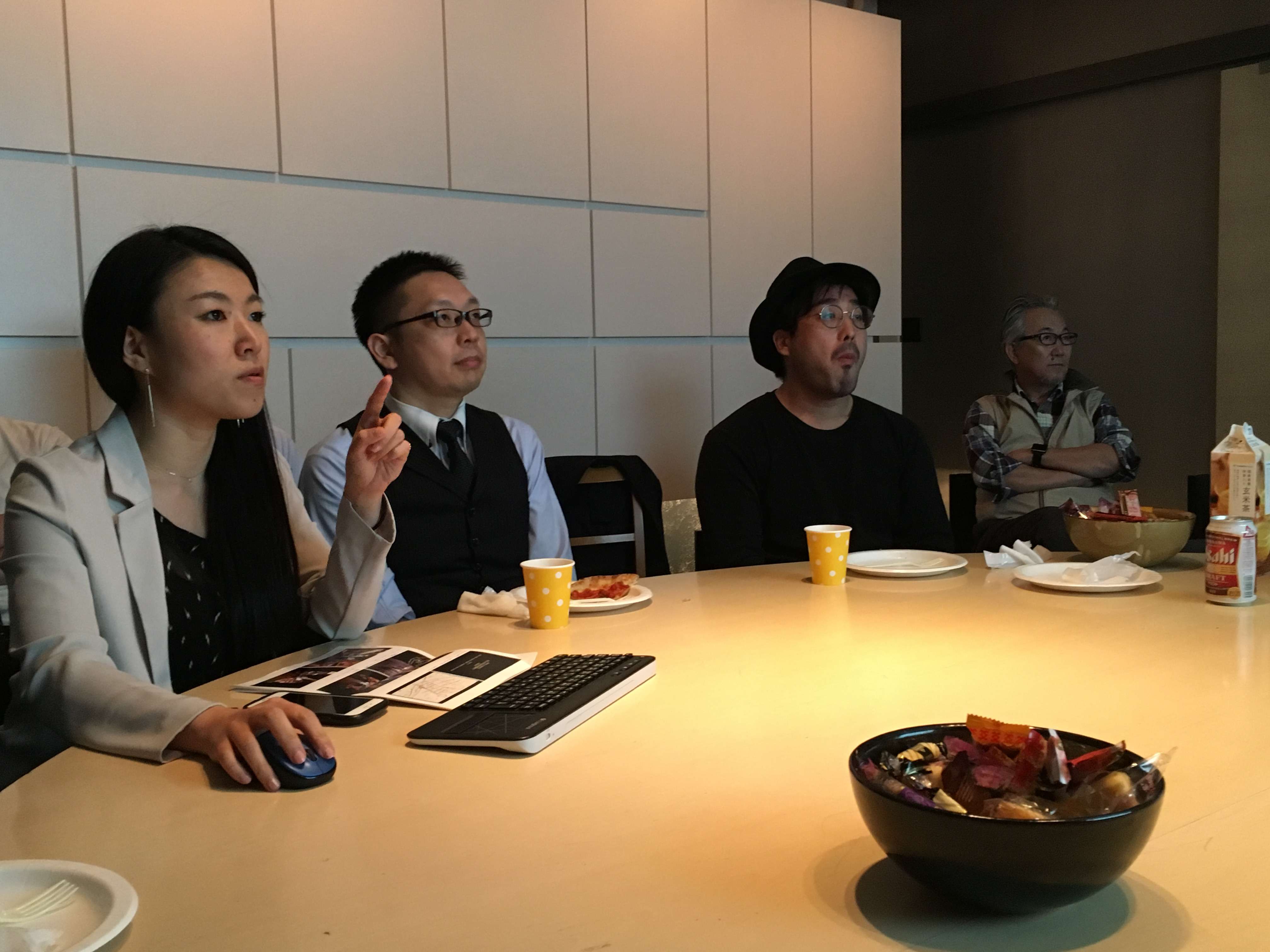
we will have a roundtable discussion to review the night walk in Shibuyagawa area.
-Date: 29 Nov. (THU)19:00~21:00.
-Venue: LPA2F 5-28-10 Jingumae Shibuyaku
-Fee: Free
Send E-mail to office@shomei-tanteidan.org by 19th Nov. to save your seat.

we will have a roundtable discussion to review the night walk in Shibuyagawa area.
-Date: 29 Nov. (THU)19:00~21:00.
-Venue: LPA2F 5-28-10 Jingumae Shibuyaku
-Fee: Free
Send E-mail to office@shomei-tanteidan.org by 19th Nov. to save your seat.
Date of Issue: 23 August, 2024 ・-Activity 1 / City Night Survey – Busan, South Korea(2024.05.16 – 05.19)・-Activity 2 / Children Workshop in Omishima Island(2024.07.13) City Night Survey: Busan, South Korea2024.05.16 – 05.19 Mari Kubota+ Noriko Higashi Busan, South Korea’s second-largest city, is one of the world’s major port cities. In recent years, it has also gained fame as a hub for tourism and film. We surveyed the lighting in Busan, which is also a member of LUCI (Lighting Urban Community International). South Korea is a close neighbor, just 1.5 hours from Tokyo by plane, making it a popular destination for quick and affordable trips. Busan, the second-largest city in South Korea, is not only a tourist destination but also a major port and an entertainment center, hosting film festivals. As a member of LUCI, Busan has been focusing on urban lighting as part of its urban planning. In 2015, the city developed an extensive overview of its nightscapes, resulting in the Busan Urban Light Policy for 2030. This policy has been updated several times, reflecting the city’s ongoing efforts in implementation and improvement. The guidelines divide Busan into several zones, each with lighting tailored to its specific characteristics.We traveled to Busan to assess whether the city’s lighting contributes to safety, beauty, attractiveness, and the local economy at night. ■Jagalchi Market Jagalchi Market is South Korea’s largest seafood market, selling both fresh and dried fish. After purchasing seafood on the first floor, visitors…
Night Walk @Singapore Botanic Gardens Landscape and Parks 2018/10/11 Mayumi Banno+Sunyoung Hwang ri Goh Two walks in the month of October with professionals from the landscape and lighting industry. One in the real nature and the other in the concrete jungle! Group picture at the wrap-up session! This end of year had us finishing off with 2 walks in the exciting month of October! We had a walk at Singapore Botanic Gardens where it was the first time that we solely focussed on inviting professionals to participate. Shortly after that, we conducted another Heroes and Villains walk at Marina Bay in conjunction with PLDC Singapore 2018. Measuring lux levels at the visitor’s entrance Heroes and Villains review! On the way to the Bandstand for the Guerilla light-up activity ■Singapore Botanic Gardens Walk On Thursday 11th October, Lighting Detectives Singapore chapter organised a walk to the only UNESCO World Heritage Site on the sunny island, Singapore Botanic Gardens. Only recently awarded the title in 2015, the garden consists of three lakes, the signature National Orchid Garden and a Rainforest amongst many other attractions. It is also the third garden in the world to be listed as a World Heritage Site. Landscape and Parks was our theme for the third walk and we wanted to examine what was so different in the lighting environment of the nation’s pride and joy and how the government balances the concern they have for the…
Lighting designer’ VS ‘Lighting planner’ Interviewer: Karen Huang Karen: Mende san, today I would like to talk about the definition in between ‘Lighting designer’ and ‘Lighting planner’ since I thought about how we could define the direction or the ‘concept’ for the title of ‘lighting designer’. Just in my own opinion, the feeling of naming ‘designer’ and ‘planner’ are slightly different. Feels like ‘designer’ should pursue more creative and innovative ideas on design work, even though that is kind of challenging works. The other side, ‘planner’ feels like to support more accuracies of demand and standard regulation. If you could easily interpret that ‘designer’ may be more close to the art field and ‘planner’ shall be close to the engineering field. Of course, that is purely based on my own thinking. Our company name is ‘Lighting Planners Associates’. May I ask the reason why Mende san has chosen the ‘planner’ instead of ‘designer’? Mende: Well, do you feel the word ‘planner’ is strange? Haha~I still remembered it very clearly when I was considering the company name. At that moment, I asked Mr. Paul Marantz about the name ‘Lighting Planners Associates’ and got some feedback. He said ‘why you don’t call your company name to be ‘MENDE LIGHT’’? Actually, it was a very surprising feedback for me. I didn’t want to reflect my name on the company identity. But actually in the USA, it was not so common to use ‘designer’, but…
26 September 2008 The Lighting Detectives are always up to something unusual and for this city walk we rented a double-decker, open-air bus to cruise the streets of Tokyo. A specially planned route took us from Marunouchi→around the Imperial Palace→past the Diet Building→through the middle of Ginza→across the Rainbow Bridge→around Odaiba→back through Toyosu→across Kachidoki Bridge→up Haruumi Avenue→back to Marunouchi. It was a neck-kinking, eye-popping, wind-in-your-hair tour! Sore Neck after a Magical Tour of Ginza Group photo in Marunouchi before the start of the tour. An air of excitement and anticipation as members boarded the bus for the 2-hour night tour of Tokyo. Driving through the heart of Ginza was the highlight for many on the tour. New and old methods for street and facade lighting were on parade, an excellent opportunity for comparing and contrasting lighting eras. Office tower lighting and residential condominium lighting dominated the scene on the drive back from Odaiba to Marunouchi. While white fluorescent lighting was the predominate color some condominiums glowed a soft orange. Members all had stiff necks after 2-hours of continuous looking up, but nobody seemed to mind. Chatter even died down as the bus started along the route, as members seemed to take this opportunity very seriously. On this bus tour I accomplished something that I am too embarrassed to do any other day; Crank my head back and look up as we drove through the streets! As anybody knows, Tokyo is…
Federico FaveroLighting DesignerStockholm When asked to write a note in TNT column, I was considering to share my thoughts on how Artificial Intelligence might change lighting design. But then during the summer I experienced the “Notte delle Luci” (Light Night) festival, and I felt the urge to report it. Visitors of the festival gather at dusk in Scorrano, a small town in Salento, the heel of the Italian boot. Thousands of people walk from the outskirts of the town to the main square. The public lighting is switched off and there is life buzzing from the shops and the restaurants. White structures along the streets frame the sky and create architectures of varied scale and complexity. These structures are called “Luminarie” and host multiple light points in patterns. When the sky is completely dark, music starts and all of a sudden all the “Luminarie” are switched on. The architectural structures shine, their patterns become alive, people are lit almost as in daylight, the atmosphere recalls a sense of fascination and of lightness. The eye shifts constantly between the saturated light dots and a sense of intense diffuse white light, which creates a vibrant complexity. Most of the lights are static but there are also spectacular shows of light and sound in the square and the surrounding streets. All in all, an awe-inspiring experience. I asked Paolo Portaluri, a lighting designer based in Salento, to give some context to what I…