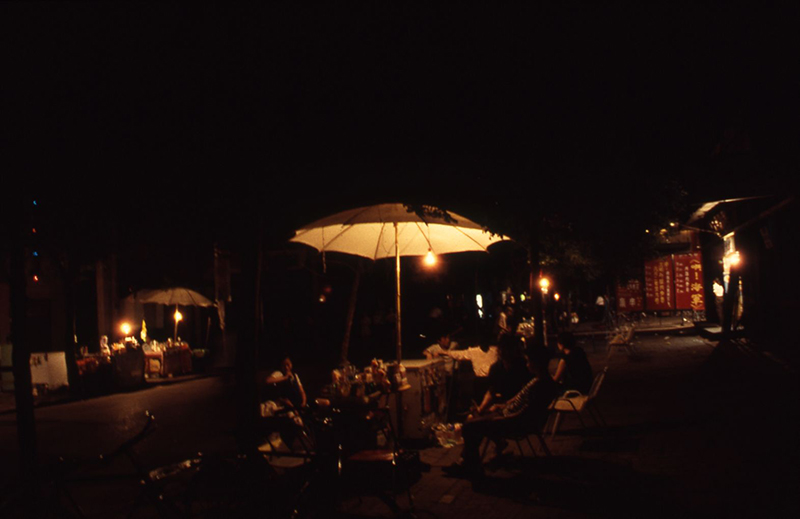
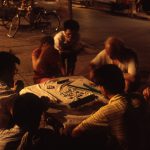
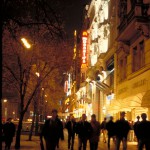
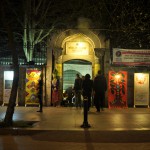
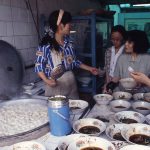
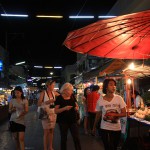
Muslim District within New Development Context2025.11.06-11.09 Quratuaini Jamil + Xu Sunny The survey aims to examine the Muslim Quarter District with a focus on its religious, cultural, and urban context, while assessing how it integrates with the emerging modern development within Xi’an. ■ Brief Summary of Lighting SurveyWith a vast metropolitan population of 12.9 million—of which 4.45% reside in the urban center—Xi’an is a renowned historical and cultural hub in China that pursues an urban planning strategy blending tradition with modernity. The city integrates its rich heritage with the demands of contemporary development while carefully safeguarding key cultural areas. A prime example is the Muslim Quarter, which plays a crucial role in preserving living heritage, ethnic diversity, and the traditional urban fabric. Xi’an’s planning approach emphasizes “development within preservation and preservation within development,” reflected in the harmonious coexistence of new growth and historic architecture. Accordingly, this research focuses on how the old and new parts of the city—particularly distinct areas like the Muslim Quarter—are effectively integrated. ■Xi’An Muslim QuarterOn the first day, we observed the Friday congregational prayer at the Great Mosque of Xi’an. This visit provided a valuable opportunity to study the mosque’s internal spatial organization and architectural characteristics. The Great Mosque of Xi’an is distinctive for its unique synthesis of traditional Chinese architectural language and Islamic religious functions. It differs markedly from the Middle Eastern style—characterized by prominent domes and tall minarets—commonly seen in places like Singapore. Instead,…
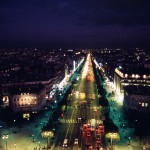
Songdo newcity, Inchon and Seoul city2025.10.22- 2025.10.25 Karen Huang + Xueying Piao + Xianyu Liu The purpose of this Seoul lighting survey is to explore how lighting shapes the city’s identity and cultural expression of the urban landscape in the multiple layers of Seoul.With this purpose in mind, we went to Songdo, Incheon and Seoul for the servey. ■ Songdo InchonOn the first day of our site survey, we visited Songdo International Business District in Incheon. As a flagship planned development in Yeonsu-gu, this new town represents a remarkable urban planning achievement, constructed entirely on reclaimed land – essentially a future-city built from the ground up. The district demonstrates excellent connectivity, with the core area accessible within approximately 90 minutes via bus from Incheon International Airport. By around 8:00 PM, few people are on the street. Our survey focused on the central park area of Songdo. At street level, building facades demonstrated minimal use of decorative flood lighting, relying primarily on internal illumination to create a subdued atmosphere, while the commercial districts utilized abundant illuminated signage to inject vibrancy into the urban landscape. The most critical insight emerged from the view at G Tower: the urban planning framework is distinctly articulated through strategic color temperature zoning, with residential areas at 2700K transitioning to over 5000K for landmark structures, constituting a macro-level “light planning” methodology. Simultaneously, the concentrated application of architectural lighting to tower crowns effectively reinforces skyline identity while minimizing…
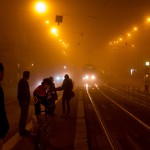
Lighting Survey: Nepal 2023.11.12 – 2023.11.14Mayumi Banno Xianyu Liu (Flower) Kathmandu Valley, a World Heritage Site encompassing Kathmandu, Patan, and Bhaktapur; how is the city faring now after the devastating earthquake of 2015? During Tihar, Nepal’s festival of lights, we visited the capital city of Kathmandu and the adjacent ancient city of Bhaktapur. ■IntroductionHow are Nepal’s cities faring after the 2015 earthquake? During Tihar, Nepal’s festival of lights, we visited the capital city of Kathmandu and the adjacent ancient city of Bhaktapur to explore the reconstruction and the lighting environment during the festival. From the plane overlooking the whole of Nepal, shocked by the twinkling lights of the stars. Nepal is a country with a high national happiness index, but it is also very poor. But when I saw this from the plane, I was surprised, I thought Nepal would have no lights, or very little lights. Later, I heard local people say that because it is the New Year, every family will prepare the colored lights, decoration, and create a lively atmosphere. (Flower) ■KathmanduKathmandu is located at an altitude of about 1,400 meters. In mid-November, when we visited, the days were hot and sunny, but the nights were cooler than 10 degrees Celsius. The city was filled with the hustle and bustle of the Hindu festival of Lakshmi, the goddess of wealth and happiness, to pray for wealth and health, and the New Year who live in this region….