


Newsletter vol.147
Date of Issue: April 24, 2026・Activity 1 / Lighting Detectives Jr. : Children’s Workshop(2026.03.20)・Activity 2 / City Night Walk Vol.78:Shinjuku(2026.03.05)・Activity 3 / The Round Table Discussion Vol.75: Shinjuku Night Walk Review(2026.03.19) Lighting Detectives Jr. : Children’s Workshop Awaken the “Treasures” Sleeping in Nighttime Tsukudajima with Light!2026.03.20 Sachiko Segawa + Simeng Huang + Momoe Nomura + Noriko Higashi On the first day of the three-day weekend before spring break in March, we held our children’s workshop. This time, right in Tsukudajima where the LPA office is located, we took the kids on a night walk survey to search for “Lighting Heroes and Villains” and discover “treasures” hidden in the darkness. We also conducted lighting experiments on the spot. On March 20th—just a bit too early for the cherry blossoms—we hosted the 2025 Children’s Workshop. This annual hands-on program encourages children to explore and create under the theme of “light,” helping them learn about its power and influence. Since children rarely have the chance to walk outside after dark, the goal is to provide a spark for them to think about the relationship of light within the city. They experience how a familiar landscape transforms at night and how a single beam of light can drastically change an impression. For this session in Tsukudajima, we tasked the children with identifying “Heroes and Villains” and locating “Night Treasures”—landmarks swallowed by the dark that could reveal new charms when illuminated. As they walked, the kids…
Newsletter vol.146
Date of Issue: January 30, 2026・Activity 1 / City Night Survey : Riyadh, Saudi Arabia(2025.11.16-11.18)・Activity 2 / City Night Survey : Tashkent, Uzbekistan(2025.11.09-11.14) City Night Survey : Riyadh, Saudi Arabia Diriyah, KAFD and Metro stations Riyadh2025.11.16 – 11.18 Gita Listia The purpose of this Riyadh lighting survey is to explore the characteristics of old urban areas and new developments in KAFD Riyadh, with a particular focus on their metro stations. The study aims to understand how each area expresses its identity through public space lighting and how lighting strategies are applied in major infrastructure such as metro station. ■Diriyah Diriyah is a historic area on the north-west side of Riyadh and one of Saudi Arabia’s most important cultural heritage sites. Located along Wadi Hanifah, about 15 km from central Riyadh, it reflects the early history of the city. Today, Diriyah is being developed into a vibrant heritage, cultural, and lifestyle destination, where historic preservation is carefully combined with modern urban design. The lighting in Diriyah is designed to be subtle and heritage-sensitive. Very warm white tones are used to complement the Najdi mud-brick architecture, creating a calm and welcoming night-time atmosphere. Pole lights and bollards in Diriyah feature distinctive shapes, patterns, and warmer colour temperatures compared to typical street lighting in other parts of Riyadh. This traditional lighting character clearly signals that visitors are entering a cultural and heritage area. ■At-Turaif At-Turaif is the birthplace of Saudi history and represents the…
Newsletter vol.145
Date of Issue: 25 December, 2025・Activity 1 / City Night Survey : Perth, Australia(2025.10.28-11.01)・Activity 2 / City Night Survey : Xi’An, China(2025.11.06-11.09) City Night Survey:Perth, Australia Urban Light and Natural light in Western Australia2025.10.28 – 11.01 Hongna Chen + Puyu Wu This lighting survey investigates the influence of Western Australia’s local culture and natural landscape on its lighting environment, exploring whether its relative remoteness has led to distinctive approaches in lighting design. For this purpose, field investigations were conducted in Perth and its surrounding natural areas. ■ Perth’s Geographic LocationPerth is a city in Western Australia and is often described as the world’s most isolated major city. This characterization stems from its extreme remoteness with the Indian Ocean to the west, vast outback deserts to the east, and long distances from other major cities—about 4,000 km from Darwin, 2,700 km from Adelaide, and over 3,000 km from eastern cities such as Sydney and Melbourne. The unique nightscape of such a “remote” city is the central focus of this survey. ■ Panoramic Night ViewTo take in the city’s nightscape from above, we chose King’s Park, the largest park in Perth. The park is a popular recreational spot for locals. On our way up, we saw many people hiking, picnicking, and sunbathing. We joined them at the hilltop to await nightfall. From Kings Park, Perth’s nighttime view clearly reveals the structure of the city’s lighting. The CBD skyline is defined by clusters…
Newsletter vol.144
Date of Issue: 3 December, 2025・Activity 1 / City Night Survey : Seoul, Korea(2025.10.22-10.25)・Activity 2 / City Night Survey : Shenzhen. China(2025.9.12&9.18) City Night Survey : Seoul, Korea Songdo newcity, Inchon and Seoul city2025.10.22- 2025.10.25 Karen Huang + Xueying Piao + Xianyu Liu The purpose of this Seoul lighting survey is to explore how lighting shapes the city’s identity and cultural expression of the urban landscape in the multiple layers of Seoul.With this purpose in mind, we went to Songdo, Incheon and Seoul for the servey. ■ Songdo InchonOn the first day of our site survey, we visited Songdo International Business District in Incheon. As a flagship planned development in Yeonsu-gu, this new town represents a remarkable urban planning achievement, constructed entirely on reclaimed land – essentially a future-city built from the ground up. The district demonstrates excellent connectivity, with the core area accessible within approximately 90 minutes via bus from Incheon International Airport. By around 8:00 PM, few people are on the street. Our survey focused on the central park area of Songdo. At street level, building facades demonstrated minimal use of decorative flood lighting, relying primarily on internal illumination to create a subdued atmosphere, while the commercial districts utilized abundant illuminated signage to inject vibrancy into the urban landscape. The most critical insight emerged from the view at G Tower: the urban planning framework is distinctly articulated through strategic color temperature zoning, with residential areas at 2700K transitioning to over 5000K…

Newsletter vol.143
Date of Issue: December 19, 2025・Activity 1 / City Night Survey:Honolulu(2025.09.04-09.08)・Activity 2 / city Night Walk Vol. 77: Gakugei-daigaku(2025.10.17)・Activity 3 / Round Table Discussion Vol. 74: Review on Gakugei-daigaku(2025.11.10) City Night Survey:Honolulu 2025.09.04-09.08 Yonglin Ke + Masashi Kurobe The nights in Honolulu are a diverse blend of resort illumination, residential lights, torches, and night market glows. However, as the city develops, the starry sky is fading, raising concerns about the impact on the local ecosystem. Balancing urban growth with light pollution countermeasures remains a significant challenge. We conducted an on-site night walk survey to explore the balance between the city and nature and to evaluate the current lighting environment. ■Honolulu Honolulu, the capital of the U.S. state of Hawaii, is a prominent tourist destination in the heart of the Pacific Ocean. Simultaneously, it serves as the political and economic hub of the state. In this land where the sea, mountains, and urban areas sit in close proximity, the nightscape reveals a variety of expressions depending on the time and location—blending the glow of resort hotels, the soft lights of residences, traditional fire torches, and the vibrant lights of night markets. Furthermore, the combination of intense sunlight and a tropical climate creates a unique character within the city’s lighting environment. On the other hand, urban development and the growth of the tourism industry have negatively impacted the visibility of the starry sky and affected local ecosystems, such as migratory birds and…
Newsletter vol.142
Date of Issue: October 24, 2025・Activity 1 / City Night Survey : Toyosu, Tokyo(2025.06.26)・Activity 2 / Kaoru Mende / Lighting Design Workshop(2025.09.13-09.15) City Night Survey : Toyosu, Tokyo2025.06.26 Yumi Honda +Qiaoxi Wang+ Momoe Nomura We observed and recorded the nighttime light environment of the newly developed commercial complex Senkyaku Banrai in the Tokyo Bay Area and its surrounding public spaces (green plaza, station area, and Gururi Park). We conducted a multifaceted analysis, including the placement of lighting fixtures, illuminance, and the impression of the space, to determine how light affects the atmosphere of the facility and the city in the Toyosu area, which is being developed as a tourist hub. The Toyosu area is a point of interest where the latest urban spaces and the lively atmosphere of shitamachi (old downtown) coexist due to redevelopment. We walked through the area around Toyosu Market Station, the green plaza, and Gururi Park, observing how light design impacts the impression, comfort, and safety of the town. ■Senkyaku Banrai Senkyaku Banrai is a commercial facility that opened in 2024 next to the Toyosu Market. It’s a spot where both tourists and local residents can enjoy the array of restaurants and souvenir shops. Through architecture and lighting design incorporating traditional Japanese motifs, it exudes a uniquely Japanese warmth and vitality, even within the contemporary urban nightscape. The lighting plan inside the facility is unified, as befitting a new commercial complex, and was designed with both…
Newsletter vol.141
Date of Issue: September 19, 2025・Activity 1/ Visiting Tanteidan in Aomori(2025.08.21-08.23)・Activity 2/ City Night Walk in Katong–Joo Chiat, Singapore(2025.07.18) Visiting Tanteidan in Aomori Tanteidan Jr. Kids Light Odyssey2025.08.21-08.23 Kayo Sasamoto + Noriko Higashi At the request of the incorporated association TOCOL, we held children’s workshops in three locations in Aomori Prefecture: Nanbu Town, Hachinohe, and Hirosaki. 20 to 30 children participated in each location, and with flashlights in hand, they conducted a Night Walk Survey and lighting experiments. For three consecutive days in the middle of summer, from August 21-23, we held children’s workshops in Nanbu Town, Hachinohe City, and Hirosaki City in Aomori Prefecture. This workshop was held at the request of the incorporated association TOCOL. They had heard there weren’t many design-related workshops in the area and asked the Lighting Detectives to come and hold one. Since it was during summer vacation, each session was fully booked with 20 to 30 children. Parents also actively participated, and in some sessions, there were more questions from the adults than from the children. Before each Night Walk Survey, the children also got to try painting the traditional Aomori craft of Kingyo Neputa (a goldfish-shaped lantern), so the workshops were packed with content. Even though the sessions were long, from 3 p.m. to 8 p.m., the children participated enthusiastically. ■Nanbu Town, Where Darkness Remains Nanbu Town is a district located about a 30-minute drive inland from Hachinohe, and it’s an area where…

Newsletter vol.140
Date of Issue: August 6, 2025 ・Activity 1 / Light-up Ninja in Guangzhou(2025.06.11-06.12) Light-up Ninja in Guangzhou First Light-up Ninja in China!2025.06.11-06.12 Huangyi Lin Lighting Detectives debuted Light-up Ninja in China (June 2025, Guangzhou). Students created temporary night art with communities, combating light villains through sustainable urban darkness and cultural storytelling. From June 11 to 12, 2025, the “Light up Ninja” flash mob popped up in Nanting Village, Guangzhou University Town—lighting up the night for a moment, then quietly withdrawing. This was the first-ever ‘Light up Ninja’ event in China. We co-organized it with the Guangzhou Academy of Fine Arts, whose faculty members Prof. Lin Hong, Yang Yiding, and Lu Haifeng were excited to join. The event also received support from the Guangzhou Lighting Society and sponsorship, including technical expertise, from CDN Lighting. The main purpose of the event was not to light up the monumental kind, often found extravagantly lighting up towers, bridges, or castles. Instead, it involved simple experiments to find appeal in the typical, by illuminating scenes buried in daily life. We wanted students to learn not just about adding light, but also about eliminating unnecessary or unpleasant light to create beauty and comfort in the nightscape closest to us. ■ DAY 1: June 11Around 30 students, along with LPA and CDN staff and professors, gathered at GAFA’s Art and Light Environment Lab for the opening ceremony. Prof. Lin Hong gave a talk on “Nightscape Lighting for…

Newsletter vol.139
Date of Issue: June 18, 2025・Activity 1/ City Night Survey: Chandigarh, India(2025.01.15-01.19)・Activity 2/ City Night Survey: Hida Furukawa, Furukawa Festival (2025.04.19)・Activity 3/ Night Walk Vol.76: Tachikawa(2025.04.25)・Activity 4/ Round Table Discussion Vol.73: Review on Tachikawa(2025.05.27) City Night Survey: Chandigarh, India2025.01.15-01.19 Masafumi Yamamoto + Yuichi Anzai About 65 years ago, a vast area at the foothills of the Himalayas was divided into districts for government functions, commerce, education, and residences, with separated roads, creating a landscape completely different from other Indian cities. This survey takes a multifaceted approach to examine Chandigarh’s urban lighting and nightscape, while observing the natural light expressions inspired by Le Corbusier’s architecture. ■Light RaysFirst, I quote the words of Le Corbusier:“Chandigarh is planned on a human scale. It connects to the infinite universe and nature. It is a place for all human activities where citizens can live a rich and harmonious life. Here, the radiance of nature and the heart is within our reach.”A vast paved ground is moistened by a dense white mist. About 180 meters ahead from where I stand, the High Court building faintly appears. Its enormous facade faces east and west. The sky behind peeks from beneath the portico, and the rays of light passing through it gently caress the huge concrete pillars painted red, yellow, and green, casting the morning sun on the ground. In this city, I encountered several lyrical daylight scenes. I believe this is because the philosophy of Atelier Le Corbusier in Paris, who…

Newsletter vol.138
Date of Issue: April 30,2025・Activity 1/ City Night Survey: Yokkaichi(2024.11.21-11.22)・Activity 2/ City Night Survey: Kitakyushu(2025.01.08-01.11) City Night Survey: Yokkaichi, Mie2024.11.21-11.22 Shunichi Ikeda + Yuta Shibata Yokkaichi has developed as an industrial city. The striking contrast between its dazzling factory nightscape and the increasingly organized city center stands out. We conducted a survey of the urban lighting where industry and daily life coexist. ■About Yokkaichi Yokkaichi has a long history, having developed as a port town facing Ise Bay. During the Edo period, it prospered as a post station along the Tokaido route. The city’s name originates from the markets that were held on days ending in “4.”After World War II, Yokkaichi grew as an industrial city with the construction of a petrochemical complex during Japan’s period of rapid economic growth. However, air pollutants emitted from the complex caused a serious pollution-related illness known as Yokkaichi asthma.Today, the city has regained a comfortable living environment. Residential areas, shopping streets, and everyday life now extend right alongside the industrial zones. ■3D Factory Nightscape Yokkaichi, with its history of industrial development, began drawing attention during the early 2000s factory nightscape boom. The expansive factory nightscape of the Yokkaichi petrochemical complex, which stretches about 10 kilometers north to south, is counted among Japan’s five greatest factory nightscapes. What makes it especially unique is that the nightscape can be viewed from the sky, land, and sea—earning it the nickname “3D Nightscape.” Particularly photogenic views of the…
Newsletter vol.137
Date of Issue: March 31, 2025・Activity 1/ City Night Survey: Ulaanbaatar, Mongolia(2024.10.01-05) City Night Survey: Ulaanbaatar, Mongolia2024.10.01-10.05 Atsushi Itakura & Genki Watanabe When thinking of Mongolia, many people may imagine vast grasslands and nomadic gers, but therapidly developing capital city of Ulaanbaatar also deserves attention.Despite being only about five and a half hours from Japan, few people are familiar with its currentstate.This visit, conducted through an urban lighting survey of Ulaanbaatar, provided a valuableopportunity to discover an unexpected side of Mongolia. ■What Kind of Place Is Mongolia?When we think of Mongolia, the first image that often comes to mind is of vast grasslands stretching out endlessly, dotted with “gers”—the traditional dwellings of nomadic herders. For Japanese people, there’s also a sense of connection through cultural and historical ties, such as the shared heritage linked to the Mongolian spot (mongolian birthmark) and the many Mongolian sumo wrestlers who have found great success in Japan. Despite being only a five-and-a-half-hour flight away from Japan, Mongolia is a country that feels both near and distant—close in proximity, yet far in familiarity. Though we may feel an affinity toward Mongolia, the reality is that most people know very little about its present state. With this simple curiosity as our starting point, we embarked on a 5-day, 4-night survey of urban lighting in Ulaanbaatar, the capital of this rapidly developing nation. ■Topographical Characteristics of Ulaanbaatar Ulaanbaatar covers an area of approximately 4,700 square kilometers and…
Newsletter vol.136
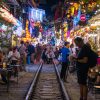
Date of Issue: March 1, 2025・Activity 1/ City Night Survey: Hanoi, Vietnam(2024.11.21-11.24)・Activity 2/ Lighting Detectives x Glow Shenzhen (2024.12.19)・Activity 3/ Lighting Detectives Annual Gathering (2025.1.16) City Night Survey: Hanoi, Vietnam2024.11.21-24 Chuanyi Liu + Jiang Kunzhi Hanoi, the capital of Vietnam where history and modernity blend seamlessly. Thanks to its rich cultural heritage, it has established itself as one of Southeast Asia’s premier tourist destinations. In this city where the Old Quarter, St. Joseph’s Cathedral, and Lotte Tower coexist, we explore Hanoi’s nightscape culture through the lens of light. Vietnam, a populous nation of 100 million people, has Hanoi as its capital serving as the political, cultural, and economic center as well as a key transportation hub. In July 2020, the Vietnamese government issued Decision No. 1129, promoting the development of the night economy and designating Hanoi as the pilot city for this initiative. The city’s rich heritage and unique cultural arts provide favorable conditions for the growth of Hanoi’s night tourism. Hanoi’s urban lighting exhibits distinct characteristics depending on the area and function. In the Old Quarter, narrow alleys and historic buildings create a lively atmosphere with bustling night markets. The nighttime lighting here mainly consists of creatively designed decorative lights at individual shops, which enhance the vibrant energy. Around Hoan Kiem Lake, soft lights reflected on the water’s surface and the illumination of the Turtle Tower standing in the lake harmonize to create a calm and serene nightscape. In the…
Newsletter vol.135
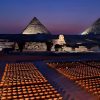
Date of Issue: 16 December, 2024・-Activity 1/ City Night Survey –Cairo&Giza, Ezypt(2024.10.31-11.3)・-Activity 2/ Visiting Tanteidan in Hida Kamiokamachi (2024.11.15)・-Activity 3/ Nightwalk : Kagurazaka, Tokyo (2024.11.18) City Night Survey: Cairo&Giza, Egypt2024.10.31-11.3 Makalin Wongchinchai + Stell Li Egypt, land of secrets, a place full of history, mystery and amazing stories. We wanted to see not only thefamous pyramids, but also a lot of interesting cities and lightings in the night. To explore the lighting in Egyptian daily life, we chose to visit two main cities in Greater Cairo Area for four days. ■Introduction Egypt, one of the world’s oldest civilizations, is home to the pyramids, deserts, the Nile, and its vibrant capital, Cairo, where ancient and modern worlds meet.To explore this one of the most historical countries in the world, we chose to visit two main cities in Greater Cairo Area —Cairo (the captial city of Egypt) and Giza (with Memphis and its Necropolis – the Pyramid Fields from Giza to Dahshur ).As the sun sets over the city, Cairo & Giza transforms into a dazzling display of lights and enchantment. The bustling streets come alive with vibrant energy. As locals and visitors alike gather in cafes, shisha lounges, and bazaars, embracing the rich Egyptian culture that thrives well into the night, we surveyed lightings on Cairo & Giza’s daily life. ■Cairo The Khan el-Khalili market has always been a hub of trade and commerce since it was established in 14th century. Walking in this…

Newsletter vol.134
Date of Issue: 2 December, 2024– Activity 1/ Night Walk Vol.74: Kawasaki Musashi-Kosugi(2024.10.04)– Activity 2/ Children Workshop: Night Walk in Aoyama and Photo Taking (2024.11.2)– Activity 3/ Round Table Discussion vol.72: Musashi Kosugi Night Walk Review (2024.10.25) Night Walk Vol.74: Kawasaki Musashi-Kosugi– From Industrial Zone to Japan’s Leading Tower Mansion City –2024.10.04 Yutaka Enomoto + Yuko Nakayama + Noriko Higashi Musashi-Kosugi, a major transportation hub served by the Tokyu Toyoko Line, Meguro Line, JR Nambu Line, Yokosuka Line, Shonan-Shinjuku Line, and the Sotetsu Line, offers convenient access to both Yokohama and Tokyo. Over the past decades, the area has undergone rapid development, leading to a significant increase in its population. However, the station area still retains traditional shopping streets and izakaya districts, creating a striking contrast with the towering high-rise buildings. This walk focused on exploring the coexistence of these new and old elements of the area. Historically, Musashi-Kosugi flourished as a boat crossing on the Nakahara Kaido during the Edo period. Later, it became home to numerous factories. However, as these factories relocated, redevelopment plans were initiated, transforming the city’s landscape. The changes over the past decade have been particularly dramatic, with a population increase of 60,000 compared to 20 years ago. ■Group 1 Group 1 focused on exploring areas with a nostalgic atmosphere, including low-rise residential neighborhoods and traditional shopping streets. The shopping streets had implemented creative lighting installations to enhance the atmosphere. In particular, an “analog interactive…

Newsletter vol.133
Date of Issue: 18 November, 2024– Activity 1 / City Night Survey : Akihabara, Tokyo(2024.9.9)– Activity 2 / Kaoru Mende / Lighting Design Workshop (2024.9.21-23)– Activity 3 / Online Talk Event – Nightscape in Your Town – (2024.7.25) City Night Survey: Akihabara, Tokyo2024.9.9 Yonglin Ke + Kunzhi Jinag + Linxi Chen The brightness (luminance) of signage lighting is key to shape the overall lighting of a city. This survey conducted in Akihabara, a globally famous district, focused on the renowned Akihabara Electric Town (Chuo-dori), analyzing the evolution of the city’s lighting composition by comparing it to the survey from 19 years ago. ■Akihabara Electric TownAkihabara is the heart of electronics in Tokyo and a globally famous hub for otaku culture. While it is bustling with tourists daily, the colors of the signs, filled with anime and game culture, are much more diverse compared to upscale commercial areas like Ginza or other shopping districts. In 2020, Chiyoda Ward released guidelines for outdoor advertising and urban development, leading to changes in Akihabara’s streetscape. This survey investigates the current night view of Akihabara Electric Town, comparing it to a survey conducted 19 years ago. (Kunzhi Jiang) ■What kind of lights shape Akihabara?The main lighting elements in Akihabara’s key districts include streetlights, signage lighting, building façade lighting, and lighting from store entrances and spillover light.Compared to the picture from 19 years ago, the most noticeable green and red lights from EDION were not illuminated…
Newsletter vol.132
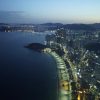
Date of Issue: 23 August, 2024 ・-Activity 1 / City Night Survey – Busan, South Korea(2024.05.16 – 05.19)・-Activity 2 / Children Workshop in Omishima Island(2024.07.13) City Night Survey: Busan, South Korea2024.05.16 – 05.19 Mari Kubota+ Noriko Higashi Busan, South Korea’s second-largest city, is one of the world’s major port cities. In recent years, it has also gained fame as a hub for tourism and film. We surveyed the lighting in Busan, which is also a member of LUCI (Lighting Urban Community International). South Korea is a close neighbor, just 1.5 hours from Tokyo by plane, making it a popular destination for quick and affordable trips. Busan, the second-largest city in South Korea, is not only a tourist destination but also a major port and an entertainment center, hosting film festivals. As a member of LUCI, Busan has been focusing on urban lighting as part of its urban planning. In 2015, the city developed an extensive overview of its nightscapes, resulting in the Busan Urban Light Policy for 2030. This policy has been updated several times, reflecting the city’s ongoing efforts in implementation and improvement. The guidelines divide Busan into several zones, each with lighting tailored to its specific characteristics.We traveled to Busan to assess whether the city’s lighting contributes to safety, beauty, attractiveness, and the local economy at night. ■Jagalchi Market Jagalchi Market is South Korea’s largest seafood market, selling both fresh and dried fish. After purchasing seafood on the first floor, visitors…
Newsletter vol.131
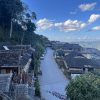
Date of Issue: 12 July, 2024-Activity 1 / City Night Survey – Pu’er City Yunnan, China(2023.12.08 – 12.13)Lighting Detectives Newsletter Vol.131 Download PDF City Night Survey – Pu’er City Yunnan, China Nightscape in Jingmai Mountain2023.12.08 – 12.13 Kyoko Takubo + Hongna Chen Located on the southwest border of China, Jingmai Mountain is the birthplace of Pu’er tea, where the indigenous people have created an ancient tea forest cultural landscape, which was registered as a UNESCO World Heritage Site in September 2023.While working on the project, we became interested in the local culture. So we decided to survey the villages at night and to observe and report the impact of tourism development on the local nightscape. ■Introduction Visiting Jingmai Mountain isn’t easy. First, spend the night in Kunming, then leave early morning for the destination by plane or train.We had planned to fly from Langcang Jingmai airport, but our flight was suddenly cancelled. So we had to travel to Pu’er by train and grab a cab to Jingmai Mountain.During our stay, we were based in Huimin Town where our project TEA CELLAR is located. We visited Nuogang Village, Wengji Village, and Jingmai Village to observe the people’s daily life and the nightscape there. ■ Nuogang Village Nuogang Village is a historic village of the Dai tribe, where the villagers have maintained their traditional lifestyle. The first floor of the house, with its distinctive gabled roof, is used for tea production and for…

Newsletter vol.130
Date of Issue: 28 June, 2024-Activity 1 / City Night Survey – Alaska(2024.02.06-02.12)-Activity 2/ Night Walk Vol. 73 – Azabudai Hills & Toranomon Hills (2024.05.10)-Activity 3/ Round Table Discussion Vol.71– Azabudai Hills & Toranomon Hills Review (2024.05.30) City Night Survey – Alaska 2024.02.06-02.12 Masafumi Yamamoto + Yuki Ito We visited Alaska at the beginning of February. The purpose was to investigate the light environment in the Arctic under the theme of ‘Mother Nature’, focusing on urban areas, living environments, Eskimo life, and the wilderness. In this study, we stayed in Anchorage, the largest city in Alaska, and Fairbanks, a citysurrounded by nature. In Fairbanks, we stayed at a lodge in the mountains and observed the northern lights. ■Arctic City After noon in Fairbanks, a city as close to the Arctic Circle as you can reach. The weather is clear. The sun has risen close to the horizon and is about to set. Houses and trees cast long shadows on the ground. It is a beautiful scene, as if I had dipped the tip of my paintbrush in dark blue watercolor paint and carefully traced a stroke on a white canvas covered with snow. The temperature here is minus 20°C (68°F). Still, I can feel the warmth of the sun on my skin. The temperature can reach minus 40°C (-40°F) during the harshest season, while the four seasons are rich in variety. The temperature drops even further when the wind blows. This is the…
Newsletter vol.129
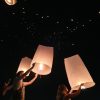
Date of Issue: 14 May, 2024 -Activity 1 / City Night Survey-Chiang Mai Lantern Festival(2023.11.25 – 11.29) Lighting Detectives Newsletter Vol.129Download PDF City Night Survey- Chiang Mai Lantern Festival2023.11.25 – 11.29 Angkana Kongchatri (Tan)+Momoko Muraoka Chiang Mai is the second largest city in Thailand which has special atmosphere tracing from Lannar kingdom period. Tan from Bangkok and Momoko from Tokyo traveled to the city for a survey. ■Back ground of the survey The lantern festival in Chiang Mai has been getting very high attention from international tourists since a couple of decades ago.Due to its visual appeal, the festival has become an explosively hot tourist spot and activity. As number of tourists raise up, the negative side of the festival also becoming a serious issue, such as the risks of fire and abandoned trashes which cause suffering to local people.In this SNS era, the speed and frequency of exchanging information has become extremelyheavy than ever. When very local culture getsintensive attention from unidentified crowds,then the one to retain the culture need to faceand respond the troubles to come with the anonymous attention which is also happeningon the lantern festival in Chiang Mai.Festivals with lights are attractive. However, overlooking the wastes happening materially and culturally cannot be accepted anymore.Through this survey, we aim to observe not only the bright side but also the problems and struggles behind which could relate with many other traditional lighting festivals. We believe that the approach…
Newsletter vol.128
Date of Issue: 04 April, 2024 -Activity 1 / Lighting Survey-Izumo(2023.11.22-11.24) -Activity 2 / Visiting Tanteidan in Ishigaki (2024.03.10) Lighting Detectives Newsletter Vol.128 Download PDF Lighting Survey-Izumo Lights in Izumo, Illuminating Cultural Values 2023.11.22-11.24 Masashi Kurobe+ Yuta Shibata The Izumo region has a long history and culture since the establishment of villages in the Yayoi period and the birth of Izumo Province. The Iwami region is a port town with hot springs that has existed since the Middle Ages including the town named Yunotsumachi which was developed as an outer port for the Iwami Ginzan Silver Mine, which is registered as a World Heritage site. What kind of light you can find in these two areas where rich history and culture of Shimane Prefecture remain? Can lighting enhance their cultural values? We investigated the light environment as well as the cultural background. ■IntroductionThe towns of Izumo and Iwami Yunotsumachi in Shimane Prefecture have a long history and a variety of cultures since the birth of Izumo Province. We investigated what kind of light can be seen in the spark of the culture, as well as its historical and cultural background. This survey also made us, who have lived in cities for a long time, think about the role of lighting as it should be. ■Kamimukae Shinji (Shinto ritual for welcoming the gods)October of the lunar calendar in the Izumo region is called “Kaminazuki” month. This is because during this month, all gods…