Date of Issue:April 27, 2017
・Activity 1/Ueno Night Park: The Lighting Detectives descend upon Ueno(2017/01/28,02/03)
・Activity 2/ Night Walk Vol.56 : Sumida Aquarium (2017/02/15)
・Activity 3/54th Salon & Workshop @ Lighting Detectives Office (2017/03/16)
Ueno Night Park: The Lighting Detectives descend upon Ueno
2017.01.28,02/03 Yasuhiko Higaki + Nozomi Yoshida + Mahiro Akiyama +Noriko Higashi
Over two days, January 28 and February 3, the Lighting Detectives held a workshop titled “Ueno Night Park.” Ueno is home to numerous museums and a vast park that bustles with people during the day; however, at night, the foot traffic thins out, and it can hardly be called an attractive district. To find out why, we explored the area and brainstormed ideas together with participants recruited from the general public.
Ueno Night Park was launched in 2016 (Heisei 28) to create nighttime vibrancy in the area. By collaborating with various cultural facilities that are increasingly extending their evening hours, the project organizes exhibition-related events and night-themed activities. Through these “Ueno Night Park” events, we aim to establish the habit of facilities staying open late and to promote the nocturnal charms of the area—encouraging visitors to explore not just the park, but also the Ueno Station vicinity and local neighborhoods like Yanesen. (Yasuhiko Higaki)
This inaugural event was structured into two parts. The first day consisted of a Lighting Detectives orientation followed by a night walk survey with participants divided into two groups. The second day focused on evaluating and analyzing the lighting heroes and villains discovered during the walk, ultimately culminating in a lighting proposal for Ueno Park.

Night walk survey route map

Strategy meeting divided into groups
■Night 1: Group A – Around Shinobazu Pond
Group A began by exiting the main gate of the Tokyo National Museum and heading toward the main gate of Tokyo University of the Arts (Geidai), keeping the Kuromon Gate to our right. We noticed a lack of unity among the streetlights, which were somewhat glaring, possibly due to different installation periods or jurisdictions. The lighting of the Kuromon Gate and the classical lamps atop the gates of the Music Department were overshadowed by these streetlights. While we couldn’t call them villains outright, the group agreed that unifying the fixtures and adjusting their brightness would be essential for creating a high-quality landscape.
Next, we walked behind the Ueno Zoo and headed toward Shinobazu Pond. Upon arrival, we found numerous food stalls lining the approach to Bentendo Temple. Many participants felt that the warm, atmospheric light leaking from these stalls, which seemed to warmly welcome visitors to the pond, was truly worthy of being called a hero.
As we moved further along the approach, we found that the Bentendo Temple was illuminated by an extremely strong orange floodlight, which dyed the surroundings orange and resulted in a disappointing landscape. When viewing the temple from a distance, the glare of the floodlight was prominent. Additionally, the signs of nearby commercial buildings and hotels were excessively conspicuous, and the entire group agreed that these were villains. While the contrast between the quiet night at Shinobazu Pond and the bustling lights of Ameya Yokocho was beautiful in its own way, the group proposed an improvement: reducing the luminance of the signage adjacent to the pond, which would still be sufficiently visible.
Finally, we circled behind Bentendo Temple to explore the area around the boat rentals. Tall, intensely glaring streetlights illuminated the paths. While the light was strong enough to read text on a bench, our eyes grew very tired during the survey. Although these lights are likely intended to improve path visibility and ensure security, we noted that the high-angle projection cast deep shadows on the faces of oncoming pedestrians, potentially reducing actual visibility. Our consensus for improvement was to eliminate the glare and change the lighting to something warmer.
In this survey, heroes were few, and villains were notably prominent. Ueno has many spots in need of lighting improvement, and I suspect there are many more heroes and villains yet to be discovered. Ueno is both the cultural heart of Tokyo and a place visited by many travelers. I strongly felt a desire to be involved in these efforts, hoping that the insights from this survey will be shared with more people to build a better urban landscape. (Mahiro Akiyama)

The Kuromon Gate, highly acclaimed as a hero

Feedback noted the extreme contrast between bright and dark areas
■Night 1: Group B – Ueno Forest
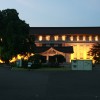
Group B departed from the Tokyo National Museum. Our first checkpoint was the illuminated Kuromon Gate. In the deepening twilight, the eaves were modestly lit from below, creating a solemn atmosphere—our first “hero” candidate. Next was the Ueshima Coffee building, where orange indirect lighting bathed the red brick walls, creating a warm wall of light. The interior light spilled out, forming a cozy pocket of illumination in the park.
As darkness fell, we headed toward the Tokyo Metropolitan Art Museum. While the light escaping from the building was beautiful, many felt the streetlights with exposed light sources were too glaring. The light distribution was uneven, with levels reaching nearly 100 lx directly under the lamps—marking them as potential “villains.” However, a small “hero” appeared along this path: a telephone booth. Standing quietly near the old Ueno Zoo entrance, its poetic presence evoked stories of people reaching out to distant loved ones throughout the years.
Next was the approach to the Tokyo Metropolitan Art Museum. The lighting here was masterful. Lights illuminated the bushes at foot level for safety while using fixtures that remained cool to the touch. In addition to accentuating the trees, the illuminated brick walls drew visitors inward. The tree lights featured cylindrical cowls so that only the leaves and the base were highlighted.
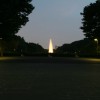
Leaving the museum, we entered the central plaza. Only the Starbucks facing the dark plaza was bustling. Both the interior lighting and the streetlights in front were a calm, warm 2500K, providing a sufficient sense of brightness at 70 lx. The fountains were off, leaving the basin pitch black, while the National Museum glowed in the distance.
Next was the National Museum of Nature and Science, famous for the giant whale statue. However, the spotlights were aimed at the support pillars rather than the whale itself—”Poor Whale,” we thought; this was a “villain.” Since the museum wasn’t open late, it felt dim compared to the lightfilled art museum and cafes. The path from here to the Museum of Western Art is reportedly used by the Emperor, yet the lighting was inconsistent in color, brightness, and fixture design. The mercury lamps, in particular, felt cold and uninviting.
In the street between the National Museum of Western Art and the Tokyo Bunka Kaikan, we found another “villain” emitting a bright, pale blue light. The greenery at the Bunka Kaikan was also overilluminated. Participants suggested ideas like using glowing glass floor blocks to unify the two historic buildings or providing more subtle light to the Western Art museum.
As our walk neared its end, we headed toward the Saigo Takamori statue via the cherry tree path. Amidst the white, glaring 5000K / 100 lx street, a single spotlight aimed at a cherry tree caught our eye. While likely beautiful during full bloom, in the winter season of bare branches, it was a blinding glare visible from the end of the street—a unanimous “villain.”
Passing the illuminated Ueno Royal Museum, we found a grove containing historical sites with no lighting at all, creating a rare and effective contrast of light and shadow. Finally, we reached the Saigo statue, only to find a large, blue illuminated tree right next to it. The group agreed: the lighting should be more composed and fitting for such a landmark. With that, our forest walk concluded. (Nozomi Yoshida)

Experiencing light level measurement for the first time

The nostalgic light from a Showa-era telephone booth

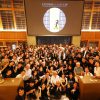
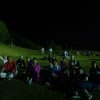
Group photo in front of the Tokyo National Museum main building

Explaining the lighting master plan for Ueno Park.

Introducing the concept of Lighting Heroes and Villains
■Night 2: Reviewing Heroes and Villains
On the second night, we revisited our findings from the night walk survey by reviewing photos and selecting five “Lighting Heroes” and “Villains” per group. We mapped these out on a scale alongside the keywords that defined our criteria, such as “comfortable light” or “excessive glare.” Based on these evaluations, each group developed a proposal for how the future nightscape of Ueno Park should be shaped.
Group A proposed the elimination of the blinding lights surrounding Shinobazu Pond. Their plan focused on transforming the perimeter into a comfortable, inviting space for visitors to stroll around the water.
Group B created a comprehensive lighting master plan for Ueno Park. They established specific themes for various areas and proposed a clear lighting hierarchy. Some of their ideas were remarkably practical—solutions that could be implemented immediately yet would dramatically transform the landscape.
Despite the limited three-hour window, the participants remained deeply focused, engaging in heated discussions to narrow down their heroes and villains, selecting key descriptors, and sketching out their final proposals. I hope we can find an opportunity to present these findings to a wider audience, using them as a catalyst for more people to think about the future of Ueno’s nightscape. (Noriko Higashi)

The findings will ultimately be compiled into a PowerPoint presentation.

Participants putting together their presentations

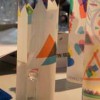
Drawing a lighting design proposal on blue paper
Ueno Night Park: The Lighting Detectives descend upon Ueno!
Tokyo National Museum, Director of Design Division: Shisei Kinoshita

The Current State of Lighting at the Tokyo National Museum and Ueno Park

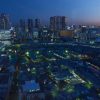
In front of the Tokyo Metropolitan Art Museum: The sky still holds a blue tint, caught in the tail end of the “blue moment

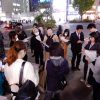
18:42 Stopping in the middle of the cherry-lined path in Ueno Park to investigate a “Villain.”

Red sticky notes for “Heroes” and blue for “Villains.” Group B sorts and analyzes their findings, matching each case with descriptive keywords

An overview of the presentation venue

A sketch created for the first time in ten?! years—using colored pencils to retouch photos copied onto flock paper
■Introduction
At the end of 2016, I sent an email to Chief Mende with the proposal: “Would you be willing to conduct a night walk survey in Ueno Park?” As 2020 approached, I began to hear discussions from various quarters about turning Ueno Park into a “tourism hub where people can enjoy nightscape strolls.” However, those conversations tended to focus solely on the idea that “it’s too dark, so we should make it brighter,” and rarely reached the topic of the actual quality of light.
I felt off regarding this approach. I wondered if we could first investigate the nightscape of Ueno Park from a perspective similar to creating a nightscape and lighting master plan. That is how I consulted Chief Mende with the project plan: “The Lighting Detectives Descend upon Ueno Park.”
The proposal was to hold a nightscape tour organized by the Lighting Detectives on a late afternoon during a cold, wind-swept weekend in January or February 2017. In a Japan striving to become a tourism-oriented nation ahead of the 2020 Tokyo Olympics, what kind of development is essential to make the Ueno Cultural Zone an area for weekend and evening enjoyment? What is the future form of lighting for the Tokyo National Museum’s main building? Let’s think about these things together!
As a preliminary survey, I planned for our Lighting Detectives to assemble in Ueno and walk through the current Ueno Park, utilizing various survey techniques and expertise.
■The Spatial Structure of “Ueno Park”
Within the framework of the “Ueno Night Park” project organized by “Ueno Cultural Park (Ueno Bunka-no-Mori),” the “Lighting Detectives / Descending upon Ueno Park” initiative was launched. As a premise, let’s review the layout of Ueno Park during the day.
The overall layout of Ueno Park starts right outside the JR Ueno Station Park Exit with the Ueno Royal Museum. Along the straight path toward Ueno Zoo, you find the Tokyo Bunka Kaikan and the National Museum of Western Art, which is registered as a World Heritage site for its architecture by Le Corbusier.
If we call this east-west axis “Zoo Avenue,” it is intersected by a north-south axis consisting of the cherry-lined path and the Great Fountain. Serving as the visual focal point at the northern end of the fountain is the imposing Tokyo National Museum (Main Building) with its iconic tiled roof. On the wings of this axis stand the National Museum of Nature and Science to the east and the Tokyo Metropolitan Art Museum to the west.
In short, the east-west axis from “JR Ueno Station Park Exit to Ueno Zoo” and the north-south axis from “Cherry Path/Fountain to Tokyo National Museum” form the basic skeleton of Ueno Park’s “Cultural Zone.”
By overlaying layers of time and eras around this skeleton—such as Shinobazu Pond, the Tokyo University Arts Museum, Sogakudo Concert Hall, the statue of Saigo Takamori, and the tombs of the Shogitai—various insights emerge. This project was conducted as an experiment to walk through and observe the reality of the park from dusk into the night, and then to boldly push toward creating actual lighting proposals.
■Night 1: Night Walk Survey
The Lighting Detectives have been active for 27 years. My own most active period as a member was the three years from 1996 to 1998; since then, I have continued to apply the survey skills I acquired in my daily life and during my travels. I was excited to see what discoveries we would make during this long-awaited group walk.
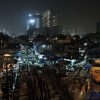
While the sky still held the lingering blue of the “blue moment,” we passed the Tokyo Metropolitan Art Museum and viewed the illumination of the Tokyo National Museum across the fountain plaza before heading toward the National Museum of Nature and Science. Once past 6:00 PM, the surroundings were swallowed by darkness, and the sparse crowds created a lonely atmosphere. Upon reaching the cherry-lined path, we found three powerful spotlights illuminating pedestrians like stage lighting for no apparent reason. These were dubbed “The Bazookas” and were designated as the day’s top “villain.” It was a stark example of how infrastructure lighting, once installed, continues to criminally consume electricity until the day it is finally removed.
Participating in a night walk survey with others for the first time in a while got my blood pumping. Although I had intended to let the participants take the lead, I found myself moving around too much—demonstrating light level measurements and such. I regret overdoing it a bit, but truly, being a detective is fun!
■Night 2: Workshop at Kuroda Memorial Hall
Based on the records of “Lighting Heroes and Villains” gathered from the two different routes of Groups A and B, we engaged in discussions and formulated proposal-style summaries. While enjoying green tea provided by our official sponsor, Ito En, the atmosphere was amicable yet the discussions remained professional and thorough.
■Presentations
We reviewed the surveyed courses, from the group photo taken at the Tokyo National Museum at dusk to the final dispersal at the Saigo Takamori statue. From identifying Heroes and Villains to drafting lighting proposals, the four hours from 3:00 PM to 7:00 PM felt all too short. Everyone worked with the intensity of professional lighting designers—taking photos, processing images, sketching, editing, and preparing their pitches. The presentations were fantastic, demonstrating a strong sense of unity and presenting objective, well-defined perspectives from each group of detectives.
City Night Walk Vol.56:Sumida Aquarium
2017.02.15 Eiki Takeuchi + Kanako Zakoh
This night walk shifted its perspective from the usual city streets to focus on how lighting is used to enhance exhibits. We explored the specific techniques behind these visual displays and investigated where “Lighting Heroes and Villains” might exist within such a setting. To study these indoor facility lights—which offer a different flavor compared to urban street lighting—we headed to Sumida Aquarium, located at the foot of Tokyo Skytree.

A view inside the exhibit where you can observe penguins perched on the rocks from eye level

The overall space is dark, yet light is precisely directed where it is needed
■Overall Impression
The night walk survey was a great success, with over 30 members gathered for the event. This time, we divided into four groups, with two groups each focusing on the themes of “Lighting to See” and “Lighting to Enchant.” Sumida Aquarium spans two floors (5th and 6th), with three different routes connecting them, allowing visitors to explore freely without a fixed path.
While all groups started together in the natural aquascape zone, they eventually branched off to survey at their own pace due to the open layout. Since it was evening, the entire interior was bathed in a blue light for atmospheric effect. We were surprised by the complete absence of any unpleasant odors typically associated with indoor penguin and fur seal pools. In front of the “Ogasawara Sea Life,” chairs were provided, and we observed many visitors taking their time to enjoy the view. It was clear that the aquarium had been designed with great care for the five senses.
Perhaps because of this immersive environment, although we initially thought we might have excess time, most groups ended up conducting thorough surveys right up until the last minute. The aquarium felt like a place where one could easily lose track of time and relax. With many first-time participants, some seemed a bit nervous at first, but once the group surveys began, everyone seemed to relax and enjoy the investigation in the pleasant atmosphere of the aquarium. (Kanako Zakoh)

The immersive underwater-style production heightens the sense of anticipation

The jellyfish tanks transformed into an art piece by Ms. Mika Ninagawa. Opinions were divided on whether this was a hero or a villain
■From the Entrance to the Exhibit Rooms
Along the corridors and staircases leading from the entrance gate to the first exhibit room, shimmering blue-based images reminiscent of being underwater are projected. This creates a powerful effect, drawing visitors into an aquatic world and inviting them into an extraordinary experience; as an introductory light performance, it was very pleasant. However, because the projectors are aimed in the direction of travel, anyone looking back is met with the direct glare of the light source. While its “enchanting” effect was undoubtedly a hero, the installation and execution had to be labeled a villain.
■Natural Aquascape
As if the previous immersive introduction had never happened, the area immediately at the top of the stairs opened into a space brilliantly lit with lighting that mimicked intense, high-noon sunlight. The lighting fixtures shining directly onto the large tanks were exposed, and the light sources were so intensely bright that everyone unanimously agreed they were villains.
In contrast, the tanks just a little further along the path featured a design where the lighting was integrated into the housing, resulting in zero glare. As intended for the exhibit, the aquatic plants bathed in this light were performing photosynthesis and releasing oxygen, creating natural, delicate ripples. The reflection of these ripples, the vibrant green of the plants, and the small swimming fish were so beautiful that visitors found themselves enchanted and lingering for a long time. This was felt to be a hero in both “Enchanting” and “Functional” lighting.
■Jellyfish
There was a collaboration exhibit with photographer Mika Ninagawa, featuring jellyfish swaying gracefully against a backdrop of vibrant, colorful imagery. The way the translucent jellyfish merged with or occasionally reflected the visuals created a fantastical underwater landscape. It was felt to be a highly intriguing exhibit in terms of “Enchanting” lighting.
■Aqua Gallery
This area consists of a row of small window tanks set in darkness where the light level is less than 1 lux, showcasing small aquatic creatures. Among them, one tank glowed a deep red. Displayed inside were deep-sea creatures like horseshoe crabs. Since red light does not reach the deep sea, these creatures have no natural sensitivity to it; for them, it is as if the light isn’t there at all. While the creatures feel as though they are in the darkness of the deep sea, the red light allows the human eye to see them clearly. This is a “Functional” lighting hero unique to aquariums, allowing us to glimpse their actual ecology.

The massive tank glowing within the dark exhibition room.
■Ogasawara Sea Life
A massive tank that pierces vertically through the two-story aquarium. Large creatures like rays and sharks swim leisurely within it. Looking up, a single beam of light reminiscent of the sun pierces through a deep, crystal-clear blue that feels quintessentially aquatic, making one feel as though they have become an underwater creature themselves. It was incredibly comfortable and brimming with a sense of presence—a hero in both “Enchanting” and “Functional” lighting.
■Penguin and Fur Seal Zone
In a spacious, open atrium area lies the exhibit for penguins and fur seals. The slope connecting the upper and lower floors featured blue lights embedded in the walking surface to guide the flow of visitors. However, the contrast with the dark surroundings was too strong, creating a glare that actually made it difficult to see where one was stepping. While the overall space, bathed in blue light from the ceiling, was visually beautiful as “Enchanting” light, it left an impression that it might be a source of stress for the animals.
■Reflections
At Sumida Aquarium, the lighting scenes are programmed to switch between “Day” and “Night” modes around 6:00 PM. Our night walk took place after the transition to the Night scene. Except for the Natural Aquascape area, most sections were dark and enveloped in a predominantly blue light.
While the primary focus seemed to be on atmosphere-building and entertainment for late-night visitors, the tanks and the creatures within remained brightly lit and easy to observe. I felt the aquarium achieved a well-balanced harmony between “Enchanting” and “Functional” lighting.
Although I have visited during the day before, many of the first-time participants expressed a strong desire to come back and see the Day scene for themselves. (Eiki Takeuchi)

Aquarium floor map

Blue-based ambient lighting

Scattered downlights causing occasional glare

Small mirrors placed on both sides of the corridor, creating a kaleidoscope-like space

Light reflecting off the water surface, making the goldfish difficult to see

Presenting the Heroes and Villains discovered during the post-survey gathering
54th Salon & Workshop @ Lighting Detectives Office
2017.03.16 Yuka Tamano
A salon was held to review the night walk survey conducted at Sumida Aquarium in February. The discussion focused on whether the aquarium successfully embodied its dual themes of “Enchanting Light” and “Functional Light”.

Discussion while reviewing the presentation slides.

The presentations were led by each team leader

A few new faces joining the night walk survey and salon for the first time
On March 16th, a review of the Sumida Aquarium night walk was held in a friendly atmosphere accompanied by a seasonal spring meal. For the Sumida Aquarium walk, we divided into four groups and conducted our survey with an emphasis on “Functional Light” (lighting to see) and “Enchanting Light” (lighting to charm). While the findings had been briefly presented at the postsurvey gathering, the salon allowed for a deeper analysis with each group’s opinions compiled into slides. During this salon, many heroes unique to entertainment facilities were identified, but there were also villain”—cases where participants felt, “It’s a shame this exists despite the other good lighting.”
First, many felt the staircase from the entrance to the initial tank was a hero, as it creates a crucial first impression that draws visitors into the facility’s world. Shimmering lights reminiscent of being underwater were projected across the walls, leaving a positive impression. However, turning around on the stairs resulted in a direct hit from the projector’s glare. While concealing the equipment in that environment seemed difficult, participants felt countermeasures were necessary.
Regarding the tanks, various opinions were voiced on which ones succeeded or failed in their creative efforts to maximize the appeal of marine life. The coral reef and the “Ogasawara Sea Life” were cited as heroes. By skillfully utilizing phenomena such as refraction and reflection, these tanks ensured sufficient brightness to observe the fish without the light source being visible, while simultaneously creating a fantastical space. On the other hand, tanks labeled as villains drew criticism for light entering the viewers’ eyes directly, with many noting a need to cut unnecessary spill light. The special jellyfish exhibit sparked a divided debate with both pros and cons. Overall, however, I believe the tanks received mostly positive evaluations.
Conversely, there were many opinions labeling the lighting for the space as a whole—such as ceiling lights and slope floor lights—as villains. One group even experimented by covering the floor lights with their hands to compare the atmosphere with and without them. While Sumida Aquarium changes its lighting between day and night to offer different experiences, the blue light used to represent “night” drew mixed reactions: some praised it for its “good atmosphere” and “unique take on an aquarium,” while others argued it made it “hard to see for those who came specifically to observe the fish and penguins.
Conversely, there were many opinions labeling the lighting for the space as a whole—such as
ceiling lights and slope floor lights—as villains. One group even experimented by covering the floor
lights with their hands to compare the atmosphere with and without them. While Sumida Aquarium
changes its lighting between day and night to offer different experiences, the blue light used to
represent “night” drew mixed reactions: some praised it for its “good atmosphere” and “unique take
on an aquarium,” while others argued it made it “hard to see for those who came specifically to
observe the fish and penguins.”
In an aquarium, where meticulous attention is supposedly paid to illuminating the exhibits (marine life), it was telling that most “Heroes” were individual tanks while most “Villains” were the ambient lighting of the exhibition spaces. This suggests a clear divide between areas of high focus and those that were perhaps overlooked. Through the lens of the Lighting Detectives, we were able to conduct a “light survey” of the aquarium, observing both the ingenious techniques used to balance “Functional” and “Enchanting” light, as well as the challenges that remain. (Yuka Tamano)

Ranking the Ogasawara Sea Life as the #1 lighting hero.

Tank lighting that received high praise from every group

Score sheets for enchanting light vs. functional light.