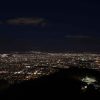
2025.11.09-11.14 Jiang Kunzhi + Lin Huangyi This survey aims to explore the interaction between Soviet culture and Islamic culture within the urban space of western Tashkent, with a particular focus on whether this cultural layering has given rise to region-specific lighting approaches and expressions of the luminous environment. Therefore, a systematic field survey and documentation were carried out across the urban areas of Tashkent. As the capital of Uzbekistan, Tashkent reflects both Soviet modernism and Islamic architectural traditions. The city features large Soviet-era public buildings alongside religious architecture that blends tradition and modernity. In addition to above-ground buildings, this survey also examined the Tashkent Metro, Central Asia’s first metro system opened in 1977, where refined lighting and rich materials create museum-like underground spaces. (Jiang Kunzhi) ■Aerial night view of Tashkent Viewed from the TV Tower, Tashkent’s nightscape appears as a network of “lines” and “points” rather than a continuous illuminated façade. The road system forms the clearest visual structure: main roads and ring roads read as linear light bands, while bridges and major intersections appear as brighter nodes, creating a legible traffic framework over the city’s flat skyline. These linear elements strongly define the city’s sense of direction and scale. In contrast, most buildings remain dark at night, with their presence defined only by entrance lighting, limited window glow, and reflected ambient light. As a result, the overall background luminance stays low, allowing a few landmarks—such as tall structures or media…
2025.01.15-01.19 Masafumi Yamamoto + Yuichi Anzai About 65 years ago, a vast area at the foothills of the Himalayas was divided into districts for government functions, commerce, education, and residences, with separated roads, creating a landscape completely different from other Indian cities. This survey takes a multifaceted approach to examine Chandigarh’s urban lighting and nightscape, while observing the natural light expressions inspired by Le Corbusier’s architecture. ■Light RaysFirst, I quote the words of Le Corbusier:“Chandigarh is planned on a human scale. It connects to the infinite universe and nature. It is a place for all human activities where citizens can live a rich and harmonious life. Here, the radiance of nature and the heart is within our reach.”A vast paved ground is moistened by a dense white mist. About 180 meters ahead from where I stand, the High Court building faintly appears. Its enormous facade faces east and west. The sky behind peeks from beneath the portico, and the rays of light passing through it gently caress the huge concrete pillars painted red, yellow, and green, casting the morning sun on the ground. In this city, I encountered several lyrical daylight scenes. I believe this is because the philosophy of Atelier Le Corbusier in Paris, who designed this Capitol Complex, also extended to the urban layout. Until now, Chandigarh has been discussed mainly from an architectural viewpoint. However, I feel it has not been explored much from the perspective of…
City Survey in Qatar/Azerbaijan 2018/02/12-02/17 Masahiro Iwata + Hikaru Kimura We went to Qatar and Azerbaijan from 12th to 17th February for 6 days for lighting survey. Both of countries are oil producers, and have been developed with oil money. Qatar and Azerbaijan are located on similar longitude, however each urban landscape has been developed in different ways according to their history. Qatar is an emergent country, which benefits from oil money. High-rise buildings has been built on vacant huge desert, and the gulf coast has been developed for attracting wealthy class in around the world. On the other hand, Azerbaijan still faces a problem which a lots of refugees by the past war have hard lives, even it is in bubble boom and it benefits from oil money as much as Qatar. They have redeveloped the old town, which is world heritage. We surveyed lighting in these two countries, where electricity expenses are free by benefit of oil money. Sketch of the road lighting ■Qatar, Capital city Doha Doha used to be described as “the most boring city in the world”, where there were no accommodation and entertainment facilities according to its closed policy. Today luxury hotels and huge shopping malls has been built, and it has become a bustling city. There are lots of buildings painted the current president’s face on the façade. These buildings are by pocket money of president or owned by the government. The buildings along…
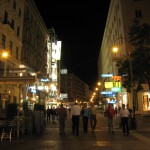
Buenos Aires, aiming to become the Paris of South America, entertains a long siesta in the afternoon leading to a remarkable late nightlife. The atmosphere of these bright, flourishing streets could easily be mistaken for the middle of the afternoon. Where the air of excitement and chaos meet, this is uniquely South American. Diffused, shaded light gives the night scene along Alem Street a pleasant rhythm. The eaves extend out over the sidewalks creating an arcade that acts as a connector from the inside to the outside of buildings. Even at night, the arcades are brightly lit. Bold neon lights attract people to the game center.
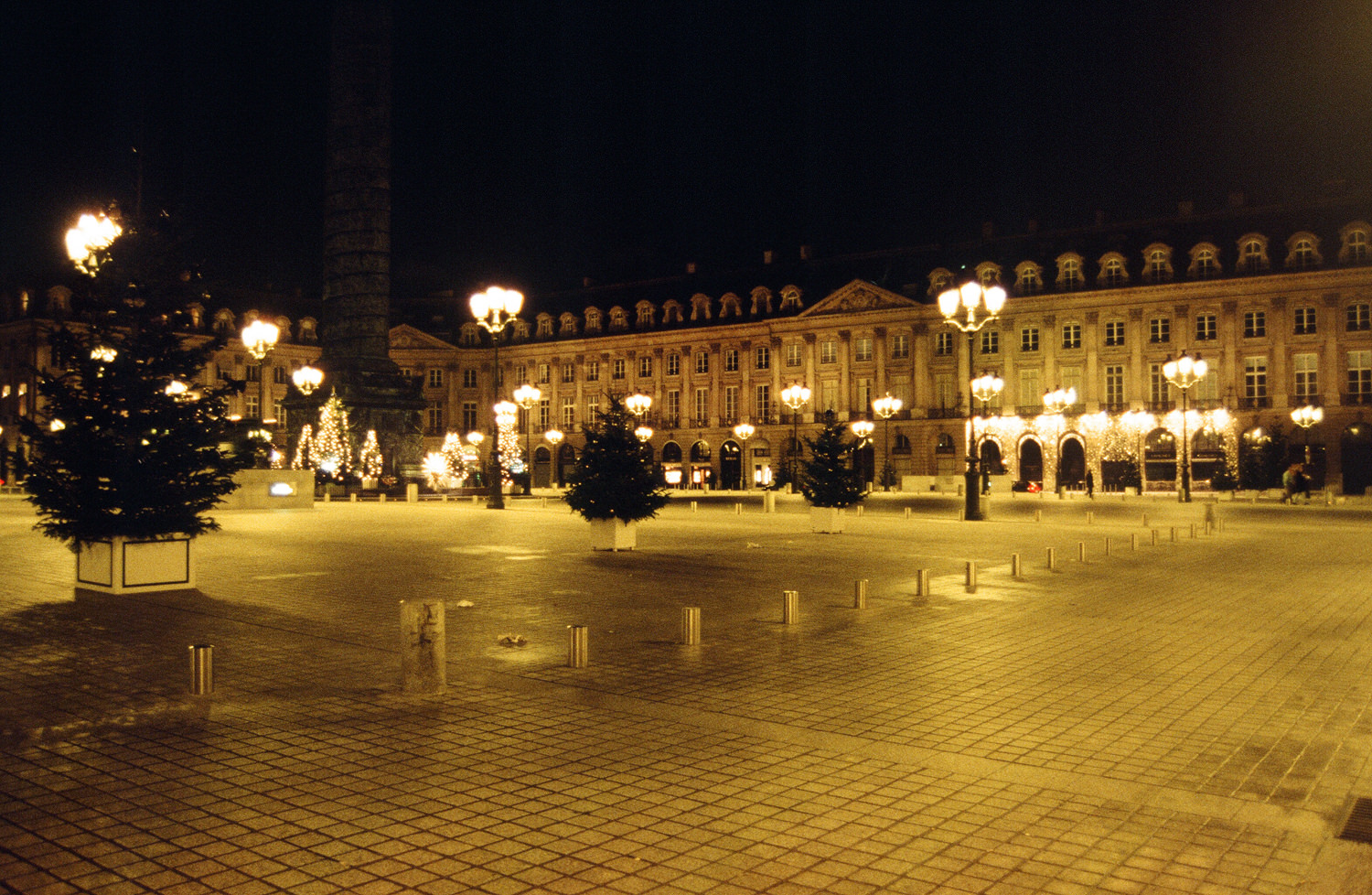
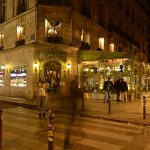
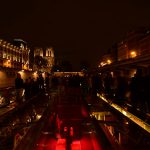
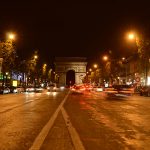
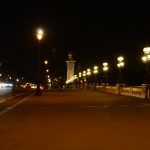
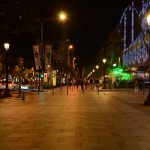
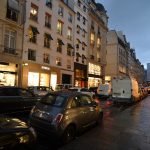
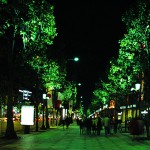
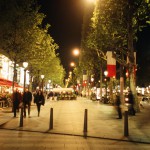
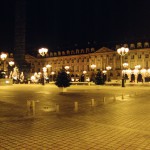
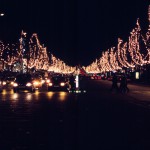
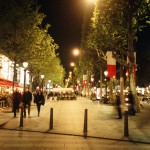
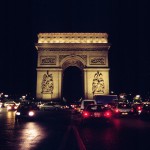
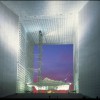
The Paris nightscape has become a model for nightscapes around the world. Appreciation for the streets of Paris has helped to preserve and restore them to places of beauty during the day and at night. At night, the streets emerge as distinct axes of light and one wonders how far urban light planning will progress. Illuminated in white light, the La Grande Arche, gives the impression of a modern-day city. Set against a dark background, the lofty figure of the Eiffel Tower glows impressively. Looking towards Montparnasse from the top of the Eiffel Tower. The bright building in the center is Montparnasse Tower.