


PARIS, France
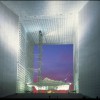
The Paris nightscape has become a model for nightscapes around the world. Appreciation for the streets of Paris has helped to preserve and restore them to places of beauty during the day and at night. At night, the streets emerge as distinct axes of light and one wonders how far urban light planning will progress. Illuminated in white light, the La Grande Arche, gives the impression of a modern-day city. Set against a dark background, the lofty figure of the Eiffel Tower glows impressively. Looking towards Montparnasse from the top of the Eiffel Tower. The bright building in the center is Montparnasse Tower.
LYON, France
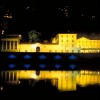
The design of the Lyon nightscape is a joint venture between the government and the citizens. Various lighting materials are used by trail and error throughout the city to create its lightscape. Standing on a street corner one gets the impression that paint materials were thrown onto a canvas, as the artist decided what kind of city and nightscape to paint. The striking blue florescent lights and sodium lamps illuminate the National Institute of Music along the River Saone. The view from La Colline de Fourviere across the City of Lyon is beautiful, with no glaring lights in sight. The Justice Suspension Bridge over the River Saone is just 4.2 meters wide.
LONDON, England
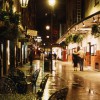
A profound lightness and darkness soaks into the classic streets of London. There is not any flashy propaganda, but the orange street lights in the late night fog bring the history of the city and its lights alive. The question now is how much further London is willing to renovate its historic streets. Light sneaking out from the pubs and alleyways conveys the flavor of London`s streetscape. It comes as a surprise that there are not more night viewing points along the Thames River. There are no observatories from which to view the entire city, creating a shortsighted view of the city. The stone facade of the architecture matches the fine light of the matiere.
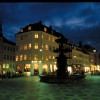
COPENHAGEN, Denmark
The thoughts and ideas of Poul Henningsen seem to be present throughout the streets of Copenhagen. Co-existing soft, tender light and natural light combine to create a nightscape in Copenhagen that reminds us technology is not always the answer. The catenary lights strung across Stroget Plaza and warm light from the surrounding windows gives a striking appearance to the plaza. The sidewalks along Stroget wrapped in the blue moment. At dusk, PH (Poul Henningsen) lamps are visible though living room windows, as time seems to slow down for the evening.
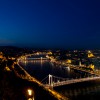
BUDAPEST, Hungary
Even as the busy capital of Hungary, this city is almost free of fancy colored-lighting and flashy signage. Overall there is not much facade lighting or the glamorous atmosphere associated with many larger cities in Western Europe. However, amongst the quiet streets, historical buildings here and there are illuminated and color temperatures are roughly unified for a very comfortable nightscape with an added sense of security. View of the Danube River from Gellert Hill. On the left bank, several historic buildings are built into the hilly terrain and along the right bank, the city spreads across the flat land. Illuminated buildings over two-stories high are very few with a hand-full of buildings and bridges standing out against the dark night. View of the Royal Palace and Chain Bridge, named for the rows of lamps along the suspension cables that resemble links of chain. At night, the reflection in the Danube River creates a beautiful nightscape. Most arterial roads in the city are lit with high-pressure sodium lamps, but fixtures are adjusted for roadways, pedestrians, and tram platforms. Smaller streets intertwined between buildings are lit manly by catenary lighting.
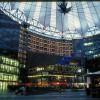
BERLIN, Germany
The new cityscape in Potsdamer Platz is a symbol for the new Berlin. Like light, the shadow from the wall that separated the east and west has dwindled to nothing, but some things still stay the same. The light along Ku-Damm Street still creates a gentle axis of light, providing a welcoming atmosphere for the bustle of people. The Sony Center, with its impressive rooftop called the Fujiyama. The Siegassaule, a symbol of east and west division and unification, stands out in illumination. The showcases along Ku-Damm Street continue for 2km. This street transforms by night into a sidewalk light by large lantern-like show windows.
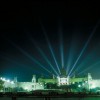
BARCELONA, Spain
Barcelona is a city of monuments, whether driving or walking, these unforgett- able symbols of Barcelona are everywhere. At night, the lights of the city further jog one’s memory and create distinctive perspective projections. Streaks from xenon lamps radiate from the top of the Nacional Palace leaving a graphical pattern in the sky. A symbol of Barcelona, the unfinished Sagrada Familia. Shadows at night, further increase the impact of this cathedral. Approaching Place Espanyla from Nacional Palace .
ATHENS, Greece
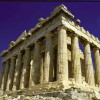
Our survey took place after the dust settled from the construction rush to finish infrastructure for the 2004 Athens Olympics. Around the main tourist attractions the lighting atmosphere was very orderly, but in Athens the ancient and modern co-habitat to create a charming townscape, possibly found in no other city. Under a perfect blue sky, the Parthenon stands surrounded by Doric columns. Over the years under direct sunlight, weathering has taken its toll on the building, but its presence still gives the illusion of a slip back in time. An illuminated Parthenon as viewed from the historic district of Plaka. Seeing the historic townscape, as it must have been in ancient times intertwined with modern adaptations, is one of the attractions of the Athens nightscape. To the eye, significant contrasts in light and dark are apparent in Sintagma Square. Some of the most brightly lit places in the plaza registering 300lx and the places like the stairs leading down to the plaza completely dark. Some fixtures also seem as bright as the sun, almost like afternoon daylight.
TOKYO : KICHIJOJI
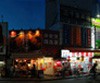
Kichijoji is an area of Tokyo where a variety of elements are compressed together to create this unique neighborhood. However, even though it seems to be a mixture of “stuff” the area is well planned and organized. Public and private organizations have aggressively worked together in city planning and we surveyed the area to discover what kind of lighting environment or rules they have advised. Starting on the north side of the station, a commercial area, we then moved to the south side of the station and Inogashira Park and the alleyways that connect the park and station. North Side of the Station The lighting along the covered arcade shopping streets, Sun Road and Diamond Street, are LEDs, creating a modern atmosphere, but down some of the narrower alleyways, like Harmonic Alley, the lighting is retro for an exciting nightly stroll. Park Street The main street from the station to Inogashira Park is a narrow 3-meter wide street lined with small cafes, bars, and recycled clothing and nick-nack shops. Restaurant and shop lighting is a warm 3000k for a comfortable atmosphere, but most street lighting spills out from the entrance to these restaurants and shops. Once they are closed for the night the street is very dark. Inogashira Park Equip with solor panels, tall metal halide streetlights record 331lx inside the park. However, the average lux level inside the park is about 30lx. The streetlights are too bright, and ruin…
Northern Japan Disaster Relief Charity Candle Night @ Omotesando Eco-Avenue 2011
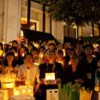
Sending our warm candle night to disaster victims. Friday, June 17, 2011 On March 11, 2011 a magnitude 9.0 earthquake struck Northern Japan, followed by a powerful tsunami, and a severely damaging a nuclear power plant which continues to leak radiation. This unprecedented disaster has taken many lives and livelihoods, leaving scarred land and hearts of the people. However, many have risen beyond this challenge and are beginning the long road to rebuilding what they have lost. We have been touched by their courageousness, and would like to express our continued support by organizing this Charity Candle Night. In a joint effort, Omotesando hosted this charity event with all proceeds donated to the rebuilding effort. Because of energy concerns, recently, this tree-lined street is darker than usual, but in response to the rebuilding effort we light a candle for you. By: Candle Night @ Omotesando Planning Committee ■Friday, June 17th Schedule 19:00→20:00 Children`s Candlelight Parade. 20:00→22:00 Candle Installation, Candle Cafe Network, and originally-designed lanterns on display ■Host Candle Night @ Omotesando Planning Committee ■Supported by: Harajuku Omotesando Keyaki Organization ■Event Producer Kaoru Mende (Lighting Desiger, Musashino Art U. Prof.) Shinichi Takemura (Cultural Anthropologist, Kyoto U. of Art and Design Prof.) Taku Satoh (Graphic Designer) ■Sponsored by: Kameyama Candle House / Omotesando Hills / Omotesando Bamboo / Lighting Detectives / eredie / BROWN RICE CAFE & DELI / shu uemure / Kyobashi Senbikiya Omotesando Harajuku Store / Maruman Products / BAKERY…
Visit to “The Seven Gods of Good Fortune” in Nihonbashi
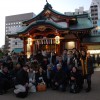
08 January, 2011 The collective theme for the Lighting Detectives this year is “gathering.” To start off the New Year, club members gathered to visit the seven shrines of good fortune near Nihonbashi, Tokyo. While the pilgrimage is called “The Seven Shrines of Good Fortune,” there are actually Eight as the God of Fishermen, good fortune, commerce, and honest labor, Ebisu, is enshrined in two of the shrines along the tour. The group gathered just before dusk at Suitengu Shrine. From there we visited Matsushima Shrine, Suehiro Shrine, Kasama-inari Shrine, Suginomori Shrine, Takarata Ebisu Shrine, Koami Shrine, and Ochanoki Shrine. With map in hand, the detectives set off to discover what kind of lighting environments each shrine portrayed. The back streets along the way were dim and we had to stop under the fluorescent street lamps every so often to check our progress. Seven Gods of Good Fortune Walking Tour of Nihonbashi Suitengu Matsushima Shrine Suehiro Shrine Kasama-inari Shrine Suginomori Shrine Takarata Ebisu Shrine Koami Shrine Ochanoki Shrine The Seven Gods of Good Fortune City Walk Route Three Lighting Detectives Select the Most Impressive Shrines on the Tour Lanterns hung along the streets near Suitengu Shrine The soft lantern light along the main street is very striking, but all over lighting elements are not to the human-scale, but for traffic safety. Street lights, window light from bars and small eateries, and moonlight guided our way. 1. Detective Fujimoto: Koami Shrine…
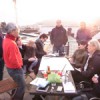
Core Member Meeting: Lucerne, Switzerland
Discussion at a rooftop cafe. City walk through Lucerne and pictueresque photos on Kapellbrucke Bridge. Core members enjoy Swiss food at the farewell party. View of the old town from the new city center. Kapell Bridge is one of the Europe`s oldest covered, wooded bridges. View of Pilatus Mt. from the train window. Chief Mende and other core member enjoy the bright mountain top. 2010.11.2-5 10th Anniversary of TNT The Transnational Lighting Detectives have reached the 10 year mark. Instead of a 2010 Forum, the core member convened to discuss and reaffirm the organizations role, concept, and vision. This discussion included how the TNT forum will be held in the future and possible formats. Eight core members, Alesandra Stratimirovic, Frederico Favero (Stockholm), Christof Fielstette, Ulrike Brandi (Hamburg), Lisbeth Skindbjerg Kristensen (Copenhagen), Kaoru Mende, Momoko Muraoka, Noriko Higashi (Tokyo), gathered in the beautiful lakeside town of Lucene, Switzerland. Who are we? Why do we meet? Our first item on the agenda was Who are the Transnational Lighting Detectives? and Why do we meet? All of the core members come from a variety of backgrounds, so it is important that there is a group consensus on these two points. Everyone is in agreement that we want to share our lighting cultures and experiences with each other, but what is the most important item concerning light is left up to debate. Vision, Mission, Goals The members also discussed a TNT roadmap for the…
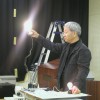
Chief Mende x Class of 3rd Graders: Experiencing Light & Dark
Yokohama Kitayamata Elem. School 2010.11.16 Chief Mende x Class of 3rd Graders It was a perfect sunny day. So perfect that Lighting Detective`s Chief Mende gathered with Kitayamata Elementry School 3rd graders in a perfectly darkened, blacked-out music room to give a lesson on “Light and Dark.” Chief Mende, who regularly lectures at a local university, seemed slightly intimidated by the smaller-in-size students. However, the difference ended there. Inquisitive and curious, the children were very eager to learn, first about light and different sources of light, and then experience complete darkness, laser beams, and candlelight. Lastly, using a 500ml plastic bottle and LED, the children made their own lanterns from recycled materials. Chief Mende began by showing the children a drawing of a campfire and firelight, the origin of light used thousands of years ago by the first humans. The talk continued with several questions and answers about what kind of light the children like, don`t like, and why. Chief Mende presented the children with different lamps such as an incandescent bulb, various sized halogen lamps, a compact fluorescent lamp, and a color-changing LED panel so they could compare different types of everyday light sources. Then the lights went out! Instantly, the room was completely dark. First, there were a few yells and screams, but even in complete darkness the children`s eyes began to adjust to see vague outlines. After a few minutes in complete silence and darkness, Chief Mende…
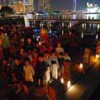
CANDLE NIGHT @ MARINA BAY, SINGAPORE 2010
A Free and Open Public Participation event! Date and Time: 15 Oct 2010 (Fri), 18:00-21:00 Venue: Merlion Park, Clifford Pier @ Marina Bay Organizer: The Lighting Detectives Singapore In collaboration with: The Fullerton Heritage Supported by: Studio Miu, Musashino Art University (Tokyo) LaSalle College of the Arts (BAIC) Japanese Kindergarten of Singapore “Turn off the lights and take it slow” Candle Night, an environmental and energy conservation event that helps in finding one’s inner sense of time, is the brainchild of a non-profit environmental group in Japan. During this one night event, main building facilities are “lit down”, and candle light events are held. Previous Candle Night events include the Candle Night @OMOTESANDO @ Eco Avenue held since 2003. For the inaugural Candle Night @ Marina Bay, the Lighting Detectives together with public participants lit the waterfront in Marina Bay using candles in floating lanterns. Ambient lighting of the buildings in the vicinity will be dimmed in order to achieve the appropriate darkness required to enjoy the spectacle. Participating cafes and restaurants all along the waterfront enjoied the surrounding atmosphere of soft light with specially designed candles and lanterns in an outdoor seating. Using recyclable materials as the principal theme, children from the Japanese Kindergarten of Singapore created lanterns in pre-event workshops and floated them in the water around the Clifford Pier at twilight. Art students from Singapore and Japan Joined them and also created beautiful lanterns and candle installations…
TOKYO : KAGURAZAKA
Modern Kagurazaka still conveys the atmosphere of its once flourishing Edo Era streets. Old Japanese restaurants and bars line the narrow alleyways and with softly glowing lantern light and welcome signs to complete the scene, one forgets that this is Shinjuku Ward in the middle of Tokyo. In this historical neighborhood warm lantern light is all but a natural presence. Compared to the white lights of Ikebukuro and Shinjuku glowing brightly in the distance, Kagurazaka is submerged in darkness. Buildings in Kagurazaka are lower and lower color-temperature light also peaks out from the many alleyways. Kagurazaka Street, running down the center of this neighborhood, is the only really bright spot, except for the lights reflecting off the canal along Sotobori Street. A prized neighborhood for shopping and entertainment during the Edo period, the historical Kagurazaka Shopping Street is a 700 meter long living time slip. New and old shops are jumbled together along the street with specially designed, lantern-like street lights placed at intervals along the edge of the sidewalk. From Kaguraza`s main street several narrow alleyways lead to the interior of the neighborhood where the scale of lighting is downsized to human proportions. Outside restaurants on Hyogo Yokocyo, one of the more famous back streets, softly glowing lanterns light the entrance and also reflect of the cobbled street and traditional-style fence for a very old Japanese atmosphere.
Tokyo River Float: Nihonbashi, Kanda, & Sumida Rivers
16 September, 2010 Previously in March 2006 the Lighting Detectives navigated the Nihobashi and Kanda Rivers. It was such a unique experience leaving the Lighting Detectives wanting more, that we have tweaked the Tokyo river float tour to include the Sumida River and a view of the Rainbow Bridge, for a dramatic 3-hour tour. While most of the elevated highway system puts a cap on portions of the center of Tokyo, this creates dark spots with a colorful nightscape in the background, best viewed from, where else, but on the rivers. Survied by: Noriko Higashi, Haruka Sakoda, Genki Watanabe The 3-hour Tour. Lighting under the elevated highway system. Kanda River Kanda River Ochanomizu Station Platform Akihabara Rainbow Bridge Starting from Hamamatsucho Station, 40 Lighting Detectives boarded a houseboat rented from Nawasada Houseboat Company to navigate the Nihonbashi, Kanda, and Sumida Rivers of Tokyo in the cold and sprinkling rain. The Nihonbashi River, which is shielded mostly by the elevated highway system, started off the tour. From there, we navigated the more open canal of Kanda River, past Ryogoku Bridge, back to the Sumida River, and headed towards Asakusa. After viewing the Sky Tree, still under construction, the captain made a U-turn floating directly towards Odaiba and the Rainbow Bridge. In spite of the rain and cold weather, tour participants, all decked out in rain ponchos, boarded the boat and continuously snapped photos along the tour route, all seemly enjoying the…
TOKYO : UENO PARK
Rich in local history and cultural facilities, Ueno Park covers a large area in the middle of Tokyo. Even though located in an urban setting, we anticipated a lighting environment completely different than the lights of downtown. Between the trees and darkness of the park there are patches of Tokyo`s bright night sky, but the hushed silence is isolated from the city`s hustle and bustle. Ueno Park`s quiet presence gently sleeps next to Tokyo`s vibrant downtown. Approaching Ueno Park from the JR train station. The large overhang of the Tokyo Bunka Kaikan is brightly illuminated in contrast to the surrounding darkness of the park. A view o f northern Tokyo over the Shinobazu Pond from an elevated Ueno terrace. The bright lights of a vibrant downtown are seen in the distance beyond the dark trees of the park. However, through the darkness a bright, orange, sodium lamp illuminates the Benten Shrine near the pond. Looking towards the water fountain plaza from the Tokyo National Museum. A slightly bright night sky, characteristic of most metropolitan areas, opens over head with a dark belt of trees and tiny dots of light below. Young couples seeking a quiet spot away from the lights, snuggle up together on near benches.
Candle Night Summer Solstice 2010 @ Omotesando – Eco Avenue
Candle Night Summer Solstice 2010 June 19, 2010 “Turn off the lights and take it slow.” This is the campaign slogan for Candle Night, a movement started in 2003 on the summer solstice by an environmental NPO. Nationally, the event is unofficially planned for the summer and winder solstices, and persistence from local groups have turned it into a huge event to enjoy a different kind of evening by candlelight. Candlenight@OMOTESANDO-Eco Avenue Candle Night along Omotesando was held for two hours on June 19th, 2010 from 8pm to 10pm in the evening. The Harajuku / Omotesando Candle Night started on the 2003 winter solstice. This year marks the 10th event along the popular shopping street. The theme for 2010 summer solstice was “Encounters with Candles x LEDs.” In contrast to candles, which have been used for hundreds and hundreds of years, LEDs are the latest gadget in optical technology. This year visitors encountered hybrid installations using both candles and LEDs along the zelkova lined street. For the event, 611 staff members, mostly art university students in the Tokyo precinct, were recruited and collaborated to present a unified, coexistence of warm candlelight and techno LED installations. Candle Installations The theme this year was “Encounters with candle x LED,”so it wasn`t just candle light along the street, but a combination of candles and LEDs for a variety of installations. Installations included, stacked wine glasses with candles inside and softly emitted blue LED…
Kawasaki Factory Night Bus Tour: The Hidden Charm of the Factory Nightscape
3 June, 2010 The hottest tour in recent years is the famous Kawasaki Factory Night Bus Tour. Upon news of an upcoming tour, sales agents are bombarded with seat reservations, and within minutes the limited space is fully booked. This is the popular night tour the Lighting Detectives sought to hitch a ride on. The tour would take us to all the popular night viewing spots in the area, as tension escalates with a climatic drive down factory lane! Survied by: Daisuke Yano, Syunichi Ikeda, & Noriko Higashi Inside the tour bus. The guide relays facts and history to Lighting Detective members. The bus picked up Lighting Detective members and departed from Kawasaki Station, headed for different observation spots such as Kawasaki Rinko Warehouse roof and Higashi Ougishima East Park. Through the silent darkness along the Port of Kawasaki, bright-white factory security lighting shone like beckons and we could almost feel the heat inside the bus from gigantic flare stacks. Below are three accounts from members on the tour. Kawasaki Factory Night Bus Tour Route Depart Kawasaki Station ↓ Kawasaki Mari-en Observation Hall ↓ Municipal Wharf ↓ Rooftop of Kawasaki Rinko Warehouse ↓ Higashi Ougishima East Park ↓ Drive along Metropolitan Expressway from Kawasaki Interchange (Viewing from bus window) ↓ Drive down Ginza Chuou Blouvard (Viewing from bus window) ↓ Arrive at Tokyo Station and end of tour Tour route in the Port of Kawasaki. From here, the bus took…
Enjoy Green Lighting Salon 2: “Office Lighting / Eco Ideas for Fun Office Lighting”
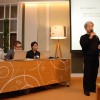
26 February The second “Enjoy Green Lighting” Salon tackled the topic of office lighting, as the Lighting Detectives tried to answer the tough question; What is comfortable, but enjoyable eco office lighting? Research on actual office lighting conditions and a presentation by guest speaker Kouichi Kaiho of Nikken Sekkei, on the latest technology and natural lighting started the discussion on the future existence of office lighting. by: shunichi ikeda Now is the time for the “Eco Office” Results from the individual work space experiment. Meeting room at 300lx Guest speaker Mr. Kouichi Kaiho Keywords such as ecology, energy-conservation, and low carbon are all the hype across the globe, and now they are find their way into the office scene. In reaction to this paradigm shift, the Lighting Detectives sought out the latest in actual eco office lighting techniques and discovered these 5 points of interest. 5 Eco Lighting Methods Highly efficient sources of light -ex. LEDs or the latest in lighting fixture technology- Combination of task lighting + ambient light -Reduce the lighting down to an individual level- Modulated light -Adjust luminance levels and color temperature according to usage.- Use of natural day light -Effective use of natural sunlight- Lower luminance level settings -Revise the amount of light actually necessary- From past attempts to incorporate day lighting to the use of LEDs and other new technology, several methods do exist and when used in conjunction with one another, can lead to…