Date of Issue:December 9, 2016
・Activity 1/Lighting Survey in Osaka(2016/11/26-11/28)
・Activity 2/City Night Walk vol.55 : Haneda Airport (2016/10/21)
・Activity 3/Round Table Discussion vol/53 @Lighting Detective Office (2016/11/30)
Lighting Survey in Osaka
2016.11.26-11.28 Lin Hu + Masahiro Iwata + Masafumi Yamamoto


Survey Area Map
Our survey focus this time was Osaka. Even within a single city, Osaka has developed distinct personalities and lighting environments depending on the area. From the warm, human-centric neighborhoods of Namba and Shinsekai, to the industrial zones facing Osaka Bay, the historic monuments and modern skyscrapers of Nakanoshima set against its waterways, and the vast transportation networks around Osaka Station—we surveyed these diverse lighting environments from multiple perspectives to rediscover the essence of the city.
Osaka is a heart of Japanese culture, renowned nationwide for its unique performing arts and culinary traditions. The people living there often give an impression of being unpretentious, deeply compassionate, and rich in spirit. Perhaps Osaka’s nighttime lighting also hides a certain “generosity” or “broad-mindedness,” much like the famous “Fluorescent Chandeliers” suspended over the Midosuji Line subway platforms. This lighting fixture became such a symbol of Osaka’s identity that it was even adopted for the Yoshimoto Kogyo headquarters in Tokyo. We ventured into the night to track down these uniquely “Osaka-esque” lights.
■Around Osaka Station
For our dusk photoshoot, we chose the view from the pedestrian bridge leading to the Hankyu Department Store. The ground-level crosswalk connecting the JR Midosuji Exit and Hankyu is much like Shibuya’s scramble crossing—a scene frequently broadcast on local news to depict the current pulse of Osaka. Trains pull in toward the massive roof suspended between buildings, while cars race across the ground in a perpendicular flow. With the distant echo of announcements, the roar of traffic, and the bustle of people coming and going, the drama of countless lives unfolds every day at Osaka’s newly reborn gateway.

The view from Oebashi Bridge. The scene at the Midosuji Line subway platform

Osaka Station district during the blue moment
■Namba
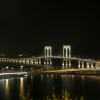
Abeno Harukas, opened in March 2014, is the tallest skyscraper in Japan. Its top-floor observation deck offers a 360-degree panoramic view of the region. Looking down, the cityscape of Osaka appeared to be dominated by white lights. Midosuji Boulevard and the Hanshin Expressway stood out like major arteries, with cars flowing through these vessels illuminated by sodium lamps. Toward the sea, the brilliant lights of skyscrapers and factories were prominent, while toward the mountains, residential areas spread out with orderly, sparse dots of light. Near the base of the tower, where traffic is heavy, sits the Abeno Pedestrian Bridge. From above, it is shaped like the lowercase letter “a” and serves as a local landmark. The bridge features LED pendant lights hanging from its origami-like roof, casting a warm bulb-colored glow onto the path. With an average illuminance of about 80 lux, combined with the surrounding commercial facilities and media facades, it created a vibrant and bustling pedestrian space. (Masafumi Yamamoto)

The classic streetlights of Ebisubashi Bridge
■Dotonbori
What kind of image do you have of a river running through a bustling entertainment district? The Dotonbori River features wooden deck promenades and stairs at the water level, affectionately known as “Tonbori River Walk.” It was a comfortable space enveloped by the glowing signs of
buildings on both banks, bustling with people listening to live music, office workers at outdoor pub seating, and tourists admiring the neon reflections shimmering on the water. Under the bridges, brightness was maintained with downlights and footlights, creating spots where people gathered to lean against walls, chat, and rest. The frantic energy of the Dotonbori district and the lively atmosphere of the riverside that cuts through it are similar yet distinct. For both locals and tourists, it is an open and charming city where one can seek out their own comfortable “third place.” (Masahiro Iwata)

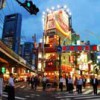
The bustling Dotonbori shopping district

Viewing the cluster of neon signs along the riverbank from Ebisubashi Bridge

The atmosphere along the Dotonbori waterfront
■Nakanoshima
Surrounded by water, the island of Nakanoshima is a place where the modern and the contemporary coexist, with the lighting environment expressing the distinct characteristics of each era. It felt like a stage set where one could sense the passage of time and the unique backgrounds of different periods. The uplighting on modern heritage buildings scattered throughout the business district, combined with the colored lights along the water’s edge, served to soften the tension of the professional atmosphere, making it feel more relaxed. The illumination reflected on the water surface took on various expressions, shifting with the flow of the river and the movement of the wind. (Lin Hu)

The view of Nakanoshima

Osaka City Central Public Hall

The view from Nakanoshima Garden Bridge
■Factory Nightscape (Nanko)

A panoramic night view overlooking the industrial zone
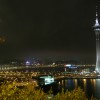
Unfortunately, it was a rainy day, but the rain began to ease as sunset approached. Ascending to the observation deck of Cosmo Tower, 252 meters above ground, we looked down over Osaka Bay as the city lights began to flicker on. The contrast was immediately apparent: the container districts at
the pier were bathed in the warm, bulb-like glow of sodium lamps from gantry cranes, while the buildings rising behind them were illuminated in stark white. The reclaimed industrial land featured orderly blocks with primarily functional lighting, yet the varied color temperatures visible in the city center reflected a complex mix of diverse urban functions.
After descending to the pier park, we saw people lined up along the water even at night, enjoying sea fishing. On the pedestrian bridge leading from the sea to the station, the fluorescent bracket lights were so bright that some had been deactivated. Despite this, the contrast with the surrounding darkness remained jarringly bright, which was a shame as it abruptly broke the tranquil mood of the time spent by the water.
■Factory Nightscape (Hamadera)
What kind of scenery awaits in the Hamadera petrochemical complex, where heavy chemical plants sit adjacent to residential bedroom communities? We visited the area around the Tonen General Sekiyu Sakai Refinery, a famous spot for factory nightscape photography. As we approached the plant, smoke rising from the blast furnaces and work lights installed on the facades peeked out eerily from across the canal and the Hanshin Expressway Bayshore Line.
Because the factory is situated across a waterway, there was a reassuring sense of distance between the people and the industrial site. At night, the work lights illuminated the sky, making it quite bright. For factory nightscape enthusiasts, however, this brightness—along with the inorganic expressions created by the facility—is likely what makes the scene so captivating. (Masahiro Iwata)

Viewing the Tonen General refinery from Hamadera Park

The Hamadera petrochemical complex

People enjoying sea fishing late into the night at the pier park

A pedestrian bridge that remains excessively bright even with partial lighting deactivation
■Summary
During the Edo period, Osaka was known as the “Kitchen of the Nation” due to its highly convenient water transport network. Specialty goods and annual rice taxes from across Japan gathered here before being distributed nationwide. “Dotonbori” was originally the name of one such canal. In those days, the distance between the people and the water must have been very close.
Even today, this relationship between water and people is maintained. Beneath the Ebisubashi Bridge over the Dotonbori River, benches and lighting for gatherings are provided, creating an environment that encourages engagement with the waterfront. Furthermore, the atmospheric
lighting in the Nakanoshima area clearly directs the attention of passersby toward the water, prompting them to reflect on Osaka’s history as a “Aqua Metropolis.” Even the industrial zones viewed across the water have the potential to become environments where one can spend time in tranquil reflection by the riverside. I hope that people, the city, and the waterfront will continue to be connected through a comfortable and harmonious lighting environment. (Masafumi Yamamoto)
City Night Walk vol.55:Haneda Airport
Exploring the “Hospitality of Light” across Three Terminals
2016.10.21 Shinichi Sakaguchi + Daisuke Yamaguchi + Yusuke Wakata + Simeng Huang
Haneda Airport serves as the primary gateway to Japan. We explored how the lighting is planned to produce the spirit of “Omotenashi” (hospitality) that welcomes and sees off travelers from around the world.
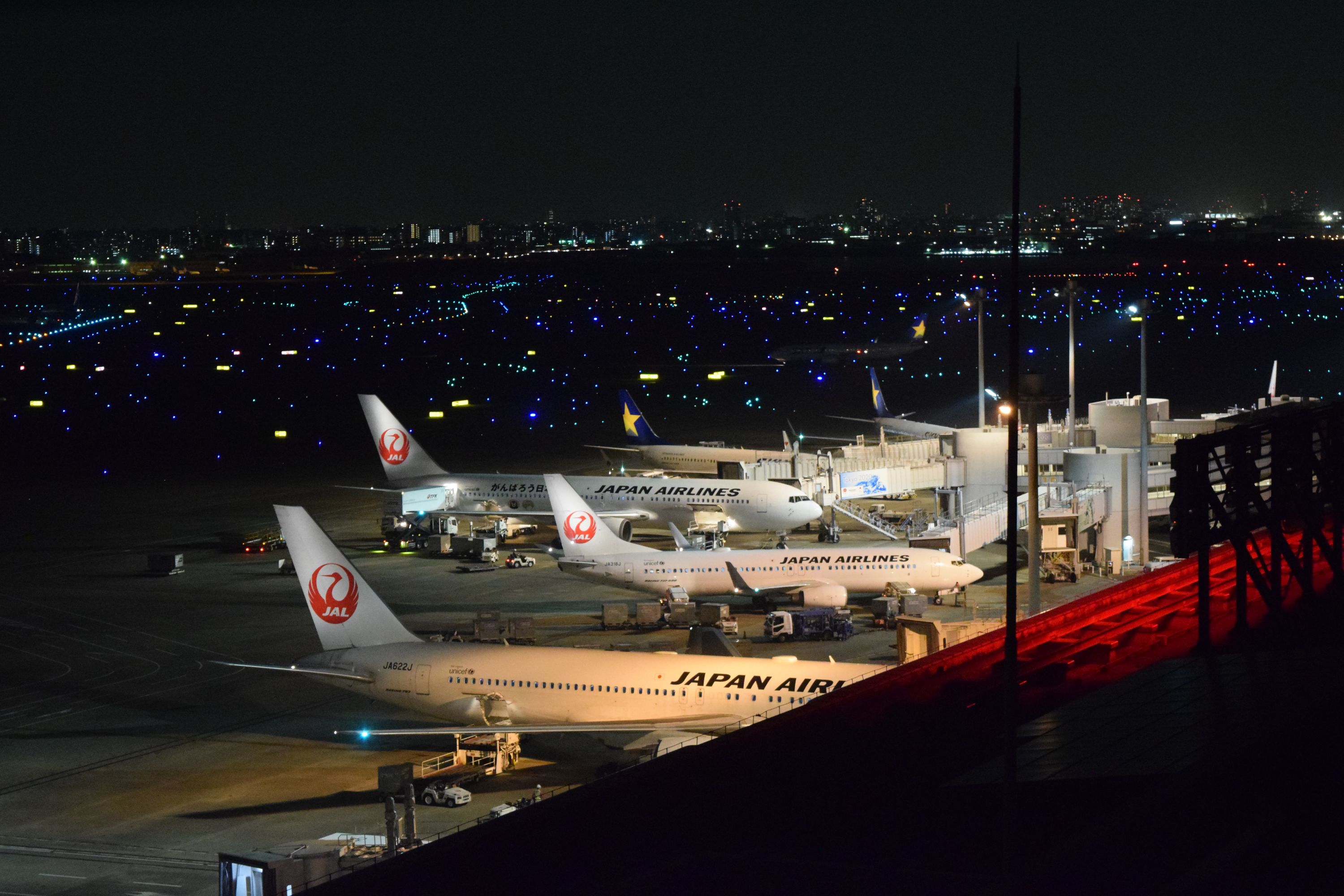
Haneda Airport consists of two domestic terminals and one international terminal. We investigated whether there are distinct lighting concepts for each of these three terminals, and explored what elements create a space that embodies the spirit of “omotenashi” (Japanese hospitality).
■Group 1
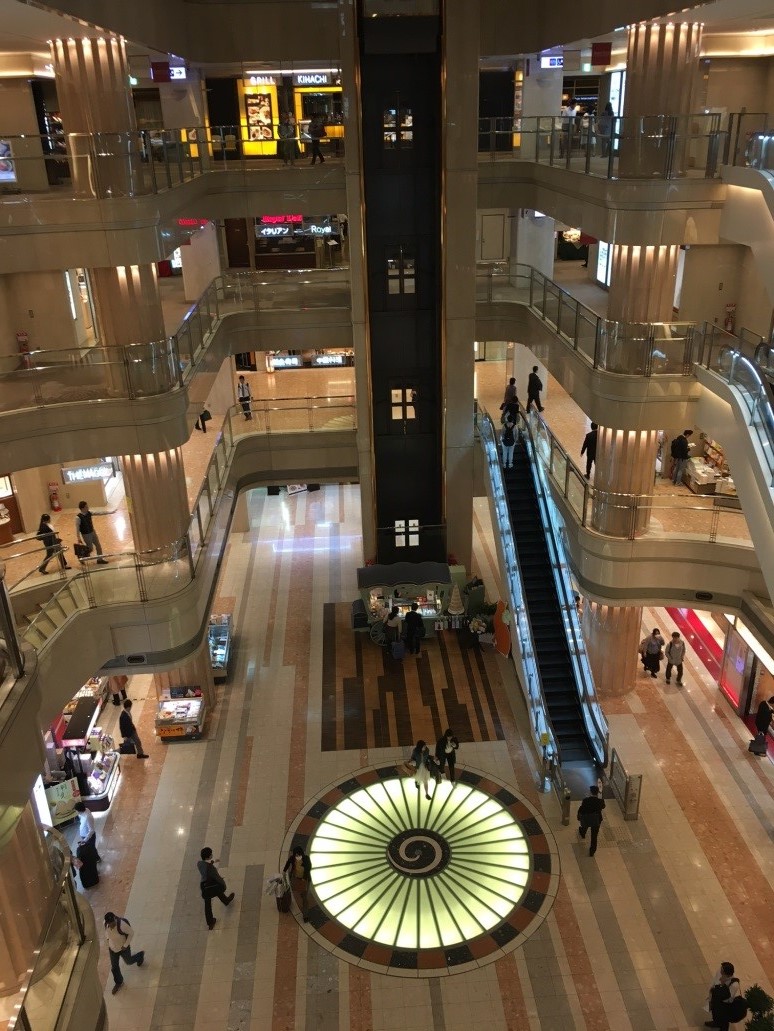
The commercial area in Terminal 1
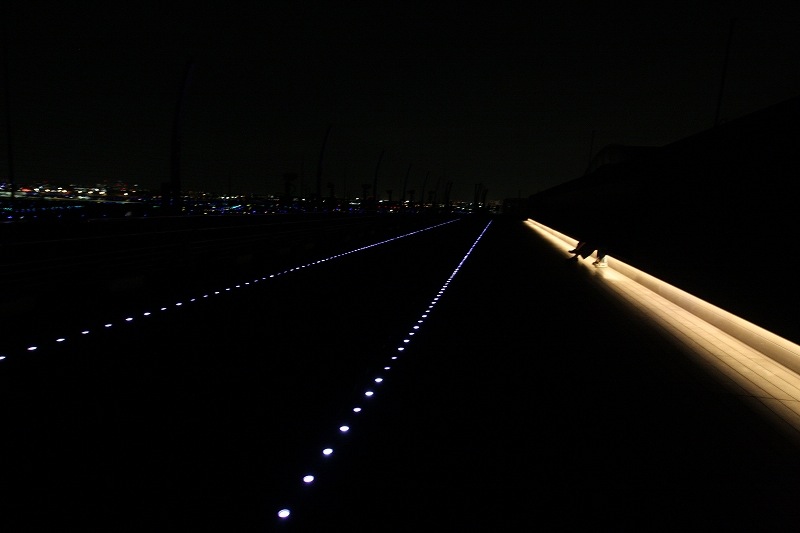
Lines of light mimicking a runway
Group 1, consisting of Chief Mende and six others, walked through Terminal 1 and the International Terminal. First, we visited the Terminal 1 observation deck, which offers a panoramic view of the entire airport. Lines of light flowing across the floor change in various ways, heightening the anticipation of visitors. Combined with the powerful sound of airplanes nearby and the approaching lights and night view, being on the observation deck is a thrilling experience. As the name suggests, Terminal 1 is the oldest terminal. Traces of renovations were visible throughout, and many noted that some areas were well-executed while others were not.
Next was the International Terminal. While some areas had stark differences in illuminance, there were opinions that the terminal felt cohesive, perhaps due to specific concepts for each area. Many spots left an impression of careful design: the deliberate use of high and low color temperatures, the “Edo-koji” area for calm dining and shopping, and the departure counters that evoke the excitement before a flight. A point of disappointment for many was the blue-green lighting in the walkway leading to the parking building. We were curious to know the reasoning or concept behind the choice of that specific color.
Unlike our usual night walk surveys, this survey took place entirely within a facility. Simply focusing on the lighting made the familiar airport feel like a completely new and fresh place. At the same time, we experienced firsthand the difficulty of creating comfortable lighting environments tailored to the specific needs of each area. (Shinichi Sakaguchi)
■Group 2
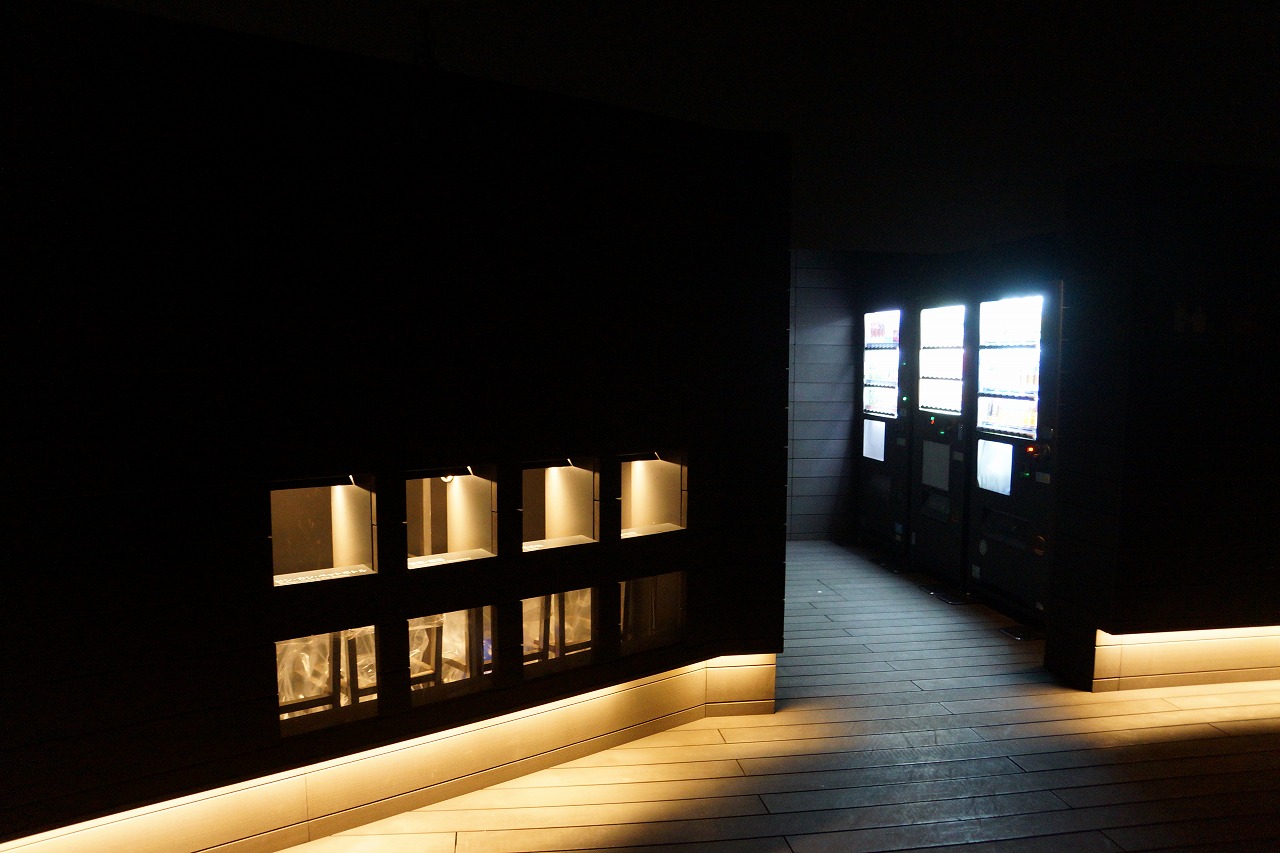
Vending machines and trash bins
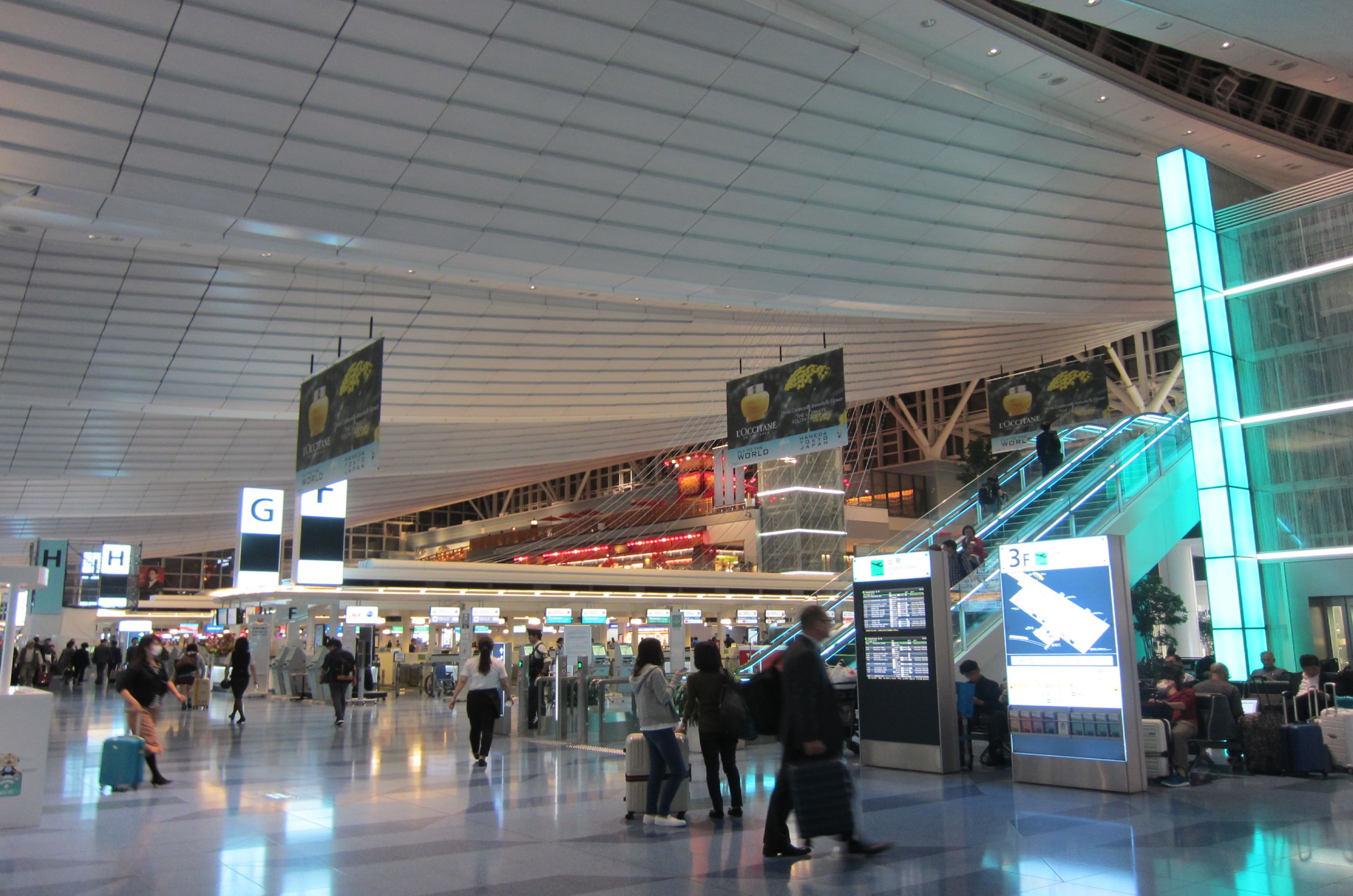
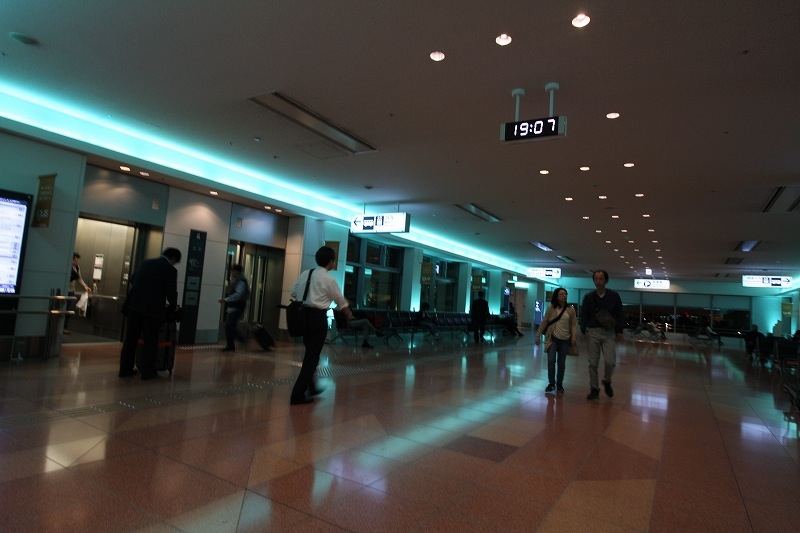
Blue lighting stood out in the International Terminal
Our exploration centered on Terminal 1 and the International Terminal. We began at the rooftop of Terminal 1, which was renovated in November 2011. The atmosphere was calm, carefully designed not to obstruct the panoramic view, yet featured playful touches—such as lines of light mimicking a
runway that would occasionally glide across the floor. A particular highlight that caught the attention of many members was the light illuminating the built-in trash bins. By naturally encouraging waste sorting at night and ensuring safety by making the contents visible, we unanimously agreed this light was a hero. The interior of Terminal 1 also left a positive impression; with its unified lighting, it felt more like a sophisticated department store than a typical airport.
In the International Terminal, however, many pointed out the green lighting used around the escalator handrails, questioning the choice of color and its lack of harmony with the space. In particular, the green uplights on the columns and the perimeter walls of the walkway leading to the parking garage created an unsettling feeling, especially given the low light levels. Everyone felt these were villains. Furthermore, in the departure hall, one of the column uplights had discolored due to deterioration—a disappointing sign of neglected maintenance.
On a brighter note, the lighting in “Edo-koji,” the bustling dining and shopping area, received mixed reviews. While some felt it was “tacky,” others appreciated the atmosphere created for both travelers and visitors alike, deeming it a fitting entrance to Japan. As Haneda continues to undergo
renovations leading up to major events like the Olympics, I hope to see the birth of even more advanced “Light for Omotenashi” that represents Japan on the world stage. (Yusuke Wakata)
■Group 3
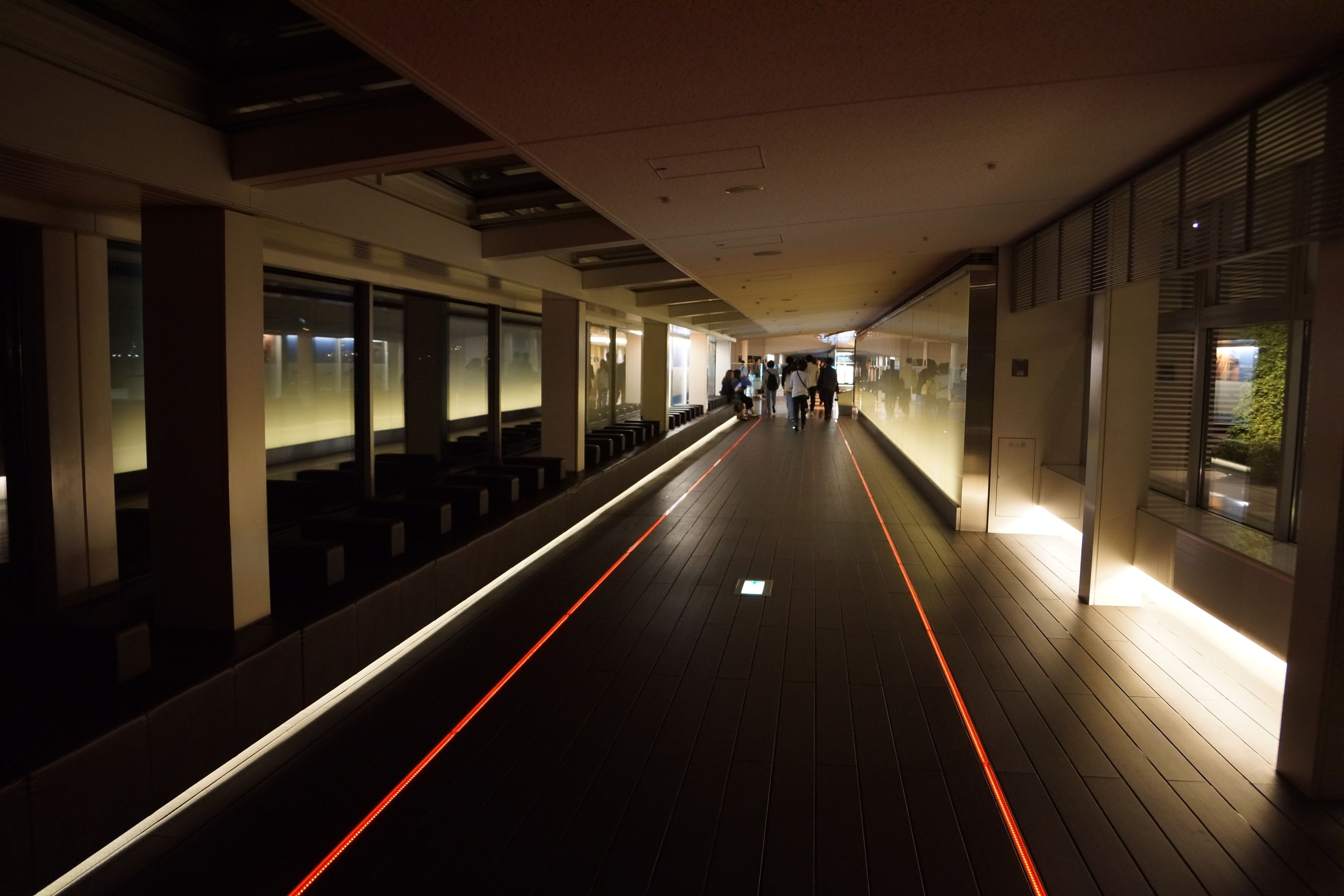
Terminal 2 also features lighting inspired by a runway
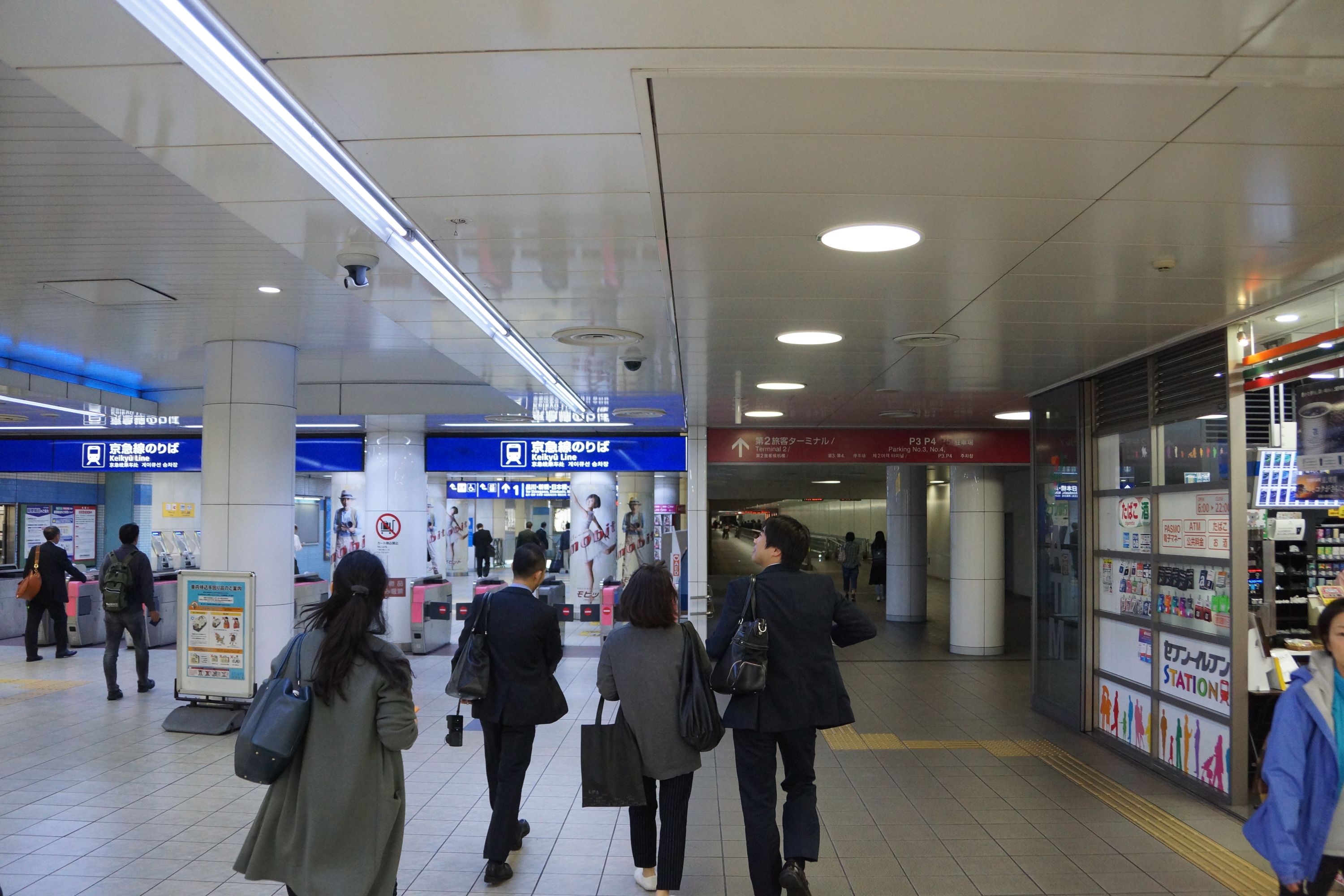
Probably due to different management companies, disparate fixtures are installed along the exact same corridor
Group 3 began our night walk by moving from Domestic Terminal 1 to Terminal 2. In the connecting passage, only half of the fixtures were lit due to energy-saving measures. Combined with the poor color rendering of the white light and the low ceiling, the space felt oppressively cramped. It was quite jarring to see two different lighting plans—one for the railway station and another for the airport jurisdiction—applied to the exact same space and ceiling design.
In the Terminal 2 arrival lobby, warm lights welcomed travelers. The base illuminance was relatively high, around 400–500 lux, creating a bright atmosphere. In contrast, the departure lobby used higher color temperature lighting with brightness suppressed to 80–100 lux. During the day, it
takes in ample natural light through skylights, while at night, it ensures necessary illuminance by indirectly lighting the ceiling structure—a plan that skillfully utilizes the building’s form. However, it was disappointing that the hues of the fixtures were inconsistent, with a noticeable reddish tint.
While the International Terminal featured modern interiors and fixtures, the lighting plans (color temperature and brightness) for the arrival and departure lobbies were identical.
The “Edo-koji” area on the departure floor was highly praised by members as a tranquil spot emphasizing Japanese aesthetics, likely leaving a strong final impression on departing foreign visitors. We also noticed a niche attention to detail: glare-less downlights were specifically used only in front of the electronic bulletin boards at the arrival gates. Finally, the blue lights of the runway seen from the observation deck were as beautiful as the Milky Way. We concluded our walk by fully soaking in these unique lights that can only be found at an airport. (Simeng Huang)
■Group 4
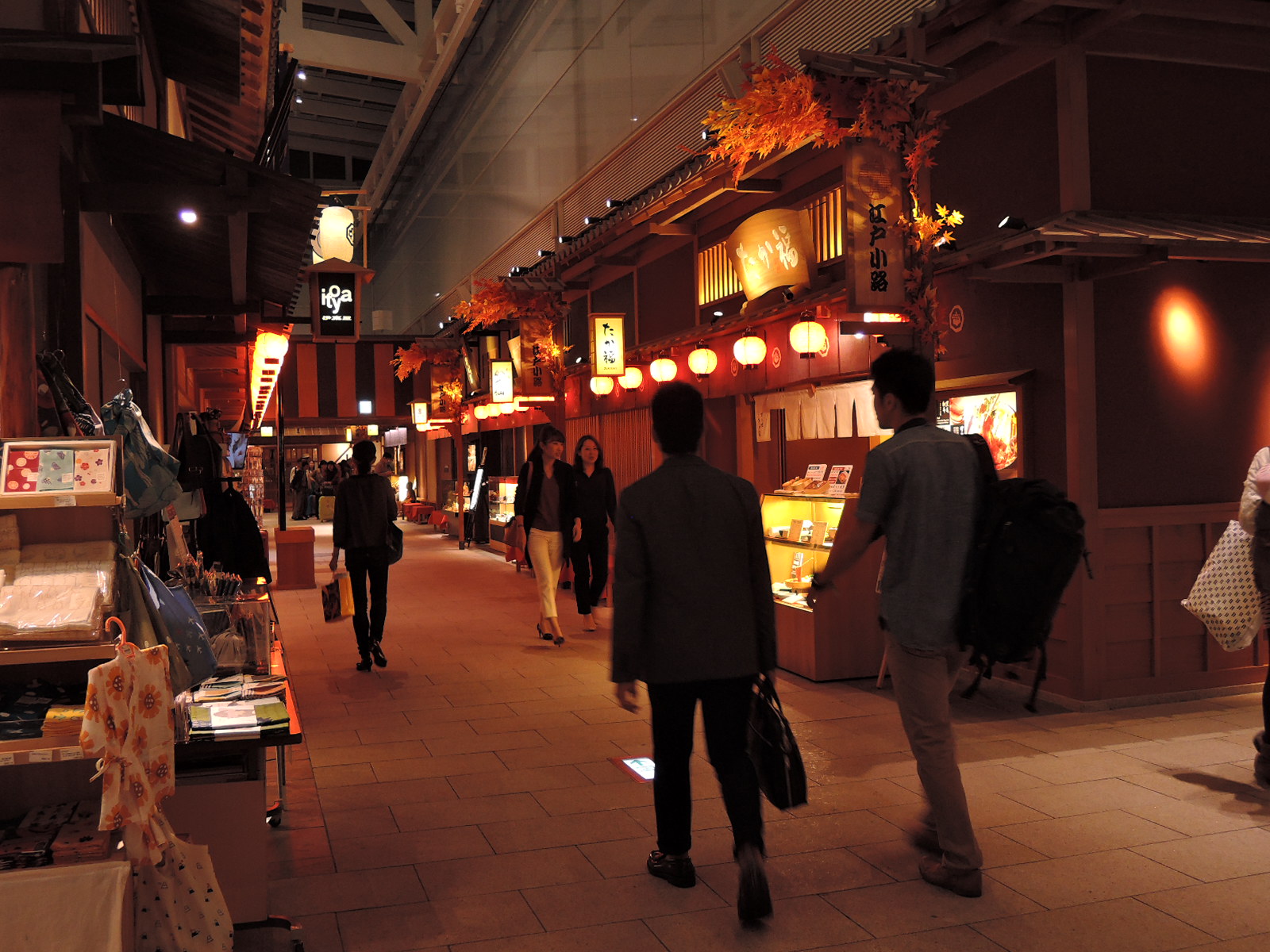
he light of Edo-koji representing Japanese “omotenashi” spirit
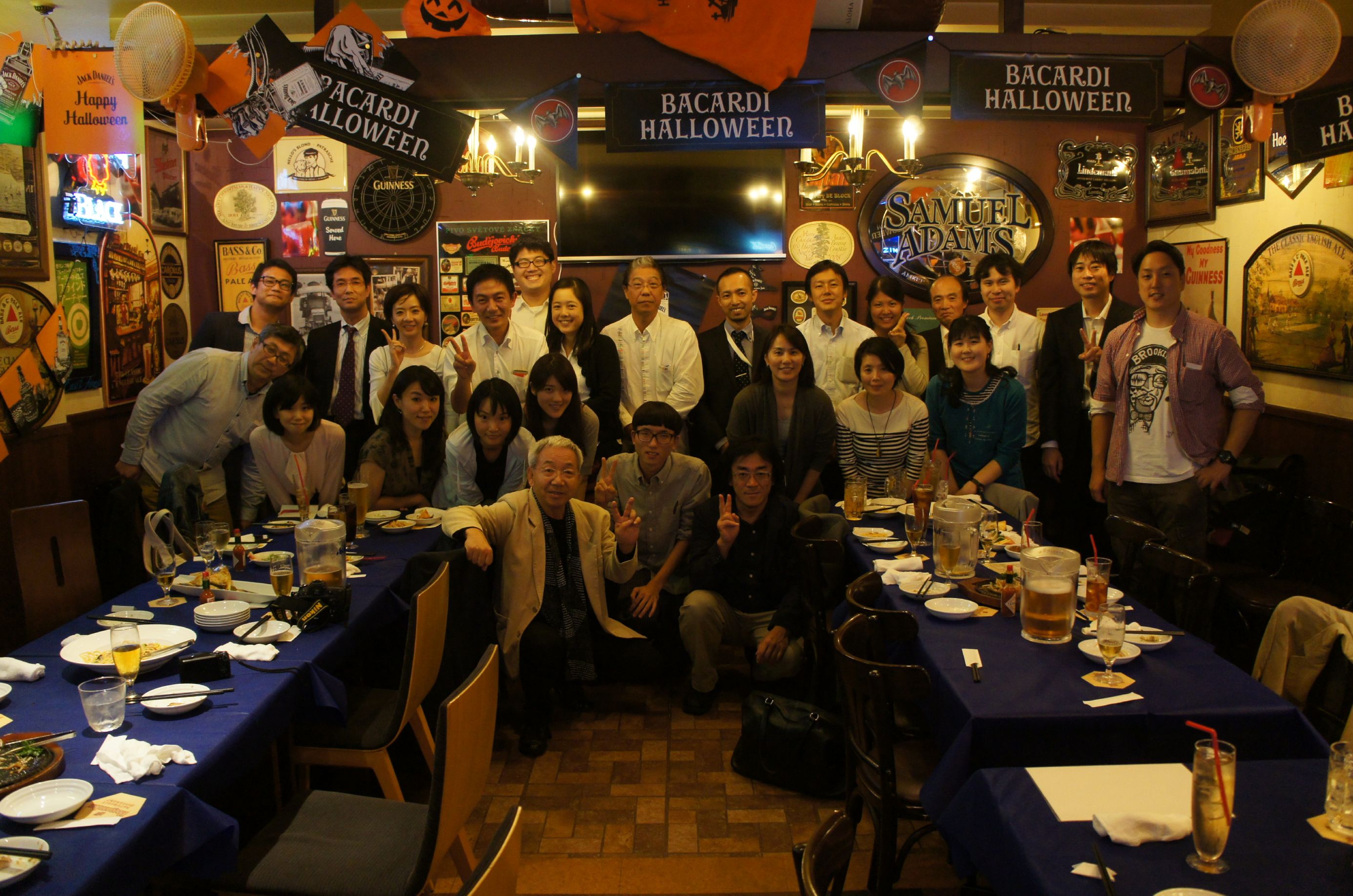
Scenes from the post-survey gathering
Group 4 followed a route traveling from Terminal 1 to Terminal 2 and finally to the International Terminal. Our first finding was the presentation of the night view. The Terminal 1 observation deck offered the most beautiful night scenery. The reason for this was the deliberate suppression of illuminance across the entire deck and the clever use of walls to conceal light sources like vending machines. It appears that a renovation was carried out in 2011 with the concept of “a space to swell one’s dreams and longing for travel by enjoying the scenery.” As someone involved in construction, I learned the immense importance of paying attention to such fine details.
The second finding was the difference in lighting between domestic and international lines. In the departure lobbies, while the illuminance was similar, the international terminal had a lower color temperature. We speculated this might be a hospitable gesture toward travelers from abroad, keeping them relaxed until just before departure. Regarding the arrival lobbies, the color temperatures were similar, but the domestic terminal had higher illuminance. We surmised that the domestic terminal uses more administrative, functional brightness to promote a quicker flow of passengers and shorter stays. Thinking about lighting plans in this way makes visiting other airports a much more interesting experience.
The third finding was the stark difference in lighting equipment along the connecting passage between the city-managed area and the Keikyu Line section. The city-managed section used fluorescent lights with some bulbs removed for energy savings. In contrast, the Keikyu section had switched to LEDs for energy efficiency and maintained a unified blue design, enhancing its aesthetic appeal. Seeing these two polar opposite lighting styles in the same corridor reminded me that when designing lighting, it is crucial to consider harmony with adjacent facilities, not just one’s own assigned area. I want to keep this sensitivity in mind when I visit other facilities on future travels. (Daisuke Yamaguchi)
Round Table Discussion vol.53@ Lighting Detectives Office
2016.11.30 Yuri Araki
About a month after our Haneda Airport night walk, we gathered once again to share presentations from each group. Although every group had hurried through all three terminal buildings, it was striking to see how evaluations of the lighting varied considerably, even for the exact same spots. Here is an introduction to the presentation contents from each group.

Reflecting on the night walk survey while looking at the photographs taken
■Group 1
The design of the restrooms in Terminal 1 was completely different for men and women. The women’s restroom was a warm space with a low color temperature, while the men’s restroom was a sharp, crisp space with a high color temperature. This revelation drew surprised reactions from
members of other groups who hadn’t noticed. In comparing the bus pick-up/drop-off areas of Terminal 1 and Terminal 2, it became very clear how much the atmosphere can change solely due to a difference in color temperature, even when the illuminance is exactly the same at around 150 lux.
■Group 2
The observation deck of Terminal 1 received high praise on many points for its minimal lighting, which allowed visitors to fully enjoy the nightscape. Overall, however, there were many villain nominations regarding inappropriate color temperatures and excessive inconsistencies across fixtures, reinforcing the critical importance of color temperature in lighting design. The group concluded that the International Terminal contained many baffling lights, meaning the Domestic Terminal ultimately had more heroes.
■Group 3
The runway guiding lights viewed from the observation deck received high praise, with members noting how they created a stunning, Christmas light-like spectacle. On the other hand, the group pointed out the stark contrast in lighting between the Keikyu Line station premises and the airport itself. Many expressed that this discrepancy felt jarring, noting that in large-scale facilities, such issues arising from differing management jurisdictions tend to occur frequently.
■Group 4
The observation deck of Terminal 1 was highly rated, with many points nominating it as a “Hero.” In contrast, members felt that the International Terminal’s observation deck suffered from excessive light spill from nearby shops, which was a missed opportunity. Regarding the Haneda Nihonbashi— a replica bridge intended as a photo spot—it was noted that the glare from the fixtures illuminating the golden folding screen decoration was too harsh, suggesting that a bit more ingenuity was needed. It was also a very interesting finding that the DUV readings taken at various locations within the domestic terminal leaned toward the positive side, while those in the international terminal leaned toward the negative side.

Presentation materials: Haneda Nihonbashi was named the biggest villain.

Detailed materials were prepared
■Summary
The lighting on the Terminal 1 observation deck, renovated in 2011, received consistently high praise across all groups. Regarding the blue-green lighting in the International Terminal’s connecting passage, while the majority criticized it as a villain due to its unclear intent, some conversely found it cool. Opinions were completely split on Edo-koji: some hailed it as a hero for its sense of hospitality, while others dismissed it as a villain because it felt overly fabricated.
Furthermore, across both terminals, the spatial design consisted of “low color temperature and high illuminance in the arrival lobbies” versus “high color temperature and low illuminance in the departure lobbies.” The interpretation of this contrast seems to vary based on the traveler’s psychological state and purpose.
While airports are typically places where people spend a long time in one spot, rushing through numerous areas in a short period allowed us to discover many unfamiliar facets of these facilities.
Our next night walk survey will take us to the Sumida Aquarium. We look forward to your participation!

Each group brought their ideas together for the presentation

A salon with a peaceful atmosphere while enjoying light refreshments