Instagram Live Vol. 2 from Akabane

Please join us tomorrow, Tuesday, November 15, 19:00~.
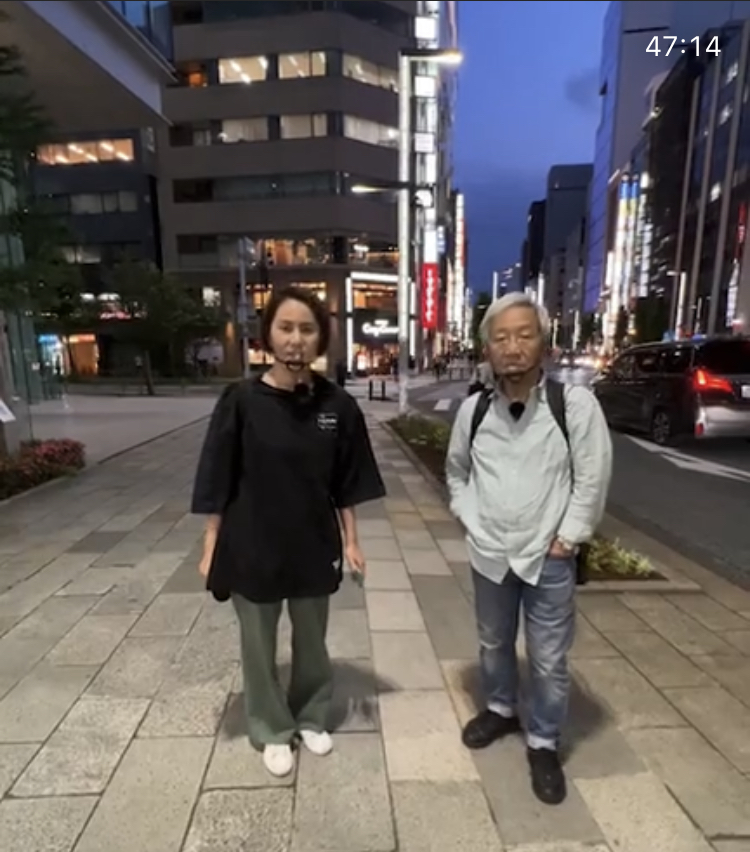
we will hold Instagram-live from Akabane, Mr. Mende’s hometown.
Comments and questions are welcome.
https://www.instagram.com/lightingdetectives/
Instagram Live Vol. 2 from Akabane

Please join us tomorrow, Tuesday, November 15, 19:00~.
we will hold Instagram-live from Akabane, Mr. Mende’s hometown.
Comments and questions are welcome.
https://www.instagram.com/lightingdetectives/
Songdo newcity, Inchon and Seoul city2025.10.22- 2025.10.25 Karen Huang + Xueying Piao + Xianyu Liu The purpose of this Seoul lighting survey is to explore how lighting shapes the city’s identity and cultural expression of the urban landscape in the multiple layers of Seoul.With this purpose in mind, we went to Songdo, Incheon and Seoul for the servey. ■ Songdo InchonOn the first day of our site survey, we visited Songdo International Business District in Incheon. As a flagship planned development in Yeonsu-gu, this new town represents a remarkable urban planning achievement, constructed entirely on reclaimed land – essentially a future-city built from the ground up. The district demonstrates excellent connectivity, with the core area accessible within approximately 90 minutes via bus from Incheon International Airport. By around 8:00 PM, few people are on the street. Our survey focused on the central park area of Songdo. At street level, building facades demonstrated minimal use of decorative flood lighting, relying primarily on internal illumination to create a subdued atmosphere, while the commercial districts utilized abundant illuminated signage to inject vibrancy into the urban landscape. The most critical insight emerged from the view at G Tower: the urban planning framework is distinctly articulated through strategic color temperature zoning, with residential areas at 2700K transitioning to over 5000K for landmark structures, constituting a macro-level “light planning” methodology. Simultaneously, the concentrated application of architectural lighting to tower crowns effectively reinforces skyline identity while minimizing…
Colombo ⇒ Kandy ⇒ Galle 2018/10/23-28 Momoko Muraoka + Yuri Araki We surveyed the relationship between lighting and people’s lives in the Buddhist nation of Sri Lanka, traveling through three distinct cities: Colombo, which has seen remarkable development in recent years; and Kandy and Galle, both designated as World Heritage Sites. ↑↑The nightscape of Kandy, a World Heritage Site. The illuminated Temple of the Sacred Tooth Relic can be seen on the right, across Kandy Lake ↓With few buildings featuring facade light-up or sign lighting, the nightscape is primarily formed by light spilling out from shop interiors ■What Creates the Night Streetscape of Sri Lanka Kandy is an ancient capital and a World Heritage Site in central Sri Lanka. In the heart of the city, the Temple of the Sacred Tooth Relic—a sacred site for Buddhists—stands by the lake. Directly across from it is the colonial-style Queen’s Hotel, which evokes the British colonial era. During the day, this diverse streetscape allows you to feel the history of Sri Lanka. However, the streetscape takes on a different appearance in the evening. Very few buildings have facade lighting, and even the Queen’s Hotel, a city symbol, is plunged into darkness. Since shop signs lack extravagant electrical decorations, the nightscape is primarily formed by light spilling out from the interiors. Compared to the streetscapes of modern cities, the scene is like a figure-ground reversal. Even the city’s largest road has no streetlights for…
Interviewer: Shunichi Ikeda Theme:Lighting for Lighting Design Office Ikeda Today I`d like to discuss the lighting in a lighting design office. I have always wondered about architects and interior designers who design their own offices based on their own style preferences. I find it kind of interesting. So, I was also wondering about a lighting designer`s office? Is it a place to test elaborate lighting design methods? If you don`t mind, I`d like to pick apart the LPA office. When I first came to LPA I noticed that all of the lighting is a warm color temperature. If it was a restaurant or place of leisure I would understand, but as an office not many places are equipped with all warm color temperature lighting. Also, the ceiling indirect lighting, non-glare desk lights, 2F studio lighting controls were all impressive and dramatic. When you are designing office lighting, what things do you care about most? Stuio at party Working Space Task & ambient lighting with incandescent lamp color Mende It is all a presentation for guests. I want them to think, “Hey, I really liked that lighting style at LPA, so I`ll try to copy it.” I want to design lighting that makes guests think this. This is the place to display our theories and logic. What is good and what is bad. And it is absolutely unacceptable if the light sources are directly visible. Ikeda The 2F studio is used for visitor reception and…
Drawing shadows on white paper. Drawing lighting on blue paper. Interviewer: Masahiro Iwata Iwata:Today I`d like to talk about the differences between painting and lighting design. From an early age I started painting with water colors. Now, I have a habit of seeing most visual spaces in terms of light and shadow. For example the intricate work of the eaves of an old temple reflecting light from the ground or light streaming into spaces of a building. When I first started at LPA you said that “lighting is similar to water colors.” That statement made an impression on me, but what did you actually mean by it? Mende:Did I really say that?! Well, in water color painting layer after layer of paint is used to complete a painting and in lighting design layer after layer of light is often used to complete a space. Maybe this idea of layering colors is similar. A lighting designer must use the beam of light coming from a fixture like a paintbrush to define a space. A large paintbrush might gently sweep a space and a small brush might highlight fine detail. I am always thinking “if I had this fixture in this space” and I can visualize and imagine the painting I would want to draw. Long ago I failed the entrance exam to an art university, but I spent a great deal of time painting and studying watercolors to past the exam the…
Published:Dec.05, 2017 ・Activity 1/Lighting Survey:Mumbai (2017/10/02-10/07) ・Activity 2/Lighting Survey:Kagoshima (2017/10/25-10/27) ・Activity 3/Shomei Tanteidan descend on Ueno Park vol.2 (2017/10/16,11/13-11/14) Newsletter vol.84 Download PDF Lighting Survey in Mumbai 2017/10/02-10/07 Mikine Yamamoto + Leon Hitsu We researched the biggest economic city of India, Mumbai. It is located west coast of India, which was used to call Bombay. This is the second time we researched this city since we last did in 2004. The goal of this research is to compare how its architecture and lighting have developed, and to compare with Navi Mumbai (New Bombay) developed as a new city of Mumbai. Dhobi Ghat is an outdoor laundry with more than 100 years of history. It is used as a laundry in the daytime, though people lived there and felt a sense of life in the nighttime. The contrast with the skyscraper in the background is very Indian. The building in front of the station. Building was carefully lit up with orange color. Mounting details. The hood was installed in the fixture in order to avoid glare when seen from the front Arriving at Mumbai hotel after the sunset, from the taxi on the way to the hotel, I only saw street lights that lit the street, and the city that was on the background looked dark and sunken. We expected that it was developed like China where a number of buildings lit up, but there was no building that was illuminated. The situation…