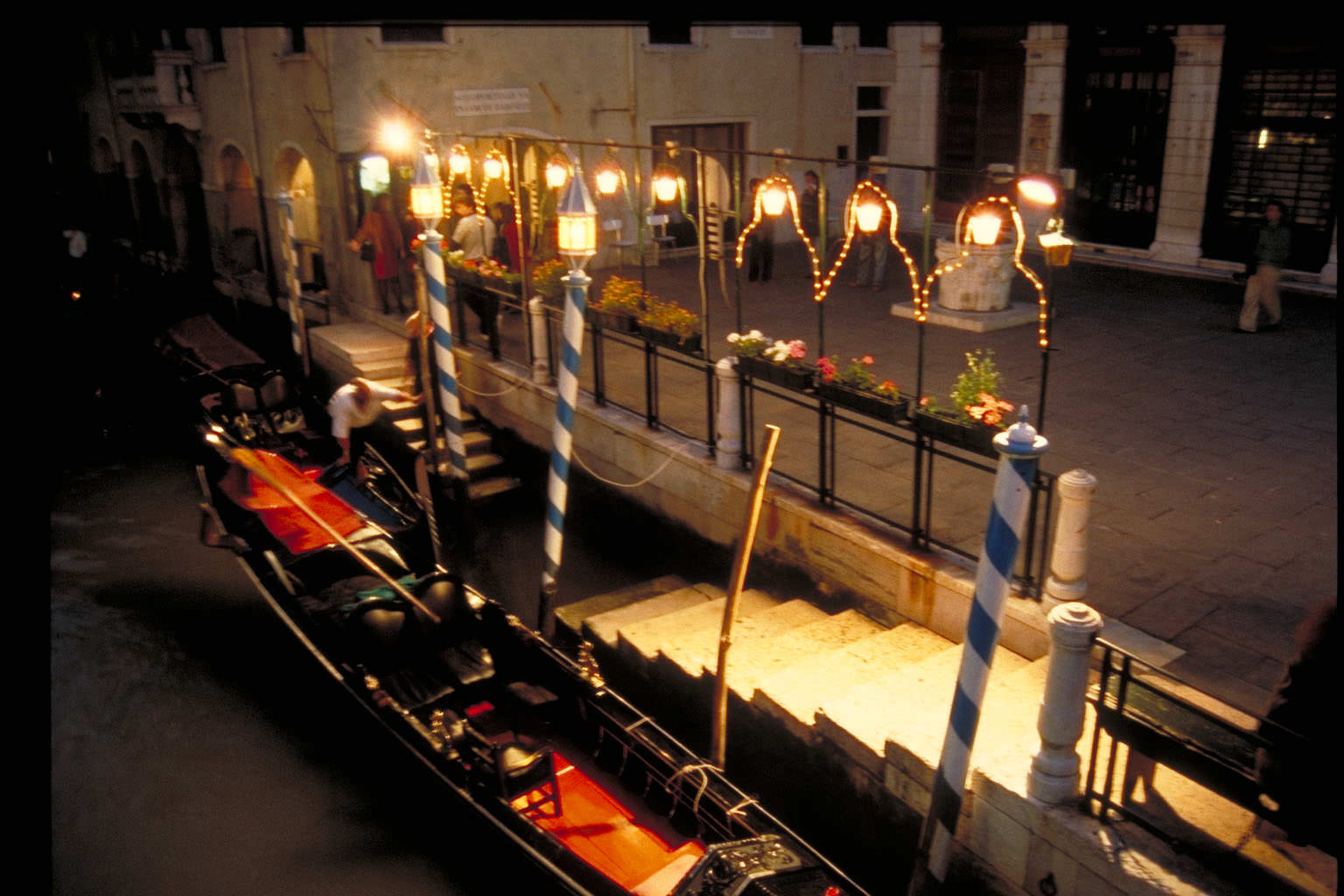
Ponte-di-Rialto
YOU MIGHT ALSO LIKE
MOSCOW, Russia
The streets of Moscow are mostly buried in shadows except for a few groups of lucent buildings, maybe an expression of authority. During the intense commercial time bawdy lights are lost, along with street activity, and stillness returns to the city. Now, towering lights dot the cold winter landscape. Looking towards Moskva University at dusk. The Bolshoi Theatre rebuilt in 1856. The upper lights set off the detail of this Greek-style Architecture. Christmas illumination at Tsum Department Store next to Bolshoi Theatre.
Vol.058-Finding the Ideal Street Lighting
Interviewer: Niken Wulandari Mende: Niken, do you like traveling? Niken: Yes, I do. I brought photos that I took from my trips, and we will talk about street lighting. I started to pay more attention to this since I did my thesis. During the time, I surveyed and compared the view during daytime and nighttime. That is when I noticed there are many designs of street elements that are visible during the daytime and not very noticeable during night-time. Mende: At the beginning, in Asia, everyone understood that lighting design is for the shape of the pole element. They care less about the lighting effect and the environment at nighttime, just focus on the beautiful shape of the street poles. Niken: I found that a lot of streets in European cities are using catenary lights, so they don’t have a lot of elements on the streets. When we walk, we don’t notice where the lights are coming from, we can enjoy the street view because it’s not obstructed by the poles. That’s why I like the concept of using catenary light. Mende: It is quite difficult for us in Japan or other Asian countries to implement this method to the buildings, it is not allowed in Japan. In Europe, they also mount wall-scones to the building. We have been suggesting so many times to use catenary light or wall-mounted street lighting in Tokyo and other cities in Japan, but it…
City Night Walk vol.70: Shimokitazawa & Kobe
The Lighting Environment of a Cultural Hub 2022.11.25 & 26 Naoko Oguchi, Shinichi Sakaguchi, Ryuji Hatta, Tomoya Furukawa, Azumi Okubo, Mutsuo Honma For the first time in three years since 2019, we held a night walk survey where everyone gathered in one location.Under the theme of “Lighting Environments in Cultural Hubs,” we explored two cities: Shimokitazawa in the Kanto region, where a series of exciting new developments have recently been completed, and Kobe in the Kansai region, known for its stylish urban atmosphere. Before the arrival of full-fledged winter, we conducted our first large-group night walk survey in about three years. The theme was “Lighting Environments in Cultural Hubs,” held in two locations: Shimokitazawa in eastern Japan and Kobe in the west.In Shimokitazawa, participants were divided into four groups. Two started from Odakyu Line’s Setagaya-Daita Station and the other two from Higashi-Kitazawa Station, each heading toward Shimokitazawa Station on foot.In Kobe, the walk began after taking in the nightscape from the summit of Mt. Rokko. ■Shimokitazawa – Group 1 Group 1 walked the route from Setagaya-Daita Station to Shimokitazawa Station. The path from Daita Station to the onsen ryokan “Yuen Bettei” was composed of modest stand lights and uplights on the trees, creating a lighting environment that felt calm and atmospheric. While the pole lights were somewhat glaring, their low color temperature provided a unified tone that made the glare less bothersome. Considering safety, the overall brightness felt appropriate, and the…
CHICAGO 1995
Orange lights brighten the plains and continue on towards the horizon, creating the Chicago nightscape. Notorious for cold winds, the Chicago nightscape was unified early on with high-pressure sodium streetlights. For crime prevention, the amount of light slowly increased with each passing decade, but outdoor lighting technology in Chicago is considered very progressive. Orange axes of light extend toward the horizon. High pressure sodium streetlamps are used beautifully throughout the citystreets of Chicago. The highmast lighting pole at the base of the John Hancock building is functional and glareless. Highly efficient streetlights illuminate State Street, creating a unified environment.
Newsletter vol.130
Date of Issue: 28 June, 2024-Activity 1 / City Night Survey – Alaska(2024.02.06-02.12)-Activity 2/ Night Walk Vol. 73 – Azabudai Hills & Toranomon Hills (2024.05.10)-Activity 3/ Round Table Discussion Vol.71– Azabudai Hills & Toranomon Hills Review (2024.05.30) City Night Survey – Alaska 2024.02.06-02.12 Masafumi Yamamoto + Yuki Ito We visited Alaska at the beginning of February. The purpose was to investigate the light environment in the Arctic under the theme of ‘Mother Nature’, focusing on urban areas, living environments, Eskimo life, and the wilderness. In this study, we stayed in Anchorage, the largest city in Alaska, and Fairbanks, a citysurrounded by nature. In Fairbanks, we stayed at a lodge in the mountains and observed the northern lights. ■Arctic City After noon in Fairbanks, a city as close to the Arctic Circle as you can reach. The weather is clear. The sun has risen close to the horizon and is about to set. Houses and trees cast long shadows on the ground. It is a beautiful scene, as if I had dipped the tip of my paintbrush in dark blue watercolor paint and carefully traced a stroke on a white canvas covered with snow. The temperature here is minus 20°C (68°F). Still, I can feel the warmth of the sun on my skin. The temperature can reach minus 40°C (-40°F) during the harshest season, while the four seasons are rich in variety. The temperature drops even further when the wind blows. This is the…