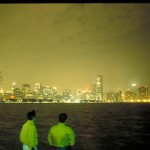
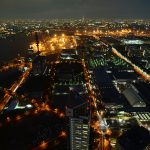
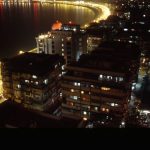
2024.11.21-11.22 Shunichi Ikeda + Yuta Shibata Yokkaichi has developed as an industrial city. The striking contrast between its dazzling factory nightscape and the increasingly organized city center stands out. We conducted a survey of the urban lighting where industry and daily life coexist. ■About Yokkaichi Yokkaichi has a long history, having developed as a port town facing Ise Bay. During the Edo period, it prospered as a post station along the Tokaido route. The city’s name originates from the markets that were held on days ending in “4.”After World War II, Yokkaichi grew as an industrial city with the construction of a petrochemical complex during Japan’s period of rapid economic growth. However, air pollutants emitted from the complex caused a serious pollution-related illness known as Yokkaichi asthma.Today, the city has regained a comfortable living environment. Residential areas, shopping streets, and everyday life now extend right alongside the industrial zones. ■3D Factory Nightscape Yokkaichi, with its history of industrial development, began drawing attention during the early 2000s factory nightscape boom. The expansive factory nightscape of the Yokkaichi petrochemical complex, which stretches about 10 kilometers north to south, is counted among Japan’s five greatest factory nightscapes. What makes it especially unique is that the nightscape can be viewed from the sky, land, and sea—earning it the nickname “3D Nightscape.” Particularly photogenic views of the factory nightscape have gained significant popularity. From the perspective of the Lighting Detectives, we conducted a survey of…
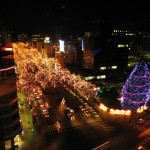
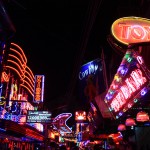
2023.07.19 Shunichi Ikeda + Masashi Kurobe + Yuta Shibata Shinjuku Kabukicho, Japan’s largest entertainment district, is a dazzling neon-lit labyrinth filled with restaurants, movie theaters, and amusement facilities. Its streets are teeming with people all night long. In recent years, however, the district has faced challenges, such as the growing presence of “Toyoko Kids” congregating in Cine City Square and engaging in criminal activities. Despite these issues, the opening of the new iconic Tokyu Kabukicho Tower has brought renewed attention to the area. As lighting detectives, we delve into the current state of Kabuki-cho, examining its lighting environment and cultural significance. ■Kabuki-cho Reborn: A Post-COVID Entertainment DistrictSeventeen years after our lighting survey in Shinjuku in 2006, Kabuki-cho has evolved from large-scale development into a global tourist hotspot. Though deserted during the 2020 state of emergency, the area is now vibrant again with the opening of Tokyu Kabuki-cho Tower. This survey revisits Kabuki-cho, comparing it with the previous survey and analyzing its changing lighting environment. ■Tokyu Kabuki-cho Tower: An All-Out Entertainment ComplexThe Tokyu Kabuki-cho Tower, a 48-story, approximately 225-meter-tall, super high-rise entertainment complex comprising a hotel, movie theater, theater, and more, opened in April 2023.Upon entering the building, I was overwhelmed by the countless glittering lights that filled the space. The small shops and narrow corridors were adorned with an excessive number of paper lanterns, creating an atmosphere reminiscent of an Asian festival. Outside, the building’s digital signage, facade indirect lighting, reflected…
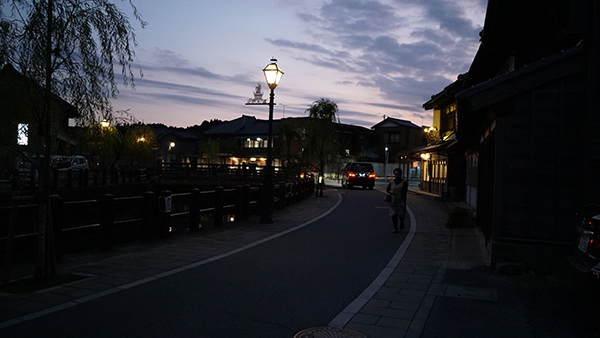
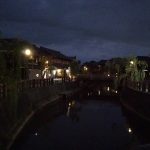
2022.11.4-5 Sachiko Segawa Surprisingly, this survey of the Sawara district marks the first time the Lighting Detectives have conducted an investigation within Chiba Prefecture. The team focused on an area designated both as an Important Preservation District for Groups of Traditional Buildings and as a Landscape Formation District. Here, the townscape of merchant houses, which flourished from the Edo period thanks to river transport on the Tone River, still remains. Located about 70 km from Tokyo Station and slightly inland from the Tone River, the Sawara district of Katori City once thrived as a merchant town, to the point it was said to rival Edo itself. However, the town declined during Japan’s period of rapid economic growth. Following a townscape survey in 1974, the value of its historic scenery was reappraised. Today, leveraging its convenient location—just two hours from Tokyo and one hour by train from Narita Airport—the area is being redeveloped as a tourist destination. For this survey, the team limited their scope to the townscape along the Ono River and conducted a nightscape survey. ■Uniquely Designed Lighting Fixtures From JR Narita Line Sawara Station, as we walked toward the Ono River, we were greeted by a bollard topped with a monkey. “Why a monkey…?” we wondered, but as we continued upstream along the river, we encountered bollards adorned with all sorts of figures: rabbits, carp, children, frogs, Ebisu, and more—each one different, with no two alike. These uniquely…