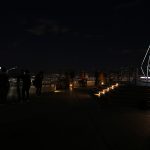
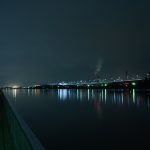
2023.01.18-01.20 Yumi Honda + Misuzu Nakamura Kobe is famous for the night view from Mt. Rokko as the “10 Million Dollar Nightscape” and for its waterside nightscape as a port city. Nightscape guidelines have been established in 2012, and efforts are being actively made to improve the lighting in the city. We walked around the city, which continues to be updated, and explored the components of a nightscape that is uniquely Kobe. ■“Instagrammable” NightscapePort Tower, Maritime Museum, Oriental Hotel, Hotel Okura, Ferris wheel, sightseeing boats, and the “BE KOBE” monument…. When people think of the city of Kobe, they probably think of Meriken Park. Meriken Park is the face of Kobe, and even at night many people were visiting the park to take commemorative photos. Many of the park’s symbolic monuments were lit up and color lighting was used extensively, but the colors and color schemes were mainly neutral, not primary colors, so it was nice to enjoy the colorful light without getting an overpowering impression. To complement the color lighting, the ground lights of the pole lights, handrail lights, and bollard lights were uniformly lit with light bulbs, creating a subdued brightness. Both decorative lighting and functional lighting emitted little excessive glare, allowing us to concentrate on the illuminated objects. It seemed like seeing the nightscape and taking pictures of it could be the purpose of a visit to this place. In this age of breathlessly uploaded photos and videos…
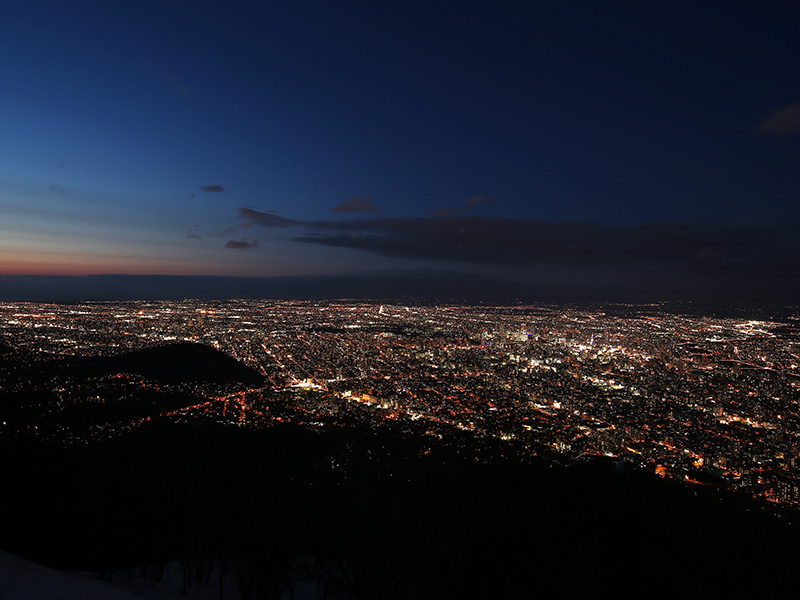
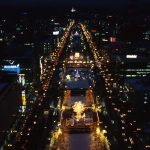
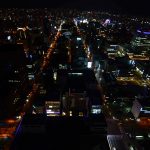
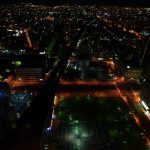
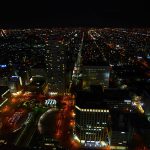
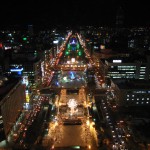
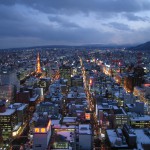
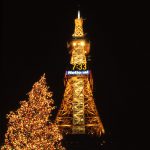
The Television Broadcasting Tower looks down on the orange sodium lamps overflowing from the grid patterned streets of Sapporo. While on assignment in December we were able to view the multi-colored White Illumination set up along Ohdori Park and Sappore Eki Mae Street. Looking towards Ohdori Promenade from the JR Tower. Sapporo is a beautiful city at twilight with orange light from the streets to set off the blue-tinted snow-topped roofs. The tree-lined street, Sapporo Ekimae Avenue is a sight to see with its unique style of looping lights over tree branches. Visitors with cameras and mobile phones converge on the decorated Ohdori Promenade. Sapporo Television Tower, similar to Tokyo Tower and Nagoya Tower, and all designed by the same architect, is also illuminated with the same type of sodium lamp.
2024.10.01-10.05 Atsushi Itakura & Genki Watanab When thinking of Mongolia, many people may imagine vast grasslands and nomadic gers, but therapidly developing capital city of Ulaanbaatar also deserves attention.Despite being only about five and a half hours from Japan, few people are familiar with its currentstate.This visit, conducted through an urban lighting survey of Ulaanbaatar, provided a valuableopportunity to discover an unexpected side of Mongolia. ■What Kind of Place Is Mongolia?When we think of Mongolia, the first image that often comes to mind is of vast grasslands stretching out endlessly, dotted with “gers”—the traditional dwellings of nomadic herders. For Japanese people, there’s also a sense of connection through cultural and historical ties, such as the shared heritage linked to the Mongolian spot (mongolian birthmark) and the many Mongolian sumo wrestlers who have found great success in Japan. Despite being only a five-and-a-half-hour flight away from Japan, Mongolia is a country that feels both near and distant—close in proximity, yet far in familiarity. Though we may feel an affinity toward Mongolia, the reality is that most people know very little about its present state. With this simple curiosity as our starting point, we embarked on a 5-day, 4-night survey of urban lighting in Ulaanbaatar, the capital of this rapidly developing nation. ■Topographical Characteristics of Ulaanbaatar Ulaanbaatar covers an area of approximately 4,700 square kilometers and is divided into nine districts. The city is flanked by hills to the north and south,…
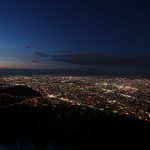
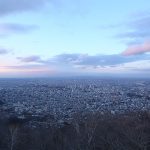
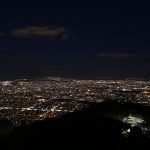
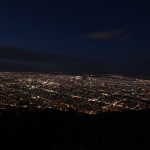
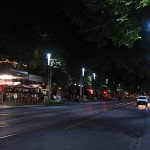
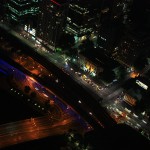
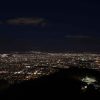
2018/04/16-19 Misuzu Nakamura + Sherri Goh It was interesting for me to juxtapose the two cities and their evident priorities with the implementation of lighting masterplan. In Hokkaido for the first time, I felt that the two cities were greatly different for their appeal to tourists. Even though Hakodate’s night view was greatly famed and did not disappoint, Sapporo seemed to be the more popular place to be at night and for its nightlife. City view of Sapporo City view of Hakodate Hakodate streets at night Sapporo streets at night Well illuminated pathway to Sapporo TV tower Dim pathways towards Hakodate Old Public Hall of Hakodate Ward despite many fixtures This survey of both cities suggests that there might be a compromise between the balance of two objectives; planning for a potential attraction and planning for functional use. As Sapporo is the larger and denser city, it makes sense to cater to comfort of the people that roam the streets after working hours. From the junction pictures, you can see that there is more lighting on the floor level in Sapporo in comparison to Hakodate. Despite the numerous dotted light fixtures, we felt that the pedestrian pathways and roads were generally darker in Hakodate.And for Hakodate, turning the nightscape into an economic tool could also be the better solution as most of the streets were empty after 1900h, with major attractions closing by then. It was also strange that Mt…