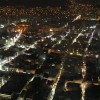
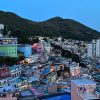
2024.05.16 – 05.19 Mari Kubota+ Noriko Higashi Busan, South Korea’s second-largest city, is one of the world’s major port cities. In recent years, it has also gained fame as a hub for tourism and film. We surveyed the lighting in Busan, which is also a member of LUCI (Lighting Urban Community International). South Korea is a close neighbor, just 1.5 hours from Tokyo by plane, making it a popular destination for quick and affordable trips. Busan, the second-largest city in South Korea, is not only a tourist destination but also a major port and an entertainment center, hosting film festivals. As a member of LUCI, Busan has been focusing on urban lighting as part of its urban planning. In 2015, the city developed an extensive overview of its nightscapes, resulting in the Busan Urban Light Policy for 2030. This policy has been updated several times, reflecting the city’s ongoing efforts in implementation and improvement. The guidelines divide Busan into several zones, each with lighting tailored to its specific characteristics.We traveled to Busan to assess whether the city’s lighting contributes to safety, beauty, attractiveness, and the local economy at night. ■Jagalchi Market Jagalchi Market is South Korea’s largest seafood market, selling both fresh and dried fish. After purchasing seafood on the first floor, visitors can have it cooked and served on the second floor. The market attracts many tourists. White lights are used to illuminate the seafood, making it look as…
2023.01.26-01.29 Masafumi Yamamoto + Yuki Ito Okinawa is a place where diverse cultures and histories are intertwined. In Okinawa, each region has its own unique streetscape, and this is due to the fact that each region has a completely different historical background. The following is a simplified explanation of the historical background of each area. The Naha area was severely damaged in the war and was rebuilt; the Koza area was influenced by the U.S. military base and retains a strong American culture; and the Bise and Imadomari areas retain the traditional streets of the Ryukyu Islands. By comparing the light environment of each area, this survey sought to determine what kind of lifestyle culture and light features each area has, and what kind of light is unique to Okinawa. ■Sakae-machi MarketSakae-machi Market, located in Naha City, is a shopping street that was established during the postwar reconstruction period and has remained almost unchanged since then. Today, the market is a lively place where locals gather during the daytime, but at night it transforms into a more local haunt, drinking district that is quite different from the impression it gives during the daytime. The only light at night is from the taverns and the faint fluorescent lights in the upper part of the shopping street. (Floor illumination: approx. 20 lx) The illuminance alone gives the impression of dimness, but the actual atmosphere was not as dark as the impression given by…
Diriyah, KAFD and Metro stations Riyadh2025.11.16 – 11.18 Gita Listia The purpose of this Riyadh lighting survey is to explore the characteristics of old urban areas and new developments in KAFD Riyadh, with a particular focus on their metro stations. The study aims to understand how each area expresses its identity through public space lighting and how lighting strategies are applied in major infrastructure such as metro station. ■Diriyah Diriyah is a historic area on the north-west side of Riyadh and one of Saudi Arabia’s most important cultural heritage sites. Located along Wadi Hanifah, about 15 km from central Riyadh, it reflects the early history of the city. Today, Diriyah is being developed into a vibrant heritage, cultural, and lifestyle destination, where historic preservation is carefully combined with modern urban design. The lighting in Diriyah is designed to be subtle and heritage-sensitive. Very warm white tones are used to complement the Najdi mud-brick architecture, creating a calm and welcoming night-time atmosphere. Pole lights and bollards in Diriyah feature distinctive shapes, patterns, and warmer colour temperatures compared to typical street lighting in other parts of Riyadh. This traditional lighting character clearly signals that visitors are entering a cultural and heritage area. ■At-Turaif At-Turaif is the birthplace of Saudi history and represents the cultural core of Diriyah. It is recognized as a UNESCO World Heritage Site. Lighting at At-Turaif is highly restrained and conservation-focused. Soft grazing and wall-washing techniques are used to gently…

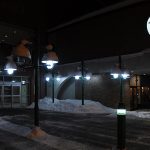
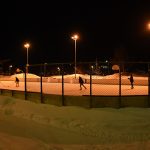
2023.01.20-01.22 Yuichi Anzai+ Chuanyi Liu ■Kozushima Village Kozushima is located about 180 kilometers south of central Tokyo with a population of about 1,800. The terrain is complex, with almost no flat land. The village is located in the center of the island at the foot of Mt. Tenjo. The impetus for the starry sky protection activities on Kozushima came from a comment made during a student internship program by the Tourism Foundation in 2016, that the night sky was as beautiful as a planetarium. The starry sky, a common sight on the island, has become a tourism resource. An island-wide effort to protect the sky began. Specific efforts include replacing streetlights and security lights with fixtures with 0% upward luminous flux and 2,700K color temperature, holding explanatory meetings for residents and regular workshops with experts to gain their understanding and cooperation in light pollution and starry sky protection activities, training islanders as guides, and holding star gazing events to protect the night sky from light pollution and communicate the appeal of the starry sky both on and off the island. The island is also working to protect the night sky from light pollution and convey the charm of the starry sky to the public. The “Light Pollution Prevention Ordinance to Protect the Beautiful Starry Sky of Kozushima Village,” which specifies the responsibilities of residents and businesses to prevent light pollution, will be enacted in 2019, and rules are being developed to…
It was 8:15 on the morning of August 6, 1945 when the first of two bombs dropped on Hiroshima then Nagasaki. Sixty-one years have passed since this memorable day and every year victims are remembered in a peace memorial ceremony attended by 50,000 people. On this night thousands of lanterns are placed in the Motoyasu River near the Hiroshima Peace Memorial as part of the remembrance and prayer for peace. As the main part of our lighting survey we wanted to see how these lanterns changed the face of city on this one night. We also visited Itsukushima Shinto Shrine and downtown Hiroshima. One of the World Cultural Heritage sites, Itsukushima Shinto Shrine. Unfortunately, the lighting is not the most faltering and lacks punch that could emphasis great architectural detail. However, looking from the bow of a boat past the large shrine gate, the main hall floats elusively in the surrounding darkness. This is the angle for a truly spiritual approach. Hiroshima Peace Memorial, a World Cultural Heritage site and the remains of a symbol of sacrifice and crime committed against humanity. Nearly buried by the surrounding city lights, but this dim gloom cast over the rubble suits its history and expresses it in the present day for all to remember. Full of prayers for peace and a symbol of remembrance, softly lit lanterns were set afloat, creating a new river of light. The lightscape created by the lanterns floating…