


City Night Survey : Riyadh, Saudi Arabia
Diriyah, KAFD and Metro stations Riyadh2025.11.16 – 11.18 Gita Listia The purpose of this Riyadh lighting survey is to explore the characteristics of old urban areas and new developments in KAFD Riyadh, with a particular focus on their metro stations. The study aims to understand how each area expresses its identity through public space lighting and how lighting strategies are applied in major infrastructure such as metro station. ■Diriyah Diriyah is a historic area on the north-west side of Riyadh and one of Saudi Arabia’s most important cultural heritage sites. Located along Wadi Hanifah, about 15 km from central Riyadh, it reflects the early history of the city. Today, Diriyah is being developed into a vibrant heritage, cultural, and lifestyle destination, where historic preservation is carefully combined with modern urban design. The lighting in Diriyah is designed to be subtle and heritage-sensitive. Very warm white tones are used to complement the Najdi mud-brick architecture, creating a calm and welcoming night-time atmosphere. Pole lights and bollards in Diriyah feature distinctive shapes, patterns, and warmer colour temperatures compared to typical street lighting in other parts of Riyadh. This traditional lighting character clearly signals that visitors are entering a cultural and heritage area. ■At-Turaif At-Turaif is the birthplace of Saudi history and represents the cultural core of Diriyah. It is recognized as a UNESCO World Heritage Site. Lighting at At-Turaif is highly restrained and conservation-focused. Soft grazing and wall-washing techniques are used to gently…
City Night Survey : Tashkent, Uzbekistan
2025.11.09-11.14 Jiang Kunzhi + Lin Huangyi This survey aims to explore the interaction between Soviet culture and Islamic culture within the urban space of western Tashkent, with a particular focus on whether this cultural layering has given rise to region-specific lighting approaches and expressions of the luminous environment. Therefore, a systematic field survey and documentation were carried out across the urban areas of Tashkent. As the capital of Uzbekistan, Tashkent reflects both Soviet modernism and Islamic architectural traditions. The city features large Soviet-era public buildings alongside religious architecture that blends tradition and modernity. In addition to above-ground buildings, this survey also examined the Tashkent Metro, Central Asia’s first metro system opened in 1977, where refined lighting and rich materials create museum-like underground spaces. (Jiang Kunzhi) ■Aerial night view of Tashkent Viewed from the TV Tower, Tashkent’s nightscape appears as a network of “lines” and “points” rather than a continuous illuminated façade. The road system forms the clearest visual structure: main roads and ring roads read as linear light bands, while bridges and major intersections appear as brighter nodes, creating a legible traffic framework over the city’s flat skyline. These linear elements strongly define the city’s sense of direction and scale. In contrast, most buildings remain dark at night, with their presence defined only by entrance lighting, limited window glow, and reflected ambient light. As a result, the overall background luminance stays low, allowing a few landmarks—such as tall structures or media…
City Night Survey:Xi’An China
Muslim District within New Development Context2025.11.06-11.09 Quratuaini Jamil + Xu Sunny The survey aims to examine the Muslim Quarter District with a focus on its religious, cultural, and urban context, while assessing how it integrates with the emerging modern development within Xi’an. ■ Brief Summary of Lighting SurveyWith a vast metropolitan population of 12.9 million—of which 4.45% reside in the urban center—Xi’an is a renowned historical and cultural hub in China that pursues an urban planning strategy blending tradition with modernity. The city integrates its rich heritage with the demands of contemporary development while carefully safeguarding key cultural areas. A prime example is the Muslim Quarter, which plays a crucial role in preserving living heritage, ethnic diversity, and the traditional urban fabric. Xi’an’s planning approach emphasizes “development within preservation and preservation within development,” reflected in the harmonious coexistence of new growth and historic architecture. Accordingly, this research focuses on how the old and new parts of the city—particularly distinct areas like the Muslim Quarter—are effectively integrated. ■Xi’An Muslim QuarterOn the first day, we observed the Friday congregational prayer at the Great Mosque of Xi’an. This visit provided a valuable opportunity to study the mosque’s internal spatial organization and architectural characteristics. The Great Mosque of Xi’an is distinctive for its unique synthesis of traditional Chinese architectural language and Islamic religious functions. It differs markedly from the Middle Eastern style—characterized by prominent domes and tall minarets—commonly seen in places like Singapore. Instead,…
City Night Survey:Perth, Australia
Urban Light and Natural light in Western Australia2025.10.28 – 11.01 Hongna Chen + Puyu Wu This lighting survey investigates the influence of Western Australia’s local culture and natural landscape on its lighting environment, exploring whether its relative remoteness has led to distinctive approaches in lighting design. For this purpose, field investigations were conducted in Perth and its surrounding natural areas. ■ Perth’s Geographic LocationPerth is a city in Western Australia and is often described as the world’s most isolated major city. This characterization stems from its extreme remoteness with the Indian Ocean to the west, vast outback deserts to the east, and long distances from other major cities—about 4,000 km from Darwin, 2,700 km from Adelaide, and over 3,000 km from eastern cities such as Sydney and Melbourne. The unique nightscape of such a “remote” city is the central focus of this survey. ■ Panoramic Night ViewTo take in the city’s nightscape from above, we chose King’s Park, the largest park in Perth. The park is a popular recreational spot for locals. On our way up, we saw many people hiking, picnicking, and sunbathing. We joined them at the hilltop to await nightfall. From Kings Park, Perth’s nighttime view clearly reveals the structure of the city’s lighting. The CBD skyline is defined by clusters of bright, cool-white light from office towers, while the streets below form a grid of warmer, yellow streetlights. The Swan River is faintly outlined by ambient…
City Night Survey : Shenzhen, China
2025.09.12 & 09.18 Lin Hu + Jiang Kunzhi + Lin Huangyi Shenzhen evolved from a fringe town into a high-tech metropolis in about 45 years, and its bold, sustainable urban lighting planning stands out nationally. A two-day field study examined nightscape patterns in its three CBDs, media façades in Futian, and the functional lighting design of the new Gangxia North Metro Station. Unlike older, historically rich Chinese cities, Shenzhen started as a peripheral town and in just about 45 years has become a high-tech modern metropolis. Thanks to its local legislative autonomy, Shenzhen’s urban planning is highly experimental and often serves as a model for other Chinese and even international cities. In urban lighting planning, Shenzhen is a national frontrunner: its nightscape design is bold and innovative, yet the city has also enacted special regulations for ecological protection and light pollution control, showing a clear commitment to sustainability. However, some lighting projects still spark social debate over energy consumption, light pollution, and the use of public resources. To understand more of Shenzhen’s current nightscape, the Shenzhen office team conducted a two-day field study with Mende-san and Kasai-san, focusing on three themes: 1. Nightscape of the three main CBDsWe visited the observation deck at 540 m on the Ping An Finance Center in Futian to take in the scale and layout of the city at night. Looking east toward Luohu, the skyline shows a mix of old and new high-rises, reflecting Shenzhen’s…
City Night Survey : Seoul, Korea
Songdo newcity, Inchon and Seoul city2025.10.22- 2025.10.25 Karen Huang + Xueying Piao + Xianyu Liu The purpose of this Seoul lighting survey is to explore how lighting shapes the city’s identity and cultural expression of the urban landscape in the multiple layers of Seoul.With this purpose in mind, we went to Songdo, Incheon and Seoul for the servey. ■ Songdo InchonOn the first day of our site survey, we visited Songdo International Business District in Incheon. As a flagship planned development in Yeonsu-gu, this new town represents a remarkable urban planning achievement, constructed entirely on reclaimed land – essentially a future-city built from the ground up. The district demonstrates excellent connectivity, with the core area accessible within approximately 90 minutes via bus from Incheon International Airport. By around 8:00 PM, few people are on the street. Our survey focused on the central park area of Songdo. At street level, building facades demonstrated minimal use of decorative flood lighting, relying primarily on internal illumination to create a subdued atmosphere, while the commercial districts utilized abundant illuminated signage to inject vibrancy into the urban landscape. The most critical insight emerged from the view at G Tower: the urban planning framework is distinctly articulated through strategic color temperature zoning, with residential areas at 2700K transitioning to over 5000K for landmark structures, constituting a macro-level “light planning” methodology. Simultaneously, the concentrated application of architectural lighting to tower crowns effectively reinforces skyline identity while minimizing…

Round Table Discussion Vol.74: Gakugei-daigaku Night Walk Review
2025.11.10 Noriko Higashi We held a review session for the Gakugei-daigaku night walk survey conducted in October. A total of 14 participants joined the retrospective, with 10 attending at the secretariat and 4 participating online. The second salon of the year at the Lighting Detectives’s office focused on the review of the Gakugei-daigaku night walk survey. Each leader from the three groups shared their findings. Participants noted that Gakugei-daigaku was perhaps the most compact neighborhood we have surveyed to date. With the station, shopping districts, and residential areas so closely integrated, the night walk survey was relatively short at 90 minutes, yet it offered a wide variety of urban “expressions.” Similar sentiments were echoed throughout the salon. One of the biggest surprises for many was the discovery that there is actually no “Gakugei University” in Gakugei-daigaku(university)! Research revealed that the university moved in 1964; it hasn’t been there for 60 years. While we began the walk expecting a student town atmosphere, we were struck by the relative lack of students and the strong presence of families and young professionals instead. The most common impressions shared during the salon were that the town is a “mixture of the old and the new,” featuring “elaborate streetlamps” and “stylish redevelopment under the elevated tracks.” The streetlamps, in particular, were a major topic of discussion. In any other neighborhood, their overly ornate designs and inconsistent color temperatures might have labeled them villains due tothe…

City Night Walk Vol.77 : Gakugei-daigaku
2025.10.17 Shino Yabuta + Yua Miyakoshi + Shiho Fujita Gakugei-daigaku was the only district in Japan selected for the “Coolest Neighborhoods in the World” rankings by the British media outlet Time Out. It is a town where “new” and “old” intersect, featuring lively shopping streets favored by the youth alongside quiet residential areas just a short walk from the station. We set out to uncover the secrets behind this neighborhood’s appeal, which has captured even international attention. Gakugei-daigaku is a popular station on the Tokyu Toyoko Line, extending from Shibuya. Bustling shopping streets spread across both the east and west sides of the tracks. Here is our report on the nighttime charm of Gakugeidai, an area celebrated by overseas media. ■Team 1: North Area Team 1 primarily explored the northern side of Gakugei-daigaku Station. We walked north along the elevated tracks, passing through dark alleys before emerging into the bustling commercial district. As bright streets and dim lanes appeared alternately, we searched for heroes and villains while experiencing the contrast between light and shadow. Stepping just one block away from the streetlamp-lit main thoroughfares plunges you into immediate silence. I felt that this contrast between light and dark is a defining characteristic of the Gakugei-daigaku neighborhood. The lighting we selected as heroes highlights the unique personality of this town. Spotlights illuminating restaurant terrace seats appeared suddenly after a stretch of dark alleys, signaling the start of the entertainment district. The…

City Night Survey:Honolulu
2025.09.04-09.08 Yonglin Ke + Masashi Kurobe The nights in Honolulu are a diverse blend of resort illumination, residential lights, torches, and night market glows. However, as the city develops, the starry sky is fading, raising concerns about the impact on the local ecosystem. Balancing urban growth with light pollution countermeasures remains a significant challenge. We conducted an on-site night walk survey to explore the balance between the city and nature and to evaluate the current lighting environment. ■Honolulu Honolulu, the capital of the U.S. state of Hawaii, is a prominent tourist destination in the heart of the Pacific Ocean. Simultaneously, it serves as the political and economic hub of the state. In this land where the sea, mountains, and urban areas sit in close proximity, the nightscape reveals a variety of expressions depending on the time and location—blending the glow of resort hotels, the soft lights of residences, traditional fire torches, and the vibrant lights of night markets. Furthermore, the combination of intense sunlight and a tropical climate creates a unique character within the city’s lighting environment. On the other hand, urban development and the growth of the tourism industry have negatively impacted the visibility of the starry sky and affected local ecosystems, such as migratory birds and sea turtles. While the state and city have begun implementing measures to reduce light pollution, finding a balance with the tourism industry remains a challenge. During this night walk survey, we investigated…

Kaoru Mende / Lighting Design Workshop
3 day student workshop 20252025.09.13-09.15 Noriko Higashi This year marks the fourth time the Lighting Design Workshop has been held. Nineteen students gathered from all over Japan to spend three days thoroughly learning about lighting design. With new programs added this year, the workshop has evolved further. This is the fourth session of the Lighting Design Workshop, which we tentatively started in 2021.This year, we again completed a packed program with 19 motivated students who gathered from across the country. In addition to nine varied lectures, this year’s program included training at a lighting manufacturer and site visits to various projects. ■LecturesWe provided a total of nine lectures, beginning with the foundational knowledge of lighting design, the design process, and the philosophy and methodologies of LPA’s lighting design. We also introduced specific projects, such as the Ishikawa Prefectural Library, Takanawa Gateway Station, and the Osaka Healthcare Pavilion at the Osaka-Kansai Expo. The themes and content of the lectures were highly refined through multiple internal reviews, making them concise and of high quality. In addition, we included Q&A sessions between each lecture. For questions that could not be answered during the session, we posted the responses so they could be read by everyone, ensuring that we addressed the students’ inquiries as much as possible. ■Individual AssignmentStudents participating in the workshop are given an individual assignment one month in advance. This year’s theme was “Redesigning Light.” Students were asked to re-examine the…
City Night Survey : Toyosu, Tokyo
2025.06.26 Yumi Honda +Qiaoxi Wang+ Momoe Nomura We observed and recorded the nighttime light environment of the newly developed commercial complex Senkyaku Banrai in the Tokyo Bay Area and its surrounding public spaces (green plaza, station area, and Gururi Park). We conducted a multifaceted analysis, including the placement of lighting fixtures, illuminance, and the impression of the space, to determine how light affects the atmosphere of the facility and the city in the Toyosu area, which is being developed as a tourist hub. The Toyosu area is a point of interest where the latest urban spaces and the lively atmosphere of shitamachi (old downtown) coexist due to redevelopment. We walked through the area around Toyosu Market Station, the green plaza, and Gururi Park, observing how light design impacts the impression, comfort, and safety of the town. ■Senkyaku Banrai Senkyaku Banrai is a commercial facility that opened in 2024 next to the Toyosu Market. It’s a spot where both tourists and local residents can enjoy the array of restaurants and souvenir shops. Through architecture and lighting design incorporating traditional Japanese motifs, it exudes a uniquely Japanese warmth and vitality, even within the contemporary urban nightscape. The lighting plan inside the facility is unified, as befitting a new commercial complex, and was designed with both aesthetic appeal and functionality in mind. The main path lighting uses warm, incandescent colors, creating a nostalgic atmosphere reminiscent of a Showa-era shopping street. This fosters a…

Lighting Detectives Online Activities 2022
Hikaru Kimura Due to the impact of the COVID-19, the Lighting Detectives have voluntarily suspended in-person activities since 2020. While we haven’t been able to conduct our usual activities, we’ve been exploring new methods, such as individual Night Walk Surveys and connecting our salons via the web. Now that we’ve grown accustomed to online communication due to the pandemic, we have launched three new live-streamed online activities on YouTube and Instagram as new content. ■Lounge Talk with Chief Mende and Friends The first is a live-streamed lounge talk on YouTube Live. This is a special project where chief Mende invites his friends to have a casual and candid conversation over drinks. For the first episode, we invited Mr. Naomitsu Tokieda from Toki Corporation as our guest, who has a personal relationship with chief Mende and has participated in the Lighting Detectives World Forum. It was a fun first episode with a relaxed, private atmosphere unique to YouTube, which included anecdotes from Mr. Tokieda’s younger days.The second episode, titled “The Dawn of the Lighting Detectives: A Look Back at 1990-2000,” featured guests Mr. Yu Inaba and Ms. Reiko Kasai. They shared their founding beliefs and the struggles from the group’s early days. A must-see part of this episode is the rare, never-before-seen footage from a 1998 exhibition, where 100 prominent figures from various fields predicted the “Tokyo nightscape in 2050.” ■Take a Walk with Chief Mende The second activity is a…
Night Walk in Katong–Joo Chiat, Singapore
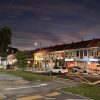
Singapore Archifest 20252025.07.18 Josephine Kwan As part of the annual architecture festival in Singapore, Archifest 2025 invited us to host a special Lighting Detectives session in the East Coast.The Katong–Joo Chiat district, celebrated for its rich history, heritage, vibrant food scene, and evolving lifestyle, became our exploration ground. ■ IntroductionWith a total of thirty participants comprising both industry professionals and those from outside the field, we embarked on two routes to uncover the night time charm of this Peranakan cultural enclave — a place whose unique character and timeless beauty continue to capture the hearts of many. ■ History of Katong-Joo Chiat DistrictIn the early 20th century, members of the wealthy Peranakan community began moving out of the crowded city areas such as Telok Ayer, Ann Siang, and Tanjong Pagar. They sought peaceful, more spacious suburban residences in the East Coast — particularly in Katong-Joo Chiat — where land was more affordable and the sea was close by. In Katong-Joo Chiat, Peranakans built rows of houses and shophouses featuring distinctive Peranakan architectural details: intricate façade tiles, vibrant colours, ornate wood carvings, and floral motifs. Many of these homes served a dual purpose — both as family residences and as small businesses, such as beadwork ateliers, bakeries, and houseware shops. As more Peranakan families settled in, Katong-Joo Chiat blossomed into a thriving cultural enclave. Temples, kopitiams (coffeeshops), tailors, and food vendors reflected the vibrant Nyonya traditions, while festivals, weddings, and rituals…
Visiting Tanteidan in Aomori
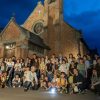
Tanteidan Jr. Kids Light Odyssey2025.08.21-08.23 Kayo Sasamoto + Noriko Higashi At the request of the incorporated association TOCOL, we held children’s workshops in three locations in Aomori Prefecture: Nanbu Town, Hachinohe, and Hirosaki. 20 to 30 children participated in each location, and with flashlights in hand, they conducted a Night Walk Survey and lighting experiments. For three consecutive days in the middle of summer, from August 21-23, we held children’s workshops in Nanbu Town, Hachinohe City, and Hirosaki City in Aomori Prefecture. This workshop was held at the request of the incorporated association TOCOL. They had heard there weren’t many design-related workshops in the area and asked the Lighting Detectives to come and hold one. Since it was during summer vacation, each session was fully booked with 20 to 30 children. Parents also actively participated, and in some sessions, there were more questions from the adults than from the children. Before each Night Walk Survey, the children also got to try painting the traditional Aomori craft of Kingyo Neputa (a goldfish-shaped lantern), so the workshops were packed with content. Even though the sessions were long, from 3 p.m. to 8 p.m., the children participated enthusiastically. ■Nanbu Town, Where Darkness Remains Nanbu Town is a district located about a 30-minute drive inland from Hachinohe, and it’s an area where a good deal of darkness remains. Here, the workshop wasn’t just about finding lighting heroes and villains while walking around. It also focused…

Children’s Workshop : Tokyo River Tour
Tokyo River Tour: Nihonbashi River + Kanda River + Sumida River2022.10.22 Sachiko Segawa + Mami Kono + Noriko Higashi The day after “Day of Light”, on October 22, we held a kids’ workshop for the first time in about three years. Due to COVID-19, we had not been able to organize it, but this year we launched the project with the strong wish to resume. This workshop, titled “River Tour Part 2,” revisited the Nihonbashi River – Kanda River – Sumida River route that we first explored in 2016. The idea was to let children experience the nightscape of central Tokyo from the riverside perspective, something they rarely get to see.On the day, 11 children and 15 adults including staff — 25 participants in total — joined the river tour. The participants gathered at Nihonbashi as dusk settled, and the boat set sail, heading west along the Nihonbashi River. Since most of the Nihonbashi River is covered by the Shuto Expressway, there is little chance to see the open sky. From time to time, the orange glow of high-pressure sodium lamps leaked through from the expressway above. The Nihonbashi River is also lined with many bridges, ranging from old to newly built, so one can see plenty of the “undersides” of both bridges and the expressway. Responding to a suggestion from the Chief Mende — “Try imagining how you would light these hidden sides to make them beautiful” — the children…

Kaoru Mende/ Lighting Design Workshop 2022
3-day Student Workshop2022.09.17-19 Noriko Higashi We held a three-day introductory workshop on lighting design, where professional designers from LPA shared their expertise. A total of 23 university students participated, making it a highly intensive program. Although some students were initially reserved, through city walks, group discussions, and social gatherings, they gradually built friendships, learned to respect each other’s opinions, perspectives, and styles of expression, and created a positive atmosphere that led to a fruitful experience. While Lighting Detectives’ activities have been restricted due to COVID-19, we are even more concerned about the limited opportunities for children and students to experience things that can only be done at their age. In particular, lighting design requires going to actual sites to observe and experience lighting firsthand, which is an essential first step. We carefully considered how to conduct a workshop that could communicate the importance of lighting design and the value of firsthand experiences, even during the pandemic, and were finally able to hold it over the September holiday weekend. (Noriko Higashi) ■Purpose of the WorkshopI once taught lighting design-related courses for about ten years at several universities, including the Department of Design at Tokyo University of the Arts, the Department of Architecture at the University of Tokyo, and the Department of Spatial Design at Musashino Art University. Each school had a different depth of interest in light, which made teaching a challenge. My own path into lighting design was, in fact,…
City Night Walk vol.70: Shimokitazawa & Kobe
The Lighting Environment of a Cultural Hub 2022.11.25 & 26 Naoko Oguchi, Shinichi Sakaguchi, Ryuji Hatta, Tomoya Furukawa, Azumi Okubo, Mutsuo Honma For the first time in three years since 2019, we held a night walk survey where everyone gathered in one location.Under the theme of “Lighting Environments in Cultural Hubs,” we explored two cities: Shimokitazawa in the Kanto region, where a series of exciting new developments have recently been completed, and Kobe in the Kansai region, known for its stylish urban atmosphere. Before the arrival of full-fledged winter, we conducted our first large-group night walk survey in about three years. The theme was “Lighting Environments in Cultural Hubs,” held in two locations: Shimokitazawa in eastern Japan and Kobe in the west.In Shimokitazawa, participants were divided into four groups. Two started from Odakyu Line’s Setagaya-Daita Station and the other two from Higashi-Kitazawa Station, each heading toward Shimokitazawa Station on foot.In Kobe, the walk began after taking in the nightscape from the summit of Mt. Rokko. ■Shimokitazawa – Group 1 Group 1 walked the route from Setagaya-Daita Station to Shimokitazawa Station. The path from Daita Station to the onsen ryokan “Yuen Bettei” was composed of modest stand lights and uplights on the trees, creating a lighting environment that felt calm and atmospheric. While the pole lights were somewhat glaring, their low color temperature provided a unified tone that made the glare less bothersome. Considering safety, the overall brightness felt appropriate, and the…

Light-up Ninja in Guangzhou
First Light-up Ninja in China!2025.06.11-06.12 Huangyi Lin Lighting Detectives debuted Light-up Ninja in China (June 2025, Guangzhou). Students created temporary night art with communities, combating light villains through sustainable urban darkness and cultural storytelling. From June 11 to 12, 2025, the “Light up Ninja” flash mob popped up in Nanting Village, Guangzhou University Town—lighting up the night for a moment, then quietly withdrawing. This was the first-ever ‘Light up Ninja’ event in China. We co-organized it with the Guangzhou Academy of Fine Arts, whose faculty members Prof. Lin Hong, Yang Yiding, and Lu Haifeng were excited to join. The event also received support from the Guangzhou Lighting Society and sponsorship, including technical expertise, from CDN Lighting. The main purpose of the event was not to light up the monumental kind, often found extravagantly lighting up towers, bridges, or castles. Instead, it involved simple experiments to find appeal in the typical, by illuminating scenes buried in daily life. We wanted students to learn not just about adding light, but also about eliminating unnecessary or unpleasant light to create beauty and comfort in the nightscape closest to us. ■ DAY 1: June 11Around 30 students, along with LPA and CDN staff and professors, gathered at GAFA’s Art and Light Environment Lab for the opening ceremony. Prof. Lin Hong gave a talk on “Nightscape Lighting for Nocturnal Living,” while Mr. Mende presented “Future of Urban Lighting” and “About Lighting Detectives.” Noriko Higashi then…
City Night Walk Vol.76: Tachikawa
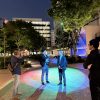
2025.04.25 Shinichi Sakaguchi + Naoko Oguchi + Noriko HIgashi The enormous terminal station of Tachikawa, with a combined daily ridership of about 410,000 passengers on JR and the Tama Toshi Monorail. The Lighting Detectives had visited Tachikawa in 2021 for a small-group night walk survey on a rainy day with just three people, but this time we decided to revisit with a larger group. This survey focused on the differences between the north and south exits of the station. During the COVID-19 pandemic in 2021, the small-group night walk survey in Tachikawa took place just after the large-scale development GREEN SPRINGS had opened. The live commentary showed scenes of walking from there. Due to the pandemic, there were almost no people around, giving a somewhat quiet atmosphere, but many expressed interest in visiting the calmly lit landscape there. We also wanted to investigate the bustling Friday night around Tachikawa Station, which ranks third in ridership after Shinjuku and Tokyo stations on the Chuo Line rapid service. Therefore, we split the walk between the north and south sides of Tachikawa Station to explore the area. ■Group A: Towards Tachikawa Station North Exit Group A, led by Captain Mende, conducted a night walk survey mainly around GREEN SPRINGS near Tachikawa Station North Exit. Starting from Tachikawa Station and along Sunsun Road under the Tama Toshi Monorail, there was some surprise at how the vast space immediately near the station is dedicated exclusively…

Round Table Discussion Vol.73: Review on Tachikawa
2025.05.27 Momoe Nomura + Noriko Higashi A follow-up meeting was held to review the night walk survey in Tachikawa conducted in April. Members gathered at the LPA office in Tsukuda and enjoyed lunch boxes while engaging in lively discussion. Plans for future activities were also discussed. A review session was held at the LPA office to reflect on the night walk survey conducted in April 2025 in Tachikawa, Tokyo. Despite all being within walking distance from the same station, each area of Tachikawa revealed its own distinct character, along with unique attractions and challenges. In particular, the large commercial complex GREEN SPRINGS, located on the north side of Tachikawa Station, was noted for its thoughtfully designed spaces. One especially memorable feature was the lighting on the staircase at the main entrance. The blue light, flowing like water down the steps, created an immersive, cave-like atmosphere when viewed from above—evoking a dreamlike ambiance. Participants also praised the pole lights that used RGB lighting to project overlapping colors onto the ground, turning illumination into an experience rather than merely a visual aid. These elements received high marks for their creativity and attention to user experience. However, in some parts of GREEN SPRINGS, it was pointed out that certain shops used bright white lighting, which clashed with the otherwise warm-toned atmosphere of the area.Near GREEN SPRINGS, under the monorail, several issues were also identified. For example, lighting on public artworks was overly intense,…