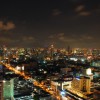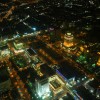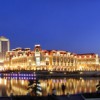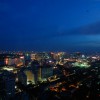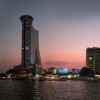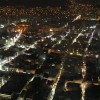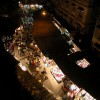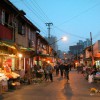
Bangkok is a center of on-going development in Southeast Asia. Solemn Buddhism culture and lively night markets have developed side-by-side to create a modern, but chaotic city full of energy. Amongst the harmonious charm of the old and new along the streets of Bangkok we survived the lighting environment. Open-air restaurants on the top floors of high-rise buildings are very popular nightspots. From the 55 floor the energetic and chaotic atmosphere of the city is absent. Amongst the rows of tall buildings sodium lamps flood the streets with light creating the impression of a sprawling modern city. Street vendors line the sidewalks. Moving deeper into the night market, the booths are covered with various lamps and neon arranged without much thought other than to show off the merchandise. At one booth warm colored lamps were used to showcase warmer tones of accessories and whitish light reflected off the spangled jewelry. An hour’s drive outside of Bangkok is the town of Amphawa, famous for the Amphawa Floating Market. Along the narrow river are many lights that reflect of the surface of the water. The reflections create depth along the Chao Phraya River and a lively buzz along the riverbanks and streets of the town.
The east end of Taipei is really growing and developing with many modern structures like the Taipei 101, the world’s tallest building, looming over the area. But off the main streets and in the back alleys, life is as usual as old buildings line the side streets of these unique little neighborhoods. The streets are alive with daily activity and residents come and go; a some what nostalgic picture. Looking west from the top of Taipei 101, the world’s tallest building, as the last of the day’s orange light breaks through the space between the buildings. From this view point you can really see how the old part of the city spreads out in the west as the streets get narrower and twist and turn. Jungshan North Road, one of the main thoroughfares of Taipei. Mounted on the streetlights lining the sidewalks are fixtures to illuminate the trees and small LED nodes programmed with different scenes of color lighting. Although the trees are big and imposing, the lighting has helped to create a pleasant pedestrian area. Every night is like a festival at the Shilin Night Market in Taipei. Many of unique smells、wares, and activity to go along with the jimble-jamble of lighting.
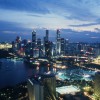
Singapore has been aiming for a nightscape that catches the viewer wondering, “Is this Asia or western Europe?” In this city of perpetual summer, lighting and air conditioning are necessities to be a modern city. Singapore’s intentions are clear as it aims to create its unique urban nightscape. Looking towards Victoria Harbor from the Millennium Tower at the clean, beautiful cityscape of this modern Asian city. Development along the riverside is progressing. Color lighting along Boat Quay creates a lively atmosphere at night as the lights amplify the refections and movement on the water. The facade of restaurants along Chjmes. This vertical plane of light creates a luminous street.
Developing Shanghai is propaganda for the world to see, as the streets of Shanghai seem to explode at night under the glitzy lights of this nightscape. One night the groups of row houses were removed, and the next, modern architecture appeared in their place. There was no time for theorizing about lighting culture, and the city became engulf in a flood of light. Shanghai is a gathering place for people from all over China. The bear light bulbs hanging in the streets cast skeptical glances over this developing city, but preserve the chaotic charm of the back streets. Daily development and innovation in the Pudong Xingqu District. Architecture from the colonial period is still standing in Bund, but the glitzy lights are more liable to catch one`s eye.
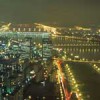
Competing with elaborately planned shop facades, intense Han River bridge illuminations, sign luminaries, and bare light bulbs, all flood the streets with chaotic lights. Multi-colored and thriving on pure energy, the different areas in Seoul are alive at night with their own individual style of light. Looking towards the Han River from the observation deck of KLI 63 Building. Myeongdong Commercial District. Light from sign luminaries flood the streets, a typical scene in many Asian cities. In the Dongdaemun Market, numerous bare light bulbs hang from the ceiling and reflect off the canopies overhead.
The infrastructure of Munbai is well built, creating a well-lit road surface from a horrendous traffic situation and colonial technology. In contrast, the chaotic bazaar boasts incandescent lights. Rich and poor, concentrated light and shadows all inhabit the same spaces. Looking down on the market, clothes and other daily necessities are laid out in narrow shops. The intense glow of a single light in front of each shop, also contributes to the public lighting environment. As the night cools off, the market becomes a clutter of people and our camera attracts the interests of many shoppers. A section sketch of the marketplace. 500lx registered at ground level in the middle of the narrow street, the same amount needed for an office environment.
Rustic scenery and relaxing daily life co-exist on Jejudo Island, where we stopped for a luxurious stay at a resort hotel. White light from fishing boats dot the horizon and clarify the boundary between the dark night sky and black ocean waters. Fishing boats dot the horizon in the bay. The light from a fish tank at a fresh fish restaurant catch the eye of pedestrians along the street. Colored spotlights cast out over the ocean waters along the Coastal Highway.
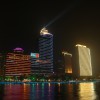
Guangzhou on the north shore of the Pearl River Delta As the saying goes “Eating in Guangzhou,” Cantonese cuisine is prepared in a wide variety of ways using almost anything under the sun. Residents carry that energy into the lighting environment that is equally diverse and full of activity, maybe a symbol of the recent economic development in China. Guangzhou Pearl River In the city limits of Guangzhou the Pearl River runs from west to east. The streets and buildings along the river face the water with people enjoying the night view from various places by cruising, strolling, and dinning. Guangzhou Xia Jiu Lu The pedestrian shopping street Xia Jiu Lu is famous for old shop houses and as a redeveloped entertainment district. Along with Chinese type red lanterns that line this street are an infinite amount of neon and other luminous signage that create a chaotic and exciting atmosphere. Shenzhen from Saige Plaza Tower After being labeled a special economic zone in the 1980`s, the population escalated and transformed the Shenzhen area into a gigantic urban beat. The city grew overnight like an illusion from a virtual world, but the population and high-rise condominium boom keep growing; which makes for an interesting nightscape.
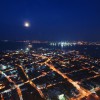
New development and activity at the fishing port generate energy in Korea’s second largest city, Busan. In sharp contrast with the dark waters, stores with flashy neon signs edge the perimeter of the bay and people sit mesmerized along the beach, staring into the black ocean, as the summer nights slip by. Looking down on the city from Busan Tower. The Jagalchi Market, full of activity and the smell of fresh fish, is flooded with fluorescent light. Long into the night, people enjoy their time along Kwanghalli beach.
Tianjin is situated 150km east of Beijing and easily reached in a 30-minute high-speed train ride. Historically, foreign influence including the UK and Germany has shaped the western-style architecture and streetscape that this city is famed. Tianjin also poses the largest harbor in Northern China, a gateway for this economical and technical development zone. Upon exiting the main station, a panoramic view of the city awaits. The western architecture, remnants from the foreign settlements era, is illuminated in low-color temperature light and stands in contrast to the newly constructed skyscrapers. A historical western architectural structure is now used as a banking facility. At night, orange-colored fluorescent and high-pressure sodium lamps softly illuminate the facade. Downtown is also bustling with construction. During the day the area is swarming with shoppers and construction site workers. At night, mega size digital media, neon signage, and colorful lanterns are everywhere, with even more foreseeable in the future as the construction boom continues.
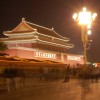
From post-Olympic pride to the celebration of the 60th Anniversary of China as a nation, China is a very vibrant place. In this country where government is central, we discovered elaborate, but regulated lighting, lighting embellished by economic development, and traditional lighting. The old and new intermingle along the streetscape of this constantly changing city. An air of excitement in Tiananmen Square, Beijing. One of the largest plazas in the world, it is brilliantly illuminated and crawling with tourists late into the night. The elaborately controlled lighting is overpowering, a possible symbol of the nation’s authority. A relic alleyway from the Ming Dynasty winds through a residential area. Traditional neighborhoods are built to the human scale with the glow of lantern light dispersed among the alleyways. People are drawn to the lit doorways and their energy spills out into the streets. After 10pm the facade lighting dims and the architectural structure of the National Stadium, or “Birds Nest” is highlighted. The icon seems to be wrapped in a silent kind of glory. Many of the high-rise buildings in the CBD are illuminated at night, a reflection of the recent economic boom.
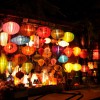
Hoi An was once a flourishing intermediate city of trade. Now, the city is trying to protect the traditional streetscape to appeal as a tourist destination. The nostalgic lantern festival, which was held every full moon, is being reintegrated, as they take on a “back to the basics” attitude towards modern city life. Compared to cities developing vigorously, but blindly economically, Hoi An growth is more diverse. Street vendors line alleyways with festive displays of lanterns. The fantastic atmosphere raises the mood and adds a functional amount of light to these dim side streets with out any street lighting. Built in the 16th century, the Japanese Covered Bridge is a focal point of the old streetscape. Many lanterns hang from the ceiling and spotlights mounted between the roof and bridge softly highlight its features. Inside, cafes are also filled the lanterns, great for creating a relaxing environment. At first glance candles or incandescent lamps seem fitting, but these lanterns are actually all fitted with fluorescent lamps.
The largest city in Vietnam, Ho Chi Minh, has developed into the center of economic activity for the country. The city is in the mists of a huge transformation with new building wherever you turn. We will have to wait and see how the streetscape and lighting environment will be altered. Birds-eye view from the tallest building in the city at the time of survey. Lights from construction sites all over the city are an undeniable element of the nightscape, but it won’t be long before several skyscrapers begin to dot the skyline of Ho Chi Minh. The principal user of the streets of Ho Chi Minh is the constant stream of motorbikes. Street lighting consists mainly of functional roadway pole lighting and the headlights of these motorbikes. They seem to have forgotten the sidewalks and pedestrian traffic. From restaurants along a main street to the night market and department stores, fluorescent lighting is everywhere. This is Asia before the introduction of LED`s.
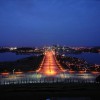
Putrajaya has been developed as the new center for government since its functional move from the former capital Kuala Lumpur. The city planning is very representative of the nation’s authority and symbolic in nature with a very elaborate lighting plan in progress. This main road is a prime example of the sense of authority this city invokes. Its symmetrical design and point of view are very important aspects. The lighting methods and luminance levels are also very detailed and divided by function. View of the office of the Prime Minister and Putra Mosque in the center of Putrajaya. The lighting for this Islamic style of architecture reflects in the water and tints it blue for a fantasy like nightscape. The center of Putrajaya is built around a man-made lake, making bridges an integrate part of city life. Many unique bridge designs are part of this urban landscape.
Georgetown is a town with a very colonial atmosphere. The entire city still has many surviving historical landmarks from its period of British rule and a collective colonial feel to its cityscape. However, it is very different then the beauty displayed in a European city, with a more lived-in feel. A panoramic view of Georgetown from the observation tower in the city center. From above, light spills out from dark city blocks of buildings to highlight the few roadways. From this location both the city and bay are visible, making it a prime viewing spot and a chance to slow down and take in the view. Green spotlights up lighting rows of trees were visible in several places around the city. It’s a little eerie at first, but the foliage seems very vivid and is a unique characteristic of this quiet city. During the day this is not a heavily traveled area, but when the sun goes down food booths line the sidewalks and festive lanterns hang overhead, a typical reminder of Asian inspired lighting.
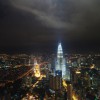
Kuala Lumpur is one of the major cities of Southeast Asia. Recent economic grow has transformed the city, with numerous skyscrapers now dotting the skyline. The outdoor market is a conglomeration of people who seem to naturally congregate here, creating a vibrant and energetic atmosphere. The Petronas Twin Towers, a world-famous symbol of Kuala Lumpur, are brightly illuminated, almost to a dangerously intense level. However since the surrounding cityscape is very dark, the sight of the glowing towers creates an almost beautiful nightscape. Bukit Bintang is the predominant entertainment district in Kuala Lumpur. The area is a showcase for many different lighting methods, but without uniformity. An assortment of lighting elements was my first impression on a walk down the street. Away from the center of the city, Titiwangsa Park is a popular nightscape viewing spot for young couples. Even at this distance the Twin Tower’s reflection on the surface of the lake is a powerful reminder of its overwhelming presence.
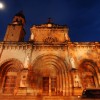
Because of previous colonial rule and occupation by Spain, USA, and Japan, many different cultures are accepted in the Philippines. As with architecture or cuisine, the uniquely arranged culture is also visible in the lighting environment. But behind the bright lights and in the shadows, we also saw a gap in the standard of living. For many people the church is a stronghold in their lives. The walls of this church were brightly lit with fluorescent lights and for relief from the heat several fans are also mounted on the walls, a nightscape very familiar in Asia. The floodlights bath the facade in featureless, flat light. In the area of town where Spanish architecture is still preserved hang sodium lamps, giving everything, walls, ground, and buildings an orangish glow. The dark green vegetation by the day is lost, but the historical atmosphere of the street seems like a scene out of a period movie. In the poorer areas of the city burned out streetlights are everywhere, but in the wealthier areas high-rise apartments and office buildings stand tall and just like in any other big city, there is a lack of individualism in this nightscape. Compared to the intensity of light in adjacent neighborhoods, the economical gap is prominent.
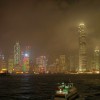
Spring of 2007 in the city-state of Hong Kong; a million dollar nightscape along the waterfront, rows of neon signs create the streetscape, and everywhere you look construction sites for new skyscrapers. The transformation of the city is laid out before your eyes, past present, and the future urban landscape of this small, but powerful city. Along the Hong Kong waterfront a nightly narrated light show thrills tourists with artistic images. Surprisingly, the local government and business community coordinate this show. Streets in the Kowloon District are lined with storefronts that still have an old-fashioned flavor. While walking down these streets I realized that with surrounding buildings and lights of the modern city are out of sight. Is this old street deliberately shielding the buildings to preserve this old district? If so, we have stumbled upon a rare model for urban lighting. Macao, a city in the middle of a construction boom and developer’s dream. Like Hong Kong, large-scale complexes that have taken over entire city blocks are central to the urban layout. Especially on Taipa Island, construction sites are numerous and building not only expand up, but also out. Buildings after building line the streets.
Bangkok, a city in a swirl of on-going change. In our previous survey of Tokyo’s Kanda River, we discover that the backs of buildings face the river creating and area of dark contrast in the middle of the city. But here along the Chaopraya River the opposite is true with the front facades lining the waterfront. Open-air restaurants and bars occupy the rooftops, as the spectacle of the city spreads out below. The Millennium Hilton, Bangkok, opened in May of 2006, is the first major hotel brand to open a hotel in the country in 20 years. The hotel boasts 543 riverfront rooms. With a UFO-like disk on top of the building, the cool-modern design stands tall among the neighboring structures. Along the riverfront, a private pier is provided for guests and dinners at the restaurant and bar. As river taxis come and go, the warm spots of light along the river reflect and shimmer on the water surface. Scirocco, one of many open-air restaurants, is approximately the same height as the special observation room at Tokyo Tower, 246 meters above ground, but without the glass barrier!. Without a glass window the lights of the city below seems so much more clear and real!! At the next table sat an older coupe that came to watch the sunset. The woman was surprised when presented with a big bouquet of flowers, undoubtedly a romantic gesture from her husband. A single candle…
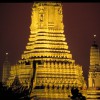
In Bangkok, the development of giant commercial facilities continues, as modern times blend with Buddhism to create the nightscape. The light from architecture, high-class restaurants, and shopping centers of these civilized, modern times are built right along side the fluorescent lights of roadside stands and vendors. Wat Arun, The Temple of the Dawn, illuminated; above all, gold is the symbol of culture and power in Thailand. Wat Arun from the opposite shore of the Chao Phraya River. The sunset also helps to convey the feeling of a country for the gods. Florescent lights shine on the street vendor`s restaurant signs, but incandescent lamps are used in the showcases.