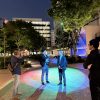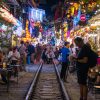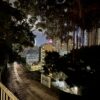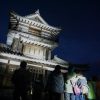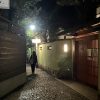

Yaesu & Otsu Night Walk Review 2023.04.28 Noriko Higashi For the first time in about three years, the Lighting Detectives held an offline (actually a hybrid connecting with Kansai) Lighting Detectives Salon. This was the first salon since the Lighting Detectives office moved from Shibuya to Tsukuda. The excitement of the members who were eager to come to the new office was beyond imagination, so much so that I had to raise my voice a few times because I couldn’t hear the group members who participated online. The content of the salon was a review of the night walk survey in Yaesu and Otsu and a discussion of the theme for the next city walk. In the review of the Yaesu night walk survey, some people expressed their hope that the nostalgic red chochin lanterns with a rich Showa-era atmosphere that still exist in the midst of steadily advancing development would remain, there was a presentation on the various street lights in the Yaesu area, a review of handmade lights on the cherry blossoms that were just in full bloom, and a discussion of the light environment in the newly completed Yaesu Midtown and the Yaesu Underground Mall that is undergoing renovation. In the Otsu review, a student member of Ritsumeikan University who had just joined the group reported on the light environment along and around Lake Biwa. The color lighting of the Lake Biwa Hana Fountain reflected on the lake’s…
2023.03.24 & 04.21 Satoshi Tamura+ Amane Kotani+ Noriko Higashi+ Shouya Koizumi+ Moana Osakabe+ Hina Inagawa The first Lighting Detectives activity of 2023 was a night walk survey in Yaesu, where Midtown Yaesu opened in March and large-scale development is planned for the future. They documented the pre-development area and at the same time looked around the new light environment in the area where development is underway. Mr. Suzuki of the Honda Foundation, whose building is scheduled for demolition, joined us on the survey and explained the history of the area and the Honda Building. ■ Group 1: North side of Yaesu Street Group 1 toured mainly the north side of Yaesu Street. Although many areas were surrounded by temporary fences and inaccessible during redevelopment work, we were able to see the old drinking area and old buildings that were in use before the redevelopment. Although there were some villains in the old buildings, the drinking area was unanimously voted as a hero for its nostalgic impression with a moderate brightness of 55lx, 4,500K. The majority of the participants were of the opinion that they would like this townscape and atmosphere to remain in Yaesu after the redevelopment. The greatest hero of the day was the rows of cherry trees along Sakura-dori Street. We were able to walk under them just as they were in full bloom on the day of night walk survey. Here, temporary lighting was installed later and the…
2025.1.16 Noriko Higashi In past years, we held a joint year-end activity report meeting with the Lighting Detectives’ corporate sponsors and members. However, this year we decided to hold separate gatherings. The aim was to create a more relaxed space where we could take our time to hear each member’s hopes and ideas for the Lighting Detectives’ activities in 2025—but with so much to discuss, the two-hour session flew by in an instant. During the Busan presentation, member Kubota shared vivid impressions of the bustling local markets and the evolving Gamcheon Culture Village, where the shift to LED lighting is putting the area’s photogenic charm at risk. He also described two contrasting beach areas: Haeundae Beach, brightly illuminated all the way to the shoreline, and Gwangalli Beach, which—though lacking direct beach lighting—is still brightly lit thanks to surrounding signage and ambient light from the nearby entertainment district. During the review of the Kagurazaka fieldwork, which was conducted in two groups, reports were given by Lighting Detectives members Kotani and Tawara, who served as group leaders. Kotani, leader of Group 1, titled their route the “Kagurazaka Alley Immersion Course”, focusing their walk primarily on the backstreets. According to her report, as participants made their way from Iidabashi toward Kagurazaka, they first encountered an overwhelming number of brightly lit signage at the entrance, which felt inconsistent with the traditional image of Kagurazaka. However, once they entered the narrow alleys, they found that…
2025.01.15-01.19 Masafumi Yamamoto + Yuichi Anzai About 65 years ago, a vast area at the foothills of the Himalayas was divided into districts for government functions, commerce, education, and residences, with separated roads, creating a landscape completely different from other Indian cities. This survey takes a multifaceted approach to examine Chandigarh’s urban lighting and nightscape, while observing the natural light expressions inspired by Le Corbusier’s architecture. ■Light RaysFirst, I quote the words of Le Corbusier:“Chandigarh is planned on a human scale. It connects to the infinite universe and nature. It is a place for all human activities where citizens can live a rich and harmonious life. Here, the radiance of nature and the heart is within our reach.”A vast paved ground is moistened by a dense white mist. About 180 meters ahead from where I stand, the High Court building faintly appears. Its enormous facade faces east and west. The sky behind peeks from beneath the portico, and the rays of light passing through it gently caress the huge concrete pillars painted red, yellow, and green, casting the morning sun on the ground. In this city, I encountered several lyrical daylight scenes. I believe this is because the philosophy of Atelier Le Corbusier in Paris, who designed this Capitol Complex, also extended to the urban layout. Until now, Chandigarh has been discussed mainly from an architectural viewpoint. However, I feel it has not been explored much from the perspective of…
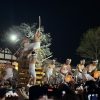
2025.04.19 Hikaru Kimura + Noriko Higashi When we first held a workshop in Hida Furukawa in 2023, city hall staff told us just how deeply the people of Furukawa cherish their festival. At the Hida Furukawa Festival Exhibition Hall, we were given explanations about the history of the festival and the stalls. We also had the opportunity to see the storehouses where each neighborhood keeps its stall, as well as the lantern stands placed in front of individual houses. This inspired us to head to Furukawa with the intent of exploring and documenting the festival scenes that are so important to the local people. The Furukawa Festival, held annually on April 19th and 20th, is designated as a UNESCO Intangible Cultural Heritage and a National Important Intangible Folk Cultural Asset of Japan. It’s a community-wide celebration so deeply rooted in the town’s identity that even former residents living outside the area for school or work return home specifically for the festival. The event centers around two main elements: the “Okoshi Daiko,” a ritual where a giant drum is paraded through the town and beaten throughout the night, and the “Yatai Procession,” where each neighborhood pulls its own stall through the streets. When we first visited Furukawa in April 2022 for a workshop, it happened to be just after the festival had ended. The excitement had slightly faded, and the town was in the midst of cleanup. During that time, we…
2025.01.08-01.11 Misuzu Nakamura + Sachiko Segawa Kitakyushu City was finally ranked No.1 in the latest “New Three Great Nightscapes of Japan” by the Night View Tourism Convention Bureau. The city has actively utilized its local assets—such as the industrial landscapes developed from the Yahata Steel Works, historic streetscapes, and a terrain of hills and bays—to enhance its nightscape. Surprisingly, this city had not yet been surveyed by the Lighting Detectives, so we set out to rediscover its unique allure. ■Learning What Makes a Compelling Nightscape Before beginning our survey, we visited Ms. Miki Matsushita, a lighting designer who has long been involved in Kitakyushu city’s nightscape—from formulating the nightscape guidelines for the Kokura city center to planning lighting for various facilities both in and outside the city. We visited her lighting design office in Fukuoka City, which felt as comfortable and refined as an art museum. There, we had the opportunity to hear a wide range of storie—from the time she spent developing the guidelines to her mindset as a lighting designer. One thing that left a lasting impression was her comment that guidelines shouldn’t become manuals, but rather serve as guidebooks. It became clear that her approach, rooted in deep empathy for the local community, allowed her to foster unique charm through the application of the guidelines in ways that reflect the distinct character of each area. (Misuzu Nakamura) ■Kokura Station Area: The Gateway to Kitakyushu and a Hub…
2024.11.21-11.22 Shunichi Ikeda + Yuta Shibata Yokkaichi has developed as an industrial city. The striking contrast between its dazzling factory nightscape and the increasingly organized city center stands out. We conducted a survey of the urban lighting where industry and daily life coexist. ■About Yokkaichi Yokkaichi has a long history, having developed as a port town facing Ise Bay. During the Edo period, it prospered as a post station along the Tokaido route. The city’s name originates from the markets that were held on days ending in “4.”After World War II, Yokkaichi grew as an industrial city with the construction of a petrochemical complex during Japan’s period of rapid economic growth. However, air pollutants emitted from the complex caused a serious pollution-related illness known as Yokkaichi asthma.Today, the city has regained a comfortable living environment. Residential areas, shopping streets, and everyday life now extend right alongside the industrial zones. ■3D Factory Nightscape Yokkaichi, with its history of industrial development, began drawing attention during the early 2000s factory nightscape boom. The expansive factory nightscape of the Yokkaichi petrochemical complex, which stretches about 10 kilometers north to south, is counted among Japan’s five greatest factory nightscapes. What makes it especially unique is that the nightscape can be viewed from the sky, land, and sea—earning it the nickname “3D Nightscape.” Particularly photogenic views of the factory nightscape have gained significant popularity. From the perspective of the Lighting Detectives, we conducted a survey of…
2024.10.01-10.05 Atsushi Itakura & Genki Watanab When thinking of Mongolia, many people may imagine vast grasslands and nomadic gers, but therapidly developing capital city of Ulaanbaatar also deserves attention.Despite being only about five and a half hours from Japan, few people are familiar with its currentstate.This visit, conducted through an urban lighting survey of Ulaanbaatar, provided a valuableopportunity to discover an unexpected side of Mongolia. ■What Kind of Place Is Mongolia?When we think of Mongolia, the first image that often comes to mind is of vast grasslands stretching out endlessly, dotted with “gers”—the traditional dwellings of nomadic herders. For Japanese people, there’s also a sense of connection through cultural and historical ties, such as the shared heritage linked to the Mongolian spot (mongolian birthmark) and the many Mongolian sumo wrestlers who have found great success in Japan. Despite being only a five-and-a-half-hour flight away from Japan, Mongolia is a country that feels both near and distant—close in proximity, yet far in familiarity. Though we may feel an affinity toward Mongolia, the reality is that most people know very little about its present state. With this simple curiosity as our starting point, we embarked on a 5-day, 4-night survey of urban lighting in Ulaanbaatar, the capital of this rapidly developing nation. ■Topographical Characteristics of Ulaanbaatar Ulaanbaatar covers an area of approximately 4,700 square kilometers and is divided into nine districts. The city is flanked by hills to the north and south,…
Hide and Seek with Light, a reflective art workshop2024.12.19 Hu Lin + Xianyu Liu + Huangyi Lin On 19 December 2024, Lighting Detectives returned to Shenzhen, promoting sustainable urban design and light pollution awareness through creative community art. Eighty participants from diverse backgrounds gathered in Lianhua Mountain Park and transformed into “light artists”. After a five-year absence, on 2024 Dec. 19th, the Lighting Detectives returned to Shenzhen with a creative public event, Glow Shenzhen, claiming the First Gold Award in Glow Shenzhen 2024’s Infinite Illumination program. Collaborating with China Academy Of Urban Planning & Design Shenzhen Branch and Shenzhen Illuminating Engineering Society, the workshop focused on combating light pollution and preserving natural darkness in urban environments. Eighty participants from diverse backgrounds gathered in Lianhua Mountain Park and transformed into “light artists” through hands-on experiments. Using adjustable handheld flashlight and reflective materials, we explored the delicate balance between illumination and darkness, crafting temporary art installations with eco-friendly red lighting. Before the creative phase, organizers held a brief introductory lecture under the dome outlining the event’s core objectives. Our chief, Mr. Mende and Ms. Kasai shared the founding story of the Lighting Detectives and the past initiatives, particularly Shenzhen Nightscape 2030 event from five years ago. Attendees showed particular interest in signature programs such as Light Up Ninja, Night Walk and Children’s Workshop. At the end of the lecture, Mr. Lin Hu demonstrated the unique properties of different materials and guided participants…
2024.11.21-24 Chuanyi Liu + Jiang Kunzhi Hanoi, the capital of Vietnam where history and modernity blend seamlessly. Thanks to its rich cultural heritage, it has established itself as one of Southeast Asia’s premier tourist destinations. In this city where the Old Quarter, St. Joseph’s Cathedral, and Lotte Tower coexist, we explore Hanoi’s nightscape culture through the lens of light. Vietnam, a populous nation of 100 million people, has Hanoi as its capital serving as the political, cultural, and economic center as well as a key transportation hub. In July 2020, the Vietnamese government issued Decision No. 1129, promoting the development of the night economy and designating Hanoi as the pilot city for this initiative. The city’s rich heritage and unique cultural arts provide favorable conditions for the growth of Hanoi’s night tourism. Hanoi’s urban lighting exhibits distinct characteristics depending on the area and function. In the Old Quarter, narrow alleys and historic buildings create a lively atmosphere with bustling night markets. The nighttime lighting here mainly consists of creatively designed decorative lights at individual shops, which enhance the vibrant energy. Around Hoan Kiem Lake, soft lights reflected on the water’s surface and the illumination of the Turtle Tower standing in the lake harmonize to create a calm and serene nightscape. In the new urban area, modern building facades and bright LED lighting present a contemporary and sophisticated city image. Dynamic light displays further emphasize the lively spirit of the area….
3-day Student Workshop2023.09.16-09.18 Yumi Honda + Noriko Higashi The second Lighting Design Camp by Kaoru Mende was held. This project is an intensive course to learn about lighting design directly from lighting design professionals over the three-day weekend in September. The 24 students from all over Japan spent dense three days together in lectures, city tours, discussions, and proposal writing. Kaoru Mende/ Lighting Design Workshop, which started last year, was held again this year at the LPA office in Tsukuda for the three-day weekend in September, inviting university students from all over Japan. The staff held multiple meetings prior to the event to review last year’s program and enhance the content of the lectures. The program structure was also restructured to ensure uninterrupted concentration. ■Day1 Lecture & Night Walk SurveyIn the previous program, the classroom lecture was concentrated on the first day.This time, however, the classroom lectures were divided into two days: Day 1 and Day 3. The first day consisted of 8 lectures, including lectures on the philosophy and concept of lighting design, basic knowledge of lighting – vocabulary and demonstration of light effects, lighting design process, urban environmental lighting, etc., as well as lectures on light pollution and lighting design in tourism area development by a guest instructor.Although there was a break in the middle of the lecture, it was quite a long lecture, lasting four and a half hours. Each lecture explained lighting design from a different…
Did you know that there are over 1,200 members of the Lighting Detective spread across the globe? Seeking to foster connections among our international members, who rarely have opportunities to interact, we hosted our first-ever online talk event and YouTube video feed. For our inaugural event, we focused on the theme of “Nightscape in Your Town.” Four members from diverse locations—Swansea, Basel, Colombo, and Takamatsu—shared their unique perspectives on the night scenes of their respective cities. Our first speaker, Howie Ruan, is a doctoral student in Swansea, a seaside city in the southeast of UK. He shared beautiful photographs capturing the daily changes in the sky, the moon’s glow, and the long blue moment in this tranquil town. His presentation conveyed a deep appreciation for the distinctive beauty of European lighting, contrasting with his hometown of Guangzhou. Next, we heard from Michael Hübscher, a lighting designer based in Basel, Switzerland’s third-largest city. He discussed the evolution of Basel’s cityscape over its long history, as well as recent debates surrounding the sudden emergence of colorful façade lighting. I’m particularly intrigued by Basel’s unique carnival, where the city lights are extinguished and lanterns illuminate the streets. Our third speaker was Nilusha Rajapaksha, a lighting designer based in Colombo, the capital of Sri Lanka. She highlighted concerns about light pollution and safety in popular tourist areas of Colombo, as well as the slow pace of LED conversion for street lighting. Her insights into…
3-day Student Workshop2024.09.21-23 Noriko Higashi Kaoru Mende’s third annual Lighting Design Workshop took place over the September long weekend. Twenty students from diverse university backgrounds came together to delve into the foundational principles of lighting design. Launched in 2022, this intensive three-day workshop brings together professional lighting designers to share their expertise with aspiring students. The jam-packed schedule, running from 10 AM to late in the evening, features eight lectures by LPA staff, two guest lectures, hands-on luminaire sessions, a city night walk, group projects, and final presentations. The program is designed to provide a comprehensive learning experience, combining theoretical knowledge with practical application. A dedicated team of 19 LPA staff members poured countless hours into crafting this enriching curriculum. ■Day 1: Lectures and City Night Walk Our workshop provided a comprehensive overview of lighting design, covering concepts, processes, technical terms, and real-world examples. External experts were also invited to discuss the significant role of lighting design in urban development and the potential negative impacts of poorly planned lighting, such as light pollution.In the afternoon, students were divided into three groups and embarked on night walk of different neighborhoods: Yurakucho, Azabu-juban & Roppongi, and Shimbashi & Shiodome. Over the two-hour walk, they were able to apply their newfound knowledge of illuminance, brightness, glare, color temperature, and overall lighting quality to real-world environments. Recognizing that perceptions of light can vary, students were encouraged to discuss their personal “heroes” and “villains” of…
2024.10.25 Noriko Higashi We held a round table discussion at the LPA office to review the Musashi-Kosugi city walk that took place in early October. (Unfortunately, I forgot to take any photos!) As we walked through different areas of Musashi-Kosugi, each with its unique characteristics (development areas, old shopping streets and residential areas, and the area connecting Musashi-Kosugi and Shin-Maruko stations), we discovered a variety of issues, challenges, and positive aspects, both specific to each area and common across them. It was surprising to find such diverse characteristics within walking distance of the same station. One common issue we observed in all areas was excessive brightness and excessive darkness. While the glare from streetlights and security lights is not unique to this city, we found that even in quiet residential areas and newly built high-rise apartments, there was an abundance of glaring light. During the discussion, we heard various concerns about lighting in dark areas. For instance, participants mentioned that it was difficult and scary to enter the back of first-floor parking lots due to insufficient lighting, and that the lighting was too bright at eye level but dark at the feet. Some also pointed out that trees had grown too large, blocking the lights. Additionally, at Musashi-Kosugi Station’s bus rotary, the color temperature differences between the bus stop lights and the streetlights created an inharmonious space. This issue was attributed to different management entities within a single space. While…
Night Walk in Aoyama and Photo Taking2024.11.02 Sachiko Segawa Let’s go out to Tokyo at night and find lighting heroes and villains!Under the cooperation of Taritari Inc., we held a children’s workshop in 2024 with this theme. Despite the rainy weather, 10 children participated. First, they listened to a talk about light from our chief, Mr. Mende, and then Ms. Mizuno from Taritari gave a talk about the old townscape around Omotesando Station. After a brief orientation, we headed out into the rain to find lighting heroes and villains. Originally, we planned to divide into four groups at the Omotesando intersection and explore four different areas, but due to the heavy rain and the number of participating children, we decided at the last minute to walk the same route together as one group. First, we walked from the office buildings along Aoyama-dori to Nonoaoyama, a mixed-use residential and commercial complex built on the site of the former Aoyama Kitamachi apartments. Then, we strolled along the adjacent walkway with its greenery and stream. Despite the rainy weather and limited visibility, the children enthusiastically pointed their cameras at the lights that caught their interest, capturing photos of the calming lights on the walkway and the blue illuminations of the restaurants beyond. As this workshop was primarily for upper elementary school students, some of them made comments that were as insightful as those of adults. After leaving the walkway, we walked through a…
– From Industrial Zone to Japan’s Leading Tower Mansion City –2024.10.04 Yutaka Enomoto + Yuko Nakayama + Noriko Higashi Musashi-Kosugi, a major transportation hub served by the Tokyu Toyoko Line, Meguro Line, JR Nambu Line, Yokosuka Line, Shonan-Shinjuku Line, and the Sotetsu Line, offers convenient access to both Yokohama and Tokyo. Over the past decades, the area has undergone rapid development, leading to a significant increase in its population. However, the station area still retains traditional shopping streets and izakaya districts, creating a striking contrast with the towering high-rise buildings. This walk focused on exploring the coexistence of these new and old elements of the area. Historically, Musashi-Kosugi flourished as a boat crossing on the Nakahara Kaido during the Edo period. Later, it became home to numerous factories. However, as these factories relocated, redevelopment plans were initiated, transforming the city’s landscape. The changes over the past decade have been particularly dramatic, with a population increase of 60,000 compared to 20 years ago. ■Group 1 Group 1 focused on exploring areas with a nostalgic atmosphere, including low-rise residential neighborhoods and traditional shopping streets. The shopping streets had implemented creative lighting installations to enhance the atmosphere. In particular, an “analog interactive lighting” system that lit up when a hand-operated handle was turned generated both positive and negative reactions. The view of high-rise apartment buildings from the lower levels is a unique sight in Musashi-Kosugi. While the lights spilling out from the high-rises…
Investigating the lighting of Kagurazaka known for its charming blend of Japanese and European cultures, reflected in its history, culture, and dishes.2024.11.18 Amane Kotani + Akira Tawarada + Noriko Higashi Our final city walk of 2024 took us to Tokyo’s Kagurazaka. This popular area is lined with small alleys filled with trendy cafes, restaurants, and izakayas. Tucked away behind the distinctive cobblestone streets are high-end ryotei (traditional Japanese restaurants) and French restaurants without signs, creating a hidden gem atmosphere. It’s a perfect neighborhood for strolling, but what about its lighting? We divided into two groups of eight and set out to explore. Kagurazaka is a town with a hidden charm, blending the atmosphere of Edo with French culture. The cobblestone streets are lined with historic buildings and unique shops, creating a nostalgic atmosphere. The area is particularly known for its dining options, with hidden restaurants and cafes offering delicious food and wine, making it popular with tourists. We explored the nighttime scenery of this charming town. ■ Team 1: Kagurazaka Alleyway Exploration RouteTeam 1, under the theme of “Kagurazaka Alleyway Exploration Course,” started from Iidabashi Station and explored various alleys. We were deeply impressed by the entire neighborhood’s high level of interest in lighting. There was a wide variety of lighting, such as illuminating shop signs while ensuring the safety of pedestrians and installing footlights on shop walls. As soon as we started our walk, we came across the illuminated…
2024.11.15 Noriko Higashi + Hikaru Kimura This is the second night walk event, following the workshop held in Hida-Furukawa in August 2023. This time, we ventured to Kamioka-cho, also within Hida City. The centerpiece of this event was an experiment to illuminate Kamioka Castle. We tested various lighting techniques to determine the most effective way to illuminate the castle and enhance the nightscape. Additionally, we walked around the town to observe the existing nighttime environment and discuss our findings. Before the experiment, our chief, Mr. Mende, provided a background on urban lighting and shared examples of successful lighting redesign, such as those in Nagasaki. After the introductions, we proceeded to Kamioka Castle to conduct the lighting experiment. We began by observing the existing lighting. Currently, the castle is illuminated by several 1kW floodlights that were installed quite some time ago. Some of these lights were not functioning. For our experiment, we used high-powered flashlights with three dimming levels and red, blue, yellow, green, and orange color filters. We tested various combinations of colors, brightness levels, and lighting positions to determine the optimal illumination. Participants were amazed at how dramatically the castle’s appearance changed with different lighting setups and shared their preferences. However, when they learned that even using 20 of our 8W flashlights would only consume about 160W of power, they were surprised at how much energy the current lighting system was wasting. Some participants expressed concerns that illuminating the castle…
Historic Meet Light @ Hong Kong Island Mid Level2023.09.05 Makalin Wongchinchai This year, Hong Kong Lighting Detectives organized a night walk event at Hong Kong Island Mid-Level. We invited some college students and designers to join us. Let’ s explore the night walk with us and see when historic lights meet. Detectives explored the special relationshipand imapct lighting in the architectural environment . The old central area of Hollywood Road in Hong Kong is well known for its rich architectural heritage, featuring a mix of Eastern and Western styles that reflects its colonial past. We have curated a route that allows us to discover some of the most significant historic and modern-day elements. In addition, a walk through the Sun Yat-sen Historical Trail, where we can still find traces of his revolution left on this land. This time, we invited college students and designers . As we were exploring the historical site, we found that the route was relatively dark . Most of heritage architectures, such as medical sciences museum, Man Mo temple or the stairs during the night walk, don’t have lighting. So it makes these heritage buildings disappear at night and creates the dark area on the stairs, which makes it difficult and unsafe to walk through these stairs. The light trespass and glare are also the main issues in this area where you may know that Hong Kong is one of the cities with the most light…
2023.10.17 Noriko HIgashi Kozushima-Island is the second island in Japan to be certified as a starry sky protected area by the International Dark Sky Association in 2020. The island is working to create a town free of light pollution by replacing street lights that do not send unnecessary light into the sky. Through a workshop, we found out how the villagers feel about the nighttime environment that has changed as a result of these efforts. The International Dark Sky Association is a group of astronomers, doctors, and environmentalists from around the world working to address the problem of light pollution. It grants certification called International Dark Sky Places to cities and places around the world that have taken measures to prevent light pollution. The hurdle is high, as they have to clear fairly high standards to be certified.Kozushima-Island received that certification in 2020. About 600 streetlights and security lights on the island were replaced with ones that do not leak light into the sky. The color temperature was also standardized to 2700K. In addition to protecting the starry sky, sea turtles, which have not been seen for decades, have been seen laying eggs, greatly contributing to the improvement of the surrounding ecosystem. Residents’ reactions to the replacement of the street lights were generally positive, with many saying that they were comfortable because the white, overly bright lights were gone. However, some said that they felt unsafe in some areas because of…