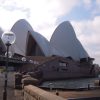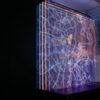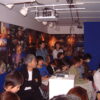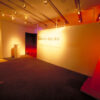
Date: October 13, 2004-November 8, 2004Place: Matsuya Ginza 7F Design Gallery 1953Host: Japan Design Committee The place is Tokyo. The year is 2050. The topic is light. One hundred and nineteen professionals from various fields, architects, designers, photographers, critics, were brought together to discuss and predict the future of light in Tokyo. Will the future grow darker? Or will it become brighter? The psychological state of the people and society were also critical factors in these predictions, which have taken the form of words, models, and video, now on display in Ginza. 2050 HOME ・ STREET ・ CITY To show the lives of people in 2050, three types of models, HOME, STREET, and CITY, were made by the students of Mende seminar of Musashino Art University. A city image where there are many desires and leaps and bounds for imagination, such as houses with no lighting fixtures and scattered light-emitting surfaces, towns without street lights, and towns that shine with multiple layers was drawn. [HOME]No lighting fixture.Only the decorative luminaries of candlelight survive.Floors, walls, ceilings, table tops, etc. emit light.The light-emitting surface plays a role as not only the lighting but also information such as TV and newspapers.Large dimming control glass screen for taking in sunlight.Control how the space shines freely. [STREET]No pole light on the street.Cars and pedestrians shine.The road is not illuminated but emits light.Completely separate human and car traffic levels.Lanes shine and car driving is automated.Greening progresses…
Date: May 14-June 9, 2003Place: Matsuya Ginza 7F Design Gallery 1953Host: Japan Design Committee World Lighting Journey’ a collection of nightscapes from 50 cities around the world, taken over the course of 12 years, was exhibited in Ginza. During the exhibition period 7 members of the LPA staff were on hand to give seminars to visitors enjoying the wall-to-wall collection of photographs. Date and Theme May 14 Yutaka Inaba(LPA / Detective) Shanghai May 21 Hideto Mori( LPA / Detective ) Lyon May 23 Mari Kubota( LPA / Detective ) Las Vegas May 27 Kentaro Tanaka( LPA / Detective ) Bergen May 30 Ryuichi Sawada( LPA / Detective ) Venice May 03 Hirohito Totsune( LPA / Detective ) Dubai June 06 Kaoru Mende(LPA Principal / Chief) Conclusion
The Lighting Detectives Makes Its Appearance in Ginza Date: March 6-April 29, 1997Place: TEPCO Ginza Building, 2F ‘Electric Scene’ Seven years of accumulated Lighting Detective’s research and activities were exhibited in a viewer-friendly show, ‘Shomei Tanteidan Exhibit?The Lighting Detectives Make an Appearance in Ginza’. Six exhibition corners were set-up in the TEPCO Ginza Building, 2F Electric Scene Room. 01 Concept of Lighting Detectives As a corner to introduce the concept of the Lighting Detectives, we have visualized the results of the Lighting Detectives over 6 years with 14 keywords in a box of 30 cm on a side. Look through the holes in the box and ask them to think about the meaning of the keyword. 02 World Nightscape Here, 20 carefully selected night views of the world and night expressions seen by the Lighting Detectives are exhibited. A beautiful night view of a beautiful city, a night view created by natural light such as the moon and stars, Aurora and blue moments … Enjoy many night expressions 03 Variety things emit light in the city There are so many “light things” lurking in the city. Here they meet and communicate with each other. The seven tools used by the Lighting Detectives are also on display. 04 Light Experience Tunnel The cities are getting brighter and brighter in Japan. The lights of vending machines, convenience stores, lights of gas stations and light-ups overflow in a city that does not sleep for 24 hours. Do…
Date: Nov. 2-8, 1998Place: Tokyo Design Center, Galleria Hall What kind of changes can we expect to see in the Tokyo nightscape of 2050? Through the discussion of experts from various fields and the prophecies of a 100 prophets, we were able to piece together clues to the nightscape of this bustling city a half a century away. Talk Events /Round Table Live Talk 2050/World Nightscape Talk We had a round-table discussion for seven consecutive days. Up to eight elite speakers will sit around a 2.4 m diameter round table and discuss under each theme. From the 1st to the 7th session, we discussed the issues of [Earth / Energy, Urban / Architecture, Information / Media, Science / Technology, Art / Design, Body / Sensation, Climate / Geography] and exchange future prediction theory. On the last session, we had a lap-up talk to conclude all talk series . It is not a symposium with a stiff shoulder, but operates in a friendly salon atmosphere.
RE-IMAGINING GOLDEN MILE 2019.11.01 Sherri Goh+Niken Wulandari Sutanto+Quratuaini Jamil+Clement Lee Golden Mile Complex and Golden Mile Tower are two of the most iconic buildings in Singapore that were completed between 1973-1974. Lighting Detectives investigated how lighting can contribute to preserve these historical buildings. A blend of Thai culture + Treasure trove of groceries and food + Pubs and KTV creates a unique blend of mismatch that invokes a flavor unique to Golden Mile Complex. Photo by Darren Soh, Singapore. Introduction A typical evening at Golden Mile Complex:the retail areas are still busy operating at the lower levels,while the offices at the mid levels are closed,and the residents are resting at the upper levels. The iconic color and facade design of Golden Mile Tower make the building recognizable even from afar. Golden Mile Complex and Golden Mile Tower are two prominent buildings that were part of Singapore’s plan to facilitate greater flexibility and autonomy in the comprehensive redevelopment of Singapore Central Area. The buildings stretch out in between Nicoll Highway and Beach road. Golden Mile Complex is a mixed-use development which consists of commercial, residential, entertainment services, and transportation center. It is a megastructure which was designed by Gan Eng Oon, William Lim and Tay Kheng Soon of the Singapore architect firm, Design Partnership (DP Architects). The vertical stepping blocks that form the unique terraces of the building has crowned the Golden Mile Complex to be one of the buildings with brutalism…
Singapore Night Walk No.4: Traveleisure – Jewel Changi at Dawn 2019/07/19 Sunyoung Hwang+Mayumi Banno+Sherri Goh+Niken Wulandari Sutanto Night walk in the month of July to talk about lighting at Jewel Changi Airport, a massive new retail and lifestyle complex in Singapore! Strategically located in the heart of Singapore Changi Airport, Jewel Changi Airport is a world-class multi-dimensional lifestyle destination that comprises a myriad range of offering including gardens and attractions, retail and dining offerings, a hotel and facilities for airport operations. The balance of daylight and the use of light fixtures is well thought throughout the complex, and in the evening, expressions of light are still gradually changing as time slips by, for a full 24-hours of pre-set lighting operations. This time lighting detectives visited Jewel during off-peak hours to experience lighting transition until sunrises. Our early riser detective members of around 20 people were gathered at Jewel at 5:30AM and had a walk from forest valley to basement, retail areas, gateway gardens and to L5d attractions when almost no one is around. We were lucky enough to get free, exclusive access to some of the attractions in L5d. The entrance gates were open specially for lighting detective members on this day. (Yey!) Backgrounds of our participants were diverse. About 20% of people were coming from lighting / Design industry and the rest were from non- design industry. Pre-requisite to join this night walk was to first experience the Jewel lighting…
Chong Qing Lighting Survey 重庆史光: Re-Celebrating History of Light 2019.07.04 – 2019.07.05 Clement Lee + Iwata Masahiro Located in the upstream of Yang Tze Basin, Chong Qing serves as one of the manufacturing, transportation and commercial hub of China. Caught within rapid infrastructure changes, this survey seeks to uncover the methods for Architectural and Lighting preservation efforts to reflect the ancient Clement Lee + Iwata Masahiro traditions from the dynasties. Ci Qi Kou Old Town highlighted with linear architecture facade lighting contrasting the light blue canvas sky of the evening Old town of Ci Qi Kou (磁器口): Cultural Hub of Chong Qing Chongqing is a technologically advanced city situated in the mountains of southwest China. With a rich history of being a major economic hub, Chong Qing was propelled to earn a place in the top 13 megalopolises of China. With the theme of understanding and exploring the cultural traditions of Chong Qing, we set out to discover its customs and efforts to preserve the rich traditions which create the unique character that separates this Sze Chuan-influenced province from the other major cities of China. We began at the heart of the city: the old district of Ci Qi Kou. This old town is currently filled with shops sells goods and traditional food of the old Chongqing. A modernized trading hub that reflects the bustling old port to trade porcelain along the Yangtze River. It was a commercial hub for pioneers back in the…
City Night Survey : Saitama-Shintoshin 2019.04.11 Lin Hu + Hikaru Kimura Saitama Shintoshin is a district established around the year 2000. Centered on JR Saitama-Shintoshin Station, it is an intensively structured urban area featuring a variety of functions, including large-scale commercial facilities, a major multi-purpose arena, government office complexes, and hospitals. This survey examined how this planned city has evolved from the perspective of lighting. Nightscape over the heliport from the Saitama Government Office Complex Light Linking Spaces A pedestrian walkway system is installed around Saitama-Shintoshin Station, utilizing an active pedestrian-vehicle separation plan that allows for smooth circulation from the second-floor station gates to various facilities. While the ground level is brightly illuminated by roadway pole lights, the pedestrian walkways feature lower-level lighting such as uplights and footlights—excluding some decorative pole lights in park areas—creating distinct expressions of light for each zone.Saitama-Shintoshin Station is connected to Kita-Yono Station by a walkway spanning approximately 600m. A continuous cantilevered glass canopy allows pedestrians to walk without getting wet in the rain or being stopped by traffic signals. Along this route, there is a straight path of about 100m running parallel to the railway tracks. Here, despite the cantilevered canopy structures being identical—likely due to differing construction phases—the lighting techniques varied across three distinct types. Although the architectural design is similar, the change in lighting methods results in varying levels of brightness depending on the location. While achieving uniformity may seem important, using different…
Singapore Night Walk@Marina Bay Urban Nightscape 2018/03/28 Mayumi Banno + Sunyoung Hwang + Sherri Goh From the completion of land reclamation in 1992, Marina Bay has grown and developed into Singapore’s iconic skyline. With skyscrapers, heritage buildings and a spectacular water-show lined along the Waterfront Promenade, there is no lack of personality in the well executed Masterplan from URA. Members of ligthing detectives held Singapore’s first night walk to hunt for the heroes and villains of light in Marina bay as well as peeking into the current iLight installations along the way. Our first group picture! Group Sherri Group Mayumi Group Sunyoung ■Singapore Night Walk 1: Urban Nightscape – Marina Bay Singapore just held their first Lighting Detectives Night Walk with the theme of Urban Nightscape and it was opened to members of the public. There were 18 people that turned up at the meeting spot Rain Oculus at Marina Bay Sands on the 28th March 2018, 1900h. We started our walk slightly late while waiting for the heavy rain to subside and started the self-introductions as well as Lighting Detectives on the international stage. Our first foray as Heroes and Villains was to look at the Financial centre together with Fullerton Promenade as a macro perspective. Most of the participants did not come from design backgrounds but they had great insight and interest in the design of the environment and its lighting. We began by examining lighting fixtures such as…
Vol.55 Round Table Discussion Review on city walk in Tsukuba Express Area 05/29/2017 Noriko Higashi We held a review on the city walk in Tsukuba Express Area. Did we find to our answer to the key thesis, “The last developed major railway in the capital region, Tsukuba Express – The lighting for the development of railway line succeeded?” We held city walk in Tsukuba Express Area on May. 15 members joined. It was not many, but we could have deep discussion. We had four groups, which walked the following four areas. Kashiwanoha-campus Station, Yashio, Nagareyama-ōtakanomori, Kitasenju. Some members commented it was difficult to find Heroes. The railway line area and its surrounding areas are being developed since EX was opened on 2005. The access from Tokyo to Tsukuba got to be convenient. Along the railway development, new shopping malls and high-rise apartments have been developed as well. However, lighting planning has a lot of problems. We found very glare lights which were wasting energy. On the other hands, we found some areas, where there were not enough light for necessary points, were very dark. New apartment lighting looked designed well, but parks were too bright or too dark and not conformable. It seemed there were no guideline of lighting for commercial buildings, and we didn’t see unity among the buildings as one town. It was appreciated that light poles around the stations were suitable color temperature and brightness. As our answer…
Vol.57 Night Walk:TX(Tsukuba Express)Area The last developed major railway in the capital region, Tsukuba Express – The lighting for the development of railway line succeeded? 05/12/2017 Satoshi Tamura + Yusuke Wakata + Sinichi Sakaguchi + Tomoya Furukawa More than 10 years have passed since Tsukuba Express (EX) was opened in 2005. The areas along the railway line, where used to be vacant sites at EX opening time, are being developed. We explored the towns along the railway and new shopping mall to find out how the new towns have been developed from vacant sites, and how the urban lighting has been designed. Kashiwanoha-campus Station : T-site Apartment in Kashiwanoha : Does it affect for the balconies? Kashiwanoha : Temporary lighting with 3000K for the boundary wall of construction site Nagareyama-ōtakanomori SC : It’s new and we liked the overall lighting Nagareyama : The dark road in the old residential area ■Group A : Kashiwanoha-campus Station We walked around Kashiwanoha-campus Station. (Station square→LaLaport→Mitsui Garden Hotel→High-rise apartment area→T site→Station square) This area was designed as “Smart City”, and uniform color temperature using 3000K. It looked comfortable mood, and we expected we could find a lot of Heroes. The followings are “Hero and Villain”, which we found in this city walk. The designs of light pole in the station square and at the bus stop looked nice and we liked them. On the other hand, the lighting of the platform of TX didn’t look…
Transnational Lighting Detectives Forum 2019 in Shenzhen “Shenzhen Nightscape 2030” The modern metropolis of Shenzhen, China has shown a striking amount of development and is the focus of attention around the world in the field of design and lighting technology. From the phenomenal speed of skyscraper construction to a cashless lifestyle to almost 100% attainment of electric buses and taxis, this is Shenzhen. In the field of lighting, so-called media facades of LEDs showcase nightscapes to defy imagination and seem unstoppable. What does the future hold for the nightscape of Shenzhen? The 15th annual TNT Forum aimed to create a platform to discuss the nightscape of this enthusiastic and frenzied city 10 years down the road in 2030. Participation from local students and residents exceeded expectations and through their proactive efforts proposals concerning the future of various Shenzhen nightscapes were discussed. Event Outline ■ Date: 2019 May 16th(THU)〜May 19th (SAT) ■ Organizer: Lighting Detectives ■ Co-organizer: China Academy of Urban Planning & Design Shenzhen Harbin Institute of Technology (HIT) Shenzhen ■ Cooperated with: China Illuminating Engineering Society (CIES) Shenzhen Illuminating Engineering Society (SZIES) International Association of Lighting Designers (IALD) Great China ■ Sponsors: Shenzhen Goldlamp Lighting Engineering Co., Ltd Shenzhen Minkave Technology Co., Ltd. Leyard Lighting Co., Ltd. Shenzhen Golden Lighting Teconology Co., Ltd. iGuziini Trading Co., Ltd Aero Light Co., Ltd. VF/A++ogjtomg Scoemce & Tecjmp;pgu Co., Ltd. Roled Opto Electoronics (China) Co., Ltd. VAS Lighting Co., Ltd. Guangzhou Yajiang…
14th Transnational Lighting Detectives Forum in Santiago, Chile 2018/10/17 Noriko Higashi Taken at the venue for talk event, National Museum of Fine Arts, Santiago The 14th Annual Transnational Lighting Detective Forum was a 2-day event held on October 18th and 19th in Santiago, Chile. As the first forum to be held in South America, the event was well attended by the general public, with professional lighting designers and architects, instead of the usual student population, making up the central body. The forum kicked off with a relay-style talk session by the core members, focusing on the forum theme, “Hero and Villains of Light in your City,” at the Chile National Museum of Fine Arts. The forum wrapped up with proposals to improve the lighting environment of Santiago at the University of Chile. Day 1:Oct. 18th(THU) ■Relay Talk “Hero and Villain of My City”@ Museum of Contemporary Art Core members kicked off with a talk session focused on the forum theme, “Hero and Villains of Light in your City,” reporting on the state of New York City, Beijing, Hamburg, Stockholm, Belgrade, Singapore, and Bangkok. Each presenter had only seven minutes to describe the challenges and successes facing each city. ■Night Walk Participants were divided into groups and walked around the five distinctive areas in Santiago to look for heroes and villains of light. Each group experienced difficulty finding heroes of light. ◇Team A:SANTA LUCIA Our group’s staring point for the survey…
Darkness and Irori (Hearth) Experience Workshop 2018/12/01 Simeng Huang This was our first children’s workshop at the Edo-Tokyo Open Air Architectural Museum in four years. To teach the children the importance of darkness and minimal light, we had most of the park’s illumination turned off after closing hours. The children were then able to experience how their five senses work in the dark. Illuminating the roof with flashlights and color filters Applying the flashlight beam as instructed by chief Mende Illumination experiments using various colors We held a children’s workshop at the Edo-Tokyo Open Air Architectural Museum on December 1st, just as the cold weather was becoming severe. This time, we conducted three activities: Light-up Ninja, Darkness Experience, and Irori (Hearth) Experience.After the orientation, 17 elementary and junior high school students gathered in front of the Kodakara-yu (public bathhouse) in the park, carrying flashlights and color filters. Following chief Mende’s instructions, they illuminated the walls and signs of the building, changing the colors with red, blue, green, pink, and orange filters. Blue light was the most popular, and the consensus was that blue light looked best on the white plaster walls of the Kodakara-yu. When they lit up the large willow tree next to it, although we expected green to be popular, the opinion was that the white light without a filter was the best.After the light-up, we toured the park to see the nighttime appearance of old Japanese buildings….
2018/11/29 Noriko Higashi We held a review of the Shibuya River Night Walk Survey. While there was high praise for the Shibuya River being brought back into public view, many opinions suggested there is still much room for improvement. About 20 members gathered to exchange opinions on the nighttime environment of the Shibuya River The sudare illumination over the Shibuya River generated mixed opinions The Shibuya River’s laser illumination also resulted in divided opinions The lighting environment of Shibuya Bridge received mostly high praise We held a review of the Shibuya River Night Walk Survey. This time, instead of dividing the area to be covered, we separated the participants into three teams based on different viewpoints (Pedestrian, Creative Worker, and Urban Environment). Each team summarized and presented the lighting heroes and villains of the Shibuya River from their respective perspectives.First, the team that focused on the Pedestrian perspective praised the successful creation of a more walkable area at night, where the formerly undesirable Shibuya River was transformed by strips of light from laser illumination and temporary displays. They also suggested that incorporating the “lines” of the former Toyoko Line and the Shibuya River into the lighting design was a good way to preserve the area’s history. The common characteristic among their villains was excessive brightness and glare from shops, signs, and lighting fixtures that ultimately undermined the atmosphere the promenade was trying to create. The team concluded that the constantly…
New Face Shibuya : Searching for the Double Line of Light 2018/10/02 Tomoya Furukawa + Haruka Takano + Noriko Higashi The redevelopment of the former Tokyu Toyoko Line Shibuya Station platform and the surrounding railway site along the Shibuya River has brought about the creation of Shibuya Stream, Shibuya Bridge, a revitalized Shibuya River, a promenade, and green spaces. In this highly anticipated area, we looked for lighting heroes and villains from three different perspectives. The successful launch of Shibuya Stream and the Shibuya River revitalization project are turning the area into a new community hub Redevelopment has been ongoing in Shibuya for many years. This Night Walk Survey started at Shibuya Stream, which opened in September. The walk proceeded along the Shibuya River promenade to Shibuya Bridge, serving as an examination of the “Challenge of the Shibuya River Restoration.” Taking the theme of “Searching for the Double Line of Light of the Shibuya River and the Toyoko Line Trace,” we divided the walk into three teams, each focusing on the perspective of the pedestrian, the creative worker, and the urban environment. Members listening attentively to chief Mende’s explanation The Shibuya River, with the river surface along the wall illuminated by blue laser light ■Team1(Creative Professionals’ Perspective) Team 1, consisting of 11 members including chief Mende and four first-time participants, conducted a Night Walk Survey through the lens of a “creative worker,” seeking out lighting that stimulates and captivates the…
2018/09/30-10/08 Shosaku Takahashi + Masafumi Yamamoto Morocco is located on the African continent but retains a strong influence from European countries such as neighboring Spain and France. It can be said that the cities have been formed under the influence of various cultures. This survey started in the major city of Marrakech, crossed the Atlas Mountains to visit the vast Sahara Desert inland, and then continued for ten hours and another 600 kilometers across the continent to reach the blue city of Chefchaouen. We experienced the climate, culture, and lifestyle of this country, which shines on the shores of the Mediterranean Sea while benefiting from the sun, and investigated the relationship between lighting and people’s lives. Djemaa el-Fna Square Many of the Old Town’s paths are covered with sunscreens The souk is bustling with people at night People watching street performers ■Arrival in MarrakechAfter driving four hours from Casablanca Airport, we saw the reddish-clay streetscape of the major city of Marrakech pop up in the middle of the wilderness. The moment we got out of the car in the old town, swarms of flies started hitting our bodies. The smell of rotting fruit and raw fish stung our noses. Crowds of people moved through the narrow alleyways, as motorcycles sped past, honking their horns. The air was thick with dust and exhaust fumes. Flies immediately swarmed the tuna sandwich we bought from a nearby stand for a late lunch. ■Old…
Let’s go see the cherry blossom illumination along the Meguro River! 2019.03.25 Naoko Oguchi + Takashi Ota + Arata Ishikawa + Noriko Higashi The Meguro River is one of the most popular cherry blossom viewing spots in Tokyo. For this night walk survey, we divided into two routes—Nakameguro to Meguro and Gotanda to Meguro—to investigate how the cherry blossoms are illuminated in each area. Cherry blossoms around Nakameguro illuminated by high-color-temperature white light Team 1 (Tokyu Toyoko Line Nakameguro Station → JR Meguro Station)Our night walk survey took us from Nakameguro to Meguro. Along the Meguro River near Nakameguro Station, the lighting went beyond simple illumination; the light from food stalls and restaurants created a lively atmosphere, and the cherry blossoms were powerfully lit with highcolor-temperature (6500K) floodlights. While there was some debate regarding this choice of color temperature, the high Kelvin value seemed to make the whiteness of the petals stand out impressively. However, depending on the installation points, some lights were at eye level for pedestrians, causing uncomfortable glare. Alongside the floodlights, countless lanterns stretched on endlessly, producing a bustling and festive cherry blossom season. In areas with few streetlights, these lanterns also served to ensure pedestrian safety. As we moved toward Meguro, past Komazawa-dori Street, the floodlight illumination ceased, leaving only lanterns and occasional independent lighting by adjacent restaurants. These shops showed various creative efforts, such as spotlights mounted on walls or portable floodlights, but those aimed upward…
Meguro River Cherry Blossom Illumination Night Walk Review 2019.04.17 Erina Hosono On April 17, as the cherry blossom season came to a close and the warmth finally arrived, a review session of the Meguro River cherry blossom illumination night walk survey was held.The element that many members recognized as a hero was the water surface of the Meguro River, reflecting the rows of pink lanterns. Members shared that the sight was mystical and beautiful, with illuminated cherry branches and blossoms swaying above while the lights flickered on the water below. However, the discussions regarding the floodlights used to illuminate them, the color of the light, and the overall environment surrounding the illumination brought forth many conflicting opinions. Heated debate over the ideal light color for cherry blossom illumination The discussion regarding the color of the cherry blossom illumination—the centerpiece of the festival—was split into three main perspectives. Some argued that it should be lit with white light to meet the expectation that “Meguro River is all about white cherry blossoms,” while others preferred warm bulb-colored light. There was even a candid opinion suggesting that “since the goal of flower viewing is drinking, does it even matter?” However, everyone agreed with the suggestion to experiment with high-color-rendering light sources that enhance the delicate, pale pink hues of the blossoms.Regarding the floodlights used to illuminate the trees, the vast majority pointed out issues with glare. villain designations were concentrated on examples where…
Singapore Design Week 8th-10th March 2019 | Sherri Goh, Niken Wulandari Sutanto, Quratuaini Bte Jamil, Tang Chia Xing Back Alley connected to Bukit Pasoh Road Singapore Design Week was held on 4th-17th March with major highlights such as Brainstorm Design Forum, International Furniture Fair, Design and Heritage Trails, District Activation and Craft Markets. Street of Clans at Bukit Pasoh was part of the “Empower my Community” initiative that brings people, history and culture together. Majority of the clans in Singapore were set up long that road itself as part of the Straits Settlement that were there to support immigrants new to Singapore, like an extended family. The lighting design concept for this event is inspired by the journey and experience of the people in the clans that travels to the unknown land by sailing through the deep water. “Sea the Light” is a lighting installation of being adrift in the tranquil dark blue of the sea. The relationship between human and nature is bridged by the warm lanterns that lit in the cool surrounding of the night. Introduction to the Gan Clan Located at the small alleyway at Bukit Pasoh Road, Lighting Detectives transformed thespace into an interactive and refreshing environment that invites people to use the space at night. The alley was immersed in sea-blue coloured lights that keeps moving as subtle as the movement of the waves. At the same time, the workshop engaged people to participate in…