Global Research

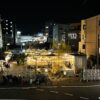
City Night Survey : Urumqi, China

More

2023.09.22 – 2023.09.26 Ke Yonglin + Chuanyi Liu

Global Research

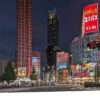
City Night Survey: Shinjuku Kabuki-cho, Tokyo

More

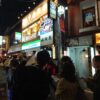
2023.07.19 Shunichi Ikeda + Masashi Kurobe + Yuta Shibata Shinjuku Kabukicho, Japan’s largest entertainment district, is a dazzling neon-lit labyrinth filled with restaurants, movie theaters, and amusement facilities. Its streets are teeming with people all night long. In recent years, however, the district has faced challenges, such as the growing presence of “Toyoko Kids” congregating in Cine City Square and engaging in criminal activities. Despite these issues, the opening of the new iconic Tokyu Kabukicho Tower has brought renewed attention to the area. As lighting detectives, we delve into the current state of Kabuki-cho, examining its lighting environment and cultural significance. ■Kabuki-cho Reborn: A Post-COVID Entertainment DistrictSeventeen years after our lighting survey in Shinjuku in 2006, Kabuki-cho has evolved from large-scale development into a global tourist hotspot. Though deserted during the 2020 state of emergency, the area is now vibrant again with the opening of Tokyu Kabuki-cho Tower. This survey revisits Kabuki-cho, comparing it with the previous survey and analyzing its changing lighting environment. ■Tokyu Kabuki-cho Tower: An All-Out Entertainment ComplexThe Tokyu Kabuki-cho Tower, a 48-story, approximately 225-meter-tall, super high-rise entertainment complex comprising a hotel, movie theater, theater, and more, opened in April 2023.Upon entering the building, I was overwhelmed by the countless glittering lights that filled the space. The small shops and narrow corridors were adorned with an excessive number of paper lanterns, creating an atmosphere reminiscent of an Asian festival. Outside, the building’s digital signage, facade indirect lighting, reflected…

Global Research

City Night Survey: Kobe

More

2023.01.18-01.20  Yumi Honda + Misuzu Nakamura  Kobe is famous for the night view from Mt. Rokko as the “10 Million Dollar Nightscape” and for its waterside nightscape as a port city. Nightscape guidelines have been established in 2012, and efforts are being actively made to improve the lighting in the city. We walked around the city, which continues to be updated, and explored the components of a nightscape that is uniquely Kobe. ■“Instagrammable” NightscapePort Tower, Maritime Museum, Oriental Hotel, Hotel Okura, Ferris wheel, sightseeing boats, and the “BE KOBE” monument…. When people think of the city of Kobe, they probably think of Meriken Park. Meriken Park is the face of Kobe, and even at night many people were visiting the park to take commemorative photos. Many of the park’s symbolic monuments were lit up and color lighting was used extensively, but the colors and color schemes were mainly neutral, not primary colors, so it was nice to enjoy the colorful light without getting an overpowering impression. To complement the color lighting, the ground lights of the pole lights, handrail lights, and bollard lights were uniformly lit with light bulbs, creating a subdued brightness. Both decorative lighting and functional lighting emitted little excessive glare, allowing us to concentrate on the illuminated objects. It seemed like seeing the nightscape and taking pictures of it could be the purpose of a visit to this place. In this age of breathlessly uploaded photos and videos…

Global Research

City Night Survey: Kozushima + Niijima

More

2023.01.20-01.22 Yuichi Anzai+ Chuanyi Liu  ■Kozushima Village Kozushima is located about 180 kilometers south of central Tokyo with a population of about 1,800. The terrain is complex, with almost no flat land. The village is located in the center of the island at the foot of Mt. Tenjo. The impetus for the starry sky protection activities on Kozushima came from a comment made during a student internship program by the Tourism Foundation in 2016, that the night sky was as beautiful as a planetarium. The starry sky, a common sight on the island, has become a tourism resource. An island-wide effort to protect the sky began. Specific efforts include replacing streetlights and security lights with fixtures with 0% upward luminous flux and 2,700K color temperature, holding explanatory meetings for residents and regular workshops with experts to gain their understanding and cooperation in light pollution and starry sky protection activities, training islanders as guides, and holding star gazing events to protect the night sky from light pollution and communicate the appeal of the starry sky both on and off the island. The island is also working to protect the night sky from light pollution and convey the charm of the starry sky to the public. The “Light Pollution Prevention Ordinance to Protect the Beautiful Starry Sky of Kozushima Village,” which specifies the responsibilities of residents and businesses to prevent light pollution, will be enacted in 2019, and rules are being developed to…

Global Research

City Night Survey: Okinawa Main Island

More

2023.01.26-01.29 Masafumi Yamamoto + Yuki Ito  Okinawa is a place where diverse cultures and histories are intertwined. In Okinawa, each region has its own unique streetscape, and this is due to the fact that each region has a completely different historical background. The following is a simplified explanation of the historical background of each area. The Naha area was severely damaged in the war and was rebuilt; the Koza area was influenced by the U.S. military base and retains a strong American culture; and the Bise and Imadomari areas retain the traditional streets of the Ryukyu Islands. By comparing the light environment of each area, this survey sought to determine what kind of lifestyle culture and light features each area has, and what kind of light is unique to Okinawa. ■Sakae-machi MarketSakae-machi Market, located in Naha City, is a shopping street that was established during the postwar reconstruction period and has remained almost unchanged since then. Today, the market is a lively place where locals gather during the daytime, but at night it transforms into a more local haunt, drinking district that is quite different from the impression it gives during the daytime. The only light at night is from the taverns and the faint fluorescent lights in the upper part of the shopping street. (Floor illumination: approx. 20 lx) The illuminance alone gives the impression of dimness, but the actual atmosphere was not as dark as the impression given by…

Global Research

City Night Survey : Hitoyoshi, Kumamoto

More

2022.11.10-12 Mari Kubota + Noriko Higashi In July 2020, Hitoyoshi City in Kumamoto Prefecture was devastated by catastrophic flooding caused by heavy rainfall. Since the disaster, the city has made steady efforts toward recovery— efforts in which lighting has played a significant role. To understand how lighting has contributed to the city’s revitalization, we conducted interviews with local stakeholders, including hot spring inn owners and city officials, and followed up with an on-site investigation of the actual lighting projects. From July 3 to 4, 2020, torrential rains caused the Kuma River to overflow, resulting in catastrophic flooding in Hitoyoshi City, Kumamoto Prefecture. Known for its scenic beauty, hot springs, and hospitality centered around local shochu, this tourism-driven city suffered devastating damage—not only from the flooding but also from the impact of the COVID-19 pandemic. In response to the disaster, a local inn owner launched the Hitoyoshi Hikari no Fukkō Project (Hitoyoshi Light Recovery Project), using light as a tool for recovery. In 2021, Hitoyoshi was selected as a model city for Japan’s Cabinet Office-led Super City (SC) initiative, proposing a future-oriented recovery plan. This plan placed lighting as a key component, aiming to promote both disaster resilience and tourism attraction through thoughtful illumination. This survey included interviews with stakeholders such as hot spring inn owners, city officials, and lighting designers involved in the project, examining how “light” became a central theme in the recovery process and evaluating the impact it has…

Global Research

City Night Survey : Koyasan

More

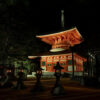
2022.10.01-10.03 Shunichi Ikeda + Genki Watanabe Koyasan (Wakayama Prefecture), a sacred site of Japanese Buddhism with a history of 1,200 years, was inscribed on the UNESCO World Heritage List in 2004 and again in 2016, and is one of the world’s most renowned religious cities. It is also a popular tourist destination, attracting many international visitors prior to the COVID-19 pandemic. Through the distinctive light environment created by the numerous temples and shrines, as well as through the experience of staying at temple lodgings (shukubō), we conducted an investigation into this extraordinary lighting culture from the perspective of the Lighting Detectives. Koyasan is a town situated in a mountain basin at an altitude of 800 meters, surrounded by peaks of around 1,000 meters in northern Wakayama Prefecture. It was founded about 1,200 years ago, in the early Heian period, by the Buddhist monk Kōbō Daishi (Kūkai) as a sacred site of Japanese Buddhism, with Danjō Garan serving as the central temple complex of this religious city.Originally, the entire area of Koyasan was considered part of the grounds of Kongōbu-ji Temple.For us, this was the first time to focus on a religious city in an urban lighting survey. We wanted to examine what the nightscape of this temple town looks like and how the lighting culture of Japan and Buddhism manifests itself in various aspects. ■Okunoin, Kongōbu-ji, Head Temple of Koyasan Shingon Buddhism Okunoin is an expansive cemetery stretching about 2…

Global Research

City Night Survey : Shimokitazawa, Tokyo

More

2022.10.27 Genki Watanabe+ Chuanyi Liu+ Yuki Ito This Tokyo night walk survey took place in Shimokitazawa, a neighborhood especially popular among young people. Known as one of Tokyo’s most culturally rich districts, the area is filled with vintage clothing shops, eateries, theaters, niche cinemas, and art galleries.The Lighting Detectives previously conducted a survey here in 2009. This time, we examined how the area has changed since the Odakyu Line was relocated underground. We also focused on the newly developed Shimokita Senrogai area, which opened on May 28, 2022, assessing its lighting design and comparing it with the older shopping streets to explore the contrast between new and traditional urban atmospheres. ■Map around Shimokitazawa Station With the Odakyu Line moved underground, a new neighborhood called Shimokita Senrogai was developed between Higashi-Kitazawa Station and Setagaya-Daita Station. Driven by the desire to support the community, redevelopment progressed step-by-step while listening to local residents’ voices. The entire area officially opened on May 28, 2022.Alongside the railway line, new facilities such as daycare centers, a hot spring inn, commercial spaces, student dormitories, and event venues were established. ■Development of Shimokita Senrogai The Shimokita Senrogai area we surveyed is a newly developed space created by moving the Odakyu Line underground. It was designed with the intention of reconnecting the northern and southern parts of the neighborhood that had previously been divided by the railway tracks, resulting in developments that encourage smooth pedestrian circulation throughout. The development features…

Global Research

City Night Survey : Yokohama Minato Mirai

More

2022.06.28 Kouki Iwanaga+ Xiaoyi Dong+ Hikaru Kawata Yokohama Minato Mirai, which has seen rapid development in recent years with projects such as Japan’s first urban circulation ropeway “YOKOHAMA AIR CABIN” launched last spring, the cruise ship terminal “Yokohama Hammerhead,” and the prestigious Hawaiian luxury resort “The Kahala Hotel & Resort Yokohama.” The purpose was supposed to be to investigate whether the “nightscape of Minato Mirai,” which could be considered a tourism resource in itself, has been well preserved… but. ■Relationship Between Zoning and Street Lighting The Minato Mirai area, which was developed on reclaimed land around Yokohama Port, can be broadly divided into three zones: the “Central District,” the “Shinko District,” and the “Yokohama Station East Exit District.” Among these, our survey focused on the Central District—with its high-rise buildings such as Landmark Tower and Queen’s Square Towers—and the Shinko District, which features many commercial and cultural facilities such as the Red Brick Warehouse and Yokohama Hammerhead. When examining the street lighting in these two districts, it was found that the streets running parallel to the Rinko trunk road and the Metropolitan Expressway were lit with sodium-colored lamps, while the streets leading toward the port, such as Icho Street and Keyaki Street, were illuminated with streetlights at a color temperature of 4000–5000K. At first glance, this color temperature plan, which changes according to the direction of the streets, appears well-organized. However, according to the building color scheme guidelines for the Minato…

Global Research

City Night Survey : Sawara District, Katori, Chiba

More

2022.11.4-5 Sachiko Segawa Surprisingly, this survey of the Sawara district marks the first time the Lighting Detectives have conducted an investigation within Chiba Prefecture. The team focused on an area designated both as an Important Preservation District for Groups of Traditional Buildings and as a Landscape Formation District. Here, the townscape of merchant houses, which flourished from the Edo period thanks to river transport on the Tone River, still remains. Located about 70 km from Tokyo Station and slightly inland from the Tone River, the Sawara district of Katori City once thrived as a merchant town, to the point it was said to rival Edo itself. However, the town declined during Japan’s period of rapid economic growth. Following a townscape survey in 1974, the value of its historic scenery was reappraised. Today, leveraging its convenient location—just two hours from Tokyo and one hour by train from Narita Airport—the area is being redeveloped as a tourist destination. For this survey, the team limited their scope to the townscape along the Ono River and conducted a nightscape survey. ■Uniquely Designed Lighting Fixtures From JR Narita Line Sawara Station, as we walked toward the Ono River, we were greeted by a bollard topped with a monkey. “Why a monkey…?” we wondered, but as we continued upstream along the river, we encountered bollards adorned with all sorts of figures: rabbits, carp, children, frogs, Ebisu, and more—each one different, with no two alike. These uniquely…

Global Research

City Night Survey : Tsushima Fishing Fire 

More

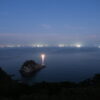
2022.09.30-10.02 Momoko Muraoka + Hikaru Kimura + Akemi Sasamoto Squid, the local specialty of Tsushima, are caught at night. The view of fishing fire illuminating the horizon is not a planned lighting environment, but a nightscape that naturally emerges from the livelihood of local fishermen.To explore this scenery of “light from daily life,” we visited Tsushima and boarded a fishing boat to experience night fishing. Under a sky full of stars, we documented the striking contrast between the vast shadowed sea and the line of fishing fires along the horizon.The interplay of starlight, fishing fire, and their faint reflections on the water revealed a beauty entirely different from that of urban lighting design. Through this survey, we were able to appreciate not only the outcome of the fishing itself, but also how light is deeply intertwined with the culture and daily life of the region. ■Boarding the Squid Fishing Boat Night fishing with lights (called “yodaki”) is a traditional fishing method that makes use of the phototactic nature of fish—their instinct to gather toward light. Its origin dates back to ancient times, and while the light sources themselves have changed over the centuries, the practice of kindling lights at sea remains the same. The nightscape of fishing fires has thus continued as a scenery born from the daily livelihood of local fishermen. That this night view is cherished as a distinctive landscape of the region is evident from the existence of…

City Walks and Salon

Night Walk in Hong Kong West Kowloon Cultural Distirict

More

2022.11.24  Bryan Yan After long pause of the activates, Hong Kongdetectives finally made one night walk event atthe West Kowloon Cultural District. We invitedvarious professions in architecture, interiorand lighting design to join us, and 17 peopleperticipated. It has been 6 years since the last Lighting Detective event in 2016 in Hong Kong.  Lighting Detectives event was organized after three years COVID-19. Although there are still some restrictions on the gathering due to COVI D -19 in Hong Kong, it cannot stop our passion to explore interesting places at nighttime. West Kowloon Cultural area is one of the most exciting places in Hong Kong recently. Huge landscape area for people to gather and enjoy the fresh air. New modern art museum M+ and Palace Museum are the attraction spots for people. How the lighting is facilitated in this new development area. We also explored how they were planned and designed to meet the people needs and to the community. The night walk event was completed with a lot of joy. Throughout the night walk, our guests found some interesting points of view and rethought about the lighting’s purpose and what the appropriate lighting should be. Lighting design for a city is always evolving with the perception of people. By exploring and discussion, we will know more about what we need. (Bryan Yan)

Children's Workshop

Mid-Autumn Lantern Workshop

More

2022.09.10 Singapore Lighting Detectives After 2 years of being quiet during the Mid-Autumn Festival, we were able to finally participate in the community event organised by the local grassroot committee of Tanjong Pagar. We held a lantern-making workshop in the early evening of Saturday, 10 September 2022 in conjunction with the Mid-Autumn Festival. The festivities were organised by a place-making committee Discover Tanjong Pagar overseeing the businesses and people of the district. The theme was “upcycling” and we were limited to the use of recycled materials for the activity. It was tough to collect items like plastic bottles, cardboard boxes and bottle caps 2 weeks before the event to gather enough for around 50pax estimated to turn up. We had assistance from the organiser to obtain tables for our workshop and some recycled bottles. A celebration of mooncakes, tea and lantern walks are commonly seen around the residential neighbourhoods as part of the festivities. There were snack stalls and live music flanking our workshop tables to draw the crowd that was out with their kids. The turnout was weak at the start, around 5pm in the evening. However as it turned to nighttime, the numbers surged and we were overwhelmed until our scheduled walk at 8.30pm. The children ranged from toddlers of 18 months old to adults, with most around 6-10 years old. They had to be supervised by Lighting Detectives volunteers as there was a lot of use of scissors…

Other Activity

Mid-Autumn Lantern Workshop in Singapore

More

Mid-Autumn Lantern Workshop 2022.09.10 Singapore Lighting Detectives After 2 years of being quiet during the Mid-Autumn Festival, we were able to finally participate in the community event organised by the local grassroot committee of Tanjong Pagar. We held a lantern-making workshop in the early evening of Saturday, 10 September 2022 in conjunction with the Mid-Autumn Festival. The festivities were organised by a place-making committee Discover Tanjong Pagar overseeing the businesses and people of the district. The theme was “upcycling” and we were limited to the use of recycled materials for the activity. It was tough to collect items like plastic bottles, cardboard boxes and bottle caps 2 weeks before the event to gather enough for around 50pax estimated to turn up. We had assistance from the organiser to obtain tables for our workshop and some recycled bottles. A celebration of mooncakes, tea and lantern walks are commonly seen around the residential neighbourhoods as part of the festivities. There were snack stalls and live music flanking our workshop tables to draw the crowd that was out with their kids. The turnout was weak at the start, around 5pm in the evening. However as it turned to nighttime, the numbers surged and we were overwhelmed until our scheduled walk at 8.30pm. The children ranged from toddlers of 18 months old to adults, with most around 6-10 years old. They had to be supervised by Lighting Detectives volunteers as there was a lot of…

Other Activity

Lighting Detectives Maxwell Light-up Maxwell Food Centre, Singapore

More

Lighting Detectives Maxwell Light-upMaxwell Food Centre, Singapore 2022.07.08-09 Sherri Goh Changing the lighting ambience of MaxwellHawker Centre, part of the UNESCO-protectedhawker culture. SINGAPORE:As part of the closing of Venice Architecture Biennale Homecoming Exhibition that was held at the Urban Redevelopment Authority (URA) from April to July, we fought to do something at Maxwell Food Centre due to its prominent reputation, close proximity to the exhibition and to celebrate hawker culture (in line with the theme of the exhibition). It was our first time working with the National Environmental Agency (NEA) as they run the local hawker centres here. Supported by Louis Poulsen, we managed to have a successful exercise that had many members of the public take part. We had a ambitious plan that was to transform the space by implementing ambient, coloured linear light, along with spotlights to emphasise the tables. However, that was phased out as we coordinated with officials to find that it would require formal licensing and permits to enact the entire idea into place. To obtain sufficient funding also meant that we would need to create something that would last around 6 months with many safety protocols covered. Hawker centers are far and many in Singapore. We put out a survey to the members of the public to take. We see that more than 58% of respondents actually dine at hawker centres multiple times a week. It is part of the regular routine of the…

Other Activity

Lighting Detectives Night Walk at Kampong Gelam – Ramadan Live Streaming

More

Muscat Street, Singapore 2022.04.21 Reiko Kasai, Mayumi Banno, Sun Young Hwang, Quratuaini Jamil, Sherri Goh   Projection on Masjid Sultan (Sultan Mosque) Group picture at the gates Ultraman, the new icon of Singapore tourism Our first group walk since 2019 to soak in the festive lights and atmosphere of the Islamic Ramadan period. Livestream team ■ Live Stream from SINGAPOREKampong Gelam is a famous heritage area in central Singapore known for its strong muslim cultural identi t y . Prior to the pandemic, it is a place popular with tourists and locals alike for its food and textile shops.Businesses and foot traffic took a big hit due to the covid restrictions and the area has changed significantly post pandemic.Many more food and beverage businesses have popped up. However the textile shops are on the verge of closing due to lack of sales. The lighting environment has evolved to reflect these changes and it made the most direct impact to the atmosphere at night. In conjunction with Ramadan (the month of fasting for Muslims), we took a walkthrough Kampong Gelam together with Mr Mende to appreciate the festive lights and atmosphere on 26th April evening. Starting off with dinner at the specific time to break the fast with the whole community, we did a livestream for Lighting Detectives Instagram, hosted by Aini and Sunyoung.We explored the Malay heritage area, watched the projection on the mosque Masjid Sultan and ended off the…

Other Activity

Night Walks in Basel

More

Basel Architecture Week 2022 2022.05.10 & 05.13 Lisbeth Skindbjerg Kristensen+Kelly Bannwart+Michael Hübscher ■ At the Biegining In January 2022, Kelly Bannwart and Michael Hübscher from the Basel Lighting Design office HÛBSCHER GESTALTET contacted the Lighting Detectives to ask if it would be possible to do a col laboration during the upcoming Basel Architecture week. It was quickly agreed that Lighting Detective core member Lisbeth Skindbjerg Kristensen, who currently lives in Basel, would participate. The theme of this year’s Architecture week was “Reale Räume” (Real Spaces) of three current development sites: Dreispitz Münchenstein), Bachgraben (Allschwil) and lybeck (Basel). The AWB uses various formats to promote dialogue between experts and local protagonists. The Forum offered an opportunity to discover these sites and exchange views on the urban transformation process with the various stakeholders. For the night walks Hübscher Gestaltet had chosen to focus on the areas of Dreispitz and Klybeck. Both areas are currently undergoing transformations from mainly industrial to mixed use and residential neighbourhoods. Michael Hübscher and Lisbeth Kristensen welcome the group and introduce the route and purpose of the night walk Discussing the value of lighting as a wayfinding and informative tool Hero: An evenly lit passageway where public and private lighting elements supplement each other Hero: The illumination of the plaza creates a nice ambience with paths illuminated for safe passage across the space. Villain: Observing the abrupt threshold between light and dark waiting to see if glary security lighting…

Global Research

City Night Survey : Shibuya, Tokyo 

More

2022.07.11 Hikaru Kimura + Yonglin Ke + Xueying Piao Shibuya, known as a youth hub, began redevelopment in 2012, transforming into a business district with a cluster of new office buildings and commercial facilities. While many new restaurants have emerged, traditional drinking alleys remain intact. This survey investigates the contrasting night scenes of the new and old Shibuya. ■Overlooking Nightscape of ShibuyaFrom the Shibuya Scramble Square, the rooftop of Miyashita Park stands out prominently to the east of the central railway tracks. The warm glow along the podium belongs to Shibuya Yokocho (alley). Nestled beside the pitch-black railway tracks and appearing as a dotted red line is Nonbei Yokocho. Viewed from above, Nonbei Yokocho exuded a soft, flickering light, resembling candles, in contrast to the lively and vibrant atmosphere of Shibuya Yokocho.The overall nightscape, divided by the Yamanote Line tracks, presents a striking contrast: the western side is dominated by tall buildings, densely packed with billboards and advertisements, exuding the lively energy of a traditional entertainment district. The eastern side, on the other hand, has fewer billboards and subdued signage, giving it a unified and calm appearance.I wonder if Shibuya will eventually become a more standardized urban landscape, much like its eastern side. Personally, I felt the bustling, nostalgic charm of the western side embodies the true spirit of Shibuya, and it’s something worth preserving. (Yonglin Ke) ■Shibuya YokochoRAYARD MIYASHITA PARK, a new landmark in Shibuya, features Shibuya Yokocho, a 100-meter-long…

Other Activity

Light-up Workshop in Akiu Hot Spring

More

(2020.11.18  Noriko Higashi The lighting event Akiu Lumina was held in the Akiu Hot Spring area of Sendai, Miyagi Prefecture from November 14-23, 2020.  Lighting Detectives was invited to the event to conduct a light up workshop. Light up at Rairaikyo gorge. The dark and gloomy canyon reveals itself by the light up. Rairaikyo gorge daytime.   Huge rocks are outstanding. During the day we inspected Rairaikyo gorge near Akiu Hot Springs.  Akiu used to be a quarry and the enormous rocks in the gorge are spectacular.   The leaves were also just starting to turn fall colors, creating the perfect location for a workshop at dusk. About 30 people, including local artists, hotel workers, and shopkeepers, gathered to start the workshop. After an introduction of the lighting detectives and a lecture on the importance of nightscape in the city, we headed into the canyon with flashlights and color filters. When we illuminated the rocks from the bridge called “Megane-bashi (glasses bridge),” the water and the canyon, which had been submerged in darkness, came to the surface. The participants were amazed at the way the water looked different depending on the angle of the flashlight. We went down to a spot near the water and used a color filter to illuminate the rocks. They were also surprised to find that some of the colors came out exactly as the filter indicated, while others did not. The rocks were illuminated with red, blue, and green…

City Walks and Salon

City Night Walk Vol. 067 Small Groups with Live Broadcasts 『Hot Spot Now』

More

2021.07.09 Tomoya Furukawa + Shinichi Sakaguchi+ Naoko Oguchi+ Hikaru Kawata+ Mutsurou Honma+ Rie UomoriYao Yuan+LIU Xinyu+GUO JIANGHAO+ Noriko Higashi  In the middle of the Covid19 Pandemic activities are still restricted.  However, in order to make this event accessible to more members, we broke up into small groups and went to eight different locations for this city walk.   Each area was interactive with a live broadcast. As the number of those infected with covid19 continues to rise, meeting people and going out is still limited, as are Lighting Detective activities.  However, we still want many people to be able to experience a city walk, so this time we set up a live broadcast city walk. Participants in Tokyo broke up into three groups and spread out over the city to broadcast from the lastest hot spots. In Kyoto members broadcast from the timeless tourist spot, Fushimi Inari Shrine.  In China, members broadcast from three cities for a very full menu. ■Public Park Restrooms in Shibuya The image of a public park restroom is summed up with the 4K`s, Kusai (smelly), Kitanai (dirty), Kurai (dark), Kowai (scary).  Using the power of design to shake this image, The Nippon Foundation is in the middle of developing “The Tokyo Toilet” project in Shibuya Ward.  We surveyed a few locations in Shibuya. The public restrooms in Yoyogi Fukamachi Park and Haruno Ogawa Community Park have transparent walls, a totally alternative way of thinking and impractical design. …