Zurich
YOU MIGHT ALSO LIKE
Vol. 076 -Memory and Forgetfulness
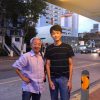
Interviewer: Yuta Shibata Shibata:Today I’d like to talk about memory and forgetfulness. Since I started working at LPA, six months have passed. Working as a lighting designer, I have found that memory is just as important as originality and creativity. While working with several senior members of the staff, I have the impression that they have very good memorization skills. I am not very good at memorizing things or trying to recall things. Mende:You sound like an old man. Have you always been like that? How about college entrance exams? You have to remember a lot of boring facts and stuff. Shibata:Ever since I was young. I had trouble remembering facts that would be on the college entrance exams, but I was good at math and physics, subjects where you think and solve problems through a thought process. Mende:I’m like that too. I used to think that if I filled up my brain with arbitrary facts it would exceed capacity and I wouldn’t be able to produce new ideas. But that’s completely wrong. What is important for a designer is the power to imagine. I have come to realize that memorization, good or bad, doesn’t really matter. However, I am like you and had trouble with memorization and really suffered. In grade school, history facts were always a problem and I made up phrases and rhymes to remember dates and events. Shibata:That is an interesting way to remember things. I…
SHANGHAI, China
Developing Shanghai is propaganda for the world to see, as the streets of Shanghai seem to explode at night under the glitzy lights of this nightscape. One night the groups of row houses were removed, and the next, modern architecture appeared in their place. There was no time for theorizing about lighting culture, and the city became engulf in a flood of light. Shanghai is a gathering place for people from all over China. The bear light bulbs hanging in the streets cast skeptical glances over this developing city, but preserve the chaotic charm of the back streets. Daily development and innovation in the Pudong Xingqu District. Architecture from the colonial period is still standing in Bund, but the glitzy lights are more liable to catch one`s eye.
“Ginza” Walking Tour, NYC Light Fair Survey Reports
28 July, 2005 At this session there were only a few topics on the table, which gave members an opportunity to discuss, in-depth, new products and ideas from the New York City Lighting Fair, the direction of and trends in Ginza lighting, and the festive events that unfolded at the most recent Candle Night Performance. This session was a welcomed breather from previous salons of fast-paced slideshows and long agendas. Members could freely exchange ideas and talk about lighting culture without a pressing schedule. Reported News, Surveys, and Events NYC Light Fair and Survey…..Akiko Okunaka City Walk: Ginza…..Ueda Natsuko Candle Night Summer Solstice 2005…..Saiko Tanuma
Vol.062-How to Live and Work in this new era with Covid 19
Interviewer: Yumeka Miyamae Miyamae:In the past year telework has really taken off, which has really changed how we live and work. Today I`d like to talk about living and working in this new era with Covid 19. Mende:Yes, I`d like to hear your thoughts, also. Miyamae:Generally, people select an area to live that is within an easy hour commute to the office. Where people live is basically decided by where one works, since the norm is to go to the office to do your work. In other words, work time = office time. Work and private life are clearly divided by place, time, and role. That is up until one year ago. One thing I have felt during teleworking this past year is the line between work and private is obscured. I am having trouble switching between the two. Mende:For people like you with a family and small children at home, I think it is much harder to switch on and off. A long time ago when my wife used to teach at the university, she had to commute two hours one way, for a total of four hours of commute time a day. Such a waste of time. I suggested she rent an apartment near the campus and crash there on days she was too tired to go home, but she refused and said she needed to come home so she could “switch off.” I didn’t understand then, but…
BEIJING, China
From post-Olympic pride to the celebration of the 60th Anniversary of China as a nation, China is a very vibrant place. In this country where government is central, we discovered elaborate, but regulated lighting, lighting embellished by economic development, and traditional lighting. The old and new intermingle along the streetscape of this constantly changing city. An air of excitement in Tiananmen Square, Beijing. One of the largest plazas in the world, it is brilliantly illuminated and crawling with tourists late into the night. The elaborately controlled lighting is overpowering, a possible symbol of the nation’s authority. A relic alleyway from the Ming Dynasty winds through a residential area. Traditional neighborhoods are built to the human scale with the glow of lantern light dispersed among the alleyways. People are drawn to the lit doorways and their energy spills out into the streets. After 10pm the facade lighting dims and the architectural structure of the National Stadium, or “Birds Nest” is highlighted. The icon seems to be wrapped in a silent kind of glory. Many of the high-rise buildings in the CBD are illuminated at night, a reflection of the recent economic boom.