Interviewer: Ito Yuki ITO:Today I`d like to discuss the “appeal of dark spaces. ”Dark space is a pretty rough idea. However, I imagine not totally pitch, black spaces, but dark spaces with a softly lit lamp, a level of darkness to feel comfortable and relaxed. Do you have any lasting impressions or experiences with dark spaces?! MENDE:Memorable dark spaces…hmm…I have so many. It is hard to choose. The level of darkness at a hotel I stayed at in Phuket left a very lasting impression. As a hotel, the level of darkness was unthinkable. I couldn’t even read the menu in the hotel restaurant. However, the interesting thing is, at first, the darkness felt very inconvenient. But as my eyes started to adapt, I gradually got used to the darkness. If I wanted to do some work in this space, it would probably be harmful. But if one is not reading or writing, I felt it was a very comfortable space and level of brightness. ITO:The fixtures I use in my home have a function to change the level of brightness and color temperature. I usually set the color temperature and brightness at the lowest setting, creating a very dim room. So, I really understand the feeling of relaxation in a dark space. MENDE: Isn’t such a dark room inconvenient for everyday living?! ITO:If I want to do some work, yes it is inconvenient. So when I set the lighting low, I…
As an architectural lighting designer, I have always thought this profession was not about the form or shape of lighting fixtures, but have argued that lighting design is about the relationship between lighting and people. Japanese lighting design is still relatively new and I am torn between hope and despair for the profession as most conversations revolve around whether a fixture looks cool or not. I always thought there are more important aspects to discuss. But as of late, I`ve come to realize and maybe most people would tend to agree with me, that lighting design isn’t just about the amount of light or shape of a fixture. But at the same time, we, as lighting designers, have to realize that we are not in the business of distributing downlights and spotlights everywhere. And so a few years back, I thought I might design a Mende-style chandelier. Of course I did not want to just reproduce a copy of a glittery European chandelier or redesign a florescent light pendant for Japanese residential use, but through the dynamic use of material, produce a delicate, but one-of-a-kind architectural chandelier, or so I thought. Unfortunately, in this world things don’t always go as you would have planned and Swarowsky, a well-established crystal chandelier manufacture, unveiled a new chandelier, very close to the design I had envisioned. It happened at the Euroluce in Milan this last spring. Have a look at the top-secret photos…
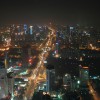
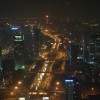
2022.07.11 Hikaru Kimura + Yonglin Ke + Xueying Piao Shibuya, known as a youth hub, began redevelopment in 2012, transforming into a business district with a cluster of new office buildings and commercial facilities. While many new restaurants have emerged, traditional drinking alleys remain intact. This survey investigates the contrasting night scenes of the new and old Shibuya. ■Overlooking Nightscape of ShibuyaFrom the Shibuya Scramble Square, the rooftop of Miyashita Park stands out prominently to the east of the central railway tracks. The warm glow along the podium belongs to Shibuya Yokocho (alley). Nestled beside the pitch-black railway tracks and appearing as a dotted red line is Nonbei Yokocho. Viewed from above, Nonbei Yokocho exuded a soft, flickering light, resembling candles, in contrast to the lively and vibrant atmosphere of Shibuya Yokocho.The overall nightscape, divided by the Yamanote Line tracks, presents a striking contrast: the western side is dominated by tall buildings, densely packed with billboards and advertisements, exuding the lively energy of a traditional entertainment district. The eastern side, on the other hand, has fewer billboards and subdued signage, giving it a unified and calm appearance.I wonder if Shibuya will eventually become a more standardized urban landscape, much like its eastern side. Personally, I felt the bustling, nostalgic charm of the western side embodies the true spirit of Shibuya, and it’s something worth preserving. (Yonglin Ke) ■Shibuya YokochoRAYARD MIYASHITA PARK, a new landmark in Shibuya, features Shibuya Yokocho, a 100-meter-long…
Aleksandra StratimirovicArtistBelgrade … well, it has been both very different and almost the same. Being an artist, I am used to work alone in my studio. Just the same as under this pandemic period when you were not recommended to meet with others. Loneliness is inevitable in the process of creation. At least it is for me. I need to struggle on my own through that essential part of each concept process. Only when a true and stable idea, or vision, or goal is born, I can open my doors and face the world. Those periods I both enjoy and dislike. I have no one in those moments to brainstorm my ideas with, and that can be so frustrating. And it takes time, always… until it gets solved by me alone, of course. What I don’t like is the feeling of helplessness when my thoughts and ideas are not satisfying my inner creative “boss”. But, those moments are unavoidable and so important for my own evolution. When the right idea is born and to my delight accepted and approved by the “boss”, the next phase is opening to the world. Reflecting on this pandemic time, that changed our world so drastically; I would like to focus on the positive effects of it, although those are very few. What comes to my mind first are just those awfully huge, overwhelming big politics, big economies, big strategies … just too many hopeless…
Theme:Conquering Personal Faults Interviewer: Hu Lin Lin:Today I`d like to ask your advice about my personality. Compared to other people, I feel like I live on an intense emotional rollercoaster. For example, in the morning I can be just fine and at night I am totally depressed. I have a hard time controlling my emotional state of mind. 練習と経験は何回も必要 恥ずかしがりや Mende:Really?! Your emotions can really go so high and just plummet in such a short period of time?! In just one day?! Lin: Yes, in just a few hours. I can be feeling great, but then all of a sudden I`m really down. In fact yesterday was like that. I just didn`t feel like talking to or interacting with anyone. When I have days like that I can`t explain myself very well in Japanese and I have a hard time communicating. Mende:Lin, I don`t think this has to do with your personality. I think it might have more to do with balancing your emotions. I don`t think it is a problem with your personality, but more of your temperament. Lin:By temperament, do you mean physically speaking? Mende:Not physical as in your actual body, but I was thinking more of mental tendencies. Everyone has different characteristics, physically and mentally. Your personality may lean towards more cognitive thinking and emotion, just like others could be described as shy or bossy. Lin:I think I have one more personality flaw. I can`t speak to people…
This website uses cookies to improve your experience. We'll assume you're ok with this, but you can opt-out if you wish. Cookie settingsACCEPT
Privacy & Cookies Policy
Privacy Overview
This website uses cookies to improve your experience while you navigate through the website. Out of these cookies, the cookies that are categorized as necessary are stored on your browser as they are essential for the working of basic functionalities of the website. We also use third-party cookies that help us analyze and understand how you use this website. These cookies will be stored in your browser only with your consent. You also have the option to opt-out of these cookies. But opting out of some of these cookies may have an effect on your browsing experience.
Necessary cookies are absolutely essential for the website to function properly. This category only includes cookies that ensures basic functionalities and security features of the website. These cookies do not store any personal information.