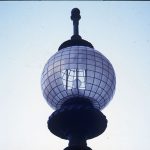
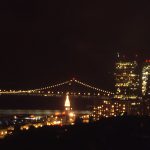
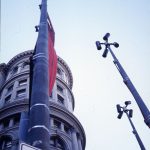
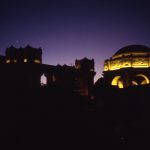
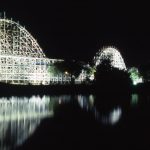
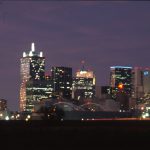
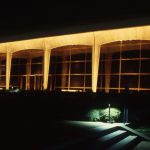
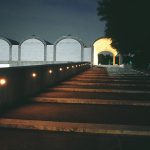
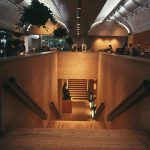
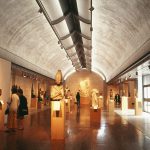
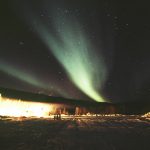
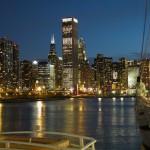
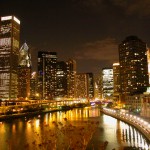
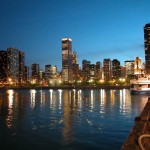
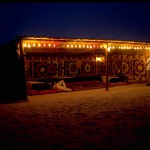
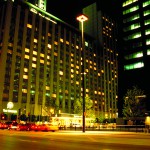
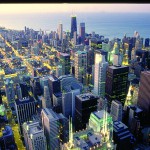
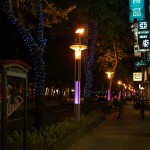
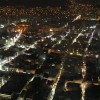
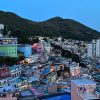
2014.06.24-06.29 Ai Sohara+ Mami Ichida With the population of 60 million and the 2nd largest country in South East Asia, Myanmar has not yet been well-known to the world because of its isolated policy for over a half century. Reforming as a democratic nation in recent years, Myanmar is now developing very rapidly and its cities are witnessing fast urban growth. The survey was made to “unveil” the role of light in three different cities. Sulepaya, View from the Surepaya As darkness falls over Yangon, the former capital of Myanmar, golden pagodas enhance its majestic presence in contrast to the modest living environment. These brilliant pagodas symbolize the faith of the local people. Street light at Naypyidaw Nay Phi Taw, the vast but empty new capital, seems the only city without electrical problems. Unlike other cities, road and public facilities are built with lighting technology and are well maintained. View from the Shwesandaw Pagoda The winning light in Old Bagan, where almost no artificial light can be seen, is absolutely during dusk. Watching thousands of pagodas turning into silhouettes and eventually merging into darkness creates the impression as if you are traveling back to ancient times.
2023.01.20-01.22 Yuichi Anzai+ Chuanyi Liu ■Kozushima Village Kozushima is located about 180 kilometers south of central Tokyo with a population of about 1,800. The terrain is complex, with almost no flat land. The village is located in the center of the island at the foot of Mt. Tenjo. The impetus for the starry sky protection activities on Kozushima came from a comment made during a student internship program by the Tourism Foundation in 2016, that the night sky was as beautiful as a planetarium. The starry sky, a common sight on the island, has become a tourism resource. An island-wide effort to protect the sky began. Specific efforts include replacing streetlights and security lights with fixtures with 0% upward luminous flux and 2,700K color temperature, holding explanatory meetings for residents and regular workshops with experts to gain their understanding and cooperation in light pollution and starry sky protection activities, training islanders as guides, and holding star gazing events to protect the night sky from light pollution and communicate the appeal of the starry sky both on and off the island. The island is also working to protect the night sky from light pollution and convey the charm of the starry sky to the public. The “Light Pollution Prevention Ordinance to Protect the Beautiful Starry Sky of Kozushima Village,” which specifies the responsibilities of residents and businesses to prevent light pollution, will be enacted in 2019, and rules are being developed to…
2024.11.21-11.22 Shunichi Ikeda + Yuta Shibata Yokkaichi has developed as an industrial city. The striking contrast between its dazzling factory nightscape and the increasingly organized city center stands out. We conducted a survey of the urban lighting where industry and daily life coexist. ■About Yokkaichi Yokkaichi has a long history, having developed as a port town facing Ise Bay. During the Edo period, it prospered as a post station along the Tokaido route. The city’s name originates from the markets that were held on days ending in “4.”After World War II, Yokkaichi grew as an industrial city with the construction of a petrochemical complex during Japan’s period of rapid economic growth. However, air pollutants emitted from the complex caused a serious pollution-related illness known as Yokkaichi asthma.Today, the city has regained a comfortable living environment. Residential areas, shopping streets, and everyday life now extend right alongside the industrial zones. ■3D Factory Nightscape Yokkaichi, with its history of industrial development, began drawing attention during the early 2000s factory nightscape boom. The expansive factory nightscape of the Yokkaichi petrochemical complex, which stretches about 10 kilometers north to south, is counted among Japan’s five greatest factory nightscapes. What makes it especially unique is that the nightscape can be viewed from the sky, land, and sea—earning it the nickname “3D Nightscape.” Particularly photogenic views of the factory nightscape have gained significant popularity. From the perspective of the Lighting Detectives, we conducted a survey of…
Diriyah, KAFD and Metro stations Riyadh2025.11.16 – 11.18 Gita Listia The purpose of this Riyadh lighting survey is to explore the characteristics of old urban areas and new developments in KAFD Riyadh, with a particular focus on their metro stations. The study aims to understand how each area expresses its identity through public space lighting and how lighting strategies are applied in major infrastructure such as metro station. ■Diriyah Diriyah is a historic area on the north-west side of Riyadh and one of Saudi Arabia’s most important cultural heritage sites. Located along Wadi Hanifah, about 15 km from central Riyadh, it reflects the early history of the city. Today, Diriyah is being developed into a vibrant heritage, cultural, and lifestyle destination, where historic preservation is carefully combined with modern urban design. The lighting in Diriyah is designed to be subtle and heritage-sensitive. Very warm white tones are used to complement the Najdi mud-brick architecture, creating a calm and welcoming night-time atmosphere. Pole lights and bollards in Diriyah feature distinctive shapes, patterns, and warmer colour temperatures compared to typical street lighting in other parts of Riyadh. This traditional lighting character clearly signals that visitors are entering a cultural and heritage area. ■At-Turaif At-Turaif is the birthplace of Saudi history and represents the cultural core of Diriyah. It is recognized as a UNESCO World Heritage Site. Lighting at At-Turaif is highly restrained and conservation-focused. Soft grazing and wall-washing techniques are used to gently…

2023.01.26-01.29 Masafumi Yamamoto + Yuki Ito Okinawa is a place where diverse cultures and histories are intertwined. In Okinawa, each region has its own unique streetscape, and this is due to the fact that each region has a completely different historical background. The following is a simplified explanation of the historical background of each area. The Naha area was severely damaged in the war and was rebuilt; the Koza area was influenced by the U.S. military base and retains a strong American culture; and the Bise and Imadomari areas retain the traditional streets of the Ryukyu Islands. By comparing the light environment of each area, this survey sought to determine what kind of lifestyle culture and light features each area has, and what kind of light is unique to Okinawa. ■Sakae-machi MarketSakae-machi Market, located in Naha City, is a shopping street that was established during the postwar reconstruction period and has remained almost unchanged since then. Today, the market is a lively place where locals gather during the daytime, but at night it transforms into a more local haunt, drinking district that is quite different from the impression it gives during the daytime. The only light at night is from the taverns and the faint fluorescent lights in the upper part of the shopping street. (Floor illumination: approx. 20 lx) The illuminance alone gives the impression of dimness, but the actual atmosphere was not as dark as the impression given by…