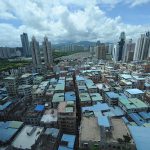
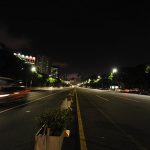
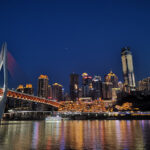
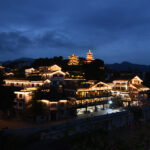
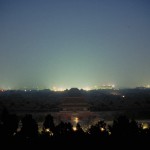
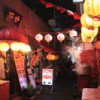
Nightscape in Jingmai Mountain2023.12.08 – 12.13 Kyoko Takubo + Hongna Chen Located on the southwest border of China, Jingmai Mountain is the birthplace of Pu’er tea, where the indigenous people have created an ancient tea forest cultural landscape, which was registered as a UNESCO World Heritage Site in September 2023.While working on the project, we became interested in the local culture. So we decided to survey the villages at night and to observe and report the impact of tourism development on the local nightscape. ■Introduction Visiting Jingmai Mountain isn’t easy. First, spend the night in Kunming, then leave early morning for the destination by plane or train.We had planned to fly from Langcang Jingmai airport, but our flight was suddenly cancelled. So we had to travel to Pu’er by train and grab a cab to Jingmai Mountain.During our stay, we were based in Huimin Town where our project TEA CELLAR is located. We visited Nuogang Village, Wengji Village, and Jingmai Village to observe the people’s daily life and the nightscape there. ■ Nuogang Village Nuogang Village is a historic village of the Dai tribe, where the villagers have maintained their traditional lifestyle. The first floor of the house, with its distinctive gabled roof, is used for tea production and for the teahouse. The second floor with a tiled roof is a living space.The owner of the teahouse told us that the first floor is open to guests and the family…
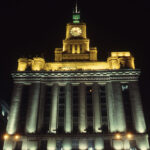
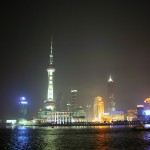
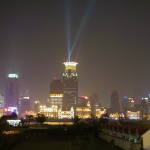
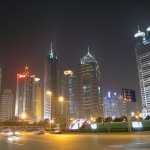
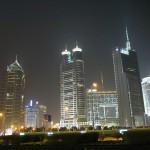
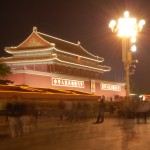
Developing Shanghai is propaganda for the world to see, as the streets of Shanghai seem to explode at night under the glitzy lights of this nightscape. One night the groups of row houses were removed, and the next, modern architecture appeared in their place. There was no time for theorizing about lighting culture, and the city became engulf in a flood of light. Shanghai is a gathering place for people from all over China. The bear light bulbs hanging in the streets cast skeptical glances over this developing city, but preserve the chaotic charm of the back streets. Daily development and innovation in the Pudong Xingqu District. Architecture from the colonial period is still standing in Bund, but the glitzy lights are more liable to catch one`s eye.
2018/10/13-23 Mikine Yamamoto + Kouki Iwanaga This was our first South American survey in about 15 years. We tracked the light expression of Rio de Janeiro, a port city marked by both entertainment and poverty, which hosted the FIFA World Cup in 2014 and the Olympics in 2016 and has become increasingly international. While possessing famous coasts like Copacabana and Ipanema and being counted as one of the world’s three most beautiful harbors, it also has the “favela” slums covering its hillsides. Surrounded by magnificent nature, Santiago, Chile’s largest city, has annual rainfall of only about 360mm, meaning it is sunny for most of the year. We investigated the lighting situation of this city blessed with natural light. The nightscape from Pão de Açúcar: A beautiful contrast created by the rich topography Viewing Copacabana Beach from Pão de Açúcar Favelas built on the mountain slopes ■Rio de Janeiro / Brazil Rio de Janeiro is an international tourist city that hosted the Carnival and the Olympics in 2016. It is said to be a microcosm of the country, where light and darkness coexist: scenic areas with beautiful topography blending nature and culture are situated next to slums. We surveyed the light expressions of this city, which has various faces, including the glamorous light of tourist and resort areas, and the strangely glowing light of the favelas (slums) where poor communities gather, reflecting the lives of the people.The suburbs leading from the…
City Night Survey : Saitama-Shintoshin 2019.04.11 Lin Hu + Hikaru Kimura Saitama Shintoshin is a district established around the year 2000. Centered on JR Saitama-Shintoshin Station, it is an intensively structured urban area featuring a variety of functions, including large-scale commercial facilities, a major multi-purpose arena, government office complexes, and hospitals. This survey examined how this planned city has evolved from the perspective of lighting. Nightscape over the heliport from the Saitama Government Office Complex Light Linking Spaces A pedestrian walkway system is installed around Saitama-Shintoshin Station, utilizing an active pedestrian-vehicle separation plan that allows for smooth circulation from the second-floor station gates to various facilities. While the ground level is brightly illuminated by roadway pole lights, the pedestrian walkways feature lower-level lighting such as uplights and footlights—excluding some decorative pole lights in park areas—creating distinct expressions of light for each zone.Saitama-Shintoshin Station is connected to Kita-Yono Station by a walkway spanning approximately 600m. A continuous cantilevered glass canopy allows pedestrians to walk without getting wet in the rain or being stopped by traffic signals. Along this route, there is a straight path of about 100m running parallel to the railway tracks. Here, despite the cantilevered canopy structures being identical—likely due to differing construction phases—the lighting techniques varied across three distinct types. Although the architectural design is similar, the change in lighting methods results in varying levels of brightness depending on the location. While achieving uniformity may seem important, using different…
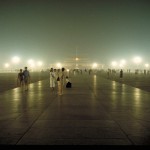
Tianjin is situated 150km east of Beijing and easily reached in a 30-minute high-speed train ride. Historically, foreign influence including the UK and Germany has shaped the western-style architecture and streetscape that this city is famed. Tianjin also poses the largest harbor in Northern China, a gateway for this economical and technical development zone. Upon exiting the main station, a panoramic view of the city awaits. The western architecture, remnants from the foreign settlements era, is illuminated in low-color temperature light and stands in contrast to the newly constructed skyscrapers. A historical western architectural structure is now used as a banking facility. At night, orange-colored fluorescent and high-pressure sodium lamps softly illuminate the facade. Downtown is also bustling with construction. During the day the area is swarming with shoppers and construction site workers. At night, mega size digital media, neon signage, and colorful lanterns are everywhere, with even more foreseeable in the future as the construction boom continues.