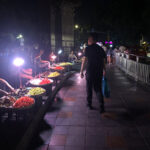
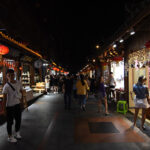
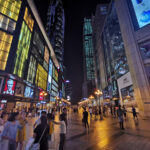
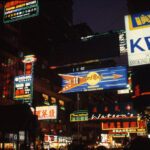
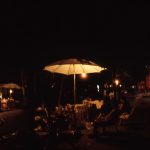
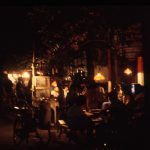
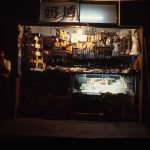
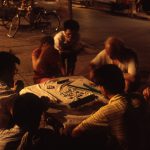
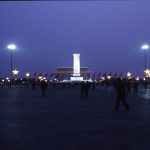
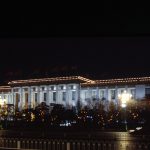
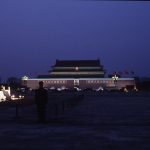
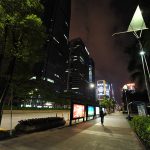
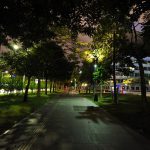
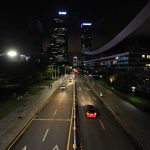
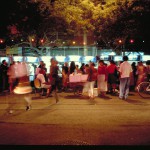
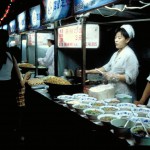
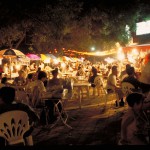
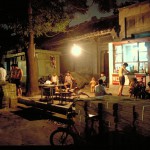
2023.09.22 – 2023.09.26 Ke Yonglin + Chuanyi Liu
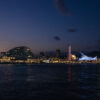
2023.01.18-01.20 Yumi Honda + Misuzu Nakamura Kobe is famous for the night view from Mt. Rokko as the “10 Million Dollar Nightscape” and for its waterside nightscape as a port city. Nightscape guidelines have been established in 2012, and efforts are being actively made to improve the lighting in the city. We walked around the city, which continues to be updated, and explored the components of a nightscape that is uniquely Kobe. ■“Instagrammable” NightscapePort Tower, Maritime Museum, Oriental Hotel, Hotel Okura, Ferris wheel, sightseeing boats, and the “BE KOBE” monument…. When people think of the city of Kobe, they probably think of Meriken Park. Meriken Park is the face of Kobe, and even at night many people were visiting the park to take commemorative photos. Many of the park’s symbolic monuments were lit up and color lighting was used extensively, but the colors and color schemes were mainly neutral, not primary colors, so it was nice to enjoy the colorful light without getting an overpowering impression. To complement the color lighting, the ground lights of the pole lights, handrail lights, and bollard lights were uniformly lit with light bulbs, creating a subdued brightness. Both decorative lighting and functional lighting emitted little excessive glare, allowing us to concentrate on the illuminated objects. It seemed like seeing the nightscape and taking pictures of it could be the purpose of a visit to this place. In this age of breathlessly uploaded photos and videos…
Worldwide City Lighting Report in Copenhagen / Stockholm December 2-9, 2017 | Written by: Hu Lin and Simeng Huang Located in high latitudes on the Northern Hemisphere, northern European countries including Norway, Sweden, Finland, and Denmark are known to be very unique in terms of the seasonal natural phenomena – the midnight sun during the summer, and the polar night during winter. In this December, we went to some of the cities experiencing the polar night during winter to research lighting environment. Considering extremely long night hours can affect circadian rhythm, are city lighting and residential lighting in those countries designed to eliminate the problem? In this trip we closely looked at the light environment that are unique to Northern Europe, gained through observation of public facilities and residential lighting. Here is the research results. Christiansborg Palace Pole lamps at bicycle parking outside the Danish Parliament Catenary lighting illuminating the roadway ■Copenhagen, Denmark In Copenhagen, the capital of Denmark, classic design and contemporary design co-exist, each divides the city into visually distinctive areas. An area across a canal is on a new development with various kinds of new buildings are being constructed. If you walk in this city, you will feel the history of Copenhagen and be convinced how this city takes creative culture so important. ■Classical Lighting Copenhagen is a city where you can feel its history reflected upon the classical architectural design and how they use light. The city is…
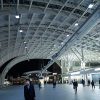
City Night Survey : Saitama-Shintoshin 2019.04.11 Lin Hu + Hikaru Kimura Saitama Shintoshin is a district established around the year 2000. Centered on JR Saitama-Shintoshin Station, it is an intensively structured urban area featuring a variety of functions, including large-scale commercial facilities, a major multi-purpose arena, government office complexes, and hospitals. This survey examined how this planned city has evolved from the perspective of lighting. Nightscape over the heliport from the Saitama Government Office Complex Light Linking Spaces A pedestrian walkway system is installed around Saitama-Shintoshin Station, utilizing an active pedestrian-vehicle separation plan that allows for smooth circulation from the second-floor station gates to various facilities. While the ground level is brightly illuminated by roadway pole lights, the pedestrian walkways feature lower-level lighting such as uplights and footlights—excluding some decorative pole lights in park areas—creating distinct expressions of light for each zone.Saitama-Shintoshin Station is connected to Kita-Yono Station by a walkway spanning approximately 600m. A continuous cantilevered glass canopy allows pedestrians to walk without getting wet in the rain or being stopped by traffic signals. Along this route, there is a straight path of about 100m running parallel to the railway tracks. Here, despite the cantilevered canopy structures being identical—likely due to differing construction phases—the lighting techniques varied across three distinct types. Although the architectural design is similar, the change in lighting methods results in varying levels of brightness depending on the location. While achieving uniformity may seem important, using different…
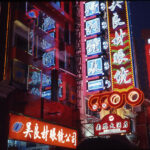
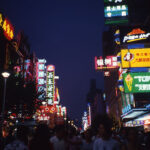
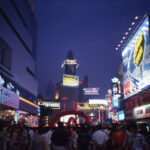
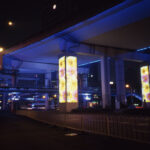
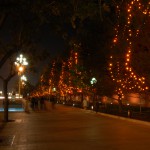
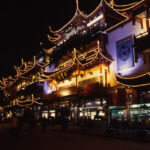
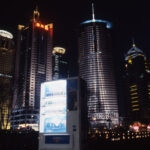
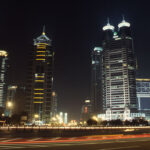
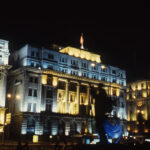
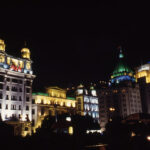
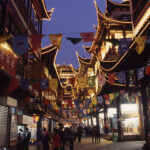
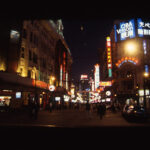
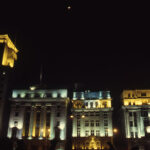
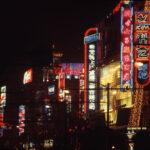
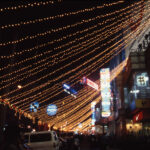
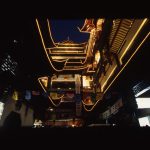
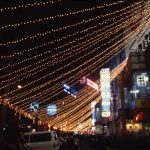
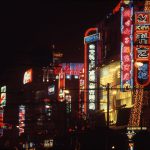
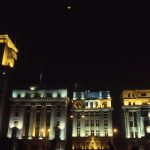
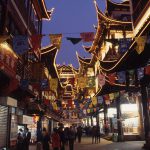
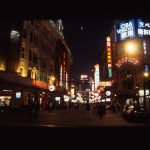
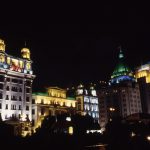
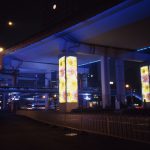
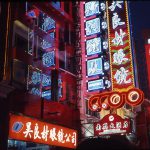
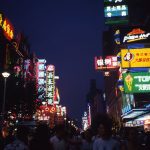
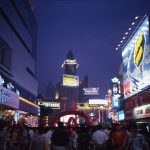
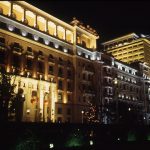
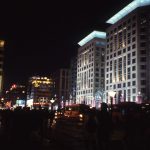
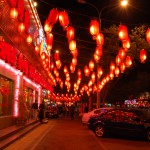
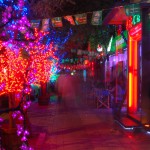
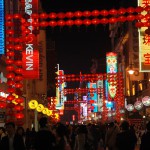
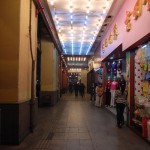
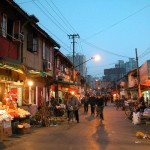
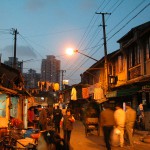
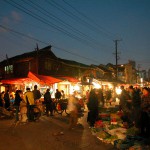
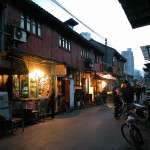
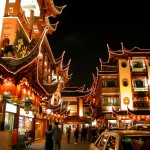
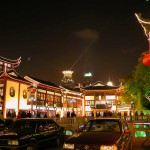
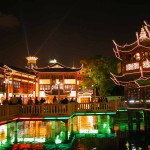
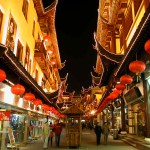
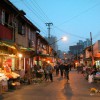
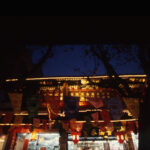
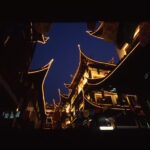
Developing Shanghai is propaganda for the world to see, as the streets of Shanghai seem to explode at night under the glitzy lights of this nightscape. One night the groups of row houses were removed, and the next, modern architecture appeared in their place. There was no time for theorizing about lighting culture, and the city became engulf in a flood of light. Shanghai is a gathering place for people from all over China. The bear light bulbs hanging in the streets cast skeptical glances over this developing city, but preserve the chaotic charm of the back streets. Daily development and innovation in the Pudong Xingqu District. Architecture from the colonial period is still standing in Bund, but the glitzy lights are more liable to catch one`s eye.