


8
category:
Update:
YOU MIGHT ALSO LIKE
Other Activity
Night Walks in Basel
More
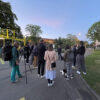
Basel Architecture Week 2022 2022.05.10 & 05.13 Lisbeth Skindbjerg Kristensen+Kelly Bannwart+Michael Hübscher ■ At the Biegining In January 2022, Kelly Bannwart and Michael Hübscher from the Basel Lighting Design office HÛBSCHER GESTALTET contacted the Lighting Detectives to ask if it would be possible to do a col laboration during the upcoming Basel Architecture week. It was quickly agreed that Lighting Detective core member Lisbeth Skindbjerg Kristensen, who currently lives in Basel, would participate. The theme of this year’s Architecture week was “Reale Räume” (Real Spaces) of three current development sites: Dreispitz Münchenstein), Bachgraben (Allschwil) and lybeck (Basel). The AWB uses various formats to promote dialogue between experts and local protagonists. The Forum offered an opportunity to discover these sites and exchange views on the urban transformation process with the various stakeholders. For the night walks Hübscher Gestaltet had chosen to focus on the areas of Dreispitz and Klybeck. Both areas are currently undergoing transformations from mainly industrial to mixed use and residential neighbourhoods. Michael Hübscher and Lisbeth Kristensen welcome the group and introduce the route and purpose of the night walk Discussing the value of lighting as a wayfinding and informative tool Hero: An evenly lit passageway where public and private lighting elements supplement each other Hero: The illumination of the plaza creates a nice ambience with paths illuminated for safe passage across the space. Villain: Observing the abrupt threshold between light and dark waiting to see if glary security lighting…
Detective Note
Vol.003 – The Herbivorous Younger Generation
More
Interviewer: Mayumi Banno Theme:The Herbivorous Younger Generation Banno For a change, I`d like to talk about the younger generation today and their nickname as “herbivores” or “introverts.” Since I have been with LPA, I have had the opportunity to travel abroad often on business trips. Especially in China, you can really feel the energy, vitality, and an air of excitement, almost the opposite of Japanese society. The current status of Japan scares me as businesses are getting harder to expand and the need to look at foreign markets is building. However, this younger generation of herbivores and introverts is also growing. The future of Japan is a little worrisome. Mr. Mende, you are anything but an herbivore. Were you already thinking outside of Japan in your 20`s? Mende Well, for starters, I really love my work and it doesn`t really matter if it is in Japan or another country. However, the approach to projects in Japan is different and of course, the language is different. This can get messy and cause a lot of headaches, but if you slowly increase your vocabulary, it can really be a thrilling opportunity. I have always had a rich sense of curiosity, so this challenge just inspires me to move forward. In other words, it depends on whether one is willing to repeat over and over again these “small adventures” that make up our life. Nowadays, the young generation is hooked on the internet. Everything comes off…

City Walks and Salon
The 60th Night Walk: Jiyugaoka
More
2018/04/06 Naoko Oguchi + Shinichi Sakaguchi + Daisuke Miura + Wenyuan Zhang Night Walk Map Jiyugaoka, a neighborhood renowned for being fashionable. Each street has a name, such as Jiyudori, Gakuen-dori, Marie Claire-dori, Maple-dori, and Megami-dori. They are lined with a high concentration of shops selling miscellaneous goods, cafes, and sweets that make you want to stop and browse.We investigated whether the nighttime lighting was as stylish as the neighborhood’s reputation. Jiyugaoka also ranks high on lists of “most desirable places to live.” This time, we conducted a Night Walk Survey on the various streets extending from Jiyugaoka Station, focusing on their “stylish” appeal. Member Oguchi Explaining the Night Walk Survey Overview Hiro Street, which received many votes as a hero Streetlights Attached to Residences on Shirakaba Street In the side alleys, there were also small streets that felt like you were being drawn in by the light of the paper lanterns The Unbalanced Streetlights of Green Street People Relaxing on Benches on Green Street Street light at residential area (4300K、19lux at ground level) Too many spotlights were installed on the wall surface The Get-together After the Night Walk Survey ■Team A (Shirakaba Street, Gakuen Street, Residential Area)Team A first walked along Shirakaba Street, a small path between the station rotary. It’s a street where old and new stores coexist, and we saw a rare sight in Japan: old-style streetlights attached directly to the walls of residences. The color temperature of the…

Candle Night
Candle Night Summer Solstice 2005: Omotesando Debut!
More
19 June 2005 “Turn off the lights and take it slow.” The time to turn off the lights and relax by candle night was once again upon us as the Lighting Detectives and Musashi Art University students collaborated with local elementary school students to celebrate another Candle Night on the 2005 summer solstice. Up until now the local event was limited to Harajuku`s Cat Street, but this year we have widen the venue and pulled the June 19th event out into the open of Omotesando. Started by an environmental NPO, this nation-wide event is a slow, relaxing time to reflect on human nature and rethink our positions on the environment, energy conservation, and the modern lifestyle. More then 20,000 venues all over the country participate in this “lighting down” event with 300 of those venues also displaying candle installations. With each biannual celebration the circle of light continues to grow. Children’s Lantern Parade Along with their parents, 50 or so children from the local Jingumae Elementary School and the local Omotesando trash detail crew, Green Bird, started off from the school on a lantern parade that would take them to a rendezvous point at the new Cartier Store construction site and then down to the Oriental Bazaar. Roman candle-shaped lanterns, made by the children, were first carried to the rendezvous point where the Chief of the Lighting Detectives, Kaoru Mende was waiting. The Roman candle lanterns were exchanged for shopping…
Children's Workshop
Children Workshop Experience the old traditional Japanese house in Chiba
More
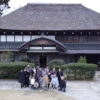
Let’s think about the importnace of even the smallest light in the dark 2023.11.25-26 Sachiko Segawa+Noriko Higashi+Mami Kono Nakanoya, a 119-year-old private house, and participants こどもワークシWe have held several “Irori (hearth)” gatherings at the Children’s Workshop as a way to experience the darkness, and we have always been thinking about the idea of spending the night in an old private house.The workshop was designed to fully engage all five senses, with the expectation thatr spending the night using as little electricity as possible and only small lights would reveal something different from the usual.This year’s children’s workshop was held in an old house in Otaki Town, Chiba Prefecture, under the theme “Let’s think about the importance of small lights in the dark!For these few years, we could not hold the event due to the COVID-19, or when we did hold it, we didn’t get opportunities to have time talking with the children. This year, however, we decided to have an overnight program to spend time with the children to feel the light. 6 children, ranging from 5 years old to 2nd grade elementary school students, gathered and enjoyed the workshop. The children designed lanterns freely with pens and cellophane This old house, called Nakanoya, has a thatched roof and the Irori hearth. In order to spend the night without relying on modern lighting as much as possible, we first made lanterns. The children made the lanterns by drawing pictures and pasting…