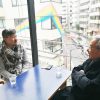

Lighting designer’ VS ‘Lighting planner’ Interviewer: Karen Huang Karen: Mende san, today I would like to talk about the definition in between ‘Lighting designer’ and ‘Lighting planner’ since I thought about how we could define the direction or the ‘concept’ for the title of ‘lighting designer’. Just in my own opinion, the feeling of naming ‘designer’ and ‘planner’ are slightly different. Feels like ‘designer’ should pursue more creative and innovative ideas on design work, even though that is kind of challenging works. The other side, ‘planner’ feels like to support more accuracies of demand and standard regulation. If you could easily interpret that ‘designer’ may be more close to the art field and ‘planner’ shall be close to the engineering field. Of course, that is purely based on my own thinking. Our company name is ‘Lighting Planners Associates’. May I ask the reason why Mende san has chosen the ‘planner’ instead of ‘designer’? Mende: Well, do you feel the word ‘planner’ is strange? Haha~I still remembered it very clearly when I was considering the company name. At that moment, I asked Mr. Paul Marantz about the name ‘Lighting Planners Associates’ and got some feedback. He said ‘why you don’t call your company name to be ‘MENDE LIGHT’’? Actually, it was a very surprising feedback for me. I didn’t want to reflect my name on the company identity. But actually in the USA, it was not so common to use ‘designer’, but…
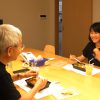
Work Style Revolution Interviewer: Tomohiro Mukaihira Mukaihira:Today I`d like to talk with you about design and work balance, not as a lighting designer, but as Mr. Mende, the entrepreneur. Recently, the workforce is decreasing with several social issues such as, childcare, nursing care, and overworking to resolve amid calls for work style reform in Japan. Mende:Do you think you and others your age are being overworked? How many work hours is ideal? Mukaihira:It seems that many Japanese are being overworked to the point of exhaustion. I think the ideal is 9 to 6 and being able to punch out on time. Mende: I see. As expected, an 8-hour day. However, what is “punching out on time”? A farmer will get up early in the morning to tend his fields and work into the night fixing and managing tools and equipment. I don`t think they have a punch out time. Mukaihira: I think there are two types of working style; one is just working for money and two working for self-fulfillment. The former, probably wants a shorter schedule and the later might be willing to work longer hours. What kind of working style did you have in your 20`s and 30`s? Mende:I`m pretty much a nerd and love working! So I don`t think my style is a good reference. I really love my work!! Before I became a designer I had several jobs, like delivery. At home I wash dishes, vacuum, and…
Design Starting with Imitating Interviewer: Kentaro Tanaka Tanaka: Today, I thought we could talk about lighting design and how to protect copyrights, but I think I`ll tone it down a bit. Shall we discuss the act of imitating instead? So to waste no time, a perfect copy of the original is a big no-no, but what about imitating? Is it important? Mende:Hmmm. It might be an “honor” to have something imitated, but the act of imitating can lead to noticeable crudeness. Have you ever imitate someone else’s work? I`ve copied many gestures and behaviors over the years. Tanaka:In the profession of design there are so many imitations. Product design, emblems, fashion, etc. You see and hear about copies all the time. Mende:I don`t think that is imitating, but plagiarism and stepping over the line to outright infringement of copyright. However, all of the great architects and designers want to be better than those before them. Tanaka:Yes, you are right. Outright, wrongful intent is just a knockoff. But I think it is a blurred line. There are those that want to learn from the great, but intentional use is unaccusable. As a professional designer, there are so many times you have a vague feeling of I`ve-seen-this-somewhere-before. And usually, it is probably a similar idea just in a different shape or context. I think design work is a lot of mixing up of things we have seen or are still in our memory…
Hairstyles Interviewer: Chika Makabe Makabe:Today I`d like to talk about your hairstyle. Also, I thought it might be fun to take a peek at your private life, a different side of the lighting designer, Mr. Mende. But let`s just see where the conversation takes us. Mende: Hmmm…Yes, let`s see… I am a very curious person, so I like to try new things. About my hairstyle, I have tried an afro before. Also, I used to part my hair straight down the middle! Makabe: I saw a rare picture of you with curly, permed hair when you were younger! For me, short hair, brushed back on the right side is the standard Mr. Mende. I don`t really have an impression of your playing around with your hairstyle. Mende:I think I got the perm right after I graduated from the university. I had a friend who lived in Nihonbashi and worked at a hair salon. This picture was taken around the time I just started working as a lighting designer. The ladies magazine JJ was doing a close up on “Up and Coming Lighting Designers.” Now that I see this picture again, it`s a little embarrassing. Although if I do something too strange, my wife will get after me! I have to consult with her, too! Makabe:I see. You take into account your partner`s feelings before trying a new hairstyle. By the way, on your online schedule, you have a monthly haircut scheduled…
Theme:Lighting Design Awards Interviewer: Li Jinmu Jinmu:Mende San, today let us discuss about design awards. When I was in the college, I actively joined many student design competitions. During my final year in the University, I particularly got a chance to participate an urban design competition. Mende:Why were you interested in taking part in design competitions? Jinmu:As you may know I majored in landscape architecture. Through this competition, I was able to team up with other architecture and urban design students. That was something I had never experienced before. I would like to know other people’s thoughts throughout the entire process. Mende: Really? So, the purpose for you to join the competition is to know something? You didn’t intend to get any prize? Usually, people would like to win. Jinmu:I didn’t expect too much at that time. My school invited several top universities in the world to participate, such as University of Tokyo, University of Pennsylvania, thus I learned to take a better yearning attitude. Adding to the difficulty, Kazuyo Sejima from SANNA was in the Jury. She came to Singapore, and our group had to present to her and other judges. It was a very interesting experience for us, and surprisingly, we got the third prize at the end. Mende: I see. One of the function of the design award program is to encourage young people to challenge themselves. Jinmu:Perhaps this is also to get the motivation for my design…
Theme: Value of Time for Designers Interviewer: Catherine Wong Catherine:So today our topic is TIME. Mende san, you always travel around to have meetings, lectures, forums and interviews through these years. You must be asked about thousands of questions. I was quite surprised you haven’t talked about today’s topic before. Mende: Yes, I can’t remember any interview talking about time. It is quite fresh for me. Time is very important to everyone’s life, especially business or achievements. It’s always quite difficult but important aspect for design. I do like to forget about time sometimes. Do you have any occasion don’t worry about time? Catherine:No, I always remember and aware of time as well. (Laughed) Mende: I wish to forget about time, you know. But unfortunately I always automatically think about the next scheduled task, and try to finish this task by designated time. (Laughed) It is not smart to me to have this habit. I think this is my bad attitude. How do you think about Mr Mende, as a very punctual and straight person about time? Catherine: Umm… I think it is okay. It is because this is your personality and attitude. To me, if you are aware of time that means you value the thing you are doing and respect the person you are with. Mende:Yes, yes. On the business occasion, time is quite valuable, first priority maybe. That is why I am always checking with our staff, for example…
Favorable Lighting for having Drinks Interviewer: Shosaku Takahashi Takahashi: Today`s theme is “Favorable Lighting for having Drinks” so instead of coffee I thought we could relax and talk with an alcoholic beverage today. Mende: It`s not a coffee break anymore, but I could get used to this. Takahashi: I like to go out for drinks, but I always get preoccupied by the lighting. When a group of friends gets together for drinks and a good time, of course a light filled area is better suited, but at home I like to turn the lights down low. This feels really luxurious to me. The relaxation effect is wonderful while having a drink in a dimly lit atmosphere. Mende:So you drink by yourself. Drinking by yourself in a dark place, isn`t that a little depressing? Takahashi:I`m a positive thinker, so I don`t get depressed. It helps me think. If I have friends over for drinks they don`t like the dark atmosphere, so this is one way I relax by myself. What type of lighting do you feel is the most relaxing and luxurious for having a drink? Mende:What do you drink at home? Beer? Takahashi:Mostly whiskey. Mende:Aha, whiskey! Yes, I don`t like to drink beer in a dark place, either. Whether it`s a meal or drinks, I feel the most luxurious setting is outdoors under the sun. Sipping sparkling wine with a little breeze on your face, that is the best! Eating and…
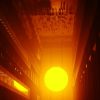
Theme: Light art and Lighting design Interviewer: Blanche Lam Blanche:LPA is a lighting design firm. The works mainly focuses on design rather than art. What do you think about design and art? Mende: Good question! But I’d like to ask you before my correct answer, Blanche. Blanche:I studied both art and design before. Art could be explained through personal emotion or convey the message to visitor/ audience. Each artwork has its own story. For design, depends on user or purpose or different situation to improve and change. How about you, what do you think about art or artist? Mende: Artist is a great career. I like art but I decided not to be an artist. Artists are more isolated spiritually. Recently, there are many people saying that designers should be much closer to artist and artist might learn many things from designer. But I don’t think so. We should be inspired by each other. However, artist doesn’t need to think about the neighborhood or others happiness. Just express their feeling or passion. But the designer always think somebody else happiness. Blanche: How about “lighting art”? Mende:I’m not familiar with this word “lighting art”, usually I would say light art. I know James Turrell and Olafur Eliasson, great artist who manipulate light as material. You cannot forget those two artists. I respect their works very much. Olafur Eliasson had an exhibition in London that is huge artificial sunlight. They cannot be compared with…
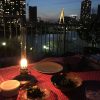
The cherry blossoms have fallen and scattered and the riverside before my eyes grows over in a mixture of shades of green. The smells of new green leaves and the scent of spring coming to an end rides on the breeze. It is a rare Sunday with no work or business trips, just fine weather. As I was watching the surface of the water along the Sumida River, I heard a little voice “Have you forgotten about your Detective Note?” So pitiful, I can`t even remember the last time I wrote a Detective Note…. So, I apologize and I have decided to write down a few simple thoughts. The topic this time is the chemistry between twilight and an oil lamp. Before my trip to Vietnam last week, I took a few pictures in my rooftop garden. Just as I was lighting an oil lamp for the dinner table, across the river, the evening sky was a beautiful gradation in the full blue moment. At my house, we like to enjoy the start of the evening with drinks and appetizers outside, then come in for the main dish. I don`t think I even need to explain how great this slow, relaxing and rambling time before the main course feels. Alfresco dining with a slight breeze and the last light of the day is the best. Imagine the orange flame of an oil lamp against the backdrop of this clear blue…
Theme: Scope of Lighting Design Interviewer: Sunyoung Hwang Sunyoung:Would like to have a talk with Mr. Mende regarding scope of our work, architectural lighting design. Sometimes it is hard to tell how much we should take care of the ‘other’ lighting that are not under our usual contractual scope but still affects architectural lighting. Mende:(While drawing a diagram) We take part of architectural lighting so do not hesitate to propose architectural design. Sometimes, there are overlaps between structure, mechanical engineering or even energy consumption calculation such as Greenmark. I am a little afraid that lighting design these days are becoming to be too technical. Also project mapping and media facade, I would say entertaining part for commercial advertisement and graphics for events.. Scope is always overlapping and regarding our contract to clients, it is difficult to say ‘no’ all the time for those areas. Sunyoung:That is right.. it is difficult to draw line sometimes. By the way, I prepared some visuals to share with you. These are pictures of event lighting for Christmas and Mid-Autumn festival happened last year. Although event lighting is always temporary, many times, I found that it does not really go well with the architectural environment it is placed in. It was quite sad to see. Even my friend who has no background in art or design would say it looks horrible. As a lighting designer, I feel somewhat responsible on lighting environment we face daily and I…
The Fashion of a Lighting Designer Interviewer: Koki Iwanaga Iwanaga:Mr. Mende do you have any preferences towards fashion. I really like the fitted jacket that I see you wear quite often. Mende:Yes, that jacket is so comfortable and easy to coordinate that I have several in the series. It’s an Issey Miyake design. It is compact and can be crumpled up so it is great for business trips. About twice a year I go shopping at Ginza Matsuya to treat myself. The printed shirt I am wearing now I fell I love with it while window shopping in Firenze. My heart has been stolen by other printed shirts a few times while window shopping!! How about you? Do you have any fashion preferences? Iwanaga: I don`t really have a brand that I totally love, but I do have a few simple rules. I usually choose my clothes based on the weather and what I`ll be doing for the day. For example, if I have a big presentation I`ll wear a dress shirt, jacket, and slacks. If I just have an internal meeting I`ll wear maybe a t-shirt and jacket or a collared shirt. If I have to go to the construction site for the day, I`ll wear a long sleeve shirt, even in the summer or dark color clothing for a lighting experiment. Mende:Yes, those for pretty obvious rules. Even I decided what color to wear based on my feeling for…
Theme”Individuality in Lighting Design” Interviewer: Ye Yu An example of too much individuality in Chinese lighting design. An example of individualistic lighting blending with the natural surroundings. Ye:Today I would like to talk about uniqueness and individuality in lighting design. For me, I think individuality is unnecessary in lighting design. However, in China many designers like to emphasis their own individuality in projects. Maybe they need to express individuality to become a top designer and the Chinese make this easy by valuing individual uniqueness in projects. Mr. Mende do you like individuality in lighting design? Mende:Yes, I think projects should have individuality, but there are ways to go about it and this is the difficult part. A few wrong steps and a project can quickly go from odd to bizarre to tasteless. Ye:Do you think LPA`s projects have individuality? Mende:Sometimes LPA`s projects are visited by acquaintances and without any prompting they deduce “Is this LPA`s work?” So one could say this might be LPA`s individuality. Ye:I often hear feedback like “This is so LPA.” I think LPA has its own style, but I can`t put my finger on it. Mende:I do not tell the LPA staff to “create something especially unique” or “do something radical.” But I am also not going to reject new ideas or methods of expression. Ye: Since I have been with LPA the one phrase I hear often is “create people-friendly light.” When the staff are working…
Theme:The Department of Lighting Design?』 Interviewer: Yuri Araki Araki:I`d like to talk today from a student`s point of view about lighting design. When I was at the university I studied architecture. One of the first things we did was study old, ancient architecture and talked about what and how architecture should be. Moving from period to period, we discussed the different styles of architecture that developed. Lighting design doesn’t have the history yet and even professionals are still debating the how and what of lighting design. There is no distinct starting point and I am having doubts about how this professional will develop in the future. Recently, the word design is everywhere, but I have never enrolled in what you would call at an Art University a “design” class. So I really have no idea how design and studies come together. I was born during a time of good economic growth and Japan was bright with lots of white light. LPA`s style of dim light and shadow design could be referred to as one type of lighting design?! Mr. Mende, what do you think? Mende:Well, you start with the hard questions first!! Hmmm…well, I think lighting design is much softer profession than you think. I like to think of it in terms of a chef. A good chef has many skills, techniques, and theories. But even with skills and techniques, you have to know your patrons in order to make them…
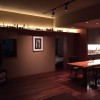
Theme:Home Lighting Interviewer: Angkana Kongchatri Tan:Today we will have a light topic talking about home lighting, I chose this topic because last month (May 2016) I and Singapore staffs had a chance to visit Mr Mende’s new house in Tokyo during company trip. Mende: Ahhhh… what time did you come, at night right? Tan:We came around 9.30pm or 10pm. I think most of us have a same feeling that your place is very impressive. Firstly about atmosphere has a very warm welcome feeling with wood finishing, furniture, all decorative stuff and also lighting helps to enhance atmosphere be more warm. So today I would like to have Mr Mende to share some of your experiences about home lighting. Mende: My house you know, I and my wife don’t like to decorate so much, we do prefer on the simple way of living and keep all stuffs in storage. For my new place, I am quite proud of use real material finishes like wood and stone, paper and plaster. But this topic is quite difficult to say because home lighting is very particular for each family. Each family has different comfortable feeling and value of life, such as Japanese or Thai may have much brighter perception of brightness comparing to European people, right. Tan: How about you and your wife, do you have the same or different perception? Mende: We have slightly different perception, like my wife is much more natural. For…
To be active as a professional after coming back from maternity leave Interviewer: Mami Kono the origin that Graduation production of the university that became the starting point for the world of light Imagine 5-years ahead and set a goal Kono:Today I`d like to talk about making a life plan. And today is your birthday, so Happy Birthday!! Mende:Yes, 66 today. Repeated digits, seems like a good number, but it’s kind of an in-between year. I don`t know if I am classified as old or young?! Kono:I turn 32 this year. Mende:Wow, 32…When you were 29, just turning 30, did you feel the “I can`t believe I`m turning 30!” blues? Kono:Yes!! I wasn`t married yet, but I had a really fulfilling job and private life. But I felt lost about where I was headed in life. Mende: I always set goals or have an image marked off in 10-year segments. Kono:When did you start setting goals? Mende:When was that? I quit my office job at 40. Maybe after that, I really started to envision things around 42 or 43 and then what I would be doing at 52 or 53 and so on. Kono:I returned from LPA Singapore this year and now I am going to have a baby. Up until now, all my time and energy went to whatever I wanted to do. But now I have a husband and soon a baby, I can`t live the single life anymore!…
Drawing shadows on white paper. Drawing lighting on blue paper. Interviewer: Masahiro Iwata Iwata:Today I`d like to talk about the differences between painting and lighting design. From an early age I started painting with water colors. Now, I have a habit of seeing most visual spaces in terms of light and shadow. For example the intricate work of the eaves of an old temple reflecting light from the ground or light streaming into spaces of a building. When I first started at LPA you said that “lighting is similar to water colors.” That statement made an impression on me, but what did you actually mean by it? Mende:Did I really say that?! Well, in water color painting layer after layer of paint is used to complete a painting and in lighting design layer after layer of light is often used to complete a space. Maybe this idea of layering colors is similar. A lighting designer must use the beam of light coming from a fixture like a paintbrush to define a space. A large paintbrush might gently sweep a space and a small brush might highlight fine detail. I am always thinking “if I had this fixture in this space” and I can visualize and imagine the painting I would want to draw. Long ago I failed the entrance exam to an art university, but I spent a great deal of time painting and studying watercolors to past the exam the…
Words are Tricky, but Important Interviewer: Haruka Sakoda 2. It`s important to flip through a dictionary from time to time 3. City Walk. Brainstorming for keywords to describe images. Sakoda:At work I feel it is better to make a phone call then to discuss a project over email with a client in Hong Kong or China. Without using visual aids or images one really has to think about what they are saying and choose words carefully. Mende:Are you good with words? Were you talkative from a young age or kept a diary? Sakoda:No, and my writing is also hard to understand. I think I rely on a lot of onomatopoeic and imitative words instead of going into a full explanation. I realize this since now I have to use English at work. For example, in Japanese I might say something like “fuwaa” which means floating or a sense of weightlessness. I don`t know how to explain this sensation. When talking with a client, usually English is neither of our native language and English skill levels are also different. Usually the speaker will fall into grammatical habits that confuse the meaning and construe word interpretation. In order to correctly express one`s ideas manner of speaking and word choice are important. Are you careful of your word choices or conscious of wording? Mende:During a lecture, I feel my words can touch and move the audience in different ways and that is all I…
Lighting for Vechicle Interviewer: Hikaru Kimura Kimura:Today I`d like to talk about interior lighting for transportation. I really like all forms of transportation, but I especially love to drive cars. Mr. Mende: Are you the type that takes on a different personality when they drive? Kimura:No, I`m not a speed demon. I`m the type that tries to lull all the passengers to sleep with my driving. Do you like to drive? Mr. Mende:I`d rather be a passenger than the driver. I don`t drive a lot now, but if you asked me to, my driving is really careful, on a professional level, as a chauffeur. But when I first got my license as a student, I thought I was the greatest and did some dangerous driving. Kimura:You had some rebellious days, too!! However, I`ve always thought of a car as not just a means of transportation, but a moving room. Even though I strongly feel this way, I still have no acceptable answer for car interior lighting. Mr. Mende:For the driver, interior lighting is virtually unnecessary, except when checking the dials. Kimura:Maybe so. However, there are two reasons why I chose this topic today. The first reason, I recently was able to drive a bus. Inside the bus, there were chandeliers and wall mounted brackets, all dimmable from the driver`s seat. Mr. Mende: Regular city buses don`t have dimmable fixtures. Kimura:No they don`t. I rented a charter bus. Up until now I…
What’s inside Mr. Mende bag? Phraporn:I have seen Mr. Mende always carries the same backpack everywhere and curious what is it inside. If Mr. Mende does not mind, could you show what is it inside? Mende: It is ok, but Phraporn, you should also show me what is inside your bag as well. Phraporn: Okay, I will also share. Mende: This is my third generation the same bag. I would prefer the backpack, which I can carry on one shoulder and I can easily grab the things. My first item is the pencil bag, inside there are, 10b pencil for sketch, 0.5pencil for sharp sketch, eraser, fountain ink pen, normal pen, seal for signature, colour highlighter and multi-8 colour. They are all important for the sketches and writing in everyday use. So how about you? Phraporn: I have pencil, pen, colour pencil, folding ruler, and a laser pointer pen. Mende: my next item is B6 sketch paper. I am always carrying this for 30years, as you can see there is some damage at the cover. I need to write it down, as many things are going and moving at the same time. This one is about the design. This one is about the management/ strategy and this one is travelling sketches. Phraporn: As I can see, there are different kinds of papers, how do you use them? Mende:The thick paper is for important memo, the thin paper is for simple…
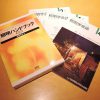
About Books Interviewer: Leon Hitsu Hitsu:Today I`d like to talk about books. First, I`d like to introduce myself through a selection of books I have brought with me. Mende:I see. Let`s see what genera of books you like. Hitsu:I am originally from the school of education, so my first book is about education. Next a guide for writing a master`s thesis, and lastly a book about graphics. By the way, my master`s thesis is titled “Language-less Communication,” in other words, pictograms. Lastly, lately, I have been reading a lot of books related to architecture. Mende:You are quite a reader of various topics! Hitsu:Thank you. I think it really suits me. My goal is not becoming a famous designer, but rather a professor, like you. Being in this place at this time might not be important for becoming a teacher, but I really want to become a college professor or researcher in the future… Or maybe work at a critic. Lately, I have got the idea to publish an encyclopedia of lighting design terminology in three languages, English, Japanese, and China. Or maybe a book explaining my own theories; something to communicate information and educate the public. This is what I am interested in. Mende:Sounds good, but very challenging. You are not a specialist in terminology. How do you plan to put that type of book together? Hitsu: I don`t think it will be that difficult. I have looked, but there are…