2
YOU MIGHT ALSO LIKE
Vol.009 – Days with the Light: My 21-Day “Retreat ” from the COVID Regulations
Reiko KasaiLighting Design ProducerSingapore I am now cramped in a packed economy class flight from Bangkok back to Singapore with my laptop open. I am amazed at the number of people passing through the airport. The reason this scene feels like a dream is that I am still vividly remembering my flight from Japan only a year ago, when the airport was deserted, and I was the only passenger. On the return “private” flight from Haneda to Singapore, I enjoyed strolling around the cabin, chatting and playing cards with the five amiable cabin crew members who were working for just one passenger. The anxiety of the mandatory 21-day hotel stay that awaited me after landing had disappeared. Once again, I was the sole passenger on the bus that ferried me from the empty and lonely Changi Airport, where there were more staff in protective suits than passengers. I was nervous because I was not told where we were going, but we arrived at a high-rise 5-star hotel with a balcony in the center of the city. My prior fearful and pessimistic imaginings – 21 days isolation in the locked hotel room, boredom, stagnation, ill-health, and madness – were completely misled as I spent the next 21 days in peace, comfort, leading healthy regulated time schedule, and happiness. I can say with absolute certainty that what brought me happiness was the view from the room; windows that fully opened to the…
Kawasaki Factory Night Bus Tour: The Hidden Charm of the Factory Nightscape
3 June, 2010 The hottest tour in recent years is the famous Kawasaki Factory Night Bus Tour. Upon news of an upcoming tour, sales agents are bombarded with seat reservations, and within minutes the limited space is fully booked. This is the popular night tour the Lighting Detectives sought to hitch a ride on. The tour would take us to all the popular night viewing spots in the area, as tension escalates with a climatic drive down factory lane! Survied by: Daisuke Yano, Syunichi Ikeda, & Noriko Higashi Inside the tour bus. The guide relays facts and history to Lighting Detective members. The bus picked up Lighting Detective members and departed from Kawasaki Station, headed for different observation spots such as Kawasaki Rinko Warehouse roof and Higashi Ougishima East Park. Through the silent darkness along the Port of Kawasaki, bright-white factory security lighting shone like beckons and we could almost feel the heat inside the bus from gigantic flare stacks. Below are three accounts from members on the tour. Kawasaki Factory Night Bus Tour Route Depart Kawasaki Station ↓ Kawasaki Mari-en Observation Hall ↓ Municipal Wharf ↓ Rooftop of Kawasaki Rinko Warehouse ↓ Higashi Ougishima East Park ↓ Drive along Metropolitan Expressway from Kawasaki Interchange (Viewing from bus window) ↓ Drive down Ginza Chuou Blouvard (Viewing from bus window) ↓ Arrive at Tokyo Station and end of tour Tour route in the Port of Kawasaki. From here, the bus took…
Vol.061- dan sha ri
Interviewer: Junko Nagatomo Nagatomo:Today’s topic is the art of decluttering or living a minimalist lifestyle. Decluttering is a thought process of yoga. I didn’t know this, but in Japanese the three characters that make up the word Danshari, or decluttering, each have a meaning. 断―(dan) the refusal of things coming into your home or life 捨―(sha) the discarding of unwanted things 離―(ri) to abandon the obsession of possessing things So, decluttering is not just about throwing things away, but also about organizing your surroundings and reducing fixations on having possessions, which in turn reduces mental stress. I became interested in decluttering about three years ago when I was in the process of moving. I had so many things packed into a small closet like a tetras puzzle. When I finally took everything out, way in the back were many things I had forgotten about or already had a duplicate. So when I moved, I threw away so many things that weren`t being used and now I really try to avoid possessing and keeping unnecessary things. Mende:However, I think many Japanese feel that fewer possessions doesn’t really relay a lived-in, at-home feel. In western culture it isn’t uncommon to continue using a pair of your grandfather`s shoes, bag, or other items for tens of years. But Japanese seem to use things for a shorter cycle or just single usage. Experts also say that Japanese consumers are not satisfied unless there is…
Newsletter vol.111
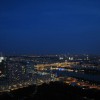
Date of Issue: July 11,2022・Activity 1/City Night Survey : Shibuya, Tokyo(2022.03.10) City Night Survey : Shibuya, Tokyo 2022.07.11 Hikaru Kimura + Yonglin Ke + Xueying Piao Shibuya, known as a youth hub, began redevelopment in 2012, transforming into a business district with a cluster of new office buildings and commercial facilities. While many new restaurants have emerged, traditional drinking alleys remain intact. This survey investigates the contrasting night scenes of the new and old Shibuya. ■Overlooking Nightscape of ShibuyaFrom the Shibuya Scramble Square, the rooftop of Miyashita Park stands out prominently to the east of the central railway tracks. The warm glow along the podium belongs to Shibuya Yokocho (alley). Nestled beside the pitch-black railway tracks and appearing as a dotted red line is Nonbei Yokocho. Viewed from above, Nonbei Yokocho exuded a soft, flickering light, resembling candles, in contrast to the lively and vibrant atmosphere of Shibuya Yokocho.The overall nightscape, divided by the Yamanote Line tracks, presents a striking contrast: the western side is dominated by tall buildings, densely packed with billboards and advertisements, exuding the lively energy of a traditional entertainment district. The eastern side, on the other hand, has fewer billboards and subdued signage, giving it a unified and calm appearance.I wonder if Shibuya will eventually become a more standardized urban landscape, much like its eastern side. Personally, I felt the bustling, nostalgic charm of the western side embodies the true spirit of Shibuya, and it’s something worth…
Vol.077 -Cities and Countryside
Interviewer: Masashi Kurobe Kurobe: Today’s coffee break theme is “Cities and Countryside.” I come from a rural town, but I have been living in Tokyo for some time now and have gotten used to urban life. Recently, I went to Shimane Izumo for a lighting survey. While walking through the town, I found that the lighting was different from that in the city, simple and not overly decorated, which was very attractive. Personally, I like experiencing first hand light in rural areas and viewing city lights from a distance. For example, the night view from the LPA office. Mende: That’s a new perspective. Speaking of “cities and countryside,” when we say things like “there are no dark places in Tokyo,” but in the countryside, there are so many dark places that people might fall into rice fields. So, they say they need more lights and install LED security lights. Stereotypically speaking, I think there is a huge difference in the atmosphere or quality of light in the city and the countryside. Kurobe: That’s true. When I lived in my hometown, I never thought darkness was an inconvenience, but now when I go back home, there are so many places that are truly dark and you can’t see anything.Now, I think you’ve traveled to many countries. Do you have a favorite rural town or countryside area? Mende: I have traveled, but mostly for business trips as an adult. So my perspective…