Lighting Detectives chief, Kaoru Mende, announced activities and goals for 2018.
Please have a look!
We are waiting for your participation in our activities.

Lighting Detectives chief, Kaoru Mende, announced activities and goals for 2018.
Please have a look!
We are waiting for your participation in our activities.
Date of Issue: 28 November, 2023-Activity 1 / City Night Survey : Urumqi, China(2023.09.22-09.26)– Activity 2 / Kaoru Mende / Lighting Design Workshop 2023 (2023.09.16-09.16) City Night Survey : Urumqi, China2023.09.22 – 2023.09.26 Ke Yonglin + Chuanyi Liu Xinjiang Uygur Autonomous Region is the largest province in China in terms of area, and borders eight neighboring countries. It is also a multicultural and multi-ethnic area.Since ancient times, it has prospered through long-distance trade with China, Central Asia, India, Iran, and Europe, and has been an important hub along the Silk Road with active cultural exchange. We surveyed the light of Urumqi, the largest Uyghur city, an unexplored area of the Lighting Detectives where all cultures coexist.It has prospered in international trade since ancient times and has become an important region on the Silk Road. Trade and cultural exchange took place with China, Central Asia, India, Iran, and Europe. As a result, Xinjiang is a multicultural and multiethnic region. It is a very mysterious region that has become a famous tourist destination in China in recent years. We have been investigating Urumqi, the largest city in the region.Urumqi has been urbanized through redevelopment in the past decade, and I had the impression that commercial facilities, office buildings, and housing complexes occupy most of the city. The old city was built around a mosque, but the mosque is now covered by buildings. (Ke Yonglin) ■Xinjiang International Grand BazaarNo visit to Urumqi is complete…
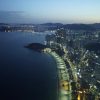
Date of Issue: 23 August, 2024 ・-Activity 1 / City Night Survey – Busan, South Korea(2024.05.16 – 05.19)・-Activity 2 / Children Workshop in Omishima Island(2024.07.13) City Night Survey: Busan, South Korea2024.05.16 – 05.19 Mari Kubota+ Noriko Higashi Busan, South Korea’s second-largest city, is one of the world’s major port cities. In recent years, it has also gained fame as a hub for tourism and film. We surveyed the lighting in Busan, which is also a member of LUCI (Lighting Urban Community International). South Korea is a close neighbor, just 1.5 hours from Tokyo by plane, making it a popular destination for quick and affordable trips. Busan, the second-largest city in South Korea, is not only a tourist destination but also a major port and an entertainment center, hosting film festivals. As a member of LUCI, Busan has been focusing on urban lighting as part of its urban planning. In 2015, the city developed an extensive overview of its nightscapes, resulting in the Busan Urban Light Policy for 2030. This policy has been updated several times, reflecting the city’s ongoing efforts in implementation and improvement. The guidelines divide Busan into several zones, each with lighting tailored to its specific characteristics.We traveled to Busan to assess whether the city’s lighting contributes to safety, beauty, attractiveness, and the local economy at night. ■Jagalchi Market Jagalchi Market is South Korea’s largest seafood market, selling both fresh and dried fish. After purchasing seafood on the first floor, visitors…
Interviewer: Ito Yuki ITO:Today I`d like to discuss the “appeal of dark spaces. ”Dark space is a pretty rough idea. However, I imagine not totally pitch, black spaces, but dark spaces with a softly lit lamp, a level of darkness to feel comfortable and relaxed. Do you have any lasting impressions or experiences with dark spaces?! MENDE:Memorable dark spaces…hmm…I have so many. It is hard to choose. The level of darkness at a hotel I stayed at in Phuket left a very lasting impression. As a hotel, the level of darkness was unthinkable. I couldn’t even read the menu in the hotel restaurant. However, the interesting thing is, at first, the darkness felt very inconvenient. But as my eyes started to adapt, I gradually got used to the darkness. If I wanted to do some work in this space, it would probably be harmful. But if one is not reading or writing, I felt it was a very comfortable space and level of brightness. ITO:The fixtures I use in my home have a function to change the level of brightness and color temperature. I usually set the color temperature and brightness at the lowest setting, creating a very dim room. So, I really understand the feeling of relaxation in a dark space. MENDE: Isn’t such a dark room inconvenient for everyday living?! ITO:If I want to do some work, yes it is inconvenient. So when I set the lighting low, I…
Observe the nightscape of the newest spot, Azabudai Hills~Toranomon Hills2024.0 5.10 Shinichi Sakaguchi + Amane Kotani+ Naoko Oguchi+ Yuko Nakayama Eight months have passed since the last city night survey in September last year. The first city night survey in a while took place in Azabudai Hills and Toranomon Hills Station Tower, two of the hottest areas in this year. A large group of 43 people enjoyed walking around this newest spots. A walking tour of two new hot spots in Tokyo, Azabudai Hills and Toranomon Hills Station Tower.Due to the abundance of sights, most groups focused on Azabudai Hills, and ended up speed-walking through Toranomon Hills Station Tower as time ran out. ■ Group 1 Group1 focused on Azabudai Hills. At the entrance to the Garden Plaza, the first building in Azabudai Hills, the unanimous hero of the survey was the lighting embedded only in the automatic doors as a “modest welcome mat”. Conventionally, downlights on the ceiling surface would be used to illuminate the entrance, but integrating them with the doors keeps the doors out of the shadows and makes for a more beautiful entrance. By using this method, there is no need to worry about interference from guide lights, etc., and the floor can be well illuminated. Once you pass through the garden plaza and step outside, the lighting in the landscape is much more subdued, and you are drawn to the lighting of the stores. What…
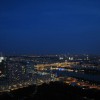
Wien is a city of artistic culture built upon the glory of the Habsburg Family Rein. Floodlights illuminate the heavy, stone architecture along the old streets, but just across the way is newer architecture with systems of LED`s that illuminate shear glass facades. The clash between the old empire and new culture is clearly visible in this city. viView of the City of Wien from Donauturm Observatory. The city, clustered around the Danubian River as it winds through the urban landscape, is beautiful at dusk. Nineteenth-century buildings used to store gasoline, Gasometer, have been transformed in to apartment buildings, shopping malls, and other facilities in 2001. Lights from the new living quarters spill out over the redeveloped area. Stephans Plaza at night. All the shops are closed, but store windows are aglow with soft light. Neon lights and other illuminated signage are also more visible along this street.