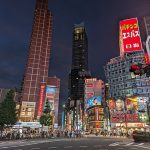
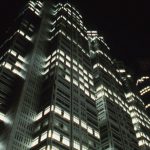
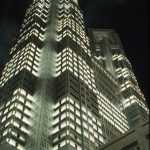
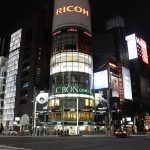
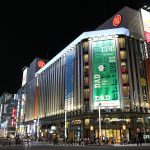
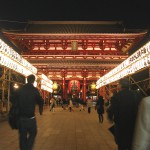
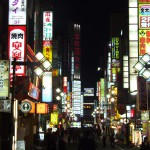
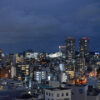
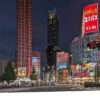
2023.07.19 Shunichi Ikeda + Masashi Kurobe + Yuta Shibata Shinjuku Kabukicho, Japan’s largest entertainment district, is a dazzling neon-lit labyrinth filled with restaurants, movie theaters, and amusement facilities. Its streets are teeming with people all night long. In recent years, however, the district has faced challenges, such as the growing presence of “Toyoko Kids” congregating in Cine City Square and engaging in criminal activities. Despite these issues, the opening of the new iconic Tokyu Kabukicho Tower has brought renewed attention to the area. As lighting detectives, we delve into the current state of Kabuki-cho, examining its lighting environment and cultural significance. ■Kabuki-cho Reborn: A Post-COVID Entertainment DistrictSeventeen years after our lighting survey in Shinjuku in 2006, Kabuki-cho has evolved from large-scale development into a global tourist hotspot. Though deserted during the 2020 state of emergency, the area is now vibrant again with the opening of Tokyu Kabuki-cho Tower. This survey revisits Kabuki-cho, comparing it with the previous survey and analyzing its changing lighting environment. ■Tokyu Kabuki-cho Tower: An All-Out Entertainment ComplexThe Tokyu Kabuki-cho Tower, a 48-story, approximately 225-meter-tall, super high-rise entertainment complex comprising a hotel, movie theater, theater, and more, opened in April 2023.Upon entering the building, I was overwhelmed by the countless glittering lights that filled the space. The small shops and narrow corridors were adorned with an excessive number of paper lanterns, creating an atmosphere reminiscent of an Asian festival. Outside, the building’s digital signage, facade indirect lighting, reflected…
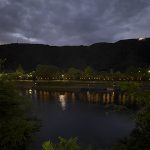
Rich in local history and cultural facilities, Ueno Park covers a large area in the middle of Tokyo. Even though located in an urban setting, we anticipated a lighting environment completely different than the lights of downtown. Between the trees and darkness of the park there are patches of Tokyo`s bright night sky, but the hushed silence is isolated from the city`s hustle and bustle. Ueno Park`s quiet presence gently sleeps next to Tokyo`s vibrant downtown. Approaching Ueno Park from the JR train station. The large overhang of the Tokyo Bunka Kaikan is brightly illuminated in contrast to the surrounding darkness of the park. A view o f northern Tokyo over the Shinobazu Pond from an elevated Ueno terrace. The bright lights of a vibrant downtown are seen in the distance beyond the dark trees of the park. However, through the darkness a bright, orange, sodium lamp illuminates the Benten Shrine near the pond. Looking towards the water fountain plaza from the Tokyo National Museum. A slightly bright night sky, characteristic of most metropolitan areas, opens over head with a dark belt of trees and tiny dots of light below. Young couples seeking a quiet spot away from the lights, snuggle up together on near benches.
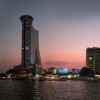
Bangkok, a city in a swirl of on-going change. In our previous survey of Tokyo’s Kanda River, we discover that the backs of buildings face the river creating and area of dark contrast in the middle of the city. But here along the Chaopraya River the opposite is true with the front facades lining the waterfront. Open-air restaurants and bars occupy the rooftops, as the spectacle of the city spreads out below. The Millennium Hilton, Bangkok, opened in May of 2006, is the first major hotel brand to open a hotel in the country in 20 years. The hotel boasts 543 riverfront rooms. With a UFO-like disk on top of the building, the cool-modern design stands tall among the neighboring structures. Along the riverfront, a private pier is provided for guests and dinners at the restaurant and bar. As river taxis come and go, the warm spots of light along the river reflect and shimmer on the water surface. Scirocco, one of many open-air restaurants, is approximately the same height as the special observation room at Tokyo Tower, 246 meters above ground, but without the glass barrier!. Without a glass window the lights of the city below seems so much more clear and real!! At the next table sat an older coupe that came to watch the sunset. The woman was surprised when presented with a big bouquet of flowers, undoubtedly a romantic gesture from her husband. A single candle…
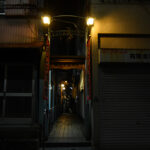
Modern Kagurazaka still conveys the atmosphere of its once flourishing Edo Era streets. Old Japanese restaurants and bars line the narrow alleyways and with softly glowing lantern light and welcome signs to complete the scene, one forgets that this is Shinjuku Ward in the middle of Tokyo. In this historical neighborhood warm lantern light is all but a natural presence. Compared to the white lights of Ikebukuro and Shinjuku glowing brightly in the distance, Kagurazaka is submerged in darkness. Buildings in Kagurazaka are lower and lower color-temperature light also peaks out from the many alleyways. Kagurazaka Street, running down the center of this neighborhood, is the only really bright spot, except for the lights reflecting off the canal along Sotobori Street. A prized neighborhood for shopping and entertainment during the Edo period, the historical Kagurazaka Shopping Street is a 700 meter long living time slip. New and old shops are jumbled together along the street with specially designed, lantern-like street lights placed at intervals along the edge of the sidewalk. From Kaguraza`s main street several narrow alleyways lead to the interior of the neighborhood where the scale of lighting is downsized to human proportions. Outside restaurants on Hyogo Yokocyo, one of the more famous back streets, softly glowing lanterns light the entrance and also reflect of the cobbled street and traditional-style fence for a very old Japanese atmosphere.
2023.01.26-01.29 Masafumi Yamamoto + Yuki Ito Okinawa is a place where diverse cultures and histories are intertwined. In Okinawa, each region has its own unique streetscape, and this is due to the fact that each region has a completely different historical background. The following is a simplified explanation of the historical background of each area. The Naha area was severely damaged in the war and was rebuilt; the Koza area was influenced by the U.S. military base and retains a strong American culture; and the Bise and Imadomari areas retain the traditional streets of the Ryukyu Islands. By comparing the light environment of each area, this survey sought to determine what kind of lifestyle culture and light features each area has, and what kind of light is unique to Okinawa. ■Sakae-machi MarketSakae-machi Market, located in Naha City, is a shopping street that was established during the postwar reconstruction period and has remained almost unchanged since then. Today, the market is a lively place where locals gather during the daytime, but at night it transforms into a more local haunt, drinking district that is quite different from the impression it gives during the daytime. The only light at night is from the taverns and the faint fluorescent lights in the upper part of the shopping street. (Floor illumination: approx. 20 lx) The illuminance alone gives the impression of dimness, but the actual atmosphere was not as dark as the impression given by…