RELATED POSTS
Pillar palace
Khaju Bridge
Khaju Bridge
YOU MIGHT ALSO LIKE
Vol.012 – Perspectives on the Evolution of Lighting Environment Design
Mutsuo HonmaLighting Environmental ResearcherKyoto How has the design of light in architecture evolved throughout human history? This is the research theme I am currently pursuing, with a particular focus on religious architecture. Today, I would like to share an overview of this work with you. I very much look forward to your enthusiastic responses. Today, light is valued for concepts such as ‘coloring space’ and ‘creating atmosphere.’ In the past, however, I think the role of light was much simpler. In the Romanesque period, the use of stone masonry arches imposed clear limitations on the size of window openings. Reliance on daylight was unavoidable, therefore, windows known as embrasures, with splayed edges, were widely used. Maximizing daylight was regarded as an absolute priority. Because embrasures also increased penetration of direct sunlight, linear shafts of sunlight entering through windows into otherwise dim interiors may have been perceived as gifts from God. Presumably, this visual experience was cherished and valued. Fast forward to the Gothic period, structural innovations dramatically relaxed constraints on window openings. Although these developments might naturally lead to brighter interiors, in reality large windows were filled with low-transmittance, richly colored stained glass. Instead, deliberately preserving a dim atmosphere and bathing interior spaces with shafts of direct sunlight filtered through stained glass. Introducing the injection of colored light. While one theory holds that stained glass served as a visual display of biblical stories for followers, regardless of interpretation, this period…
WIEN, Austria
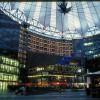
Wien is a city of artistic culture built upon the glory of the Habsburg Family Rein. Floodlights illuminate the heavy, stone architecture along the old streets, but just across the way is newer architecture with systems of LED`s that illuminate shear glass facades. The clash between the old empire and new culture is clearly visible in this city. viView of the City of Wien from Donauturm Observatory. The city, clustered around the Danubian River as it winds through the urban landscape, is beautiful at dusk. Nineteenth-century buildings used to store gasoline, Gasometer, have been transformed in to apartment buildings, shopping malls, and other facilities in 2001. Lights from the new living quarters spill out over the redeveloped area. Stephans Plaza at night. All the shops are closed, but store windows are aglow with soft light. Neon lights and other illuminated signage are also more visible along this street.
Global Lighting Survey: Tsukuda/ Tsukishima, Tokyo
Tokyo Survey: Tsukuda / Tsukishima 2019.11.18 Kyoko Takubo+Yuichi Anzai+Namiko Watanabe An overview of Tsukishima. In contrast to the bright large city buildings, the small alleys and storefronts don’t leak much light Tsukuda is an fisherman island made in Edo-period. Tsukishima was landfilled in Meiji era and now there are still many row houses and small alleys. While the port area of Tokyo is going through mass redevelopment, we investigated the lighting environment of this area filled with intermingling old town houses and large city buildings. Tsukuda Tsukuda 1Chome Mainstreet. Children playing outside the old candy store Tsukuda 1 Chome Mainstreet is mainly lit with mercury lamps Tsukuda Machikado Museum. Its lit with LED3000K with about 134lx. Our investigation started by taking an overview photo from a tall building from the other side of the river. With the hustle and bustle bright lights from the Central area’s cityscape, there was one part that was dark- that is our target of this investigation, Tsukuda・Tsukishima. The dark patch from this area is even more pronounced as it is surrounded by the bright city lights all around. As we get back on the ground, we headed towards Tsukuda 1 chome (Old Tsukuda Island) Mainstreet. On our way we saw the mercury lamp streetlights (4500K) emitting some green tinted white light. The average brightness was around 11lx. In the day you could still see a nostalgic scene with children playing outside the old candy store…
Vol.015– An Encouragement of Morning
Interviewer: Yumi Honda Theme: An Encouragement of Morning Honda Mr. Mende, you are a morning person and come into the office early, but that lifestyle and working as a lighting designer seems to be contradictory. I am also a morning person, so today I would like to discuss waking up early and how we spend the hours in our day. As lighting designers we have late on-site meetings which leads many to become nightowls. Intrinsically, the city lights and nightscape are the reason why many choose to become lighting designers. How about you? Have you always been a morning person? Remnant of the night and light in the morning Refreshed by sun light in the morning during vacation Mende Ok, so I take it that today’s theme is “recommending being an early riser for lighting designers.” I have always been an early riser. How about you? Do you feel better in the morning? Honda Not always, but I like to take in the morning sun. Mende If I have a choice, I think I’m more of a evening person. Honda Yes, I like the evening too, but I really like the refreshing feeling of the morning sun. Even if I have not had a good night’s sleep the sunrise is refreshing. In the book Makurano Sohshi, or The Pillow Book, the opening line is “In spring, the dawn – when the slowly paling mountain rim is tinged with red…” Or “Winter, the early morning…”…
Newsletter vol.94
Date of Issue:February 7, 2019 ・Activity 1/City Night Survey:Rio de Janeiro/ (2018/10/13-10/23) ・Activity 2/TNT Forum 2018 in Santiago(2018/10/17-10/18) City Night Survey:Rio de Janeiro/ Santiago 2018/10/13-23 Mikine Yamamoto + Kouki Iwanaga This was our first South American survey in about 15 years. We tracked the light expression of Rio de Janeiro, a port city marked by both entertainment and poverty, which hosted the FIFA World Cup in 2014 and the Olympics in 2016 and has become increasingly international. While possessing famous coasts like Copacabana and Ipanema and being counted as one of the world’s three most beautiful harbors, it also has the “favela” slums covering its hillsides. Surrounded by magnificent nature, Santiago, Chile’s largest city, has annual rainfall of only about 360mm, meaning it is sunny for most of the year. We investigated the lighting situation of this city blessed with natural light. The nightscape from Pão de Açúcar: A beautiful contrast created by the rich topography Viewing Copacabana Beach from Pão de Açúcar Favelas built on the mountain slopes ■Rio de Janeiro / Brazil Rio de Janeiro is an international tourist city that hosted the Carnival and the Olympics in 2016. It is said to be a microcosm of the country, where light and darkness coexist: scenic areas with beautiful topography blending nature and culture are situated next to slums. We surveyed the light expressions of this city, which has various faces, including the glamorous light of tourist and resort…