JAPAN

City Night Survey : Saitama-Shintoshin

More

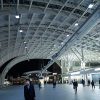
City Night Survey : Saitama-Shintoshin 2019.04.11  Lin Hu + Hikaru Kimura Saitama Shintoshin is a district established around the year 2000. Centered on JR Saitama-Shintoshin Station, it is an intensively structured urban area featuring a variety of functions, including large-scale commercial facilities, a major multi-purpose arena, government office complexes, and hospitals. This survey examined how this planned city has evolved from the perspective of lighting. Nightscape over the heliport from the Saitama Government Office Complex Light Linking Spaces A pedestrian walkway system is installed around Saitama-Shintoshin Station, utilizing an active pedestrian-vehicle separation plan that allows for smooth circulation from the second-floor station gates to various facilities. While the ground level is brightly illuminated by roadway pole lights, the pedestrian walkways feature lower-level lighting such as uplights and footlights—excluding some decorative pole lights in park areas—creating distinct expressions of light for each zone.Saitama-Shintoshin Station is connected to Kita-Yono Station by a walkway spanning approximately 600m. A continuous cantilevered glass canopy allows pedestrians to walk without getting wet in the rain or being stopped by traffic signals. Along this route, there is a straight path of about 100m running parallel to the railway tracks. Here, despite the cantilevered canopy structures being identical—likely due to differing construction phases—the lighting techniques varied across three distinct types. Although the architectural design is similar, the change in lighting methods results in varying levels of brightness depending on the location. While achieving uniformity may seem important, using different…

JAPAN

City Night Survey: Sapporo・Hakodate, Hokkaido, Japan

More

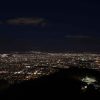
2018/04/16-19 Misuzu Nakamura + Sherri Goh It was interesting for me to juxtapose the two cities and their evident priorities with the implementation of lighting masterplan. In Hokkaido for the first time, I felt that the two cities were greatly different for their appeal to tourists. Even though Hakodate’s night view was greatly famed and did not disappoint, Sapporo seemed to be the more popular place to be at night and for its nightlife. City view of Sapporo City view of Hakodate Hakodate streets at night Sapporo streets at night Well illuminated pathway to Sapporo TV tower Dim pathways towards Hakodate Old Public Hall of Hakodate Ward despite many fixtures This survey of both cities suggests that there might be a compromise between the balance of two objectives; planning for a potential attraction and planning for functional use. As Sapporo is the larger and denser city, it makes sense to cater to comfort of the people that roam the streets after working hours. From the junction pictures, you can see that there is more lighting on the floor level in Sapporo in comparison to Hakodate. Despite the numerous dotted light fixtures, we felt that the pedestrian pathways and roads were generally darker in Hakodate.And for Hakodate, turning the nightscape into an economic tool could also be the better solution as most of the streets were empty after 1900h, with major attractions closing by then. It was also strange that Mt…

JAPAN

Global Lighting Survey: Tsukiji, Tokyo

More

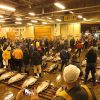
City Survey: Tsukiji, Tokyo 2017/12/14,2018/01/12  Nemoto Isao + Masafumi Yamamoto  Night view from the opposite shore of Tsukiji, across the Sumida River. Tsukiji Market on the middle, Tokyo Tower and Tsukiji Bridge on the left, and Kachidoki Bridge on the right. In this Tsukiji survey, we visited the inner market, where mainly wholesale is taking place, the outer market, where visitors can shop and eat, and also the Tsukiji Honganji temple and the Kachidoki Bridge which are popular spots for tourists. ■Luminous Environment around Tukiji Fish Market From the Kachidoki area on the opposite side of the Tsukiji fish market, you can overlook the entire view of the market, buildings such as Kachidoki Bridge and Tokyo Tower across the Sumida River. While we notice white light that comes from the market and surrounded buildings, the warm-colored light of incandescent lamps emitted from the fish handling facility facing the Sumida River on the opposite shore. This view is quite impressive, and creates an emotional and beautiful view during the night.This warm light from the market brings the sense of the history of Tsukiji rooted in this area for a long time. In contrast, the white light emitted from the group of high-rise buildings in the background seems to symbolize the momentum of the rapidly evolving city. Outside the market, there are more than 400 shops, and many shops still remain open after evening.Various light sources and lighting fixtures are used in each…

JAPAN

Global Lighting Survey: Kagoshima

More

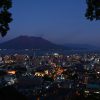
Lighting Survey:Kagoshima 2017/10/25-10/27  Shunichi Ikeda + Yuri Araki Kagoshima city is a city which its urban area is integrated with nature and magnificent scenery, and it is also a tourist attraction that is represented by Sakurajima. It has scenery unique to Kagoshima city such as a view to Sakurajima, Japanese modernization asset like historical buildings, and urban scenery with slanted green area in the background. We researched the light environment of this highly regarding scenery formation area with Sakurajima as a main axis. Night view of Kagoshima seeing Sakurajima. There isn’t any color lighting or building advertisement on city in front of the Sakurajima. It takes 1 hour to get to central area of city from Kagoshima airport. It was very exciting and felt good to have a drive looking at clear sky, rich water and greens, and magnificent Sakurajima with rising smoke. When we arrived at urban area, we started from researching about urbanscape planning, so we visited city hall that is a little walk from statue of Saigou Takamori. After that, we checked up main roadways in central areas and parks, history and culture area, commercial area, etc, and started preparing for a research about lighting environment. Night view of Central Kagoshima station from the same observatory. There are color lightings and building advertisements. ■Night view of Kagoshima When the street lights started to turning on and the city was gradually taking on liveliness of night, Sakurajima gradually…

JAPAN

YOKOHAMA CHINATOWN 2011

More

The largest Chinatown in Japan has become an established feature of the Yokohama downtown area, but still an area with its own culture and identity. We surveyed Yokohama to discover the Chinese style of lighting environment alive within Japan. At night, there are many hanging lanterns with soft glowing light. This “Light with a Shape” or, through colorful shades, “Light with Color” is a staple of Chinatown and helps to create excitement and a sense of elation. Along the main street there is no specific street lighting, but shop lighting and luminous signage create a natural ambiance along the street. Most structures have columns painted red and use warm tone lighting, but the facade design and signage is all different. This unification of the streetscape through color temperature creates a balance and lasting impression of Chinatown.

JAPAN

TOKYO : TOYOSU, FUTAKO TAMAGAWA, & TAKAJIMA DAIRA

More

The Diversity of Condominium Lighting in the Tokyo Area Condominiums play a leading role in housing for the Tokyo Area. As the city grew, busy shopping, business, and entertainment districts are supported by the residences, which live in densely populated residential areas. As the population density increased so did the proportion of condominiums for housing. According to reality statistics, condominiums account for 70% of the housing within the 23 wards of Tokyo. For this survey we stepped away from the bustle of the big city and investigated 3 relatively large, densely populated condominium complexes. The three areas all have a different history and commuting distances from the center of Tokyo. What can we discover about the lighting environment of these three totally different condominiums and the surrounding residential area? Toyosu Once an industrial area built on reclaimed land, housing redevelopment started in 2003 and the first of several residential blocks was completed in 2006. Toyosu is a “new city”, built from scratch and popular with younger families and couples. The number of condominiums is astounding, but the development is not just large, but a luxurious residential area as well.   Color temperature viewed from the condominium windows: Orange: 80% White: 16% Bluish: 4% The tower condominiums are immediately visible upon leaving the station. Relatively close to the center of Tokyo, these tower condominiums were built during a boom in condominium real estate. Each tower has a luxurious entrance lobby and…

JAPAN

TOKYO : SHIODOME & SHINBASHI

More

Shiodome Sio-Site was a joint public and private sector redevelopment project completed in 2006. In nearby Shinbashi, eateries and bars built under and into the brick structure of the elevated railway tracks during the Meiji era have become a famous cityscape of this area. We set out to discover what kind of lighting environment exists in this conflicting neighborhood of Tokyo. Red lanterns, single light bulbs hanging under the eaves, colorful luminous signage…All the lighting is warm and inviting. The lighting environment along the streets of Shinbashi is wide and varied, but somehow closes the distance between strangers. Lighting for an elevated pedestrian deck connecting high-rise buildings in the area. The warm colored lighting creates a comfortable atmosphere for a nighttime stroll. The Shiodome high-rise buildings are not showy, and along with the interior office lighting, only a few have facade lighting on the building crowns.

JAPAN

TOKYO : IMPERIAL PALACE

More

In the middle of Tokyo is the Imperial Palace, a haven for runners and tourists, alike. The lighting in the palace outer garden and nearby Wadakura Fountain Park has been renewed and replaced with environmentally conscious LED fixtures. We surveyed the unique pocket of darkness that surrounds the Imperial Palace along with lighting environment of nearby parks and roads. Imperial Palace Outer Garden. The fancy pole lights in the outer garden are originally gas lamps, but the light source has been changed to high-pressure sodium lamps and now upgraded to LEDs. The average lux level is only 1-2lux along the paths lined with these LED fixtures, but inside the fixtures are 6, 26watt LED modules all pointed in different directions. This application helps to spread the light around without making a too bright, but comfortably dim atmosphere. Daikancho Street Daikancho Street runs along the north side of the palace grounds, is a much narrower street and pedestrian sidewalk compared with the rest of the facilities surrounding the palace. Along the tidy, hedged sidewalk, streetlights are placed at 3-meter intervals. Mostly for crime prevention, the lights are very bright and glaring. Ohtemachi Entrance The Ohtemachi Entrance area leads to an inner palace garden and is surrounded by a main arterial road on the outside, for a very open and accessible area. Most lighting is road lighting, mounted on 10-meter tall poles arranged down the middle of the street, but plenty bright…

JAPAN

TOKYO : SHINJUKU

More

Under a rush of redevelopment, this is a huge period of transition for the area surrounding Shinjuku. On this survey, we were met by soft light filtering out of tall skyscraper windows, brilliant signage on facades and rooftops, and crowds of people along the streets and alleyways. Shinjuku Station South Entrance is in the middle of a redevelopment project scheduled to be complete in 5 years. A multitude of fluorescent lights line the pedestrian walkways with such an intense brightness that the surrounding scene is almost invisible. Six o`clock in the morning and waiting for the sun to come up on Yasukuni Street. Calm is finally starting to settle over Kabukicho, but still brightly lit signage are but glaring reminders of the nightlife. Brilliant advertising and signage along Yasukuni Street acts as an entrance gate to Kabukicyou. The bight lights entice many, who are aimlessly swallowed up by Kabukicho.

JAPAN

Seto Inland Sea of Japan

More

The archipelago, pristine nature, and human footprint all combine to create the highly valued landscape of the Seto Inland Sea. Depending on the season and time of day the inlet and small islands have a store of rich expressions from dusk to dawn. The lights of the villages and ships come on in the distance and fade with the morning light. Different from a larger city, we surveyed the charm of this aesthetic landscape and Inlet Sea. The survey course starts on the island of Shikoku in Imabari, Ehime Prefecture along the Shimanami Kaido Expressway. The 60-kilometer long highway skips through the islands, connected by 9 bridges and ends in Onomichi City, Hiroshima. If you look hard, from a mountain top lookout, the entire route is visible. By car and on foot, we aimed to discover the lighting identity of this area, including cities drowning in light and smaller villages that dot the sides of the highway. From the observation deck on top of Chikamiyama near, Imabari City, The Kurushima Channel Bridge is visible. A panoramic view from Senkoji Park.

JAPAN

SENDAI

More

After WW II, Sendai was rebuilt into a modern city with streets perfectly aligned in a gridiron pattern, but mixed with covered arcades. We surveyed the covered arcades and their daily activity along with the annual lighting event Sendai Hikari Pageant. Whole boulevards are just covered in little lights. The overwhelming brilliance is impressive and takes your breath away. When standing in the middle of the road between the rows of illuminated trees, there is no end in sight. The lighting “tunnel” is endless and for a little while we forgot to blink or even breathe. One characteristic of Sendai, the covered arcade, is shown in the middle of the picture to the right. The milky-glass dome running down the center of the arcade reveals the nonuniformity of lamp color temperature and intensity of light. We found excessive amounts of light fixtures in a number of places around the city, a characteristic of the lighting environment that create the nightscape for this city.

JAPAN

SAPPORO

More

The Television Broadcasting Tower looks down on the orange sodium lamps overflowing from the grid patterned streets of Sapporo. While on assignment in December we were able to view the multi-colored White Illumination set up along Ohdori Park and Sappore Eki Mae Street. Looking towards Ohdori Promenade from the JR Tower. Sapporo is a beautiful city at twilight with orange light from the streets to set off the blue-tinted snow-topped roofs. The tree-lined street, Sapporo Ekimae Avenue is a sight to see with its unique style of looping lights over tree branches. Visitors with cameras and mobile phones converge on the decorated Ohdori Promenade. Sapporo Television Tower, similar to Tokyo Tower and Nagoya Tower, and all designed by the same architect, is also illuminated with the same type of sodium lamp.

JAPAN

OSAKA

More

Along Osaka`s main street, Midosuji, taillights create a river of red light. Osaka’s symbolic shopping district, Dotomobori, is full of Osaka style flare. Redevelopment in Nakanoshima West District continues.

JAPAN

NAGOYA

More

Looking over the Nagoya nightscape from the symbolic Television Broadcasting Tower, Hisaya Boulevard stands out in the center and orange sodium lamps dominate the park below. The new trendy spot in Nagoya, Oasis 21, along Hisaya Boulevard. We climbed up the Television Broadcasting Tower before dusk so we could sit back and watch nature’s light show over the city with Oasis 21 in the foreground. Various mechanisms of light are incorporated into the design of Oasis 21, a former LPA project and winner of IESNA 2003 Award of Merit. One characteristic of Hisaya Boulevard nightscape is that the scenery always includes the Television Broadcasting Tower. Whether from the illuminated water fountain, Central Bridge, Central Park, or Oasis 21 all are framed just like a picture postcard with the Tower in the background.

JAPAN

TOKYO : KICHIJOJI

More

Kichijoji is an area of Tokyo where a variety of elements are compressed together to create this unique neighborhood. However, even though it seems to be a mixture of “stuff” the area is well planned and organized. Public and private organizations have aggressively worked together in city planning and we surveyed the area to discover what kind of lighting environment or rules they have advised. Starting on the north side of the station, a commercial area, we then moved to the south side of the station and Inogashira Park and the alleyways that connect the park and station. North Side of the Station The lighting along the covered arcade shopping streets, Sun Road and Diamond Street, are LEDs, creating a modern atmosphere, but down some of the narrower alleyways, like Harmonic Alley, the lighting is retro for an exciting nightly stroll. Park Street The main street from the station to Inogashira Park is a narrow 3-meter wide street lined with small cafes, bars, and recycled clothing and nick-nack shops. Restaurant and shop lighting is a warm 3000k for a comfortable atmosphere, but most street lighting spills out from the entrance to these restaurants and shops. Once they are closed for the night the street is very dark. Inogashira Park Equip with solor panels, tall metal halide streetlights record 331lx inside the park. However, the average lux level inside the park is about 30lx. The streetlights are too bright, and ruin…

JAPAN

TOKYO : KAGURAZAKA

More

Modern Kagurazaka still conveys the atmosphere of its once flourishing Edo Era streets. Old Japanese restaurants and bars line the narrow alleyways and with softly glowing lantern light and welcome signs to complete the scene, one forgets that this is Shinjuku Ward in the middle of Tokyo. In this historical neighborhood warm lantern light is all but a natural presence. Compared to the white lights of Ikebukuro and Shinjuku glowing brightly in the distance, Kagurazaka is submerged in darkness. Buildings in Kagurazaka are lower and lower color-temperature light also peaks out from the many alleyways. Kagurazaka Street, running down the center of this neighborhood, is the only really bright spot, except for the lights reflecting off the canal along Sotobori Street. A prized neighborhood for shopping and entertainment during the Edo period, the historical Kagurazaka Shopping Street is a 700 meter long living time slip. New and old shops are jumbled together along the street with specially designed, lantern-like street lights placed at intervals along the edge of the sidewalk. From Kaguraza`s main street several narrow alleyways lead to the interior of the neighborhood where the scale of lighting is downsized to human proportions. Outside restaurants on Hyogo Yokocyo, one of the more famous back streets, softly glowing lanterns light the entrance and also reflect of the cobbled street and traditional-style fence for a very old Japanese atmosphere.

JAPAN

TOKYO : UENO PARK

More

Rich in local history and cultural facilities, Ueno Park covers a large area in the middle of Tokyo. Even though located in an urban setting, we anticipated a lighting environment completely different than the lights of downtown. Between the trees and darkness of the park there are patches of Tokyo`s bright night sky, but the hushed silence is isolated from the city`s hustle and bustle. Ueno Park`s quiet presence gently sleeps next to Tokyo`s vibrant downtown. Approaching Ueno Park from the JR train station.  The large overhang of the Tokyo Bunka Kaikan is brightly illuminated in contrast to the surrounding darkness of the park. A view o f northern Tokyo over the Shinobazu Pond from an elevated Ueno terrace. The bright lights of a vibrant downtown are seen in the distance beyond the dark trees of the park. However, through the darkness a bright, orange, sodium lamp illuminates the Benten Shrine near the pond. Looking towards the water fountain plaza from the Tokyo National Museum. A slightly bright night sky, characteristic of most metropolitan areas, opens over head with a dark belt of trees and tiny dots of light below. Young couples seeking a quiet spot away from the lights, snuggle up together on near benches.

JAPAN

TOKYO : SHIMOKITAZAWA

More

Shimokitazawa is a neighborhood of small shopping streets and alleyways, projecting a strange, but comfortable atmosphere, as people crowd the backstreets until late in the night. However, plans to replace this quaint neighborhood with arterial roads and high-rises are underway. The detectives took what maybe a last chance to survey this area before it is “defaced.” The top half and rooftops of most buildings do not have any luminous signage. As a result, a bird’s eye view of this neighborhood is actually fairly dark. The station front plaza is filled with people listening to music from sidewalk acts or looking at street art. The crowds of people naturally overflow into a nearby street. If an arterial road is planned for this area, this atmosphere will be lost forever. Two streets back-to-back, but built to two different scales and with two different demeanors. On the left is Shimokitazawa`s main south entrance shopping street. With many interior decor shops, the lighting is bright and color temperature is high. One street inside and the atmosphere and lighting are more relaxed. Low color temperature, incandescent lamps from restaurants, cafes, and bars are the main source of light.

JAPAN

TOKYO : ASAKUSA

More

In front of the main gate to Senso-ji Shrine lies the neighborhood of Asakusa. One of Tokyo’s most popular entertainment districts, Asakusa flourished with kabuki, opera, and comic storytelling from the Meiji Era to the end of WWII. The Lighting Detectives discovered a variety of decorative streetlights and a lighting atmosphere fitting for this lively cultural destination. Upon entering the famous Kaminarimon, the Nakamise approach proceeds towards the shrine with bright-white, fluorescent-tube illuminated signage lining both sides. After navigating this corridor, walls of softly glowing lanterns come into view. The lanterns once lit with fire were replaced with incandescent bulbs and now fluorescent lamps. In popular neighborhoods like Shibuya or Roppongi, architectural facade lighting or neon signage fills the vertical space and “street lighting” is virtually non-existent. However, a variety of decorative streetlights festively illuminate the streets of Asakusa for a very fitting lighting environment. Pub signage and lanterns dispersed along the dark streets of Asakusa create an uncanny charm in this neighborhood. Roadway lux levels are a fairly dim 10-16 lx, but the red lanterns hanging from the eaves of establishments dig up affection for this old town.

JAPAN

TOKYO NIGHT DRIVE

More

Taking a drive along the Tokyo Metropolitan Expressway is a great experience in the sequence of Tokyo light. In one drive you can catch glimpses of Tokyo Tower in between buildings, awe at the endless Ginza neon signage, and hide in the dark shadows surrounding the emperor’s palace and Tokyo Bay. Close up lights zoom by, but in the distance light is scattered everywhere, creating a complex sequence of overlapping elements. Such a variety of light exists in Tokyo! Rainbow Bridge and Tokyo Tower, Dual Features of the Tokyo Night (Ariake JCT~Shibaura JCT) At night the Rainbow bridge is a bridge of light connecting the Bayshore Route and Tokyo mainland. As we drove across the bridge, the Tokyo Tower that seemed to twinkling in the far distance became a dominating presence. However, all of the distance lights of Tokyo were swallowed by the cluster of buildings waiting for us on the Shibaura side of the bridge. The Lights of the Tokyo Nightscape (Ohi JCT ~ Shibaura JCT) Working from Haneda towards the center of Tokyo, among the rough and tumble lighting for warehouses and factories, is warm light spilling from offices and condominiums. The expressway takes a dive under the Tokyo Monorail for a real peak at Tokyo-style building light and luminous signage. The Expressway in the Ginza Sky (Tokyo Expressway) The Tokyo Expressway is elevated in midair as it cuts through Ginza. Officially, it is not part of the…