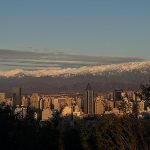
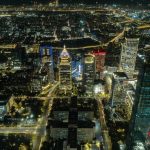
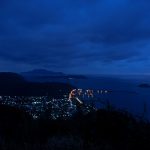
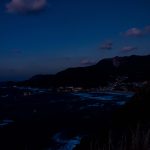
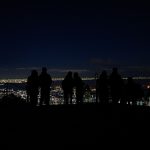
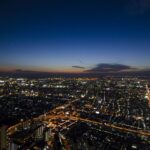
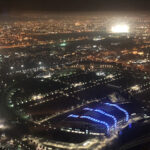
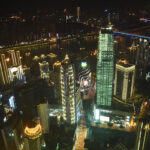
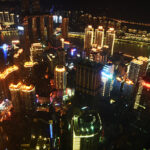
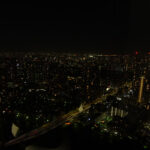
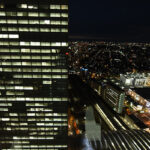
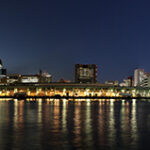
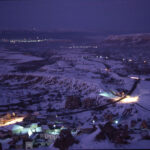
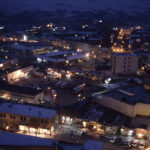
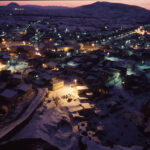
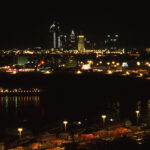
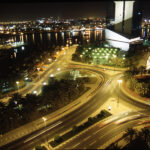
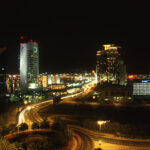
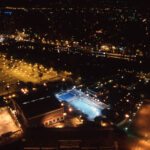
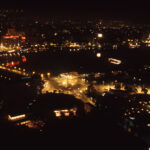
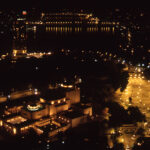
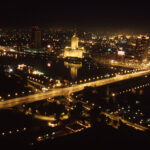
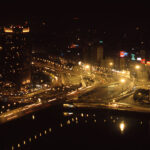
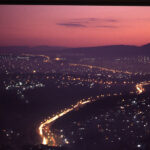
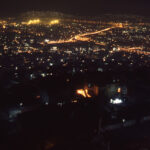
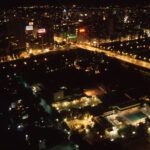
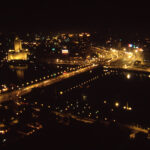
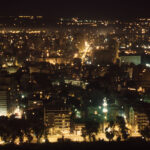
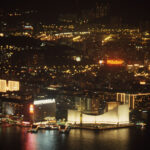
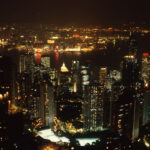
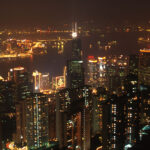
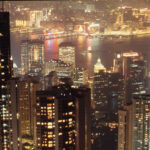
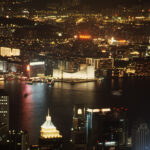
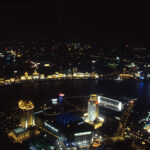
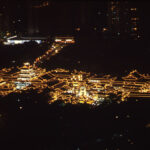
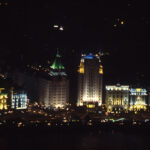
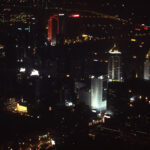
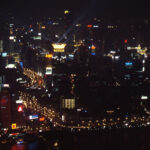
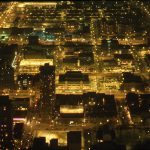
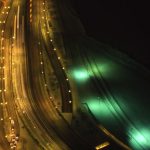
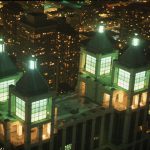
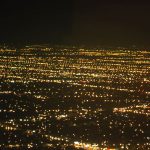
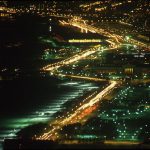
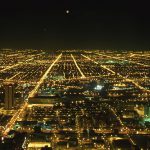
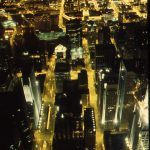
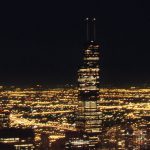
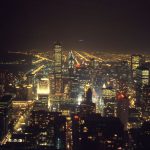
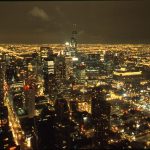
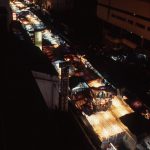
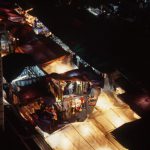
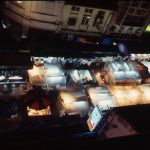
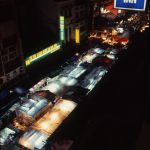
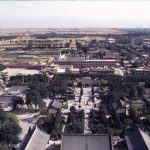
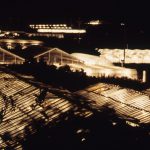
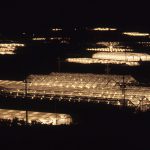
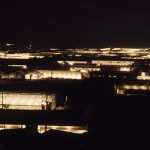
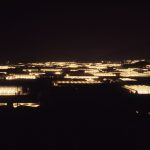
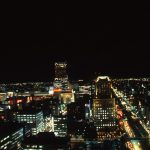
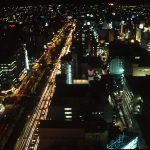
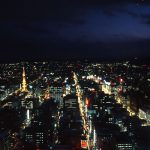
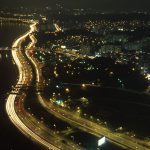
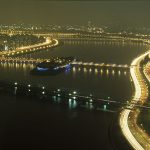
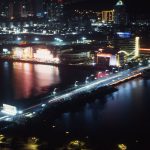
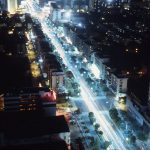
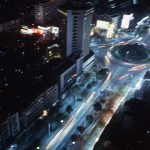
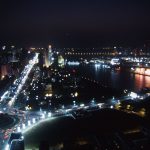
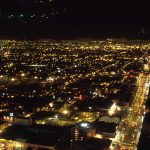
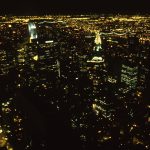
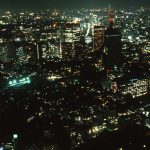
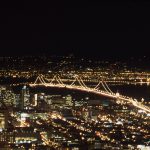
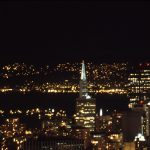
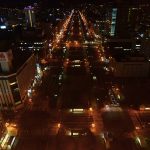
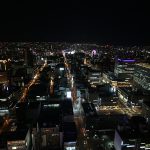
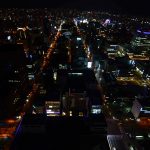
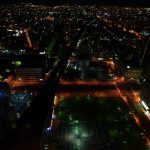
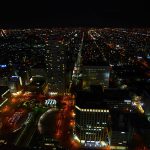
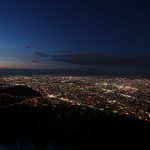
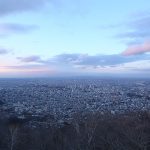
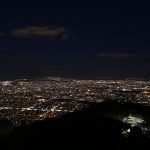
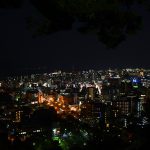
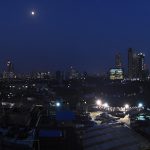
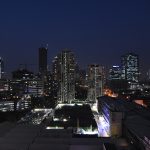
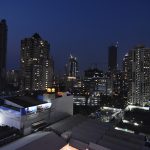
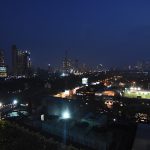
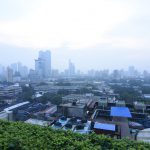
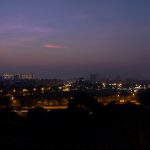
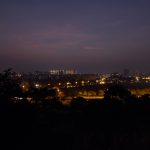
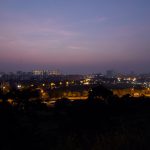
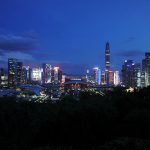
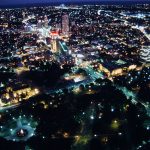
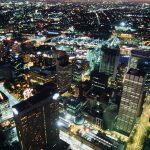
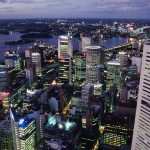
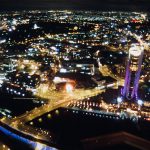
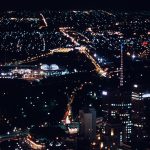
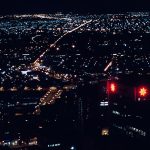
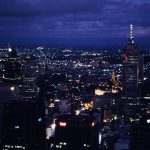
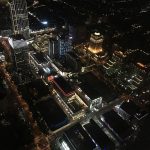
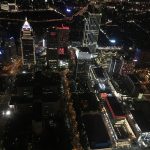
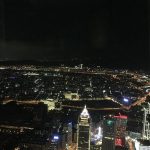
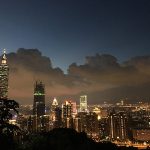
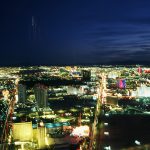
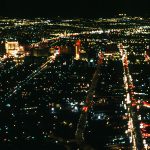
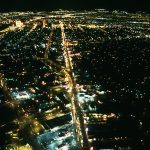
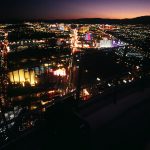
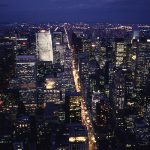
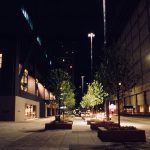
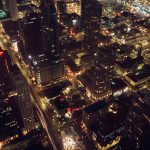
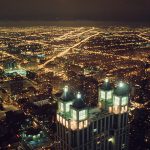
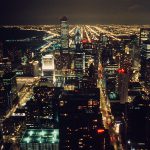
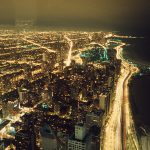
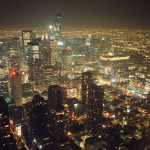
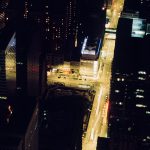
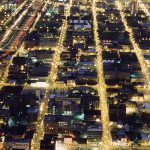
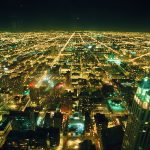
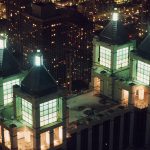
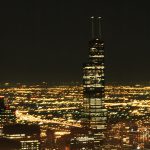
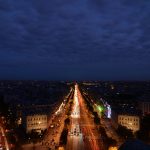
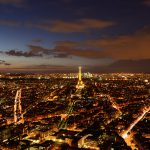
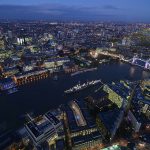
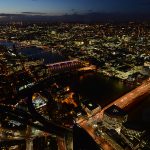
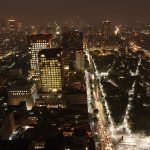
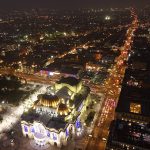
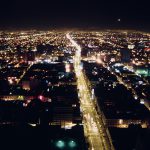
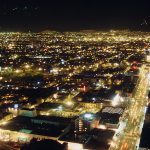
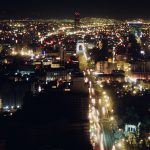
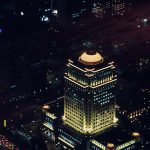
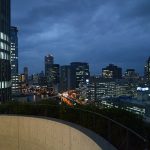
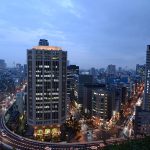
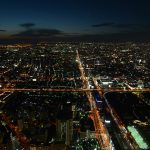
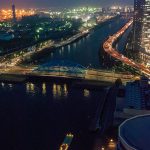
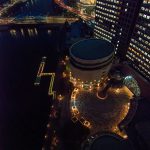
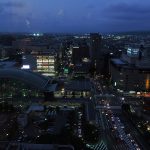
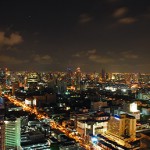
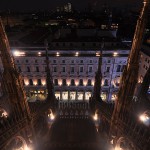
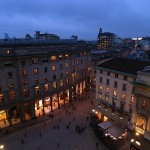
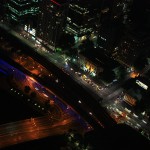
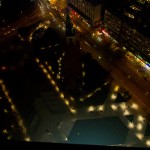
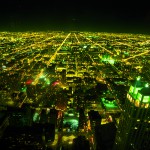
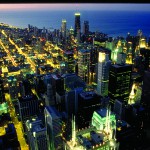
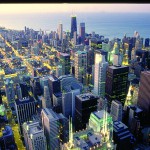
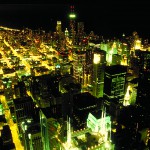
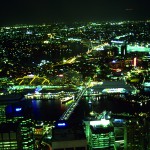
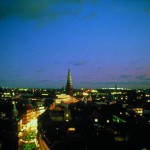
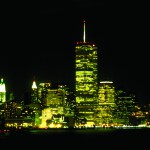
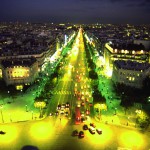
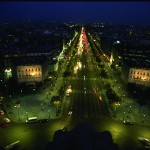
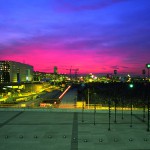
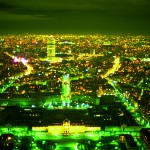
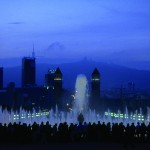
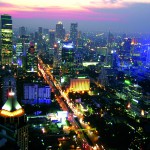
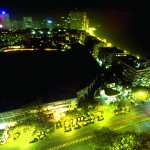
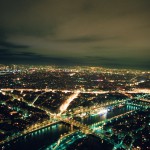
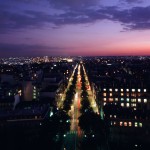
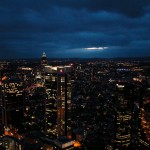
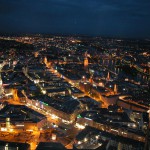
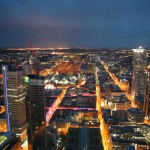
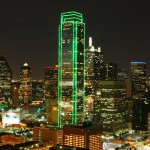
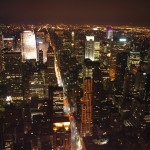
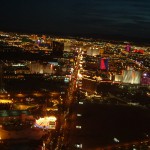
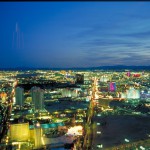
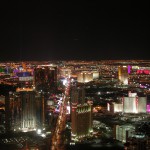
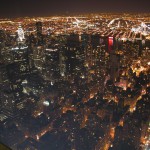
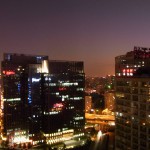
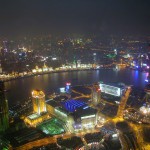
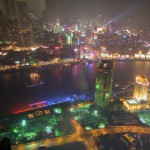
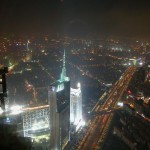
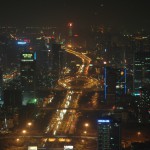
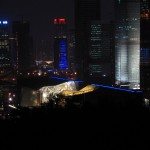
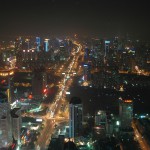
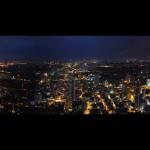
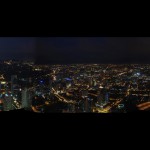
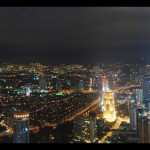
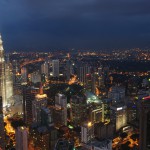
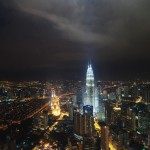
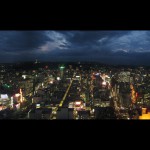
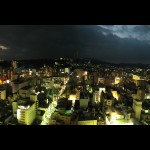
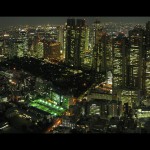
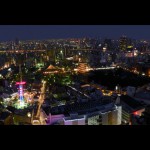
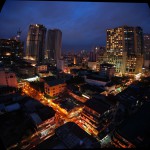
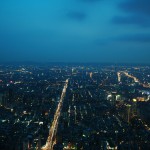
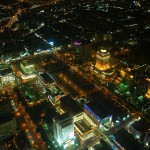
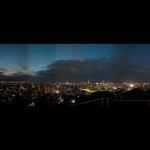
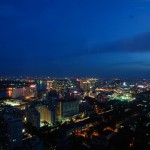
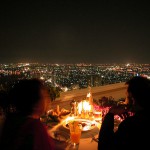
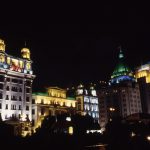
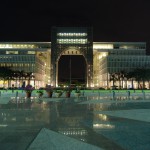
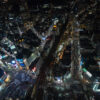
Dallas, the stage for the assassination of President Kennedy and Fort Worth, a city of culture that attracts architects and designers from around the world. However, both cities have to compete under the hot Texas sun, with most buildings fitted with walls of heat reflective glass. This building style leaves only the edge of buildings for accent lighting, which often reflects onto nearby buildings. From Reunion Tower, looking towards the glass skyscrapers in the west end of downtown Dallas. Strong accent light for other buildings is seen reflected in the facade. The interior of Louise Kahn’s Kimbell Art Museum, where his words “Light is the Theme” still echo. Natural light filters in through a slit opened at the top of the vault and reflects off of reflectors fitted into the architecture. The reflected light turns the vaulted ceilings brilliant silver. The Modern Art Museum of Fort Worth designed by Tadao Ando and completed in 2002. The main walls seen from the outside are lightly wall washed without intruding on the art pieces and exhibition space. The outer perimeter of the building reflects clear design intent in the careful composition of high-quality light. In the evening, reflections on the surface of the surrounding pond present another angle to this building.
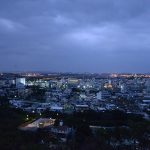
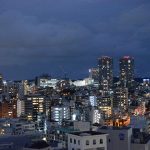
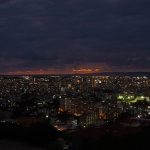
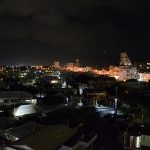
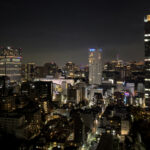
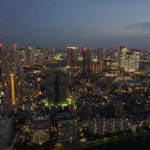
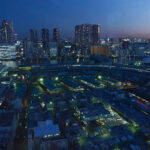
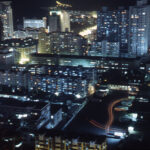
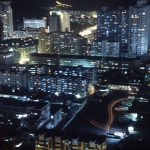
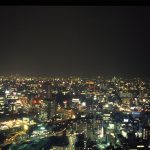
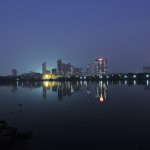
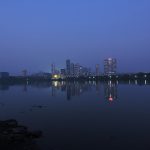
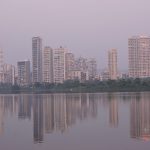
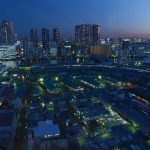
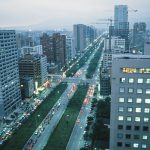
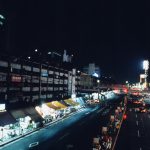
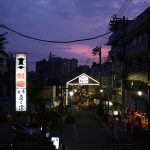
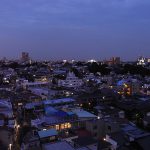
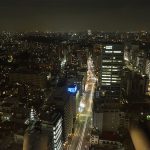
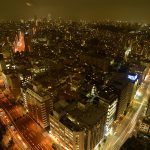
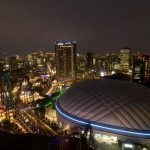
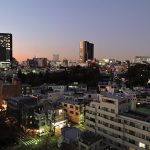
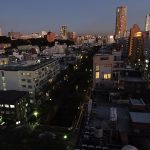
The Diversity of Condominium Lighting in the Tokyo Area Condominiums play a leading role in housing for the Tokyo Area. As the city grew, busy shopping, business, and entertainment districts are supported by the residences, which live in densely populated residential areas. As the population density increased so did the proportion of condominiums for housing. According to reality statistics, condominiums account for 70% of the housing within the 23 wards of Tokyo. For this survey we stepped away from the bustle of the big city and investigated 3 relatively large, densely populated condominium complexes. The three areas all have a different history and commuting distances from the center of Tokyo. What can we discover about the lighting environment of these three totally different condominiums and the surrounding residential area? Toyosu Once an industrial area built on reclaimed land, housing redevelopment started in 2003 and the first of several residential blocks was completed in 2006. Toyosu is a “new city”, built from scratch and popular with younger families and couples. The number of condominiums is astounding, but the development is not just large, but a luxurious residential area as well. Color temperature viewed from the condominium windows: Orange: 80% White: 16% Bluish: 4% The tower condominiums are immediately visible upon leaving the station. Relatively close to the center of Tokyo, these tower condominiums were built during a boom in condominium real estate. Each tower has a luxurious entrance lobby and…
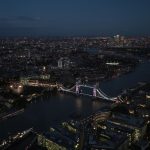
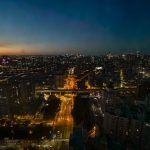
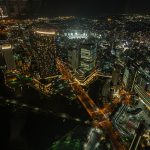
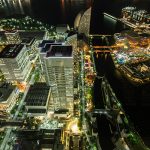
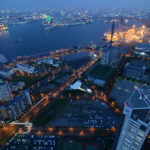
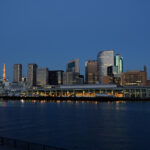
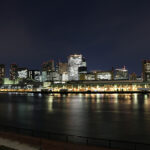
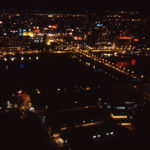
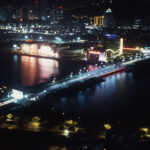
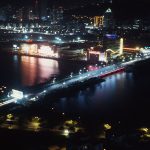
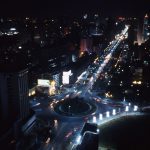
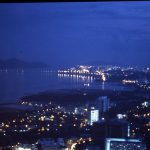
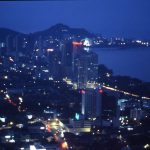
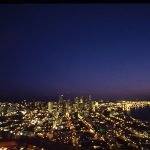
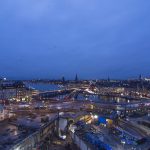
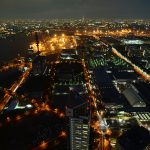
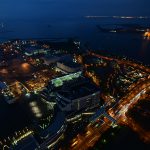
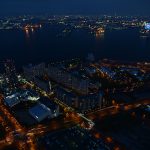
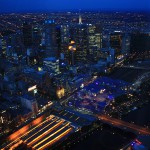
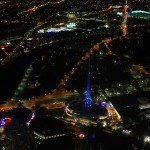
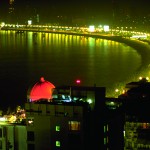
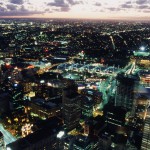
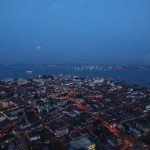
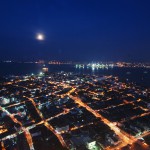
Compared to many cities, Yokohama is a relatively open city. Even with large high-raise buildings close-by you don’t feel enclosed and the added factor of a waterfront can help make anyone feel refreshed. The continually changing point of view from the Cosmos World Ferris wheel is a great way to observe the city. The Landmark Tower is often thought of as the symbol of Yokohama, but the Cosmos World Ferris Wheel could be the runner-up. In the dark night sky the Ferris wheel draws a perfectly beautiful circle of transparent layers of light, adding a deep appeal to the Yokohama nightscape. Looking south from the top of the Yokohama Cosmos World Ferris wheel. The illuminated Red Brick Warehouse expresses its self beautifully as it blends with the surroundings area and the blue twilight settling in on the Yokohama Bay. Ohsanbashi Pier and Yamashita Wharf complete the background. Looking from the vicinity of Yokohama Customs towards the Landmark Tower. In this newly developed area space is comparatively open. With only a few high-raise buildings, and reflection on the water the city seems bigger than it really is.
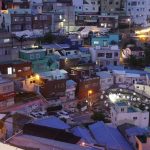
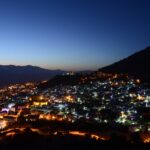
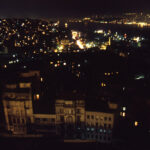
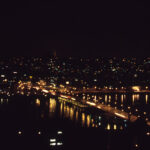
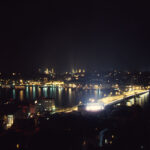
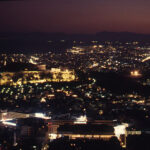
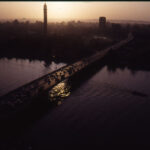
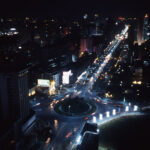
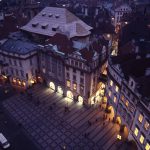
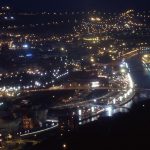
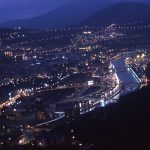
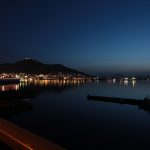
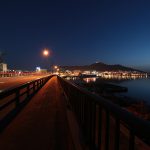
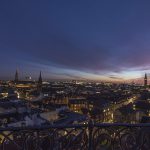
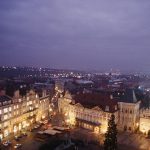
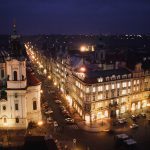
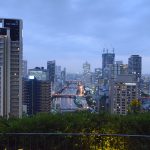
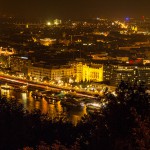
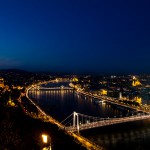
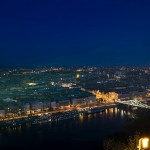
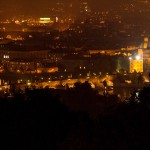
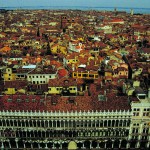
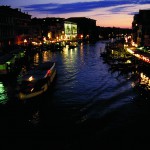
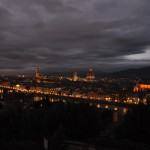
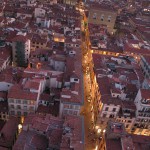
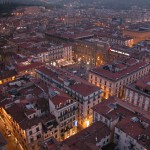
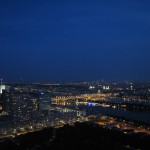
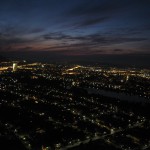
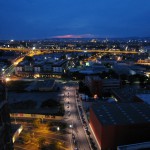
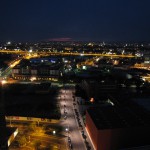
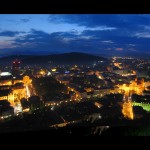
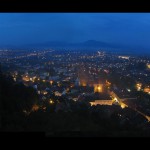
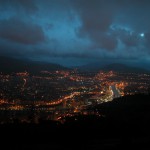
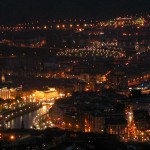
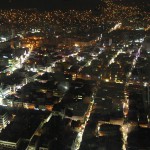
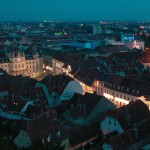
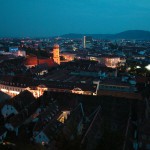
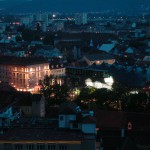
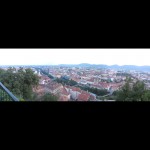
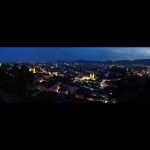
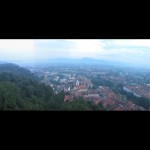
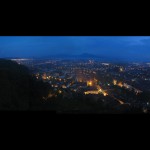
Ljubljana, the self-contained capital of Slovenia has a charming old cityscape made up of buildings topped with red tiled roofs. At dusk, people flock to the Ljubljana River to rest after a busy day and watch the lights come on over the city. Many historical buildings are lit up in this compact downtown, with other lights here and there creating a comfortable rhythm of lighting and darkness. The Tomostovje Bridge designed by Jose Plecnik connects the old city with the new city. Of all the bridges over the Ljubljana River, this is the one most central and with the most foot traffic. The orange lit facade of the Franciskanska Church next to the Presernov Plaza is visible from the bridge.。 Leaving the Presernov Plaza behind, the smaller streets are cloaked in darkness. Shop windows are dimly lit and a few neon signs are aglow down the street. View of the city from Ljubljanski Grad. From the darkness, activity along the river and the illumination of some main buildings creates axis of light across the city.
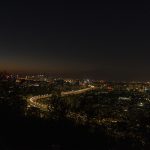
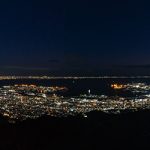
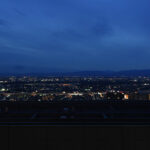
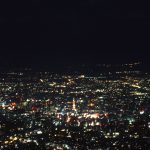
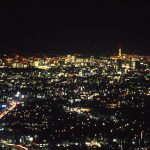
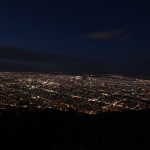
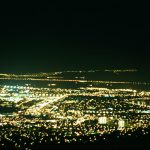
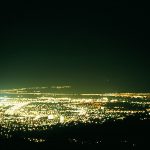
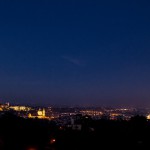
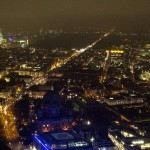
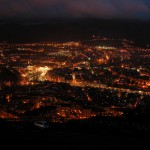
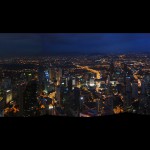
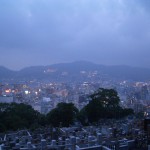
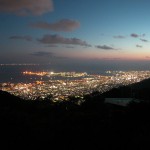
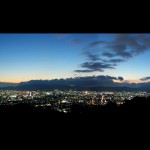
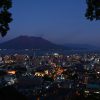
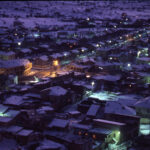
Kyoto is an ancient city of Japan that was planned based on feng shui, or Chinese divination. Although the streets of Kyoto are a typical gridiron pattern, unique spatial conditions derived from the machiya, or Japanese style townhouses, are found all over the city. All of these spatial features nestled into the city’s framework lead us to lighting environments only found in Kyoto. East of Kyoto, a frequented nightscape viewpoint, Shogunzuka looks out over the city. From this birds-eye view, street lights and other ground level lighting softly illuminate the volume of buildings in Kyoto, appearing as of more a cluster of shadows then light in the night. The Gion area of Kyoto. Here, traditional facades and buildings still exist and reflect the intention of the people to preserve and recreate the architectural and lighting atmosphere of this historical place. Instead of bright lights in this area, light is impressively filtered through cracks, crevices, or bamboo lattice of the buildings to spectacularly fulfill this area’s lighting requirements. Kyoto`s rich waterscape. Light from Pontocyo, along the Kamagawa River, filters out and reflects on the surface of the river, one of the many sophisticated nightlight waterscapes of Kyoto. KYOTO: A Multitude of Autumn Colors (2010.11) Autumn colors decorate the City of Kyoto every year with special illumination displays during the season. Moss, dew and other delicate natural colors standout during the freshness of daylight, compared to the fascinating illumination of fall…