Symbiosis of beautiful starry sky and light environment
2024.03.10 Noriko Higashi
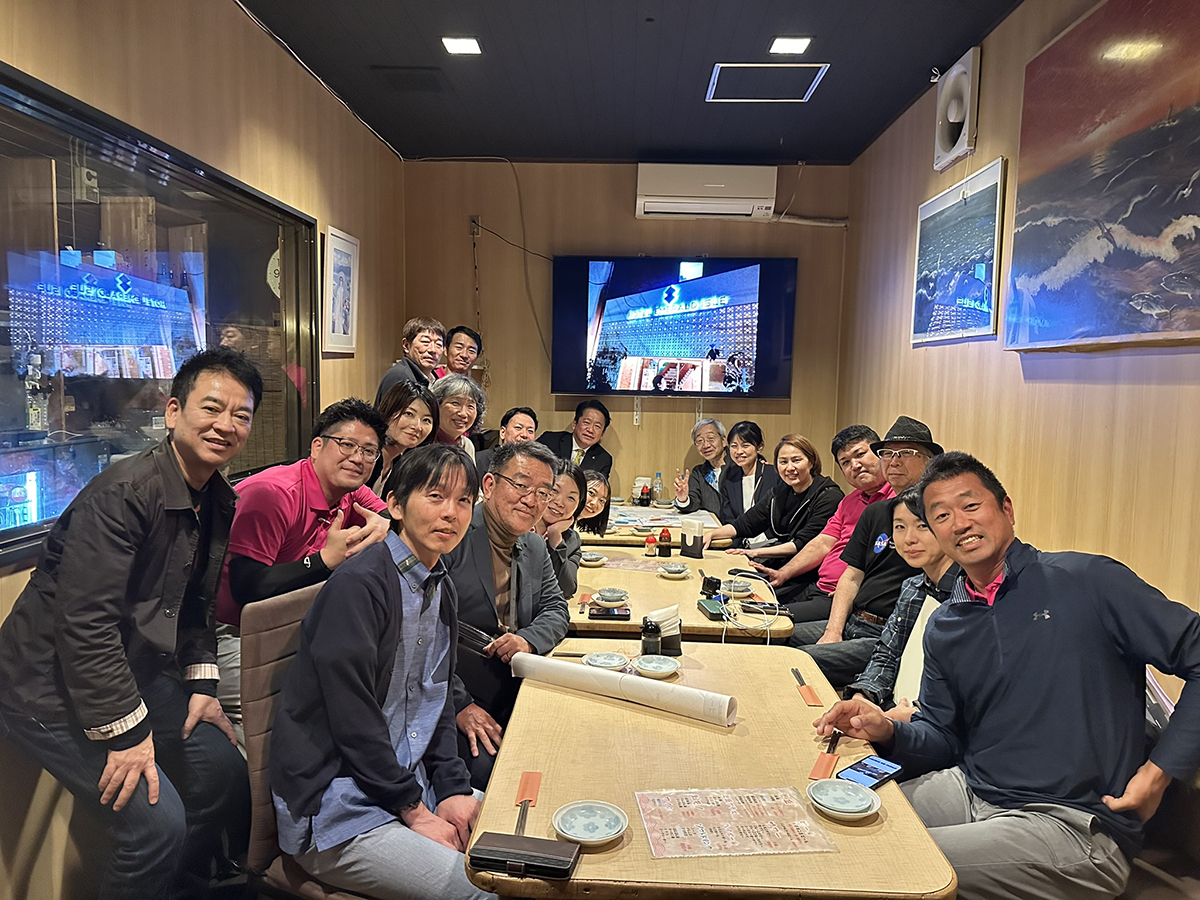
The Yaeyama Islands became the first island in Japan to be certified as a starry sky protected area. However it’s still only tentatively certified because about 2% of the outdoor lighting still needs to be improved. How should we think about the nighttime scenery in order to protect the starry sky and to make the night comfortable for local residents? We had a discussion with the citizens along with the Mayor of Ishigaki.
Thank you for joining us, Ishigaki!
The Yaeyama Islands, including Ishigaki Island, are the first area in Japan to be certified by the International Dark Sky Association (IDA, Arizona) as a starry sky protection area. The Yaeyama Islands are provisionally certified because there are still some outdoor lights that need to be renovated. Through the symposium and walking around the town with local people, we explored what kind of nighttime scenery is needed in Ishigaki, where the night sky remains precious dark and tourism is a major industry.
■Symposium
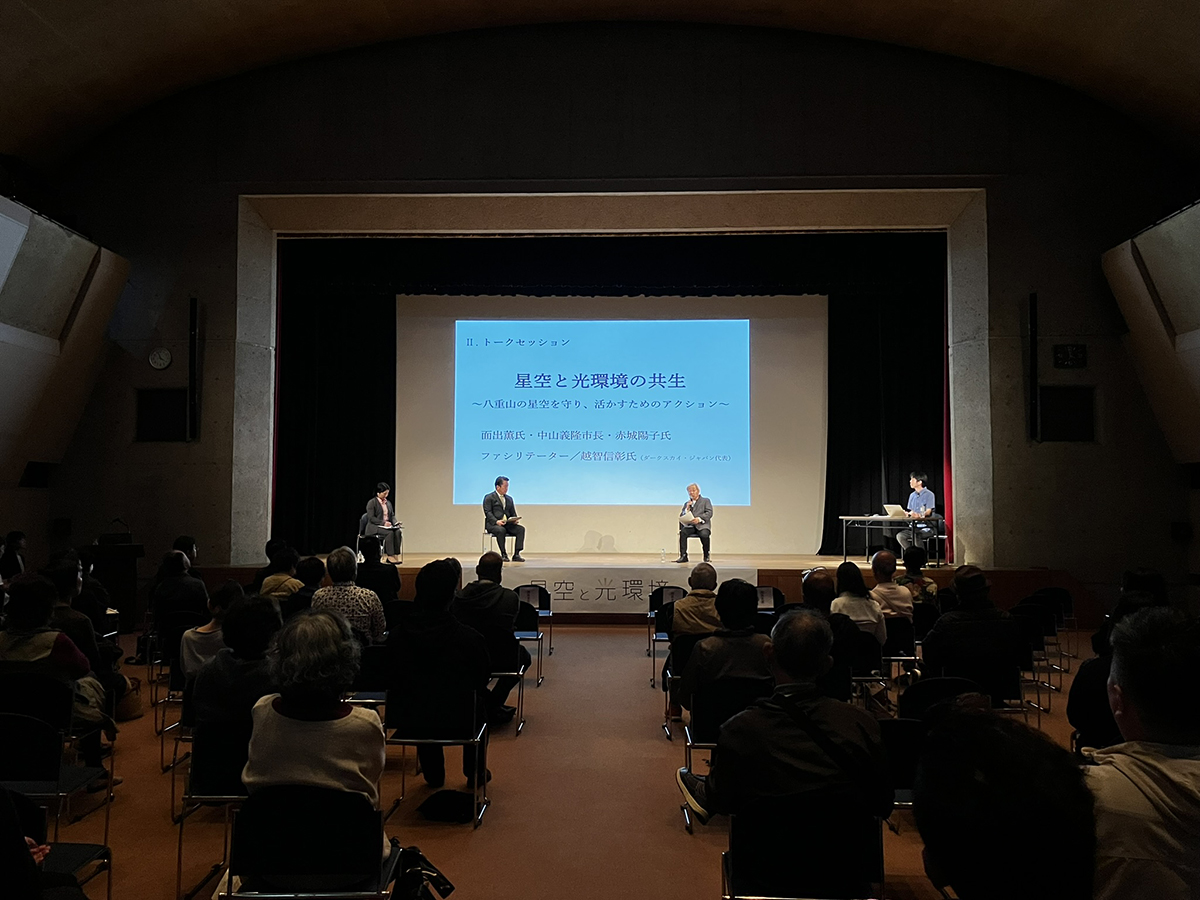
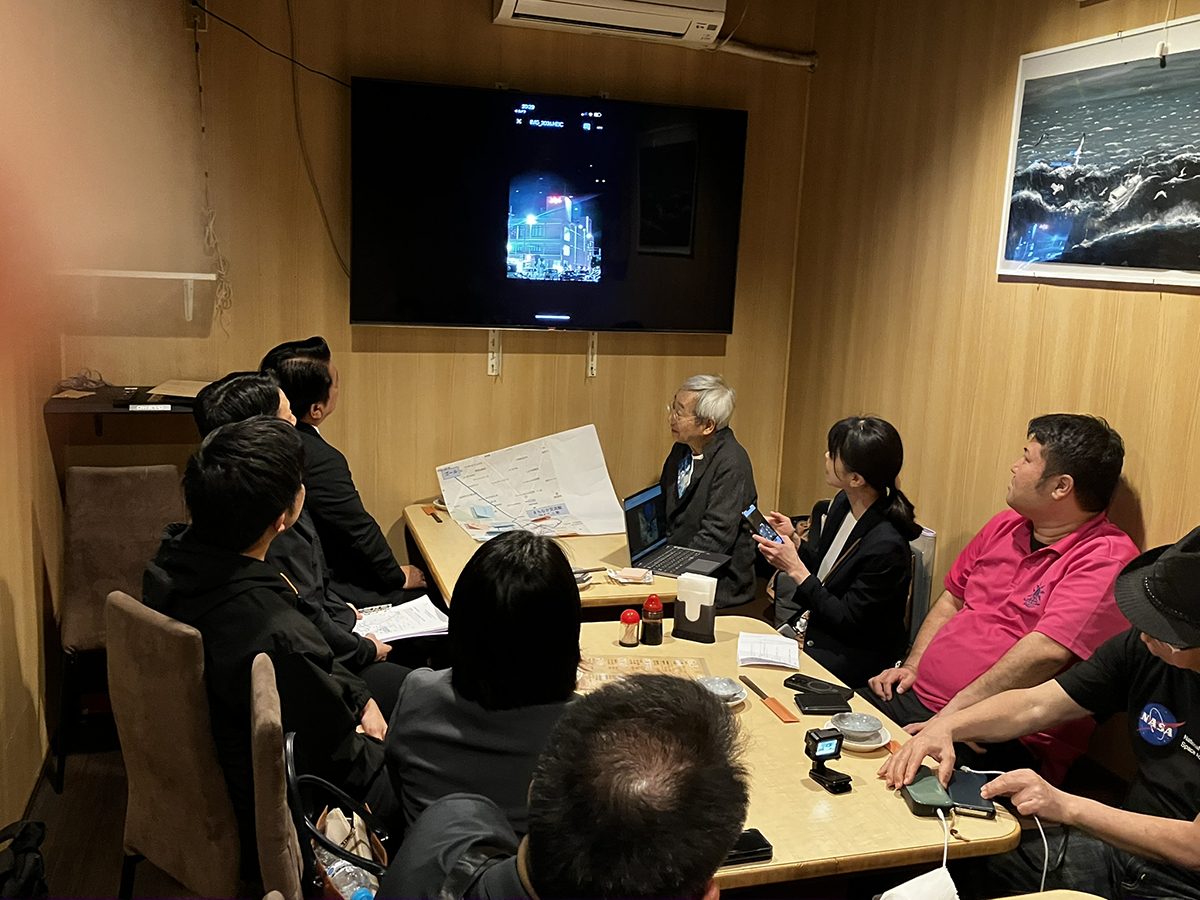
“Symbiosis of beautiful starry sky and light environment” was the theme of the lecture by Mr. Mende and tripartite discussion with Mr. Yoshitaka Nakayama, Mayor of Ishigaki City and Ms. Yoko Akagi, General Manager of Ishigaki Island Beach Hotel Sunshine, who is practicing hotel construction in consideration of light pollution. Looking back on the past light pollution countermeasures in the Yaeyama Islands, they exchanged opinions on how to create a light environment while protecting the starry sky in Ishigaki City, where tourism plays a major role in economic activities in the future.
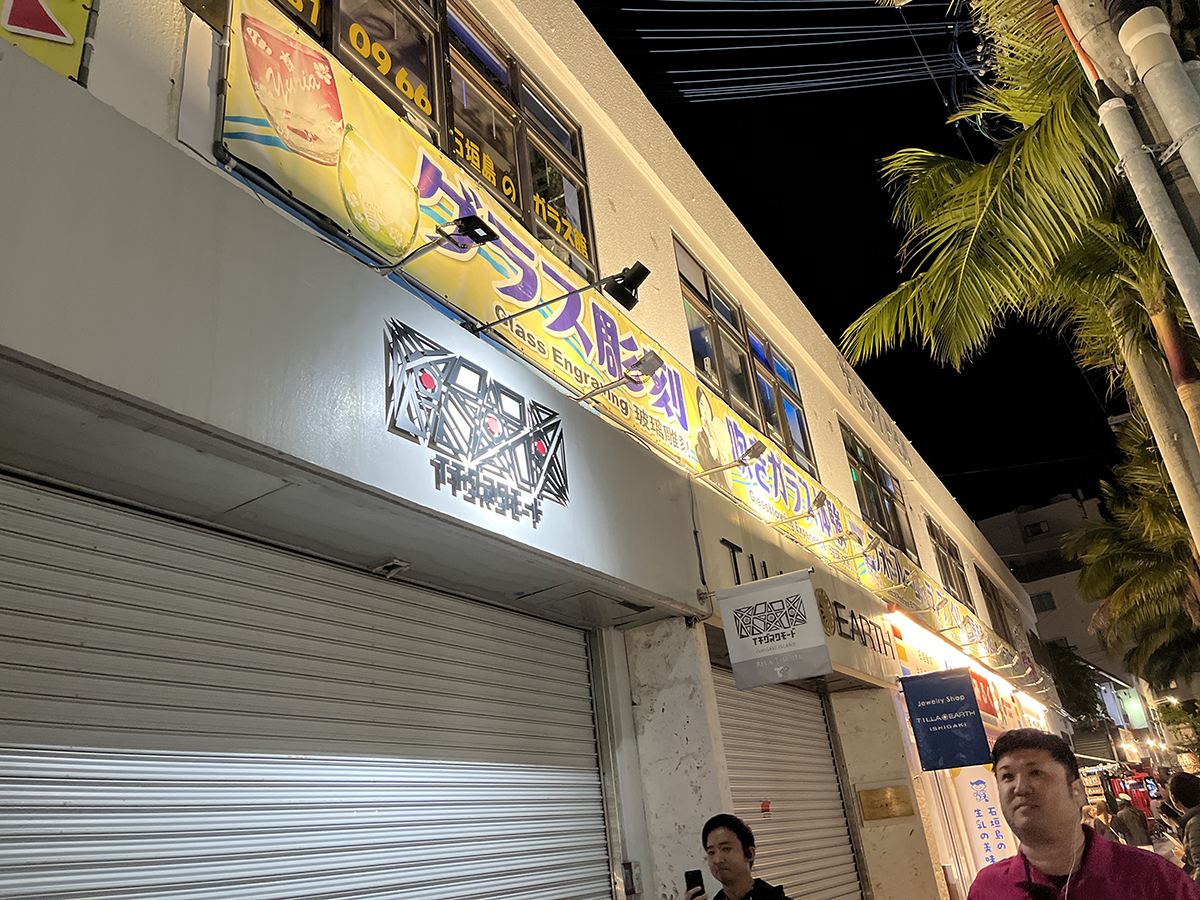
Some stores emit excessive lightThe mayor also took the initiative to express his opinion■Night Walk at Misaki-cho
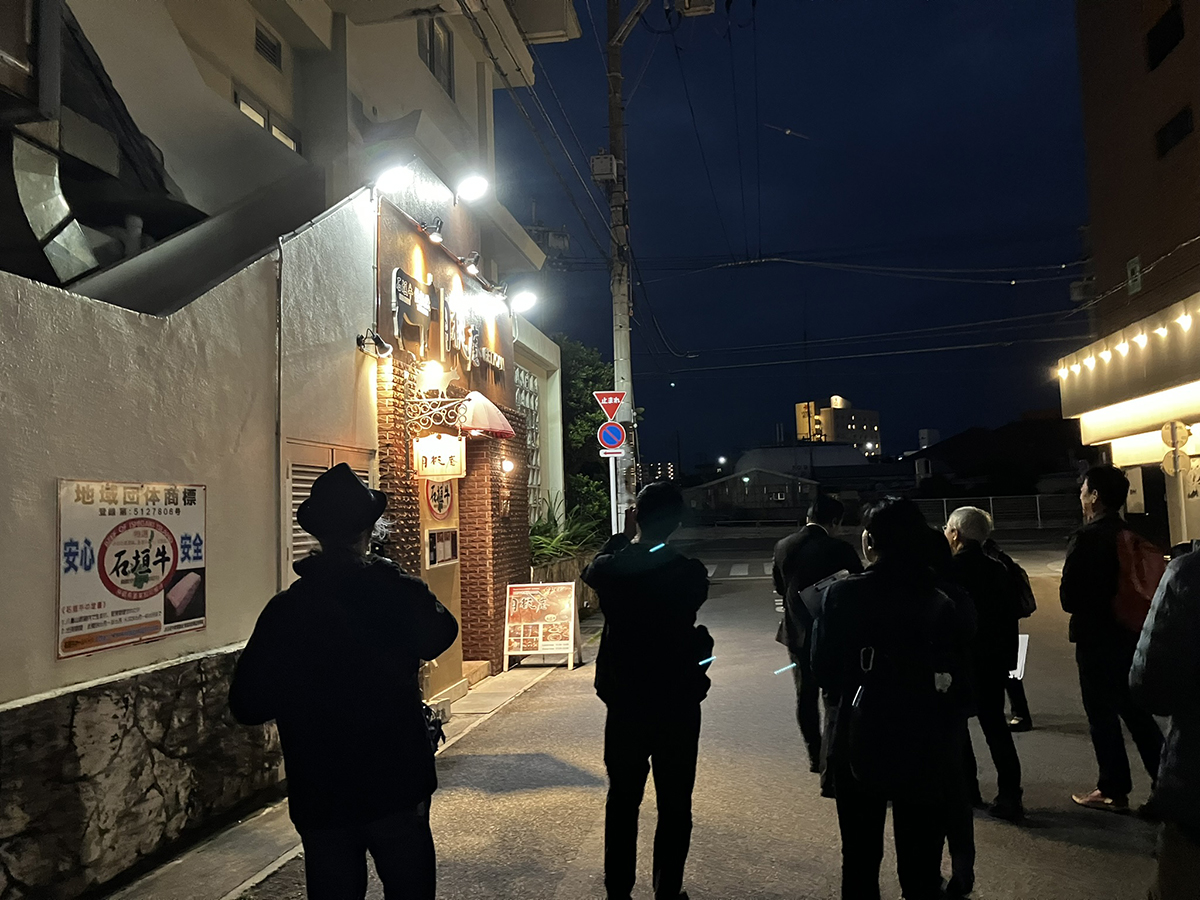
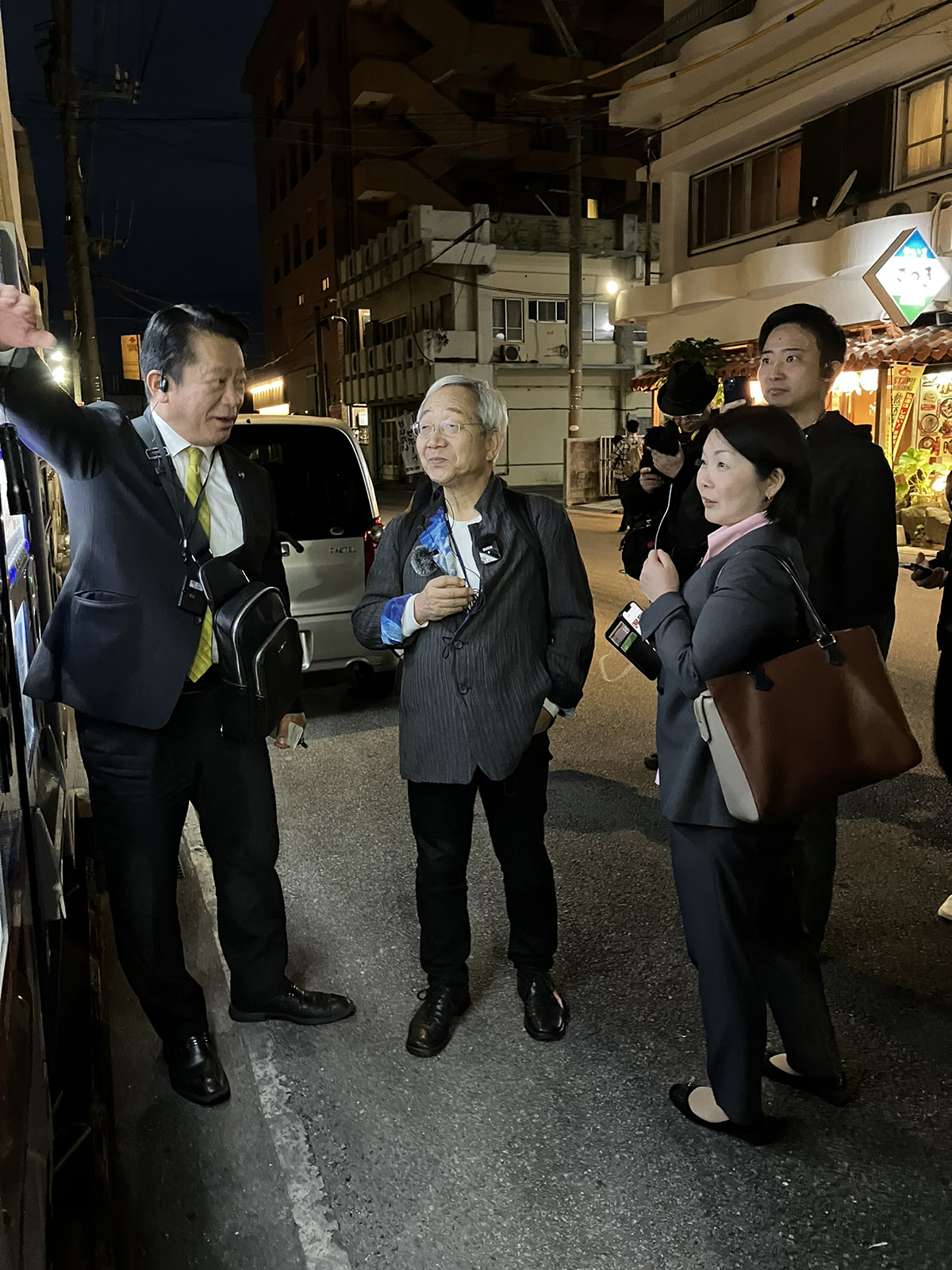
We walked around Misaki-cho, downtown of Ishigaki Island, with locals to search for the heroes and criminals of light in Misaki Town. Participants were given audio receivers to listen to the discussion of Mr. Ochi of the Dark Sky Association and Mr. Mende as they walked the streets. Mayor Nakayama also participated in this town walk, leading the way in pointing out the characteristics of the light of Ishigaki, things to cherish, and things that can be improved. The most conspicuous feature of Misaki Town is the signboard lighting with a long arm attached. Most of the stores use this method to illuminate their signboards, creating a scene unique to Misaki Town.
The use of a light source with a warm color temperature seemed to contribute to the overall sense of unity. Participants raised many questions and opinions as they walked, to which Mr. Mende and Mr. Ochi responded.
The arm is extended to illuminate the sign. We can see many this type of lighting in Ishigaki
■Night Walk Review
After walking around the city, the participants were divided into groups to discuss heroes and criminals of light, and then shared their findings with the entire group. Common comments included the following: illuminations with unclear targets are might be unnecessary, lights should be directed to the targets, lights in unused facilities and streets should be turned off, and lights that are too strong or too many should be reduced. The most highly rated were signboards that emerged with indirect light and light leaking from inside buildings. The lack of glare from the light sources was a nice touch.
We were able to learn the opinions of many people through the town walk and reviews. We hope that these activities will continue in the future to realize a better nighttime landscape in Yaeyama. (Noriko Higashi)
Night Walk Review: Heroes and Villains Shared by All
Interviewer: Simen Huang Theme:Why Chinese people love colors Simeng Today I`d like to discuss the reasons why Chinese people prefer bold or vibrant colors. In recent years, LPA has landed many projects in China. I`m sure the clients ask for bold color choices. Mende Yes, it seems to be that way. Simeng I, myself, along with most Chinese people feel a sense of enthusiasm toward bold or vibrant colors. I don’t think it is just because we like glitz and pazazz or don`t understand the quality of single color luminaries. In my opinion I think this phenomenon is rooted in our cultural background. China night scene using extreme color lighting Forbidden City-Chinese Culture That Loves Color Mende You mean to say that Chinese clients prefer colorful lighting, not because it is trendy, but a completely different deeper reason? Simeng That is correct. I think I had this realization around the time when the length of my stay in Japan became the same as my time living in China. I remember feeling that Japanese seem to conform to those around them and have the habit of blending in with the crowd, while Chinese like to assert their individuality. We don’t like to be the same as those around us and have a strong conscious feeling that “I am different from you.” Mende Yes, we even have a saying in Japanese “The nail that sticks out get hammered down.” We are a culture that lives by conforming…
2014.08.18-08.20 Noriko Higashi A 3-day workshop and Light Up Ninja event was held on August in Sao Paulo, Brazil. During the city walk we not only looked for hero and villains of light, but also discussed what kind of nightscape is needed in Sao Paulo since public safety and other issues are of concern in the city. During Light Up Ninja we illuminated one of the city’s iconic buildings, Copan, for two hours. This workshop was a great hands-on opportunity to not only exercised regular night walk, but we also debated and did actual experiments with several viable lighting proposals. Lighting plan that won 1st place in the lighting proposal competition was carried out. ■Workshop Venue:Copan The building Copan, the light up venue, was originally desinged by a representative Brazilian architect Oscar Niemeyer and interrupted several times afterwards, but it was completed in 1964. It is a large building consisting of the largest number of households in the upper part and the commercial facility lower part. Copan is standing in the old town with parks, churches and banks.There were hardly any new buildings around, which seemed to be built from the 1960’s to the 1980’s. Workshop venue, Copan ■Day 1:Orientation Mr. Mende, chief of Lighting detectives,is giving a lecture. There were about 25 participants in the workshop.Most of them were either lighting designers and lighting manufacturers, and had a wealth of knowledge about lighting. However, they rarely have opportunity to discuss and learn lighting, so…
We had our third “Lounge Talk with Mr. Mende and Friends” live streamed on YouTube.The theme was “Light on the waterfront. We delivered an enjoyable one-hour talk with Mr. Hidenobu Jinnai, a guest who was perfect for the theme. The third installment of “Lounge Talk withMr.Mende and Friends” was held after a year’s absence. We invited architectural historian, Mr. Hidenobu Jinnai as a guest and delivered a one-hour talk live. Mr. Jinnai has been researching waterside urban planning for many years, having studied in Venezia after graduating from university. Whenever the theme of the Lighting Detectives’ events has been waterfront lighting, we have always invited Mr. Jinnai and asked for his opinions. In this episode, He reviewed the Lighting Detectives’ practical lecture series, the Sumida River houseboat tour in 1996, and an interview in 1998 in which he asked the audience to predict the nightscape of Tokyo in 2050, as well as the proposal for Tokyo waterside lighting created by the LPA for the “2050” exhibition held in 2016. He reviewed the “Tokyo Nightscape Proposal” that LPA created for that exhibition, and discussed his vision for the future of waterside lighting and which areas have great potential. In the preliminary meeting, we had talked about ending the live stream in about 45 minutes, but the conversation kept going, and Mr. Mende and Mr. Jinnai seemed to be able to talk forever, but since it was a one-hour program, we ended…
Tomoya FurukawaKanagawa Still basking in the joy of how bright, unusually large, and beautiful last night’s full moon was, I headed out early in the morning to the wood deck along the beach. I went to take part in a radio calisthenics session together with elderly ladies, married couples, local runners, etc. The morning after the Cold Moon, sunrise in the Shonan area on December 6 was at 6:33 a.m., and as we exercised, we ended up watching the sun rise. I restarted radio calisthenics to add some rhythm and structure to my long days. I thought I would probably give up after about three days or so, but I have stuck with it for a month. I wonder why I have stuck with it this time? What is my motivation? The early bird catches the worm? A growing sense of urgency to maintain physical health? Because I like the post-workout chat? “Mt. Fuji is very beautiful today. So clear. You can see Ohshima Island!” “Glad to see the sun rise, again today. So peaceful.” At this time of year just before the winter solstice, the sun in the Shonan area gradually shifts to the right of Enoshima in the eastern sky and rises from behind the Miura Peninsula. As the sky turns pale and bright, about five minutes before sunrise the eastern horizon slowly deepens into shades of red. Then, for a few minutes until the very top of…
(2020.11.18 Noriko Higashi The lighting event Akiu Lumina was held in the Akiu Hot Spring area of Sendai, Miyagi Prefecture from November 14-23, 2020. Lighting Detectives was invited to the event to conduct a light up workshop. Light up at Rairaikyo gorge. The dark and gloomy canyon reveals itself by the light up. Rairaikyo gorge daytime. Huge rocks are outstanding. During the day we inspected Rairaikyo gorge near Akiu Hot Springs. Akiu used to be a quarry and the enormous rocks in the gorge are spectacular. The leaves were also just starting to turn fall colors, creating the perfect location for a workshop at dusk. About 30 people, including local artists, hotel workers, and shopkeepers, gathered to start the workshop. After an introduction of the lighting detectives and a lecture on the importance of nightscape in the city, we headed into the canyon with flashlights and color filters. When we illuminated the rocks from the bridge called “Megane-bashi (glasses bridge),” the water and the canyon, which had been submerged in darkness, came to the surface. The participants were amazed at the way the water looked different depending on the angle of the flashlight. We went down to a spot near the water and used a color filter to illuminate the rocks. They were also surprised to find that some of the colors came out exactly as the filter indicated, while others did not. The rocks were illuminated with red, blue, and green…
This website uses cookies to improve your experience. We'll assume you're ok with this, but you can opt-out if you wish. Cookie settingsACCEPT
Privacy & Cookies Policy
Privacy Overview
This website uses cookies to improve your experience while you navigate through the website. Out of these cookies, the cookies that are categorized as necessary are stored on your browser as they are essential for the working of basic functionalities of the website. We also use third-party cookies that help us analyze and understand how you use this website. These cookies will be stored in your browser only with your consent. You also have the option to opt-out of these cookies. But opting out of some of these cookies may have an effect on your browsing experience.
Necessary cookies are absolutely essential for the website to function properly. This category only includes cookies that ensures basic functionalities and security features of the website. These cookies do not store any personal information.