To grasp lighting environments around the world, the Lighting Detectives have continued to survey local and global cities. Over 70 cities have been surveyed and record in “The World Lighting Journey,” which has become an important database for comparing the many lighting environments around the world.
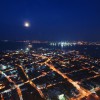
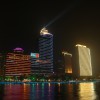
New development and activity at the fishing port generate energy in Korea’s second largest city, Busan. In sharp contrast with the dark waters, stores with flashy neon signs edge the perimeter of the bay and people sit mesmerized along the beach, staring into the black ocean, as the summer nights slip by. Looking down on the city from Busan Tower. The Jagalchi Market, full of activity and the smell of fresh fish, is flooded with fluorescent light. Long into the night, people enjoy their time along Kwanghalli beach.
The spirit of light and water reside in Venice. In every corner of the small maze-like alleyways, light and water dance together. During the day it is the sunlight and shadows shining on the water’s surface, at night the small street lamps cast a reflection in the water, Venice creates not only a city of water, but also a city of light. A typical scene along the streets of Venice, a bridge illuminated above the dimly lit canal. Looking from the Ponte di Rialto , the sunset on the Canal Grande unfolds. The people of Venice prefer the waters edge, a boundary between light and shadows along the canals.
Santorini, one of the many island of Greece, is a crescent-shaped island in the Aegean Sea. The chalk-white townscape on top of the steep bluffs of this island constantly changes with the natural light, like a painter’s canvas, and one is reminded that artificial light does not compare to the beauty of natural light. One of the many Greek Orthodox Churches in Oia Village of Santorini Island. The strong afternoon sunrays reflected off the white walls and blue roof of the church as the ocean and sky sink into the background. Lights come on slowly as the evening approaches Oia. Everyday tourists gather on the tip of the cape to view the sunset that is said to be the one of the best in the world. Five hundred and eighty stairs take one up 300m from the waters edge to the top of the bluff. Along this narrow path, light from souvenir shops is the only illumination in the night.
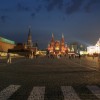
Praha, the capital of the Czech Republic, is a one of the European cities with several buildings, streets, and city features preserved from the middle ages, and a very popular destination for tourists. The city, also famous for its many steeples and spires, is referred to as the City of a 100 Steeples. Around the city, streetlamps have been changed to LED fixtures and LEDs are used in flood lighting as well. This is a city to watch for future shifts and movement in the lighting environment. The Prague Castle is a complex of several architectural structures and is one of the oldest castles in the world. Several flood lights mounted on the ground and on roof tops uniformly illuminate the castle facade. From the opposite bank of the Valtava River, the entire castle is visible through a light mist. In the old town, milky-white globe lanterns line the streets. From afar the city seems to be surrounded in an orange haze. Wenceslas Square is situated in the new town of Praha. The middle ages atmosphere is preserved in the plaza, but several modern structures are also built. Along with several pole streetlights, bright luminous signage also stands out in the plaza.
The Paris nightscape has become a model for nightscapes around the world. Appreciation for the streets of Paris has helped to preserve and restore them to places of beauty during the day and at night. At night, the streets emerge as distinct axes of light and one wonders how far urban light planning will progress. Illuminated in white light, the La Grande Arche, gives the impression of a modern-day city. Set against a dark background, the lofty figure of the Eiffel Tower glows impressively. Looking towards Montparnasse from the top of the Eiffel Tower. The bright building in the center is Montparnasse Tower.
The design of the Lyon nightscape is a joint venture between the government and the citizens. Various lighting materials are used by trail and error throughout the city to create its lightscape. Standing on a street corner one gets the impression that paint materials were thrown onto a canvas, as the artist decided what kind of city and nightscape to paint. The striking blue florescent lights and sodium lamps illuminate the National Institute of Music along the River Saone. The view from La Colline de Fourviere across the City of Lyon is beautiful, with no glaring lights in sight. The Justice Suspension Bridge over the River Saone is just 4.2 meters wide.
A profound lightness and darkness soaks into the classic streets of London. There is not any flashy propaganda, but the orange street lights in the late night fog bring the history of the city and its lights alive. The question now is how much further London is willing to renovate its historic streets. Light sneaking out from the pubs and alleyways conveys the flavor of London`s streetscape. It comes as a surprise that there are not more night viewing points along the Thames River. There are no observatories from which to view the entire city, creating a shortsighted view of the city. The stone facade of the architecture matches the fine light of the matiere.
The thoughts and ideas of Poul Henningsen seem to be present throughout the streets of Copenhagen. Co-existing soft, tender light and natural light combine to create a nightscape in Copenhagen that reminds us technology is not always the answer. The catenary lights strung across Stroget Plaza and warm light from the surrounding windows gives a striking appearance to the plaza. The sidewalks along Stroget wrapped in the blue moment. At dusk, PH (Poul Henningsen) lamps are visible though living room windows, as time seems to slow down for the evening.
Even as the busy capital of Hungary, this city is almost free of fancy colored-lighting and flashy signage. Overall there is not much facade lighting or the glamorous atmosphere associated with many larger cities in Western Europe. However, amongst the quiet streets, historical buildings here and there are illuminated and color temperatures are roughly unified for a very comfortable nightscape with an added sense of security. View of the Danube River from Gellert Hill. On the left bank, several historic buildings are built into the hilly terrain and along the right bank, the city spreads across the flat land. Illuminated buildings over two-stories high are very few with a hand-full of buildings and bridges standing out against the dark night. View of the Royal Palace and Chain Bridge, named for the rows of lamps along the suspension cables that resemble links of chain. At night, the reflection in the Danube River creates a beautiful nightscape. Most arterial roads in the city are lit with high-pressure sodium lamps, but fixtures are adjusted for roadways, pedestrians, and tram platforms. Smaller streets intertwined between buildings are lit manly by catenary lighting.
The new cityscape in Potsdamer Platz is a symbol for the new Berlin. Like light, the shadow from the wall that separated the east and west has dwindled to nothing, but some things still stay the same. The light along Ku-Damm Street still creates a gentle axis of light, providing a welcoming atmosphere for the bustle of people. The Sony Center, with its impressive rooftop called the Fujiyama. The Siegassaule, a symbol of east and west division and unification, stands out in illumination. The showcases along Ku-Damm Street continue for 2km. This street transforms by night into a sidewalk light by large lantern-like show windows.
Barcelona is a city of monuments, whether driving or walking, these unforgett- able symbols of Barcelona are everywhere. At night, the lights of the city further jog one’s memory and create distinctive perspective projections. Streaks from xenon lamps radiate from the top of the Nacional Palace leaving a graphical pattern in the sky. A symbol of Barcelona, the unfinished Sagrada Familia. Shadows at night, further increase the impact of this cathedral. Approaching Place Espanyla from Nacional Palace .
Our survey took place after the dust settled from the construction rush to finish infrastructure for the 2004 Athens Olympics. Around the main tourist attractions the lighting atmosphere was very orderly, but in Athens the ancient and modern co-habitat to create a charming townscape, possibly found in no other city. Under a perfect blue sky, the Parthenon stands surrounded by Doric columns. Over the years under direct sunlight, weathering has taken its toll on the building, but its presence still gives the illusion of a slip back in time. An illuminated Parthenon as viewed from the historic district of Plaka. Seeing the historic townscape, as it must have been in ancient times intertwined with modern adaptations, is one of the attractions of the Athens nightscape. To the eye, significant contrasts in light and dark are apparent in Sintagma Square. Some of the most brightly lit places in the plaza registering 300lx and the places like the stairs leading down to the plaza completely dark. Some fixtures also seem as bright as the sun, almost like afternoon daylight.
Kichijoji is an area of Tokyo where a variety of elements are compressed together to create this unique neighborhood. However, even though it seems to be a mixture of “stuff” the area is well planned and organized. Public and private organizations have aggressively worked together in city planning and we surveyed the area to discover what kind of lighting environment or rules they have advised. Starting on the north side of the station, a commercial area, we then moved to the south side of the station and Inogashira Park and the alleyways that connect the park and station. North Side of the Station The lighting along the covered arcade shopping streets, Sun Road and Diamond Street, are LEDs, creating a modern atmosphere, but down some of the narrower alleyways, like Harmonic Alley, the lighting is retro for an exciting nightly stroll. Park Street The main street from the station to Inogashira Park is a narrow 3-meter wide street lined with small cafes, bars, and recycled clothing and nick-nack shops. Restaurant and shop lighting is a warm 3000k for a comfortable atmosphere, but most street lighting spills out from the entrance to these restaurants and shops. Once they are closed for the night the street is very dark. Inogashira Park Equip with solor panels, tall metal halide streetlights record 331lx inside the park. However, the average lux level inside the park is about 30lx. The streetlights are too bright, and ruin…
Modern Kagurazaka still conveys the atmosphere of its once flourishing Edo Era streets. Old Japanese restaurants and bars line the narrow alleyways and with softly glowing lantern light and welcome signs to complete the scene, one forgets that this is Shinjuku Ward in the middle of Tokyo. In this historical neighborhood warm lantern light is all but a natural presence. Compared to the white lights of Ikebukuro and Shinjuku glowing brightly in the distance, Kagurazaka is submerged in darkness. Buildings in Kagurazaka are lower and lower color-temperature light also peaks out from the many alleyways. Kagurazaka Street, running down the center of this neighborhood, is the only really bright spot, except for the lights reflecting off the canal along Sotobori Street. A prized neighborhood for shopping and entertainment during the Edo period, the historical Kagurazaka Shopping Street is a 700 meter long living time slip. New and old shops are jumbled together along the street with specially designed, lantern-like street lights placed at intervals along the edge of the sidewalk. From Kaguraza`s main street several narrow alleyways lead to the interior of the neighborhood where the scale of lighting is downsized to human proportions. Outside restaurants on Hyogo Yokocyo, one of the more famous back streets, softly glowing lanterns light the entrance and also reflect of the cobbled street and traditional-style fence for a very old Japanese atmosphere.
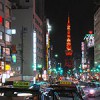
Rich in local history and cultural facilities, Ueno Park covers a large area in the middle of Tokyo. Even though located in an urban setting, we anticipated a lighting environment completely different than the lights of downtown. Between the trees and darkness of the park there are patches of Tokyo`s bright night sky, but the hushed silence is isolated from the city`s hustle and bustle. Ueno Park`s quiet presence gently sleeps next to Tokyo`s vibrant downtown. Approaching Ueno Park from the JR train station. The large overhang of the Tokyo Bunka Kaikan is brightly illuminated in contrast to the surrounding darkness of the park. A view o f northern Tokyo over the Shinobazu Pond from an elevated Ueno terrace. The bright lights of a vibrant downtown are seen in the distance beyond the dark trees of the park. However, through the darkness a bright, orange, sodium lamp illuminates the Benten Shrine near the pond. Looking towards the water fountain plaza from the Tokyo National Museum. A slightly bright night sky, characteristic of most metropolitan areas, opens over head with a dark belt of trees and tiny dots of light below. Young couples seeking a quiet spot away from the lights, snuggle up together on near benches.
Tianjin is situated 150km east of Beijing and easily reached in a 30-minute high-speed train ride. Historically, foreign influence including the UK and Germany has shaped the western-style architecture and streetscape that this city is famed. Tianjin also poses the largest harbor in Northern China, a gateway for this economical and technical development zone. Upon exiting the main station, a panoramic view of the city awaits. The western architecture, remnants from the foreign settlements era, is illuminated in low-color temperature light and stands in contrast to the newly constructed skyscrapers. A historical western architectural structure is now used as a banking facility. At night, orange-colored fluorescent and high-pressure sodium lamps softly illuminate the facade. Downtown is also bustling with construction. During the day the area is swarming with shoppers and construction site workers. At night, mega size digital media, neon signage, and colorful lanterns are everywhere, with even more foreseeable in the future as the construction boom continues.
From post-Olympic pride to the celebration of the 60th Anniversary of China as a nation, China is a very vibrant place. In this country where government is central, we discovered elaborate, but regulated lighting, lighting embellished by economic development, and traditional lighting. The old and new intermingle along the streetscape of this constantly changing city. An air of excitement in Tiananmen Square, Beijing. One of the largest plazas in the world, it is brilliantly illuminated and crawling with tourists late into the night. The elaborately controlled lighting is overpowering, a possible symbol of the nation’s authority. A relic alleyway from the Ming Dynasty winds through a residential area. Traditional neighborhoods are built to the human scale with the glow of lantern light dispersed among the alleyways. People are drawn to the lit doorways and their energy spills out into the streets. After 10pm the facade lighting dims and the architectural structure of the National Stadium, or “Birds Nest” is highlighted. The icon seems to be wrapped in a silent kind of glory. Many of the high-rise buildings in the CBD are illuminated at night, a reflection of the recent economic boom.
Shimokitazawa is a neighborhood of small shopping streets and alleyways, projecting a strange, but comfortable atmosphere, as people crowd the backstreets until late in the night. However, plans to replace this quaint neighborhood with arterial roads and high-rises are underway. The detectives took what maybe a last chance to survey this area before it is “defaced.” The top half and rooftops of most buildings do not have any luminous signage. As a result, a bird’s eye view of this neighborhood is actually fairly dark. The station front plaza is filled with people listening to music from sidewalk acts or looking at street art. The crowds of people naturally overflow into a nearby street. If an arterial road is planned for this area, this atmosphere will be lost forever. Two streets back-to-back, but built to two different scales and with two different demeanors. On the left is Shimokitazawa`s main south entrance shopping street. With many interior decor shops, the lighting is bright and color temperature is high. One street inside and the atmosphere and lighting are more relaxed. Low color temperature, incandescent lamps from restaurants, cafes, and bars are the main source of light.
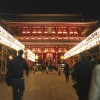
In front of the main gate to Senso-ji Shrine lies the neighborhood of Asakusa. One of Tokyo’s most popular entertainment districts, Asakusa flourished with kabuki, opera, and comic storytelling from the Meiji Era to the end of WWII. The Lighting Detectives discovered a variety of decorative streetlights and a lighting atmosphere fitting for this lively cultural destination. Upon entering the famous Kaminarimon, the Nakamise approach proceeds towards the shrine with bright-white, fluorescent-tube illuminated signage lining both sides. After navigating this corridor, walls of softly glowing lanterns come into view. The lanterns once lit with fire were replaced with incandescent bulbs and now fluorescent lamps. In popular neighborhoods like Shibuya or Roppongi, architectural facade lighting or neon signage fills the vertical space and “street lighting” is virtually non-existent. However, a variety of decorative streetlights festively illuminate the streets of Asakusa for a very fitting lighting environment. Pub signage and lanterns dispersed along the dark streets of Asakusa create an uncanny charm in this neighborhood. Roadway lux levels are a fairly dim 10-16 lx, but the red lanterns hanging from the eaves of establishments dig up affection for this old town.
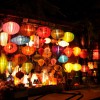
Hoi An was once a flourishing intermediate city of trade. Now, the city is trying to protect the traditional streetscape to appeal as a tourist destination. The nostalgic lantern festival, which was held every full moon, is being reintegrated, as they take on a “back to the basics” attitude towards modern city life. Compared to cities developing vigorously, but blindly economically, Hoi An growth is more diverse. Street vendors line alleyways with festive displays of lanterns. The fantastic atmosphere raises the mood and adds a functional amount of light to these dim side streets with out any street lighting. Built in the 16th century, the Japanese Covered Bridge is a focal point of the old streetscape. Many lanterns hang from the ceiling and spotlights mounted between the roof and bridge softly highlight its features. Inside, cafes are also filled the lanterns, great for creating a relaxing environment. At first glance candles or incandescent lamps seem fitting, but these lanterns are actually all fitted with fluorescent lamps.