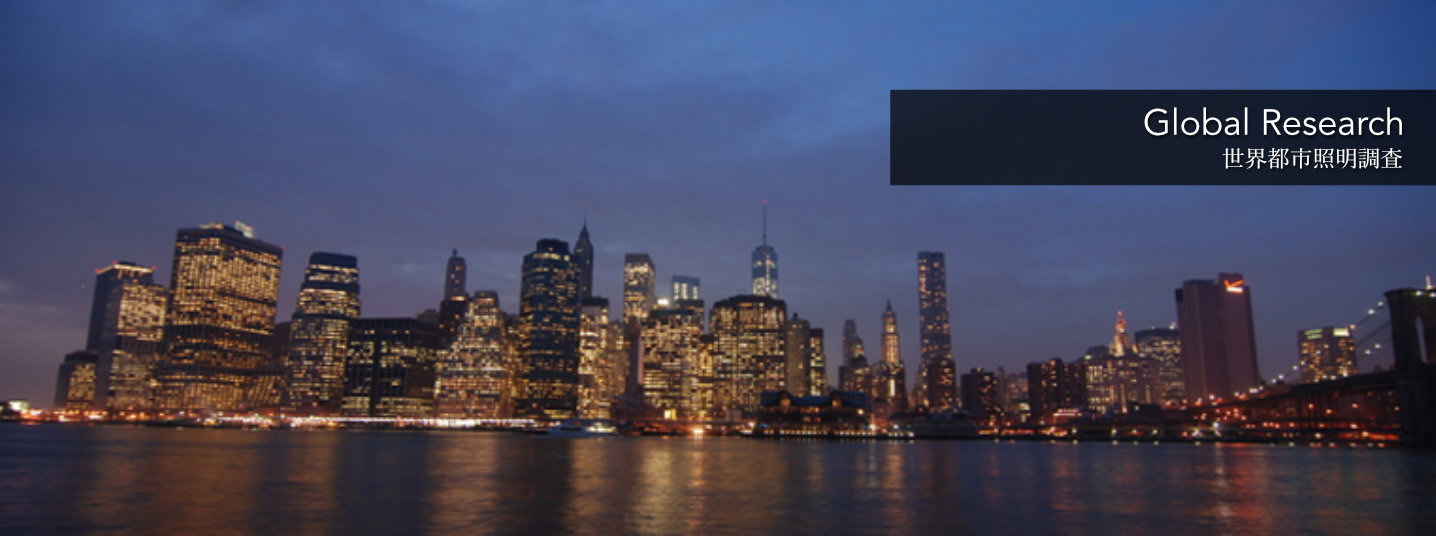
To grasp lighting environments around the world, the Lighting Detectives have continued to survey local and global cities. Over 70 cities have been surveyed and record in “The World Lighting Journey,” which has become an important database for comparing the many lighting environments around the world.
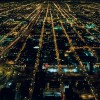
It is an island of light floating in the desert. Lighting technology in Las Vegas is not sedentary, but reinventing itself daily. How can we seize the inviting eyes of visitors? What is attractive lighting? In this place, day is night and night is day. Everybody’s internal clock has goes haywire. From the top of the Stratosphere Tower, the lights of The Strip appear out of the black desert, like the lights of a spacestation. Exterior lighting of the Venetian Resort Hotel. Tourists sit in front of casino slot machines 24 hours a day with no perception of time, since even during the day the interior is keep fairly dark.
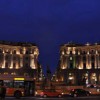
Buenos Aires, aiming to become the Paris of South America, entertains a long siesta in the afternoon leading to a remarkable late nightlife. The atmosphere of these bright, flourishing streets could easily be mistaken for the middle of the afternoon. Where the air of excitement and chaos meet, this is uniquely South American. Diffused, shaded light gives the night scene along Alem Street a pleasant rhythm. The eaves extend out over the sidewalks creating an arcade that acts as a connector from the inside to the outside of buildings. Even at night, the arcades are brightly lit. Bold neon lights attract people to the game center.
The beautiful nightscape along the bayside is the pride of this tourist town. Picking up momentum from the 2000 Summer Olympics, Sydney is again shifting gears. The waterside at night is full of postcard type scenery with places to see and be seen. The view is rich, as Sydney is surrounded by water. The view from Mrs. Macquaries Point reveals the Sydney Opera House and Harbor Bridge in one glance. Transparent globes mounted on lampposts unify the waterfront in front of the Opera House. The weekends in front of the Opera House are festive with colored lighting and visitors gathering under tents.
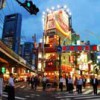
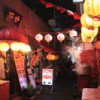
The largest Chinatown in Japan has become an established feature of the Yokohama downtown area, but still an area with its own culture and identity. We surveyed Yokohama to discover the Chinese style of lighting environment alive within Japan. At night, there are many hanging lanterns with soft glowing light. This “Light with a Shape” or, through colorful shades, “Light with Color” is a staple of Chinatown and helps to create excitement and a sense of elation. Along the main street there is no specific street lighting, but shop lighting and luminous signage create a natural ambiance along the street. Most structures have columns painted red and use warm tone lighting, but the facade design and signage is all different. This unification of the streetscape through color temperature creates a balance and lasting impression of Chinatown.
The Diversity of Condominium Lighting in the Tokyo Area Condominiums play a leading role in housing for the Tokyo Area. As the city grew, busy shopping, business, and entertainment districts are supported by the residences, which live in densely populated residential areas. As the population density increased so did the proportion of condominiums for housing. According to reality statistics, condominiums account for 70% of the housing within the 23 wards of Tokyo. For this survey we stepped away from the bustle of the big city and investigated 3 relatively large, densely populated condominium complexes. The three areas all have a different history and commuting distances from the center of Tokyo. What can we discover about the lighting environment of these three totally different condominiums and the surrounding residential area? Toyosu Once an industrial area built on reclaimed land, housing redevelopment started in 2003 and the first of several residential blocks was completed in 2006. Toyosu is a “new city”, built from scratch and popular with younger families and couples. The number of condominiums is astounding, but the development is not just large, but a luxurious residential area as well. Color temperature viewed from the condominium windows: Orange: 80% White: 16% Bluish: 4% The tower condominiums are immediately visible upon leaving the station. Relatively close to the center of Tokyo, these tower condominiums were built during a boom in condominium real estate. Each tower has a luxurious entrance lobby and…
Shiodome Sio-Site was a joint public and private sector redevelopment project completed in 2006. In nearby Shinbashi, eateries and bars built under and into the brick structure of the elevated railway tracks during the Meiji era have become a famous cityscape of this area. We set out to discover what kind of lighting environment exists in this conflicting neighborhood of Tokyo. Red lanterns, single light bulbs hanging under the eaves, colorful luminous signage…All the lighting is warm and inviting. The lighting environment along the streets of Shinbashi is wide and varied, but somehow closes the distance between strangers. Lighting for an elevated pedestrian deck connecting high-rise buildings in the area. The warm colored lighting creates a comfortable atmosphere for a nighttime stroll. The Shiodome high-rise buildings are not showy, and along with the interior office lighting, only a few have facade lighting on the building crowns.
In the middle of Tokyo is the Imperial Palace, a haven for runners and tourists, alike. The lighting in the palace outer garden and nearby Wadakura Fountain Park has been renewed and replaced with environmentally conscious LED fixtures. We surveyed the unique pocket of darkness that surrounds the Imperial Palace along with lighting environment of nearby parks and roads. Imperial Palace Outer Garden. The fancy pole lights in the outer garden are originally gas lamps, but the light source has been changed to high-pressure sodium lamps and now upgraded to LEDs. The average lux level is only 1-2lux along the paths lined with these LED fixtures, but inside the fixtures are 6, 26watt LED modules all pointed in different directions. This application helps to spread the light around without making a too bright, but comfortably dim atmosphere. Daikancho Street Daikancho Street runs along the north side of the palace grounds, is a much narrower street and pedestrian sidewalk compared with the rest of the facilities surrounding the palace. Along the tidy, hedged sidewalk, streetlights are placed at 3-meter intervals. Mostly for crime prevention, the lights are very bright and glaring. Ohtemachi Entrance The Ohtemachi Entrance area leads to an inner palace garden and is surrounded by a main arterial road on the outside, for a very open and accessible area. Most lighting is road lighting, mounted on 10-meter tall poles arranged down the middle of the street, but plenty bright…
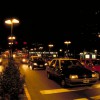
Under a rush of redevelopment, this is a huge period of transition for the area surrounding Shinjuku. On this survey, we were met by soft light filtering out of tall skyscraper windows, brilliant signage on facades and rooftops, and crowds of people along the streets and alleyways. Shinjuku Station South Entrance is in the middle of a redevelopment project scheduled to be complete in 5 years. A multitude of fluorescent lights line the pedestrian walkways with such an intense brightness that the surrounding scene is almost invisible. Six o`clock in the morning and waiting for the sun to come up on Yasukuni Street. Calm is finally starting to settle over Kabukicho, but still brightly lit signage are but glaring reminders of the nightlife. Brilliant advertising and signage along Yasukuni Street acts as an entrance gate to Kabukicyou. The bight lights entice many, who are aimlessly swallowed up by Kabukicho.
The archipelago, pristine nature, and human footprint all combine to create the highly valued landscape of the Seto Inland Sea. Depending on the season and time of day the inlet and small islands have a store of rich expressions from dusk to dawn. The lights of the villages and ships come on in the distance and fade with the morning light. Different from a larger city, we surveyed the charm of this aesthetic landscape and Inlet Sea. The survey course starts on the island of Shikoku in Imabari, Ehime Prefecture along the Shimanami Kaido Expressway. The 60-kilometer long highway skips through the islands, connected by 9 bridges and ends in Onomichi City, Hiroshima. If you look hard, from a mountain top lookout, the entire route is visible. By car and on foot, we aimed to discover the lighting identity of this area, including cities drowning in light and smaller villages that dot the sides of the highway. From the observation deck on top of Chikamiyama near, Imabari City, The Kurushima Channel Bridge is visible. A panoramic view from Senkoji Park.
After WW II, Sendai was rebuilt into a modern city with streets perfectly aligned in a gridiron pattern, but mixed with covered arcades. We surveyed the covered arcades and their daily activity along with the annual lighting event Sendai Hikari Pageant. Whole boulevards are just covered in little lights. The overwhelming brilliance is impressive and takes your breath away. When standing in the middle of the road between the rows of illuminated trees, there is no end in sight. The lighting “tunnel” is endless and for a little while we forgot to blink or even breathe. One characteristic of Sendai, the covered arcade, is shown in the middle of the picture to the right. The milky-glass dome running down the center of the arcade reveals the nonuniformity of lamp color temperature and intensity of light. We found excessive amounts of light fixtures in a number of places around the city, a characteristic of the lighting environment that create the nightscape for this city.
The Television Broadcasting Tower looks down on the orange sodium lamps overflowing from the grid patterned streets of Sapporo. While on assignment in December we were able to view the multi-colored White Illumination set up along Ohdori Park and Sappore Eki Mae Street. Looking towards Ohdori Promenade from the JR Tower. Sapporo is a beautiful city at twilight with orange light from the streets to set off the blue-tinted snow-topped roofs. The tree-lined street, Sapporo Ekimae Avenue is a sight to see with its unique style of looping lights over tree branches. Visitors with cameras and mobile phones converge on the decorated Ohdori Promenade. Sapporo Television Tower, similar to Tokyo Tower and Nagoya Tower, and all designed by the same architect, is also illuminated with the same type of sodium lamp.
Looking over the Nagoya nightscape from the symbolic Television Broadcasting Tower, Hisaya Boulevard stands out in the center and orange sodium lamps dominate the park below. The new trendy spot in Nagoya, Oasis 21, along Hisaya Boulevard. We climbed up the Television Broadcasting Tower before dusk so we could sit back and watch nature’s light show over the city with Oasis 21 in the foreground. Various mechanisms of light are incorporated into the design of Oasis 21, a former LPA project and winner of IESNA 2003 Award of Merit. One characteristic of Hisaya Boulevard nightscape is that the scenery always includes the Television Broadcasting Tower. Whether from the illuminated water fountain, Central Bridge, Central Park, or Oasis 21 all are framed just like a picture postcard with the Tower in the background.
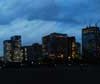
The east end of Taipei is really growing and developing with many modern structures like the Taipei 101, the world’s tallest building, looming over the area. But off the main streets and in the back alleys, life is as usual as old buildings line the side streets of these unique little neighborhoods. The streets are alive with daily activity and residents come and go; a some what nostalgic picture. Looking west from the top of Taipei 101, the world’s tallest building, as the last of the day’s orange light breaks through the space between the buildings. From this view point you can really see how the old part of the city spreads out in the west as the streets get narrower and twist and turn. Jungshan North Road, one of the main thoroughfares of Taipei. Mounted on the streetlights lining the sidewalks are fixtures to illuminate the trees and small LED nodes programmed with different scenes of color lighting. Although the trees are big and imposing, the lighting has helped to create a pleasant pedestrian area. Every night is like a festival at the Shilin Night Market in Taipei. Many of unique smells、wares, and activity to go along with the jimble-jamble of lighting.
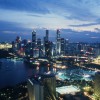
Singapore has been aiming for a nightscape that catches the viewer wondering, “Is this Asia or western Europe?” In this city of perpetual summer, lighting and air conditioning are necessities to be a modern city. Singapore’s intentions are clear as it aims to create its unique urban nightscape. Looking towards Victoria Harbor from the Millennium Tower at the clean, beautiful cityscape of this modern Asian city. Development along the riverside is progressing. Color lighting along Boat Quay creates a lively atmosphere at night as the lights amplify the refections and movement on the water. The facade of restaurants along Chjmes. This vertical plane of light creates a luminous street.
Developing Shanghai is propaganda for the world to see, as the streets of Shanghai seem to explode at night under the glitzy lights of this nightscape. One night the groups of row houses were removed, and the next, modern architecture appeared in their place. There was no time for theorizing about lighting culture, and the city became engulf in a flood of light. Shanghai is a gathering place for people from all over China. The bear light bulbs hanging in the streets cast skeptical glances over this developing city, but preserve the chaotic charm of the back streets. Daily development and innovation in the Pudong Xingqu District. Architecture from the colonial period is still standing in Bund, but the glitzy lights are more liable to catch one`s eye.
Competing with elaborately planned shop facades, intense Han River bridge illuminations, sign luminaries, and bare light bulbs, all flood the streets with chaotic lights. Multi-colored and thriving on pure energy, the different areas in Seoul are alive at night with their own individual style of light. Looking towards the Han River from the observation deck of KLI 63 Building. Myeongdong Commercial District. Light from sign luminaries flood the streets, a typical scene in many Asian cities. In the Dongdaemun Market, numerous bare light bulbs hang from the ceiling and reflect off the canopies overhead.
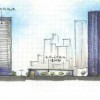
The infrastructure of Munbai is well built, creating a well-lit road surface from a horrendous traffic situation and colonial technology. In contrast, the chaotic bazaar boasts incandescent lights. Rich and poor, concentrated light and shadows all inhabit the same spaces. Looking down on the market, clothes and other daily necessities are laid out in narrow shops. The intense glow of a single light in front of each shop, also contributes to the public lighting environment. As the night cools off, the market becomes a clutter of people and our camera attracts the interests of many shoppers. A section sketch of the marketplace. 500lx registered at ground level in the middle of the narrow street, the same amount needed for an office environment.
Rustic scenery and relaxing daily life co-exist on Jejudo Island, where we stopped for a luxurious stay at a resort hotel. White light from fishing boats dot the horizon and clarify the boundary between the dark night sky and black ocean waters. Fishing boats dot the horizon in the bay. The light from a fish tank at a fresh fish restaurant catch the eye of pedestrians along the street. Colored spotlights cast out over the ocean waters along the Coastal Highway.
Guangzhou on the north shore of the Pearl River Delta As the saying goes “Eating in Guangzhou,” Cantonese cuisine is prepared in a wide variety of ways using almost anything under the sun. Residents carry that energy into the lighting environment that is equally diverse and full of activity, maybe a symbol of the recent economic development in China. Guangzhou Pearl River In the city limits of Guangzhou the Pearl River runs from west to east. The streets and buildings along the river face the water with people enjoying the night view from various places by cruising, strolling, and dinning. Guangzhou Xia Jiu Lu The pedestrian shopping street Xia Jiu Lu is famous for old shop houses and as a redeveloped entertainment district. Along with Chinese type red lanterns that line this street are an infinite amount of neon and other luminous signage that create a chaotic and exciting atmosphere. Shenzhen from Saige Plaza Tower After being labeled a special economic zone in the 1980`s, the population escalated and transformed the Shenzhen area into a gigantic urban beat. The city grew overnight like an illusion from a virtual world, but the population and high-rise condominium boom keep growing; which makes for an interesting nightscape.