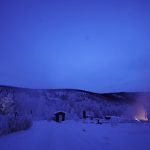
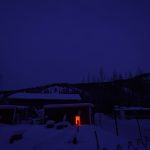
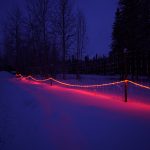
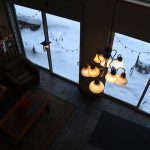
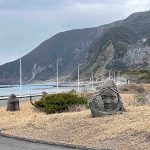
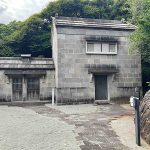
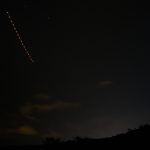
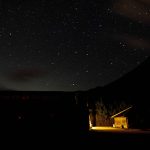
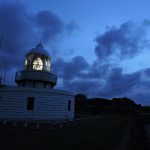
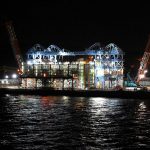
2022.09.30-10.02 Momoko Muraoka + Hikaru Kimura + Akemi Sasamoto Squid, the local specialty of Tsushima, are caught at night. The view of fishing fire illuminating the horizon is not a planned lighting environment, but a nightscape that naturally emerges from the livelihood of local fishermen.To explore this scenery of “light from daily life,” we visited Tsushima and boarded a fishing boat to experience night fishing. Under a sky full of stars, we documented the striking contrast between the vast shadowed sea and the line of fishing fires along the horizon.The interplay of starlight, fishing fire, and their faint reflections on the water revealed a beauty entirely different from that of urban lighting design. Through this survey, we were able to appreciate not only the outcome of the fishing itself, but also how light is deeply intertwined with the culture and daily life of the region. ■Boarding the Squid Fishing Boat Night fishing with lights (called “yodaki”) is a traditional fishing method that makes use of the phototactic nature of fish—their instinct to gather toward light. Its origin dates back to ancient times, and while the light sources themselves have changed over the centuries, the practice of kindling lights at sea remains the same. The nightscape of fishing fires has thus continued as a scenery born from the daily livelihood of local fishermen. That this night view is cherished as a distinctive landscape of the region is evident from the existence of…
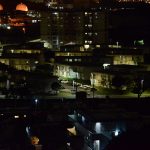
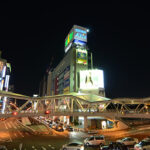
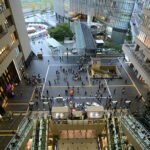
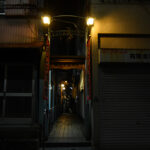
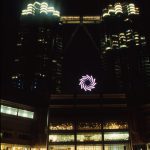
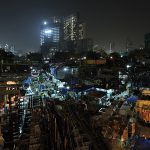
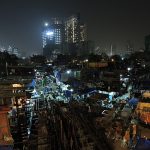
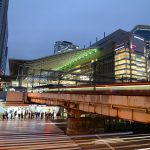
2022.07.11 Hikaru Kimura + Yonglin Ke + Xueying Piao Shibuya, known as a youth hub, began redevelopment in 2012, transforming into a business district with a cluster of new office buildings and commercial facilities. While many new restaurants have emerged, traditional drinking alleys remain intact. This survey investigates the contrasting night scenes of the new and old Shibuya. ■Overlooking Nightscape of ShibuyaFrom the Shibuya Scramble Square, the rooftop of Miyashita Park stands out prominently to the east of the central railway tracks. The warm glow along the podium belongs to Shibuya Yokocho (alley). Nestled beside the pitch-black railway tracks and appearing as a dotted red line is Nonbei Yokocho. Viewed from above, Nonbei Yokocho exuded a soft, flickering light, resembling candles, in contrast to the lively and vibrant atmosphere of Shibuya Yokocho.The overall nightscape, divided by the Yamanote Line tracks, presents a striking contrast: the western side is dominated by tall buildings, densely packed with billboards and advertisements, exuding the lively energy of a traditional entertainment district. The eastern side, on the other hand, has fewer billboards and subdued signage, giving it a unified and calm appearance.I wonder if Shibuya will eventually become a more standardized urban landscape, much like its eastern side. Personally, I felt the bustling, nostalgic charm of the western side embodies the true spirit of Shibuya, and it’s something worth preserving. (Yonglin Ke) ■Shibuya YokochoRAYARD MIYASHITA PARK, a new landmark in Shibuya, features Shibuya Yokocho, a 100-meter-long…
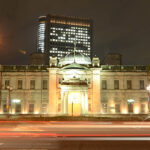
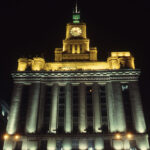
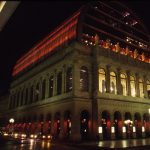
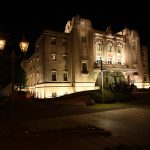
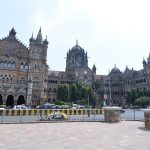
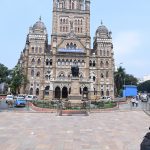
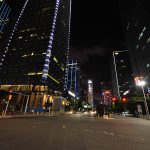
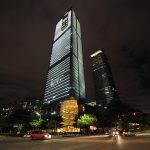
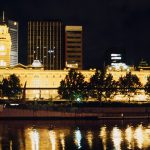
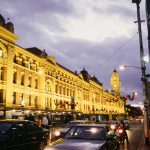
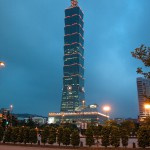
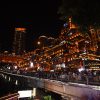
Tianjin is situated 150km east of Beijing and easily reached in a 30-minute high-speed train ride. Historically, foreign influence including the UK and Germany has shaped the western-style architecture and streetscape that this city is famed. Tianjin also poses the largest harbor in Northern China, a gateway for this economical and technical development zone. Upon exiting the main station, a panoramic view of the city awaits. The western architecture, remnants from the foreign settlements era, is illuminated in low-color temperature light and stands in contrast to the newly constructed skyscrapers. A historical western architectural structure is now used as a banking facility. At night, orange-colored fluorescent and high-pressure sodium lamps softly illuminate the facade. Downtown is also bustling with construction. During the day the area is swarming with shoppers and construction site workers. At night, mega size digital media, neon signage, and colorful lanterns are everywhere, with even more foreseeable in the future as the construction boom continues.
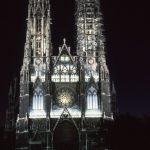
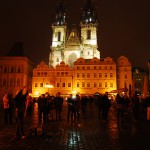
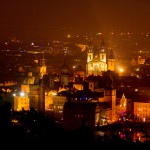
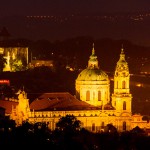
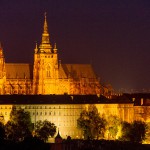
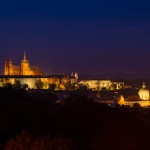
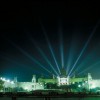
Praha, the capital of the Czech Republic, is a one of the European cities with several buildings, streets, and city features preserved from the middle ages, and a very popular destination for tourists. The city, also famous for its many steeples and spires, is referred to as the City of a 100 Steeples. Around the city, streetlamps have been changed to LED fixtures and LEDs are used in flood lighting as well. This is a city to watch for future shifts and movement in the lighting environment. The Prague Castle is a complex of several architectural structures and is one of the oldest castles in the world. Several flood lights mounted on the ground and on roof tops uniformly illuminate the castle facade. From the opposite bank of the Valtava River, the entire castle is visible through a light mist. In the old town, milky-white globe lanterns line the streets. From afar the city seems to be surrounded in an orange haze. Wenceslas Square is situated in the new town of Praha. The middle ages atmosphere is preserved in the plaza, but several modern structures are also built. Along with several pole streetlights, bright luminous signage also stands out in the plaza.
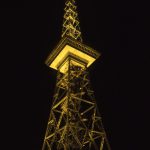
Wien is a city of artistic culture built upon the glory of the Habsburg Family Rein. Floodlights illuminate the heavy, stone architecture along the old streets, but just across the way is newer architecture with systems of LED`s that illuminate shear glass facades. The clash between the old empire and new culture is clearly visible in this city. viView of the City of Wien from Donauturm Observatory. The city, clustered around the Danubian River as it winds through the urban landscape, is beautiful at dusk. Nineteenth-century buildings used to store gasoline, Gasometer, have been transformed in to apartment buildings, shopping malls, and other facilities in 2001. Lights from the new living quarters spill out over the redeveloped area. Stephans Plaza at night. All the shops are closed, but store windows are aglow with soft light. Neon lights and other illuminated signage are also more visible along this street.